
AI Artist & Tech Enthusiast
Vehicles Style Transfer Guide for Photos

Choosing the right art style can make or break a vehicles style transfer project. Cars, motorcycles, trucks, and boats present a distinctive challenge for neural style transfer -- their metallic surfaces, sharp reflections, and geometric forms interact with artistic styles in surprising ways. We tested 116 styles using ArtFID (lower scores = higher quality) and found that Turner delivers the best results with an ArtFID of 184.82. Read on for the complete rankings, visual comparisons, and practical tips to transform your vehicle photos into striking artwork with ArtRobot.
Why Art Style Choice Matters for Vehicles Photography
Vehicles occupy a fascinating position in the world of style transfer. Their visual profile is dominated by mid-to-high frequency information -- smooth metallic panels that create broad specular highlights, chrome trim that produces sharp reflective edges, and geometric bodywork that defines clean structural lines. These characteristics create a complex interplay of large smooth surfaces and sudden high-contrast transitions that neural style transfer algorithms must navigate carefully.
When a style transfer model processes a vehicle photograph, it confronts an unusual duality. The broad, reflective panels of a car hood or door behave similarly to low-frequency content (like skies or water), while the window frames, grille details, wheel spokes, and body lines introduce dense mid-to-high frequency structure. Styles that can balance atmospheric texture application across the smooth panels without obliterating the crisp geometric details tend to score highest. This is why painterly styles with variable brushwork -- particularly those from Romanticism and Expressionism -- consistently outperform styles built on rigid geometric patterns or extreme abstraction.
Our ArtFID analysis across all 116 styles reveals that the performance gap between the best (Turner at 184.82) and worst performers (Repin at 476.27) spans more than 290 points -- a 2.6x difference. Styles that excel at atmospheric rendering and dynamic brushwork dominate the top rankings, while styles that impose heavy figural forms or extreme geometric fragmentation struggle with vehicles' reflective, hard-edged surfaces.
"The matching of Gram matrices is essentially equivalent to minimizing the Maximum Mean Discrepancy (MMD) between the generated image and the reference style image in feature distribution space, using a second-order polynomial kernel function. This conclusion reframes the style transfer problem as a distribution alignment problem in Domain Adaptation." -- NST Compatibility Research, p. 2
Top 10 Art Styles for Vehicles Photos
We tested 116 art styles on vehicles photography using ArtFID -- lower scores mean better results. Here are the top 10:
| Rank | Style | ArtFID | Stars | LPIPS | FID |
|---|---|---|---|---|---|
| 1 | Turner | 184.82 | 5 | 0.3735 | 133.56 |
| 2 | Munch | 185.72 | 5 | 0.2831 | 143.74 |
| 3 | Expressionism | 187.15 | 5 | 0.2831 | 144.85 |
| 4 | Romanticism | 188.63 | 5 | 0.4588 | 128.30 |
| 5 | Constable | 188.92 | 5 | 0.2864 | 145.85 |
| 6 | Morisot | 198.72 | 5 | 0.4065 | 140.29 |
| 7 | Surrealism | 201.54 | 5 | 0.3578 | 147.43 |
| 8 | El Greco | 203.16 | 5 | 0.3659 | 147.74 |
| 9 | Chagall | 207.28 | 5 | 0.3187 | 156.18 |
| 10 | Impressionism | 212.29 | 5 | 0.2983 | 162.51 |
#1: Turner (ArtFID 184.82)
J.M.W. Turner's atmospheric mastery makes him the undisputed champion for vehicles style transfer. His signature technique of dissolving solid forms into luminous washes of color and light transforms the hard metallic surfaces of vehicles into something ethereal and dramatic. The low FID of 133.56 -- the best among all 116 styles -- confirms that Turner's atmospheric rendering translates exceptionally well to the reflective, geometric nature of vehicles, preserving structural integrity while adding painterly depth to every chrome highlight and body panel.
#2: Munch (ArtFID 185.72)
Edvard Munch's emotionally charged brushwork and swirling, undulating forms pair remarkably well with vehicles. His Expressionist approach transforms the rigid geometry of cars and motorcycles into dynamic, psychologically intense compositions, while his excellent LPIPS score of 0.2831 indicates strong content preservation -- the vehicle remains clearly recognizable even as it gains powerful emotional resonance.
#3: Expressionism (ArtFID 187.15)
The Expressionism movement's variable, often angular strokes create a compelling tension with vehicles' manufactured precision. The style introduces raw energy and emotional intensity to the mechanical subject matter, with angular brushwork echoing the sharp body lines of vehicles. Like Munch, Expressionism achieves a standout LPIPS of 0.2831, meaning vehicles retain their structural clarity while gaining dramatic artistic character.
Before & After: Top Styles on Vehicles
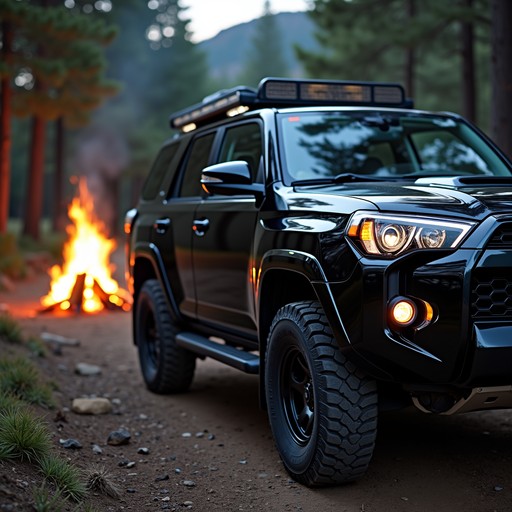
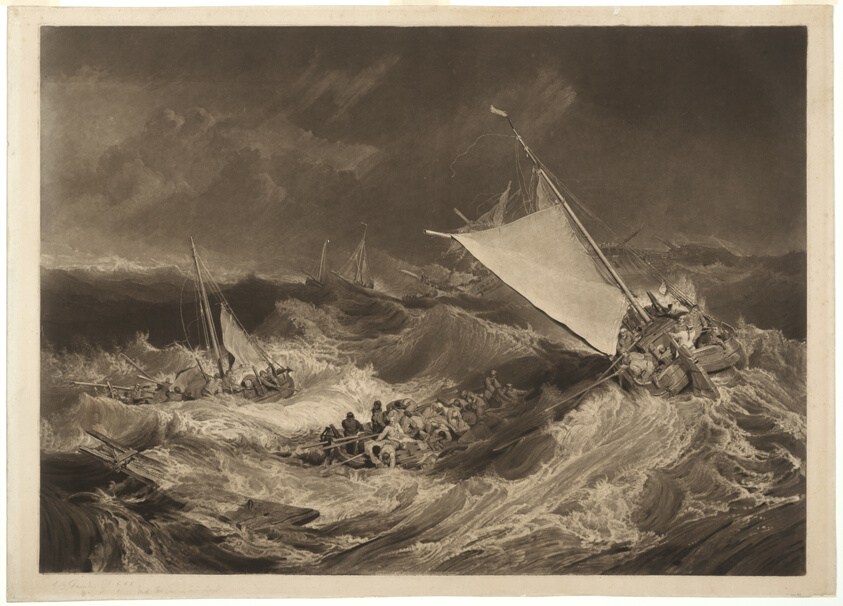
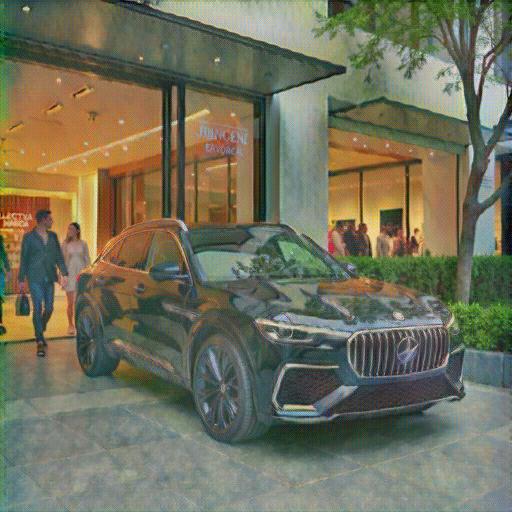
See the transformations for yourself. Each row shows the original photograph, the style reference painting, and the AI result:
Turner -- 5 Stars (ArtFID 184.82)
| Original Photo | Style Reference | AI Result |
|---|---|---|
 |
 |
|
| Source photo | A Shipwreck | ArtFID: 184.82 |
Turner's atmospheric light dissolves the hard metallic edges of the vehicle into luminous, painterly washes. The reflective surfaces become glowing fields of color, while the overall structure of the vehicle remains unmistakable -- a perfect marriage of industrial form and Romantic atmosphere.
Munch -- 5 Stars (ArtFID 185.72)
| Original Photo | Style Reference | AI Result |
|---|---|---|
 |
 |
 |
| Source photo | The Girl by the Window | ArtFID: 185.72 |
Munch's emotionally charged palette and undulating forms transform the vehicle into a composition pulsing with psychological energy. The rigid mechanical lines soften into expressive contours, while the metallic surfaces take on the brooding, atmospheric quality that defines Munch's distinctive visual language.
Expressionism -- 5 Stars (ArtFID 187.15)
| Original Photo | Style Reference | AI Result |
|---|---|---|
 |
 |
|
| Source photo | Expressionism reference | ArtFID: 187.15 |
The Expressionist treatment injects raw, angular energy into the vehicle's geometry. Body panels become bold fields of saturated color, while structural lines gain the characteristic Expressionist distortion that transforms a mechanical object into an emotionally charged statement piece.
"A lower ArtFID score means the model successfully captures the statistical distribution characteristics of the reference style while preserving content details. Large-scale user studies confirm that ArtFID scores correlate highly with human subjective aesthetic ratings." -- NST Compatibility Research, p. 4
Styles to Avoid for Vehicles
Not every art style works well with vehicles photography. Based on ArtFID testing:
- Repin -- ArtFID 476.27 (2 Stars): Repin's photorealistic Russian Realism with an extremely high LPIPS of 0.7705 destroys the original vehicle structure, imposing dense figurative detail that clashes with the clean geometric forms of automobiles and motorcycles.
- Art Nouveau -- ArtFID 472.65 (2 Stars): Art Nouveau's flowing organic linework and decorative botanical patterns fundamentally conflict with the angular, industrial geometry of vehicles, producing muddled compositions where neither the artistic style nor the vehicle form reads clearly.
- Picasso -- ArtFID 470.41 (2 Stars): Picasso's radical geometric deconstruction shatters the already-complex reflective surfaces of vehicles into unreadable fragments, producing chaotic results that lose both the vehicle's identity and the artistic intent.
- Michelangelo -- ArtFID 464.05 (2 Stars): Michelangelo's sculptural, anatomically-driven style imposes heavy figurative texture onto vehicles' smooth metallic panels, creating an uncomfortable collision between human musculature and machine geometry.
- Van Gogh -- ArtFID 459.89 (2 Stars): Surprisingly, Van Gogh's famous swirling brushwork scores poorly on vehicles. His thick impasto technique overwhelms the fine reflective details and clean lines that define vehicle photography, blurring structural clarity into dense textural noise.
Vehicles Photography Tips for Style Transfer
-
Capture strong lighting conditions for maximum reflective detail. The top-performing styles (Turner, Munch, Expressionism) all leverage the interplay between light and reflective surfaces. Shoot during golden hour or in conditions with dramatic directional lighting to give the style transfer algorithm rich tonal information to work with.
-
Isolate the vehicle against a clean background. Busy backgrounds compete with the vehicle for the algorithm's attention. A simple sky, neutral wall, or open road allows styles like Romanticism (ArtFID 188.63) and Constable (ArtFID 188.92) to focus their atmospheric treatment on the vehicle itself.
-
Shoot at three-quarter angles to reveal body geometry. Vehicles photographed head-on or in strict profile offer less geometric complexity for the style transfer to engage with. A three-quarter view reveals both the side panel and front/rear fascia, giving the algorithm the mid-high frequency structural detail that top styles like Expressionism and Munch handle so well.
-
Include chrome and glass elements in the frame. Reflective surfaces -- chrome bumpers, glass windshields, polished paint -- create the visual complexity that separates excellent vehicle style transfers from mediocre ones. These elements interact uniquely with each art style, producing the most striking transformations.
-
Upload at 2000px or higher resolution. Vehicle photographs contain fine details (badge lettering, grille patterns, wheel spoke designs) that contribute to overall quality. Higher resolution source images ensure these details survive the style transfer process, especially with styles like Impressionism (ArtFID 212.29) that apply subtle brushwork rather than heavy abstraction.
How to Apply Art Styles to Vehicles Photos
Step 1: Choose Your Photo
Upload your vehicles photograph to ArtRobot. Based on our ArtFID testing, Turner, Munch, and Expressionism produce the best results.
Step 2: Select an Art Style
Browse the art style library and pick your preferred style. Check our Art Styles catalog for inspiration or use the comparison table above to choose based on quality scores.
Step 3: Download Your Art
Generate your styled image in seconds and download in multiple resolutions -- from social media to print-ready 4K.
Try Vehicles Style Transfer Free on ArtRobot ->
FAQ
What is the best art style for vehicles photography?
Based on our ArtFID testing of 116 styles, Turner delivers the best results for vehicles with an ArtFID of 184.82. His atmospheric, light-dissolving technique transforms metallic surfaces into luminous painterly fields while preserving structural clarity. Munch (ArtFID 185.72) and Expressionism (ArtFID 187.15) are excellent alternatives that bring emotional intensity to vehicle subjects.
Why do some art styles work better for vehicles photos?
Vehicles have a mid-to-high frequency visual profile -- metallic surfaces, reflections, and geometric forms. Styles with variable, atmospheric brushwork (like Turner and Romanticism) harmonize naturally with these characteristics because they can enrich reflective surfaces without destroying geometric structure. Styles with extreme fragmentation or dense figurative detail (like Picasso at ArtFID 470.41 or Repin at 476.27) clash with vehicles' manufactured precision, producing muddy or unreadable results.
How do I choose the right style for my vehicles photo?
Start with our top 10 ranking table above -- every listed style scores 5 stars. For atmospheric, dreamlike results, try Turner or Romanticism (ArtFID 188.63). For emotionally intense transformations, Munch or Expressionism are strong choices. For a softer, Impressionist treatment, Morisot (ArtFID 198.72) or Impressionism (ArtFID 212.29) deliver beautiful results. Browse the full Art Styles catalog to preview each style.
What vehicles photos produce the best style transfer results?
Photos with strong directional lighting, visible reflections, and clear body geometry produce the best results. Three-quarter angle shots that reveal multiple surfaces outperform flat profile views. Include chrome and glass elements to give the algorithm rich reflective detail. Avoid cluttered backgrounds -- an isolated vehicle against a clean sky or simple setting allows styles like Surrealism (ArtFID 201.54) and El Greco (ArtFID 203.16) to focus their transformation on the vehicle itself.
Can I apply multiple art styles to the same vehicles photo?
Absolutely -- and experimenting across styles is the best way to find your ideal look. ArtRobot generates results in seconds, so you can quickly compare Turner's atmospheric glow against Munch's emotional intensity, or see how Chagall (ArtFID 207.28) adds dreamlike whimsy versus Constable (ArtFID 188.92) adding pastoral warmth. Our data shows all top 10 styles score 5 stars, giving you a wide creative palette to explore.
Related Guides
- Best Art Styles for Vehicles Photos
- Expressionism Style Transfer
- Romanticism Style Transfer
- Surrealism Style Transfer
- Impressionism Style Transfer
- Baroque Style Transfer
- Vehicles Expressionism Photo Effect
- Vehicles Romanticism Photo Effect
- Vehicles Surrealism Photo Effect
Try It Yourself
Turner claimed the top spot with an ArtFID of 184.82, transforming vehicles into luminous atmospheric compositions -- but with 116 styles to explore, your perfect vehicle transformation could be just one click away. Upload your car, motorcycle, or truck photo and discover the intersection of machine precision and artistic expression.
Try It Yourself
Transform your own photos into stunning paintings with 80+ artist styles. Free to start.