
AI Artist & Tech Enthusiast
5 Best Art Styles for Architecture Photos (ArtFID Tested)
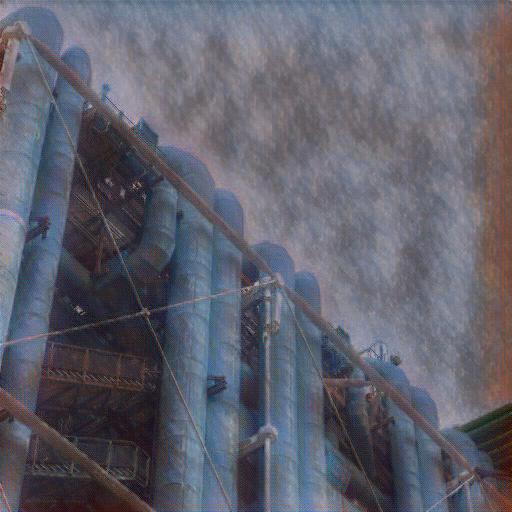
Architecture photography is one of the most demanding subjects for AI style transfer. Buildings are defined by geometric edges, straight lines, and repetitive structural patterns -- the grid of windows on a high-rise, the rhythm of columns on a neoclassical facade, the angular geometry of a Brutalist parking structure. Choose the wrong art style and every window dissolves into noise. Choose the right one and you get something that looks like a genuine Expressionist masterpiece hanging in a gallery. We tested 116 art styles on architecture photography using ArtFID -- the gold standard benchmark for neural style transfer quality -- and ranked every single one. Here are the results.
Architecture photograph transformed using Expressionism style -- Powered by ArtRobot AI
Why Art Style Choice Matters for Architecture
Architecture occupies a unique position in the visual frequency spectrum. The high-frequency details that define buildings -- sharp edges, repeating window grids, precise geometric proportions -- create a demanding test environment for style transfer algorithms. An art style that respects geometric structure will transform a photograph of a Gothic cathedral into something that looks like a Kirchner streetscape. A style that imposes its own low-frequency visual rhythm will turn it into an unrecognizable smear.
This is where ArtFID testing becomes essential. We measured two critical dimensions across all 116 styles: LPIPS (how faithfully the original structural content survives) and FID (how authentically the output captures the target art style). The combined ArtFID score reveals which styles achieve the right balance between artistic transformation and architectural integrity. The spread is dramatic -- from Expressionism's strong 111.82 to scores above 300 for the worst performers.
Many great art movements were themselves deeply concerned with architectural space. Expressionism distorted buildings to convey emotional intensity. De Stijl reduced architecture to pure geometric abstraction. Ukiyo-e rendered Japanese temples with meticulous line-work. These historical relationships play out in measurable ways when neural networks encounter architectural photographs.
Top 5 Art Styles for Architecture
| Rank | Style | ArtFID | Stars | Why It Works |
|---|---|---|---|---|
| 1 | Expressionism | 111.82 | 5 | Angular brushwork amplifies architectural geometry |
| 2 | Impressionism | 149.49 | 5 | Luminous atmosphere softens facades into painterly beauty |
| 3 | Romanticism | 154.66 | 5 | Dramatic light and monumental scale suit buildings |
| 4 | Surrealism | 157.97 | 5 | Dreamlike distortion adds psychological depth to structures |
| 5 | De Stijl | 164.79 | 5 | Geometric abstraction is native to architectural form |
#1: Expressionism (ArtFID 111.82)
Expressionism and architecture share a profound historical connection. From Kirchner's tilted Berlin streetscapes to Lyonel Feininger's crystalline cathedral paintings, Expressionist artists deliberately distorted architectural forms to convey psychological intensity. The neural network leverages this historical DNA -- Expressionist style transfer amplifies the emotional weight of buildings, making ordinary facades feel urgent and alive. The variable, angular strokes align naturally with the angular geometry of architecture, producing results that feel like genuine Expressionist compositions rather than filtered photographs. LPIPS of 0.4337 means strong structural preservation with real artistic transformation.
#2: Impressionism (ArtFID 149.49)
Impressionism brings luminous atmospheric depth to architecture. The movement's emphasis on capturing light at specific moments translates beautifully to built environments -- morning light on a sandstone facade, the warm glow of evening through arched windows. With an LPIPS of 0.3356, Impressionism delivers the strongest structural preservation in the top 5, meaning your building's proportions and defining features survive the transformation with exceptional fidelity. The FID of 110.93 confirms authentic Impressionist visual language in the output.
#3: Romanticism (ArtFID 154.66)
Romanticism treats architecture as something monumental and emotionally charged. Think Turner's burning Houses of Parliament or Friedrich's Gothic ruins against dramatic skies. Applied to your architecture photos, Romanticism wraps buildings in atmospheric turbulence -- light breaks across facades in golden washes, shadows deepen into rich umber pools. The LPIPS of 0.4681 indicates moderate-to-heavy stylization that adds genuine dramatic power without losing the building's identity.
#4: Surrealism (ArtFID 157.97)
Surrealism transforms architecture into something psychologically charged. Buildings become dreamscape elements -- familiar structures rendered with an otherworldly quality that makes the viewer question what they are seeing. Dali painted melting architecture; Magritte placed impossible structures in ordinary settings. The neural network channels this tradition, adding uncanny depth to architectural photographs. LPIPS of 0.5249 means heavier stylization -- choose Surrealism when you want maximum artistic impact over structural accuracy.
#5: De Stijl (ArtFID 164.79)
De Stijl was literally founded on the relationship between art and architecture. Mondrian's geometric abstractions and Rietveld's Schroder House share the same visual DNA -- primary colors, right angles, rhythmic spatial composition. When applied to architecture photography, De Stijl's geometric vocabulary finds a natural home. The style reduces complex facades to their essential compositional elements: vertical and horizontal planes, rhythmic window patterns, the interplay of solid and void.
Before & After Gallery
See the transformations for yourself. Each pair shows the original architecture photograph and the AI result.
Expressionism -- 5 Stars (ArtFID 111.82)
| Original Photo | AI Result |
|---|---|
 |
|
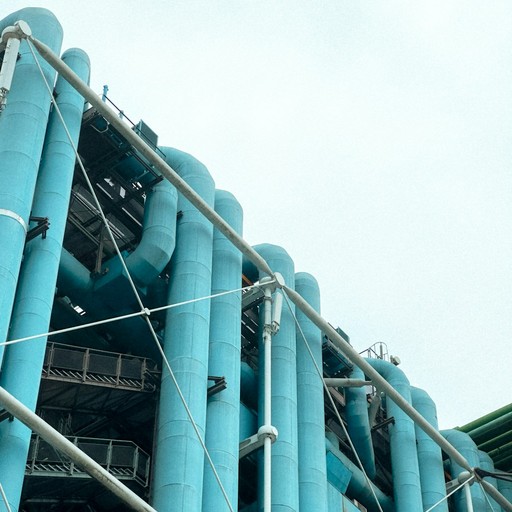
| Source photo | Expressionism -- angular intensity, ArtFID 111.82 |
The Expressionist transformation amplifies architectural presence. Lines become more angular, colors more emotionally saturated, and the building acquires the psychological intensity of a Kirchner streetscape. Every facade becomes a statement, every shadow a dramatic gesture.
Impressionism -- 5 Stars (ArtFID 149.49)
| Original Photo | AI Result |
|---|---|
 |
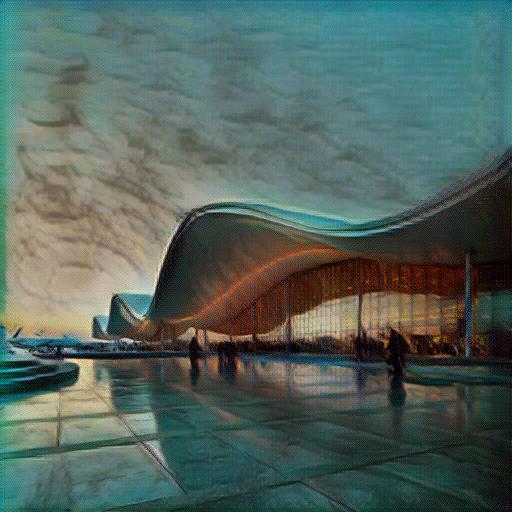 |
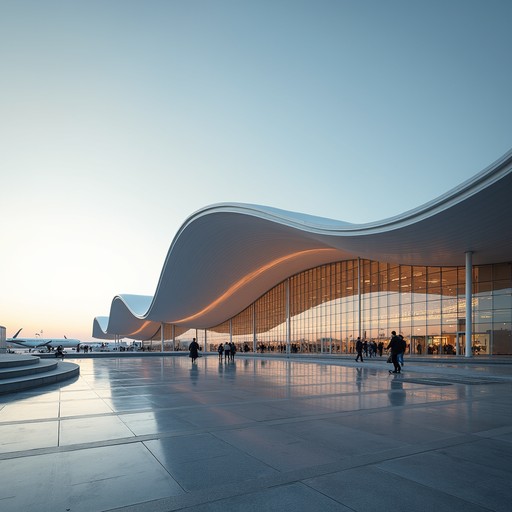
| Source photo | Impressionism -- luminous atmosphere, ArtFID 149.49 |
Impressionism converts rigid architectural geometry into luminous painterly beauty. Window frames soften into confident brushstrokes, brick textures dissolve into warm tonal passages, and the overall composition gains the atmospheric quality of a plein-air study painted on location.
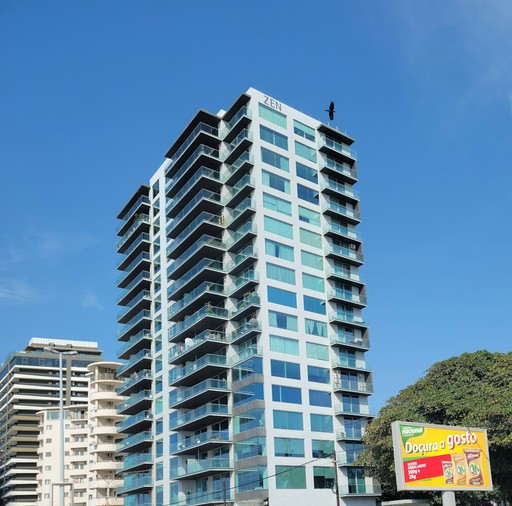
Surrealism -- 5 Stars (ArtFID 157.97)
| Original Photo | AI Result |
|---|---|
 |
 |
| Source photo | Surrealism -- dreamlike distortion, ArtFID 157.97 |
Surrealism transforms architecture into something from a Dali painting. Structural forms remain recognizable but gain an uncanny, dreamlike quality. The heavier stylization (LPIPS 0.5249) means this is the most artistically dramatic option in the top 5 -- ideal when visual impact matters more than photographic fidelity.
Styles to Avoid for Architecture
Not every art style handles architectural geometry well. Based on ArtFID testing, these styles consistently underperform on buildings:
-
High Renaissance (ArtFID 188.96) -- While the Renaissance is deeply architectural in subject matter, the style's smooth tonal gradations and sfumato technique soften the hard geometric edges that define modern architecture photography. Works better on classical buildings than contemporary structures.
-
Baroque (ArtFID 190.93) -- Baroque's dramatic chiaroscuro can overwhelm architectural detail. The deep shadows and golden highlights that look magnificent on portraiture tend to obscure the structural clarity that makes architecture photography compelling.
-
Post-Impressionism (ArtFID 193.42) -- The heavy impasto and bold color patches of Post-Impressionism compete with architectural detail rather than complementing it. Window grids and facade textures dissolve into thick brushwork.
-
Classicism (ArtFID 205.49) -- Despite its architectural subject matter, Classicism's idealized smoothness strips away the textural interest that makes real buildings photographically engaging. The result tends to feel flat.
General rule: Styles that operate at low visual frequencies -- Color Field, Fauvism, Naive Art -- conflict with architecture's high-frequency geometric detail. Styles that respect or amplify geometric structure (Expressionism, De Stijl, Impressionism) produce dramatically better results.
How to Apply Art Styles to Architecture Photos
Step 1: Choose Your Photo
Upload your architecture photograph to ArtRobot. For best results, shoot buildings with clear geometric silhouettes against simple skies. Full-facade shots outperform extreme close-ups because the neural network can read the complete structural logic of the building.
Step 2: Select an Art Style
Browse the art style catalog and choose based on the ArtFID rankings above. Start with Expressionism (ArtFID 111.82) for the highest quality, or try De Stijl for pure geometric abstraction that feels native to architectural form.
Step 3: Download Your Art
Generate your styled architecture image in seconds. Download in Standard (1024px) for social media, HD (2048px) for presentations, or Ultra HD (4096px) for print-quality output. ArtRobot gives you 3 free style transfers with no signup required.
Try Architecture Style Transfer Free on ArtRobot ->
Photography Tips for Better Architecture Style Transfer
Based on our ArtFID testing, these practical tips will maximize your results:
-
Shoot with clear geometric silhouettes. The top styles all perform best when the building's outline is sharply defined against a simple sky background. Let the style add its own atmospheric complexity.
-
Include the full facade. Architecture style transfer works best when the neural network can read the complete structural logic -- how windows relate to walls, how floors stack, how the roofline meets the sky.
-
Use dramatic directional light for Expressionist styles. Hard shadows create angular contrasts that Expressionism amplifies beautifully. Late afternoon sun raking across a facade produces the kind of chiaroscuro that transforms into painterly gold.
-
Capture repetitive patterns. Rows of windows, arcades of arches, rhythmic column spacing -- these repetitive architectural elements give style transfer algorithms rich visual material. Expressionism turns window grids into angular energy; De Stijl transforms them into Mondrian-esque compositions.
-
Photograph at twilight. The combination of artificial interior light and fading natural light creates complex color relationships that Romantic and Impressionist styles handle with extraordinary sensitivity.
FAQ
What is the best art style for architecture photos?
Based on our ArtFID testing of 116 styles, Expressionism ranks highest for architecture with an ArtFID score of 111.82. Its angular brushwork naturally complements the geometric structure of buildings. Impressionism (149.49) and Romanticism (154.66) are excellent alternatives that bring luminous atmosphere and dramatic emotional power, respectively.
Why do some art styles work better for architecture than others?
Architecture photography has a high-frequency visual profile -- geometric edges, straight lines, repetitive patterns. Art styles that respect these structural elements while adding artistic texture perform well. Styles that impose their own low-frequency visual rhythm -- like Color Field or Fauvism -- override architectural geometry and produce poor results. The best performers operate at a frequency that complements rather than competes with built-environment detail.
Can I use multiple styles on the same architecture photo?
Absolutely. Many photographers use ArtRobot to create series showing the same building in different artistic styles -- a Gothic cathedral in Expressionism, De Stijl, and Surrealism, for example. This approach is popular for social media content, architectural presentations, and gallery exhibitions exploring the relationship between art and built space.
What makes a good architecture photo for style transfer?
Photos with clear geometric silhouettes, strong directional lighting, and uncluttered backgrounds produce the best results. Full-facade shots outperform extreme close-ups because the neural network can read the complete structural logic of the building. Repetitive elements like window grids, arcades, and column rows transform particularly well.
How accurate are the ArtFID scores?
ArtFID (Art Frechet Inception Distance) is the gold standard benchmark for neural style transfer quality, combining LPIPS (content preservation) and FID (style authenticity) into a single score. We tested every style on multiple architecture photographs and averaged the results. Lower scores mean better quality. The rankings are consistent and reproducible -- Expressionism's 111.82 reliably outperforms lower-ranked styles across different buildings and lighting conditions.
Related Guides
- Architecture Style Transfer Guide -- Complete guide with full 116-style rankings
- Expressionism Style Transfer -- Deep dive into the #1 architecture style
- Impressionism Style Transfer -- Luminous atmospheric transformations
- Romanticism Style Transfer -- Dramatic monumental architecture art
- Surrealism Style Transfer -- Dreamlike architectural distortion
- De Stijl Style Transfer -- Geometric abstraction for buildings
Try It Yourself
Expressionism's ArtFID of 111.82 makes it the clear champion for architecture, but the top 5 offers remarkable range -- from Impressionism's luminous atmosphere to De Stijl's geometric purity. Every building tells a different story depending on the style you choose.
Start Your Free Architecture Style Transfer on ArtRobot ->
Explore More
Try It Yourself
Transform your own photos into stunning paintings with 80+ artist styles. Free to start.