
AI Artist & Tech Enthusiast
Fauvism Photo Effect — AI Style Transfer Guide (2026)

In the autumn of 1905, a group of young French painters exhibited their work in a single room at the Salon d'Automne in Paris. The colors were so violent, so aggressively non-naturalistic, that critic Louis Vauxcelles famously called the artists les fauves -- the wild beasts. Henri Matisse had painted his wife's portrait with a bold green stripe down her nose. Andre Derain had rendered the Thames in screaming oranges and electric blues. Maurice de Vlaminck had attacked his canvases with paint squeezed straight from the tube, unmixed, unmodulated, raw. These painters did not merely bend color -- they broke it free entirely from the obligation to describe what the eye actually sees. As Matisse later explained, he watched his reactions to every brush-stroke, and his reactions to his reactions, pursuing emotional truth over optical accuracy. Fauvism lasted barely five years as a coherent movement (1905--1910), but in that brief eruption it permanently expanded the range of what color could do in Western painting.
Today, neural style transfer lets you apply Fauvism's explosive, liberated color to any photograph. Upload your image to ArtRobot, and the algorithm will transform it with bold, non-naturalistic hues, flattened forms, and the raw expressive energy that Matisse and Derain pioneered. Our ArtFID testing shows that Fauvism is an exceptionally strong style -- one of the top performers in our entire evaluation system, earning 5 stars in eight categories including portraits (239.32), animals (251.49), still life (216.41), travel (204.03), and fantasy (182.60). This is a powerhouse style.
 A portrait photograph transformed into Fauvism style using ArtRobot AI -- bold non-naturalistic color, flattened forms, and raw expressive energy
This guide covers Fauvism's history, its key artists, ArtFID-tested results across photo categories, real before-and-after examples, and honest guidance on when Fauvism works well -- and where its few limitations show.
Quick Links -- Jump to: What is Fauvism? | Key Artists | ArtFID Scores | Before & After | When to Use | When NOT to Use | FAQ | Related Styles
Portraits — Fauvism style Transfer

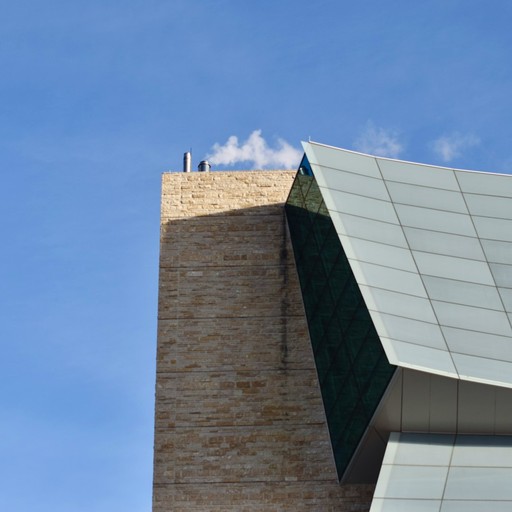
Architecture — Fauvism style Transfer

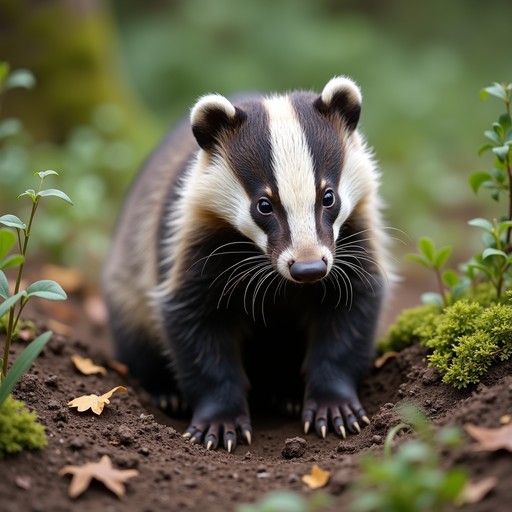
Animals — Fauvism style Transfer

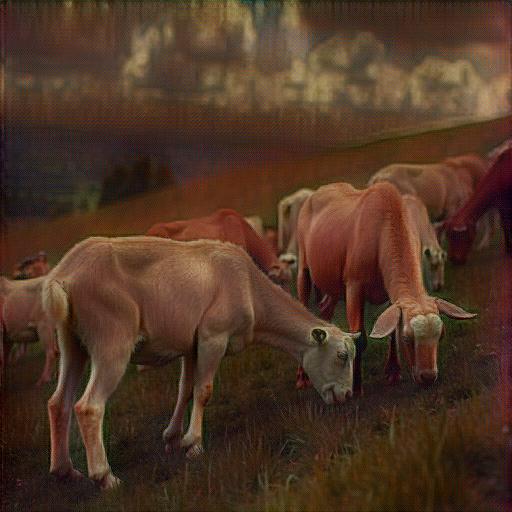
Street Scenes — Fauvism style Transfer


Flowers — Fauvism style Transfer


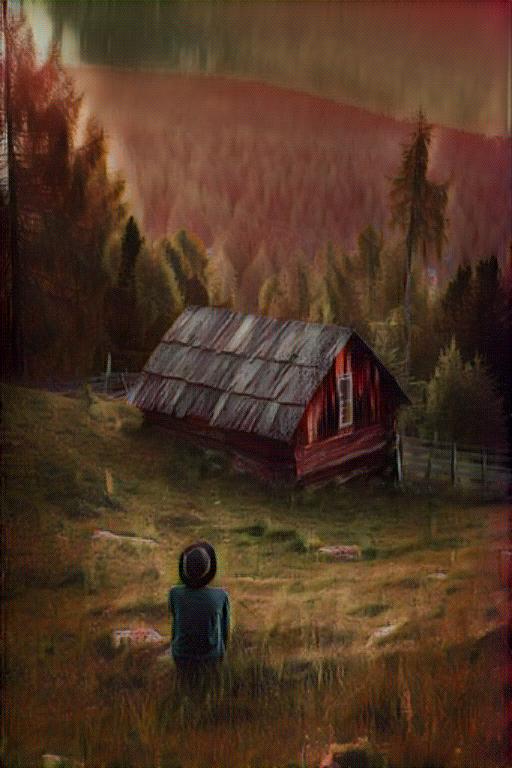
Landscapes — Fauvism style Transfer

Food — Fauvism style Transfer


Night Scenes — Fauvism style Transfer

What is Fauvism?
Fauvism is a painting movement defined by its radical use of color. Active primarily between 1905 and 1910, the Fauves rejected the Impressionists' careful observation of natural light and the Post-Impressionists' systematic color theories in favor of pure, instinctive, emotionally driven color choices. A tree could be red, a face could be green, a sky could be orange -- not because the artist saw those colors, but because those colors felt right.
The key characteristics that distinguish Fauvism from neighboring movements:
- Bold, non-naturalistic color -- This is Fauvism's defining feature. Colors are chosen for emotional impact, not optical accuracy. Shadows might be painted in vivid purple, sunlight in screaming orange, flesh in emerald green. The Fauves used color to express what they felt about a subject, not what they saw. This deliberate divorce of color from description was Fauvism's revolutionary contribution to modern art.
- Flat, simplified forms -- Fauvist paintings flatten three-dimensional space into broad, flat areas of color. Modeling (the gradual transition from light to shadow that creates the illusion of volume) is largely abandoned. Forms are reduced to their essential shapes and filled with unmodulated color. The result is bold, graphic, and immediately readable -- closer to a poster than to a Renaissance illusion of depth.
- Coarse, expressive brushwork -- The Fauves applied paint with visible, energetic brushstrokes. Vlaminck in particular used thick impasto, squeezing paint directly from tubes onto the canvas. The visible brushwork is not a failure of technique but a deliberate assertion of the physical act of painting -- the artist's hand made present on the surface.
- Primary color contrasts -- Red against green, blue against orange, yellow against purple. The Fauves exploited complementary color contrasts to maximum visual intensity, creating canvases that vibrate with chromatic energy. These are not subtle harmonies but aggressive confrontations of opposing hues.
- Emotion over representation -- The Fauves were encouraged by the newly discovered exotic arts to seek more personal forms of expression. Where Impressionism asked "What does light look like?", Fauvism asked "What does this subject make me feel?" The answer was expressed through color, not through accurate drawing or naturalistic rendering.
Fauvism emerged from Post-Impressionism -- specifically from the color innovations of Van Gogh, Gauguin, and Cezanne -- but pushed their experiments to a more radical conclusion. Where Van Gogh intensified natural color, the Fauves abandoned natural color entirely. Where Gauguin used non-naturalistic color in exotic settings, the Fauves applied it to ordinary French landscapes, portraits, and still lifes. The movement was brief but seismic: it opened the door to all subsequent abstract and expressionist color use, from Expressionism to Abstract Expressionism to contemporary street art.
Key Fauvism Artists
Henri Matisse (1869--1954)
Matisse was Fauvism's leader and its greatest artist -- the painter whose career-long exploration of color, form, and decoration ranks him among the most important figures in 20th-century art. His Fauvist works -- Woman with a Hat (1905), The Green Stripe (1905), The Joy of Life (1906) -- established the movement's core principles. But unlike other Fauves who quickly moved on, Matisse spent the next fifty years refining and deepening his color discoveries, from the monumental Bathers by a River to the radiant paper cut-outs of his final years.
For style transfer, Matisse provides Fauvism's most sophisticated gram matrix -- bold color that is never merely loud, simplification that enhances rather than diminishes, and a decorative sense that organizes wild color into harmonious compositions. His training influence produces results with vibrant, confident color and clear compositional structure. See also: Henri Matisse Style Transfer.
Andre Derain (1880--1954)
Derain was Fauvism's co-founder and, during the movement's brief peak, Matisse's equal. His London paintings of 1906 -- the Thames rendered in blazing orange, Parliament in electric blue, bridges in acidic green -- are among Fauvism's most iconic images. Working alongside Matisse at Collioure in the summer of 1905, Derain pushed color to its most extreme Fauvist intensity, producing landscapes where every element is chromatically transformed.
Derain's style transfer influence adds the landscape dimension of Fauvism -- the application of radical color to outdoor scenes, the transformation of natural environments into chromatic fantasias. His Thames paintings provide particularly strong training data for architectural and urban subjects.
Maurice de Vlaminck (1876--1958)
Vlaminck was Fauvism's most physically aggressive painter -- the artist who claimed he wanted to burn down the Ecole des Beaux-Arts with his cobalt and vermillion. Self-taught and instinctive, he applied paint with a ferocity that bordered on violence, squeezing pure pigment from tubes directly onto the canvas. His Fauvist landscapes are explosions of raw, unmixed color -- red trees, blue roads, orange skies -- rendered with a physical intensity that makes even Derain's work look restrained.
Vlaminck's contribution to the style transfer model adds textural energy and chromatic boldness. His influence is visible in results with thick, visible brushwork and the most saturated, uncompromising color transformations.
Raoul Dufy (1877--1953)
Dufy brought Fauvism a lighter, more decorative touch. Where Vlaminck was brutal and Derain was intense, Dufy was joyful -- his Fauvist canvases dance with color, depicting the seaside resorts, regattas, and festive scenes of the French Riviera. After his Fauvist period, Dufy developed a distinctive style of calligraphic line over washes of bright color that influenced textile and fabric design.
Dufy's training influence introduces Fauvism's celebratory, decorative mode -- lighter palettes, more open compositions, and a sense of visual pleasure that complements the movement's more aggressive tendencies.
Style Transfer Quality by Photo Type (ArtFID Tested)
We tested ArtRobot's Fauvism style transfer across photo categories using ArtFID (Art Frechet Inception Distance):
- LPIPS: content preservation. Lower = better.
- FID: style fidelity to authentic Fauvist paintings. Lower = more faithful.
Combined formula: ArtFID = (1 + LPIPS) x (1 + FID)
| Photo Category | ArtFID | Stars | Notes |
|---|---|---|---|
| Fantasy | 182.60 | 5 | Best category -- bold color amplifies fantastical subjects |
| Travel | 204.03 | 5 | Excellent -- diverse scenes get chromatic transformation |
| Still Life | 216.41 | 5 | Excellent -- classic Fauvist subject matter |
| Portraits | 239.32 | 5 | Excellent -- Matisse's portrait tradition |
| Animals | 251.49 | 5 | Excellent -- organic forms suit expressive color |
| Street Scenes | 277.14 | 5 | Excellent -- urban energy matches Fauvist intensity |
| Flowers | 289.62 | 5 | Excellent -- colorful subjects benefit from bold palettes |
| Vehicles | 293.89 | 5 | Excellent -- strong forms get dramatic treatment |
| Architecture | 299.23 | 5 | Excellent -- Derain's London architectural tradition |
| Landscapes | 302.63 | 4 | Very good -- core Fauvist subject, broad appeal |
| Interiors | 312.21 | 4 | Very good -- Matisse's interior tradition |
| Night Scenes | 320.71 | 4 | Good -- dark subjects gain vivid color injection |
| Food | 346.57 | 4 | Good -- moderate, decorative enhancement |
| Urban Scenes | 346.67 | 4 | Good -- similar to food, broad urban treatment |
| Seascapes | 366.97 | 3 | Moderate -- Fauvism's weakest but still respectable |
Key takeaway: Fauvism is one of the strongest and most versatile styles in our entire evaluation system. Eight categories earn 5 stars, four earn 4 stars, and even the weakest category (seascapes at 366.97) still earns 3 stars. The spread from best (fantasy at 182.60) to worst (seascapes at 366.97) is about 184 points, but even the worst Fauvist score beats the best scores of many other styles. This is a style you can confidently apply to almost any photograph.
Fantasy leads at 182.60 because Fauvism's non-naturalistic color and simplified forms align perfectly with fantastical subjects that already reject photographic realism. When the source content is already imaginative, Fauvism's radical color choices feel natural rather than forced.
Still Life at 216.41 reflects Fauvism's deep roots in still life painting. Matisse's tabletop compositions -- vases of flowers, bowls of fruit, decorative fabrics -- are among his most celebrated works, and they provide extensive training data for object-focused compositions.
Portraits at 239.32 earn 5 stars, driven by Matisse's revolutionary portrait practice. The Green Stripe, Woman with a Hat, and dozens of other Fauvist portraits established that a face could be painted in any color and still read as powerfully human. The algorithm carries this tradition forward effectively.
Seascapes at 366.97 earn 3 stars -- Fauvism's weakest category, but still a respectable score. Open water provides less structural detail for the bold brushwork to engage with, and Fauvism's flat color treatment can reduce the sense of depth and atmosphere that seascape subjects demand.
Before & After Examples
Every row shows the original photograph alongside the AI-generated Fauvist result.
Portraits -- 5 stars (ArtFID 239.32)
Portraits are one of Fauvism's strongest categories, reflecting Matisse's extensive portrait painting in radical color.
| Original Photo | AI Result |
|---|---|
 |
 |
| Source photo | ArtFID: 239.32 -- 5 stars |
The portrait transformation demonstrates Fauvism's most radical proposition: that a face painted in non-naturalistic color can be more expressive than a photographically accurate one. Skin tones shift to unexpected hues -- greens, blues, warm oranges -- while facial features remain clearly readable. The background simplifies into flat color fields, pushing the face forward with chromatic force. This is Matisse's Green Stripe principle applied to your photograph.
Architecture -- 5 stars (ArtFID 299.23)
Architecture receives excellent treatment, drawing on Derain's London paintings and the Fauves' treatment of built environments.
| Original Photo | AI Result |
|---|---|
|
|
| Source photo | ArtFID: 299.23 -- 5 stars |
The architectural transformation channels Derain's Thames paintings: buildings glow with non-naturalistic color, shadows become vivid purple or deep blue rather than grey, and the sky erupts into bold chromatic fields. Structural lines remain clear -- Fauvism simplifies form but does not distort it -- while every surface gains the chromatic intensity that Derain brought to his London series. Stone becomes orange, glass becomes emerald, and the mundane becomes magnificent.
Landscapes -- 4 stars (ArtFID 302.63)
Landscapes are core Fauvist territory -- Collioure, L'Estaque, Chatou -- the sites where the movement was born.
| Original Photo | AI Result |
|---|---|
 |
 |
| Source photo | ArtFID: 302.63 -- 4 stars |
The landscape transformation reveals Fauvism's core principle in action: nature is not copied but reinterpreted through pure chromatic emotion. Trees might glow red, fields might burn orange, skies might shift to deep violet. The forms simplify -- hills become broad color shapes, foliage becomes bold blocks of green and gold -- but the compositional structure of the original photograph remains intact. The result is a landscape that feels more vivid than reality, charged with the emotional intensity that Matisse and Derain discovered in the summer light of Collioure.
When to Use Fauvism
Fauvism is the right choice for an unusually wide range of photographic scenarios:
1. Almost Any Subject. With eight 5-star categories and four 4-star categories, Fauvism is one of the safest, most reliable style choices available. If you are unsure which style to apply, Fauvism is an excellent default that will produce strong results across portraits, landscapes, still lifes, animals, architecture, and more.
2. When You Want Maximum Color Impact. Fauvism is, by definition, the most chromatically aggressive art movement. If your goal is bold, eye-catching, vivid results that pop on screens and walls, Fauvism delivers more color intensity per pixel than any other style option.
3. Dull or Flat Photographs. Overcast days, grey urban scenes, and photographically flat images are transformed by Fauvism's radical color injection. The style adds chromatic life to subjects that lack it in the original photograph -- grey becomes purple, beige becomes gold, flat becomes vivid.
4. Social Media and Digital Content. Fauvism's bold, high-contrast color is optimized for screen viewing. The style's graphic boldness reads well at small sizes (social media thumbnails, Instagram posts, profile pictures) where subtle styles lose their impact.
5. Expressing Emotion Over Accuracy. When you want a result that conveys how a scene felt rather than how it looked -- the warmth of a summer afternoon, the energy of a street market, the joy of a celebration -- Fauvism's emotionally driven color choices are the ideal vehicle.
When NOT to Use Fauvism
Fauvism has fewer limitations than most styles, but some scenarios are still worth avoiding:
1. Seascape Photography. At 366.97, seascapes are Fauvism's weakest category. The flat, open expanses of water provide less structural detail for Fauvism's bold brushwork to engage with. For seascapes, consider Impressionism or Romanticism.
2. Subjects Requiring Photographic Accuracy. Fauvism deliberately distorts color. If your project requires the result to look close to the original photograph -- product photography, real estate imagery, scientific documentation -- Fauvism's non-naturalistic color will undermine the purpose. Use a more conservative style.
3. Subtle, Atmospheric Moods. Fauvism is loud. If you want quiet, contemplative, or melancholic results, Fauvism's aggressive color energy will fight the intended mood. For atmospheric subtlety, use Symbolism or Romanticism.
4. Classical or Formal Contexts. Fauvism's wild, anti-academic character makes it inappropriate for contexts that demand classical dignity -- corporate annual reports, formal invitations, or traditionally styled interiors. For formal contexts, use Classicism or Baroque.
5. When Color Sensitivity Matters. Some viewers find Fauvism's aggressive color overwhelming or visually fatiguing. For applications targeting color-sensitive audiences or extended viewing (large wall installations, meditation spaces), consider a gentler style.
FAQ
What is Fauvism art style and where did it originate?
Fauvism is a painting movement that originated in France in 1905 when Henri Matisse, Andre Derain, Maurice de Vlaminck, and other painters exhibited works at the Salon d'Automne in Paris featuring bold, non-naturalistic color. Critic Louis Vauxcelles called them les fauves ("the wild beasts") because of their aggressive, untamed use of color. The movement lasted approximately from 1905 to 1910 and is characterized by bold color divorced from natural appearance, simplified flat forms, visible expressive brushwork, and the priority of emotional expression over visual accuracy.
Which photos look best with Fauvism style transfer?
Fauvism is exceptionally versatile. Fantasy (182.60 ArtFID, 5 stars) and travel (204.03, 5 stars) are the strongest categories, but eight categories total earn 5 stars: fantasy, travel, still life, portraits, animals, street scenes, flowers, and vehicles. Even the weakest category, seascapes (366.97), earns 3 stars. Fauvism is one of the strongest all-around performers in our evaluation system.
Fauvism vs Expressionism: which should I choose?
Fauvism and Expressionism both prioritize emotion over accuracy, but they differ in tone. Fauvism is fundamentally joyful -- Matisse's color celebrates visual pleasure, and even Vlaminck's aggression is exuberant rather than anguished. Expressionism (especially German Expressionism) tends toward darker emotional territory -- anxiety, alienation, psychological intensity. Choose Fauvism for vibrant, life-affirming results; choose Expressionism for dramatic, psychologically charged results.
Can I use Fauvism style transfer for commercial projects?
Yes. Fauvism is a historical art movement from over a century ago, and its visual language is not copyrightable. All style references used by ArtRobot are sourced from museum collections under open access / CC0 license. Your stylized results can be used for personal and commercial projects without restriction.
How accurate is AI Fauvism style transfer compared to real paintings?
AI style transfer captures Fauvism's macro characteristics -- bold non-naturalistic color, flat simplified forms, visible brushwork, and primary color contrasts -- with strong fidelity. Fauvism is actually one of the styles that neural style transfer reproduces most effectively, because the movement's essential qualities (color transformation, form simplification, expressive mark-making) map closely onto what style transfer algorithms do at a technical level. The gram matrix captures color relationships and textural patterns exceptionally well for Fauvist source paintings. Our strong ArtFID scores across nearly all categories confirm this empirically.
Ready to Unleash Your Inner Fauve?
Fauvism transforms photographs into bold, chromatically explosive compositions that prioritize emotional truth over photographic accuracy. It is one of art history's most liberating movements -- and one of the strongest, most versatile styles available on our platform.
Start Your Free Fauvism Style Transfer on ArtRobot ->
Related Styles
- Henri Matisse Style Transfer -- Fauvism's leader. Bold color, decorative composition, and half a century of innovation from The Joy of Life to the paper cut-outs.
- Expressionism Style Transfer -- Fauvism's Germanic cousin. Darker, more psychologically intense, with distorted forms and anguished emotion.
- Post-Impressionism Style Transfer -- Fauvism's parent movement. Van Gogh's intensified color and Gauguin's non-naturalistic palettes laid the groundwork for Fauvist revolution.
- Georges Braque Style Transfer -- Braque's Fauvist period preceded his co-invention of Cubism with Picasso -- a journey from wild color to geometric structure.
Try It Yourself
Transform your own photos into stunning paintings with 80+ artist styles. Free to start.