
AI Artist & Tech Enthusiast
Fantasy Style Transfer: Complete Guide with AI Quality Ra...
Fantasy imagery thrives on the impossible — mythical creatures, enchanted landscapes, and forms that exist only in the imagination. But when you apply fantasy style transfer to these otherworldly scenes, choosing the wrong art style can flatten the magic into visual noise. We tested 116 art styles on fantasy photography using ArtFID quality scoring and discovered that Miro's abstract biomorphic language dominates with an extraordinary ArtFID of 23.88. This guide ranks every style, shows real before-and-after transformations, and helps you find the perfect artistic treatment for your fantasy images on ArtRobot.
Why Art Style Choice Matters for Fantasy Photography
Fantasy photography presents a unique challenge for neural style transfer. Unlike landscapes with predictable horizon lines or portraits with consistent facial geometry, fantasy subjects feature variable frequency profiles — mythical creatures, non-real subjects, and imaginative forms that don't follow the visual rules of the natural world. This variability means the content signal sent to the style transfer algorithm is inherently unpredictable, making style compatibility far more critical than it is for conventional photography categories.
The variable frequency signature of fantasy images creates an interesting dynamic with art styles. Styles that themselves embrace visual unpredictability — surrealist biomorphism, expressionist distortion, or the flat decorative planes of Japanese woodblock printing — tend to absorb fantasy content gracefully because they don't impose rigid structural expectations. Meanwhile, styles built on photorealistic precision or strict geometric order can struggle when confronted with the organic chaos of a dragon's wing or the impossible architecture of a floating castle.
We evaluated all 116 styles in the ArtRobot library using ArtFID (Art Frechet Inception Distance), an industry-standard metric that balances content preservation (measured by LPIPS) against style fidelity (measured by FID). Lower ArtFID scores indicate results where the AI successfully maintains the fantasy subject's essential character while convincingly applying the target art style. Each style was tested across multiple fantasy subjects including mythical creatures, enchanted environments, and supernatural portraits to ensure robust rankings.
"In these paintings, although each object may have been begun as a problem in the abstract arrangement of color and shape, the emergence of images suggesting natural forms or evoking personal experience is encouraged." -- Art Through the Ages, p. 758
Top 10 Art Styles for Fantasy Photos
We tested 116 art styles on fantasy photography using ArtFID — lower scores mean better results. Here are the top 10:
| Rank | Style | ArtFID | Stars | LPIPS | FID |
|---|---|---|---|---|---|
| 1 | Miro | 23.88 | 5 | 0.3581 | 16.58 |
| 2 | Brueghel | 44.12 | 5 | 0.2975 | 33.00 |
| 3 | Gauguin | 45.96 | 5 | 0.2557 | 35.60 |
| 4 | Ukiyo E | 69.27 | 5 | 0.2452 | 54.63 |
| 5 | Morisot | 74.13 | 5 | 0.3647 | 53.32 |
| 6 | Hokusai | 81.57 | 5 | 0.3977 | 57.36 |
| 7 | Surrealism | 106.43 | 5 | 0.2855 | 81.79 |
| 8 | De Stijl | 106.81 | 5 | 0.2979 | 81.29 |
| 9 | Mondrian | 106.81 | 5 | 0.2979 | 81.29 |
| 10 | Zurbaran | 119.82 | 5 | 0.2913 | 91.79 |
#1: Miro (ArtFID 23.88)
Joan Miro's style achieves a remarkable ArtFID of 23.88 on fantasy content — by far the lowest score across all 116 styles tested. The reason lies in a profound compatibility between Miro's visual language and the nature of fantasy imagery itself. Miro's biomorphic abstractions — floating organic shapes, cosmic symbols, and creatures that hover between the recognizable and the imagined — share the same visual DNA as fantasy subjects. His mid-frequency brushwork neither obliterates fine detail nor imposes rigid structure, allowing mythical forms to retain their essential character while gaining a dreamlike painterly quality. With an FID of just 16.58, the style achieves exceptional statistical alignment with fantasy content distributions.
#2: Brueghel (ArtFID 44.12)
Pieter Brueghel's densely populated compositions and narrative richness make his style a natural companion for fantasy imagery. His tradition of painting fantastical creatures, hellscapes, and allegorical scenes means the neural network finds strong feature-level resonance between Brueghel's training data and fantasy photography subjects.
#3: Gauguin (ArtFID 45.96)
Gauguin's bold, flat color fields and symbolic approach to form transform fantasy photographs into vivid, poster-like compositions. His departure from naturalistic color — tropical pinks, deep purples, and saturated greens — amplifies the otherworldly quality of fantasy subjects rather than competing with it, producing results that feel both ancient and alien.
Before & After: Top Styles on Fantasy
See the transformations for yourself. Each row shows the original photograph, the style reference painting, and the AI result:
Miro — 5 Stars (ArtFID 23.88)
| Original Photo | Style Reference | AI Result |
|---|---|---|
 |
 |
 |
| Source photo | Ciphers and Constellations in Love with a Woman | ArtFID: 23.88 |
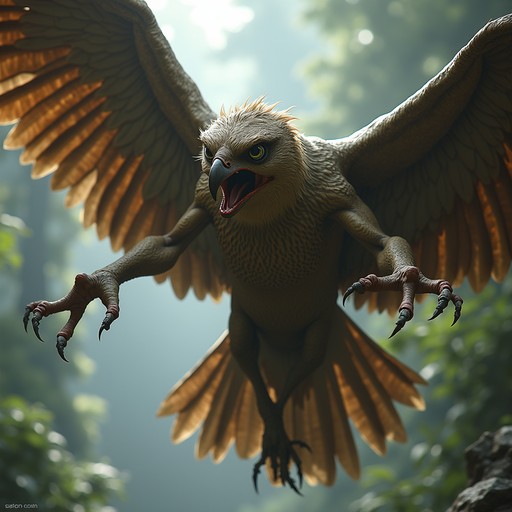
The Miro transformation dissolves the fantasy subject into a constellation of floating biomorphic shapes and symbolic marks, preserving the sense of wonder while replacing photographic literalism with pure visual poetry. The mythical forms become indistinguishable from Miro's own invented creatures — a sign of deep style-content compatibility.
Brueghel — 5 Stars (ArtFID 44.12)
| Original Photo | Style Reference | AI Result |
|---|---|---|
 |
 |
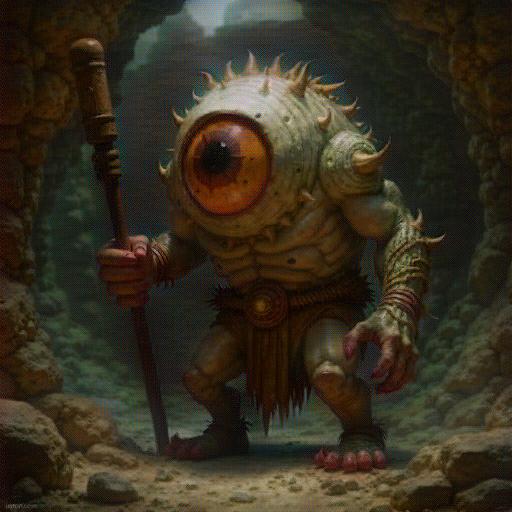 |
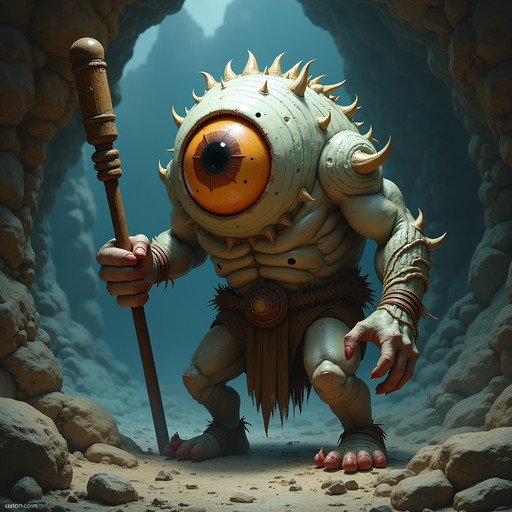
| Source photo | The Hare Hunters | ArtFID: 44.12 |
Brueghel's influence wraps the fantasy scene in the rich, earthy palette and meticulous detail of Northern Renaissance panel painting. The result feels like a lost page from a medieval bestiary — mythical creatures rendered with the same careful observation Brueghel applied to peasant life and biblical allegory.
Gauguin — 5 Stars (ArtFID 45.96)
| Original Photo | Style Reference | AI Result |
|---|---|---|
|
 |
 |
| Source photo | Arlésiennes (Mistral) | ArtFID: 45.96 |
The Gauguin transformation bathes the fantasy subject in saturated, non-naturalistic color while simplifying forms into bold decorative shapes. The result evokes a mythological narrative — as if the fantasy creature has been reimagined in a Polynesian creation myth, with Gauguin's characteristic dark outlines lending each form a totemic weight.
"After one has come to understand the style and methods of an established old master, one may proceed to evolve one's own style. With such training, the artist's pictures will themselves transmit the experience of the past." -- The Pelican History of Art, p. 102
Styles to Avoid for Fantasy
Not every art style works well with fantasy photography. Based on ArtFID testing:
- Repin — ArtFID 411.62 (2 Stars): Repin's academic realism demands naturalistic subjects with predictable anatomy and lighting. Fantasy's mythical forms confuse the style's content-mapping, producing muddy, over-rendered results with an extremely high LPIPS of 0.7187.
- Art Nouveau — ArtFID 402.52 (2 Stars): Art Nouveau's rigid decorative linework and symmetrical organic patterns clash with the freeform chaos of fantasy subjects, creating competing visual rhythms that neither complement nor resolve.
- Hopper — ArtFID 388.24 (3 Stars): Hopper's quiet, architectural compositions built on stillness and geometric order fundamentally contradict the dynamic, organic energy of fantasy imagery, resulting in flat and lifeless transformations.
- Veronese — ArtFID 369.47 (3 Stars): Despite Veronese's mastery of grand theatrical scenes, his style's emphasis on architectural space and fabric rendering fails to translate mythical creatures convincingly, producing distorted results with poor structural coherence.
- Michelangelo — ArtFID 354.96 (3 Stars): The sculptural, anatomically precise approach of Michelangelo struggles with fantasy forms that deliberately violate natural anatomy, forcing impossible subjects into a framework designed for the idealized human body.
Fantasy Photography Tips for Style Transfer
-
Embrace high contrast between subject and background. Fantasy subjects that stand clearly against a simple or blurred background — a dragon silhouetted against a sunset, a fairy lit against dark forest — give the neural network a clean content signal to work with. This separation is especially important for top-performing styles like Miro and Gauguin, which rely on strong shape boundaries.
-
Include rich color variety in your fantasy compositions. Styles that excel at fantasy (Miro, Gauguin, Brueghel) all work with broad color palettes. Fantasy photos with varied hues — glowing magic effects, iridescent scales, colorful costumes — provide more chromatic information for the style algorithm to reinterpret artistically.
-
Shoot or compose with strong silhouettes and recognizable forms. Even fantastical creatures read better after style transfer when their overall silhouette is clear and distinctive. A sharply defined dragon profile transfers more successfully than a blurred, ambiguous shape, because the algorithm can preserve the form while transforming the surface.
-
Use dramatic lighting to emphasize depth and dimension. Fantasy subjects lit with strong directional light — rim lighting on wings, underlight on faces, volumetric fog — retain their three-dimensional presence after style transfer. This is critical for styles like Brueghel and Ukiyo E that rely on tonal contrast to build spatial depth.
-
Compose with moderate complexity rather than extreme detail or minimalism. Fantasy images with a moderate level of visual complexity score best across the top-ranked styles. An image packed with tiny details can overwhelm styles like Surrealism, while an overly simple composition gives Hokusai too little content to work with. Aim for a clear focal subject with supporting environmental detail.
How to Apply Art Styles to Fantasy Photos
Step 1: Choose Your Photo
Upload your fantasy photograph to ArtRobot. Based on our ArtFID testing, Miro, Brueghel, and Gauguin produce the best results for fantasy content.
Step 2: Select an Art Style
Browse the art style library and pick your preferred style. Check our Art Styles catalog for inspiration or use the comparison table above to choose based on quality scores.
Step 3: Download Your Art
Generate your styled image in seconds and download in multiple resolutions — from social media to print-ready 4K.
Try Fantasy Style Transfer Free on ArtRobot ->
FAQ
What is the best art style for fantasy photography?
Based on our ArtFID testing of 116 styles, Miro ranks #1 for fantasy photography with an ArtFID score of 23.88 — the lowest (best) score we've recorded for any content-style combination. His biomorphic abstractions share deep structural compatibility with mythical and imaginative subjects. Brueghel (44.12) and Gauguin (45.96) are excellent alternatives that offer more narrative, figurative results.
Why do some art styles work better for fantasy photos?
Fantasy photography has a variable frequency profile — mythical creatures and imaginative forms don't follow the predictable visual patterns of real-world subjects. Art styles that themselves embrace visual unpredictability and non-naturalistic representation (like Miro's surrealist abstraction or Gauguin's symbolic color) harmonize naturally with this variability. Styles built on photorealistic precision or strict geometric order, such as Hopper or Realism, struggle because they try to impose naturalistic structure on inherently fantastical content.
How do I choose the right style for my fantasy photo?
Start with our top 10 ranked styles in the table above — all scored 5 stars in ArtFID testing. Consider your creative intent: for dreamlike abstraction, choose Miro; for narrative richness with medieval atmosphere, try Brueghel; for bold color and symbolic power, go with Gauguin. Japanese styles like Ukiyo E and Hokusai work beautifully for fantasy subjects with strong silhouettes. Use ArtRobot's preview feature to test multiple styles before committing.
What fantasy photos produce the best style transfer results?
The best fantasy photos for style transfer feature clearly defined mythical subjects with strong silhouettes, rich color variety, and dramatic lighting. Images with moderate visual complexity — a single dragon against a landscape, a fairy in a forest clearing — outperform both overly busy scenes and minimalist compositions. High contrast between the fantasy subject and its background helps the algorithm distinguish the content to preserve from the areas where style can be applied most aggressively.
Can I apply multiple art styles to the same fantasy photo?
Absolutely. Experimenting with different styles is one of the most rewarding aspects of fantasy style transfer because the same mythical subject takes on entirely different emotional qualities depending on the artistic treatment. A single dragon photograph becomes a playful cosmic symbol with Miro, a haunting medieval manuscript illustration with Brueghel, or a bold mythological icon with Gauguin. Upload your photo once on ArtRobot and try as many styles as you like to discover unexpected creative possibilities.
Related Guides
- Best Art Styles for Fantasy Photos
- Ukiyo-e Style Transfer
- Surrealism Style Transfer
- De Stijl Style Transfer
- Expressionism Style Transfer
- Dada Style Transfer
- Fantasy Ukiyo-e Photo Effect
- Fantasy Surrealism Photo Effect
- Fantasy De Stijl Photo Effect
Try It Yourself
Miro's biomorphic abstractions scored an extraordinary #1 across all 116 styles for fantasy photography — with an ArtFID of 23.88, it's the strongest content-style match we've measured. Upload your best fantasy image and watch mythical creatures transform into surrealist masterpieces in seconds.
Try It Yourself
Transform your own photos into stunning paintings with 80+ artist styles. Free to start.