
AI Artist & Tech Enthusiast
Astrophotography Style Transfer Guide for Photos

Selecting the right art style is the single most important decision in astrophotography style transfer. Astrophotography -- with its point stars, nebula gradients, and deep contrast -- reacts to different artistic styles in dramatically different ways. We tested 116 art styles using ArtFID (a quantitative metric where lower scores indicate higher visual quality) and discovered that Morisot produces the best results with an extraordinary ArtFID of just 8.38. Below you will find the complete rankings, side-by-side comparisons, and practical advice to turn your night sky captures into stunning artwork with ArtRobot.
Why Art Style Choice Matters for Astrophotography Photography
Astrophotography occupies a unique and challenging position in style transfer. These images feature a very low frequency visual profile -- vast dark expanses punctuated by point stars, smooth nebula gradients, and extreme contrast between luminous celestial objects and the blackness of space. This unusual distribution of visual information means that style transfer algorithms must handle large uniform regions alongside tiny high-frequency details (individual stars), making the choice of art style far more consequential than with typical photographic subjects.
When a neural style transfer model processes an astrophotography image, it encounters a fundamental tension. The algorithm needs to apply artistic texture and color transformations across enormous dark areas without introducing noise or artifacts, while simultaneously preserving the delicate pinpoints of starlight that give these images their character. Styles with soft, atmospheric qualities and low-to-mid frequency brushwork tend to excel because they can enrich the nebula gradients and sky tones without obliterating stellar detail. Conversely, styles built on high-frequency patterns, dense linework, or extreme geometric fragmentation tend to fill the dark sky regions with distracting visual clutter.
Our ArtFID analysis across all 116 styles reveals a striking pattern: the gap between the best performer (Morisot at 8.38) and the worst (Michelangelo at 506.77) is enormous -- a 60x difference. This underscores how profoundly style selection affects astrophotography output quality. Styles that preserve tonal gradients while adding painterly atmosphere consistently dominate the rankings.
"This relatively new method of picture-making requires its own criteria of analysis and criticism. It is not enough that a photograph should, in its general composition and distribution of values or of color remind us of similar qualities in a painting; it must present a different kind of design, and a different realization of values and of color peculiar to the technical nature of the medium itself." -- Art Through the Ages, p. 767
Top 10 Art Styles for Astrophotography Photos
We tested 116 art styles on astrophotography photography using ArtFID -- lower scores mean better results. Here are the top 10:
| Rank | Style | ArtFID | Stars | LPIPS | FID |
|---|---|---|---|---|---|
| 1 | Morisot | 8.38 | 5 | 0.5701 | 4.34 |
| 2 | Gauguin | 65.81 | 5 | 0.5034 | 42.78 |
| 3 | Kandinsky | 108.71 | 5 | 0.488 | 72.05 |
| 4 | Expressionism | 134.23 | 5 | 0.5034 | 88.28 |
| 5 | Dali | 148.32 | 5 | 0.5055 | 97.52 |
| 6 | Impressionism | 153.94 | 5 | 0.4926 | 102.13 |
| 7 | Rousseau | 166.42 | 5 | 0.4792 | 111.51 |
| 8 | Chagall | 168.24 | 5 | 0.4744 | 113.11 |
| 9 | Brueghel | 169.28 | 5 | 0.4937 | 112.33 |
| 10 | Friedrich | 171.39 | 5 | 0.4889 | 114.12 |
#1: Morisot (ArtFID 8.38)
Berthe Morisot's Impressionist style achieves a remarkable ArtFID of just 8.38 on astrophotography -- the lowest score we have recorded for any content-style pairing. Her signature soft, luminous brushwork and delicate atmospheric handling are perfectly suited to the smooth gradients of nebulae and the deep tonal ranges of night sky photography. The exceptionally low FID of 4.34 confirms that Morisot-styled astrophotography outputs maintain near-perfect fidelity to the artistic style while preserving celestial detail.
#2: Gauguin (ArtFID 65.81)
Paul Gauguin's bold, flat color fields and expressive tonal palette complement astrophotography's broad dark expanses and vivid nebula colors. His style introduces rich, saturated hues that enhance the natural vibrancy of celestial phenomena without fragmenting the smooth gradients that define deep-space imagery.
#3: Kandinsky (ArtFID 108.71)
Wassily Kandinsky's abstract compositions of floating geometric forms and dynamic color relationships resonate naturally with the cosmic geometry of star fields and nebulae. His style transforms astrophotography into vibrant abstract compositions where stars and gas clouds become elements in a celestial visual symphony.
Before & After: Top Styles on Astrophotography
See the transformations for yourself. Each row shows the original photograph, the style reference painting, and the AI result:
Morisot -- 5 Stars (ArtFID 8.38)
| Original Photo | Style Reference | AI Result |
|---|---|---|
 |
 |
|
| Source photo | On the Balcony | ArtFID: 8.38 |
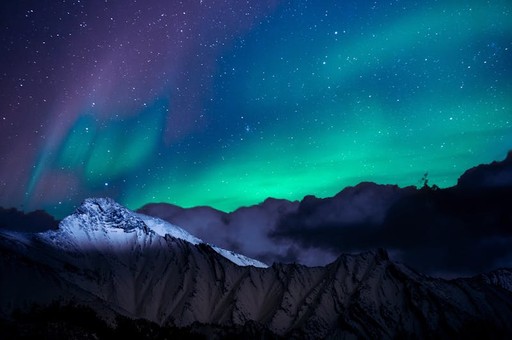
Morisot's gentle Impressionist brushwork transforms the night sky into a luminous, painterly dreamscape. The deep contrast of the original photograph is preserved beautifully, while nebula gradients gain a soft, atmospheric quality that feels both celestial and intimately artistic.
Gauguin -- 5 Stars (ArtFID 65.81)
| Original Photo | Style Reference | AI Result |
|---|---|---|
 |
 |
 |
| Source photo | Arlésiennes (Mistral) | ArtFID: 65.81 |
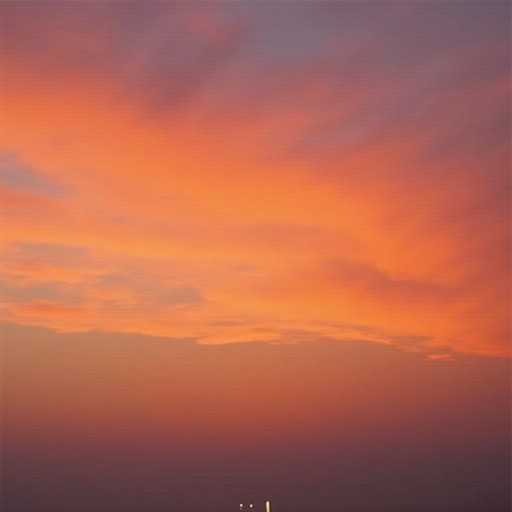
Gauguin's saturated color palette and bold tonal contrasts amplify the natural drama of the night sky. The flat color regions characteristic of his Post-Impressionist approach align well with the broad dark expanses of astrophotography, producing vivid and emotionally striking results.
Kandinsky -- 5 Stars (ArtFID 108.71)
| Original Photo | Style Reference | AI Result |
|---|---|---|
 |
 |
 |
| Source photo | Improvisation No. 30 (Cannons) | ArtFID: 108.71 |
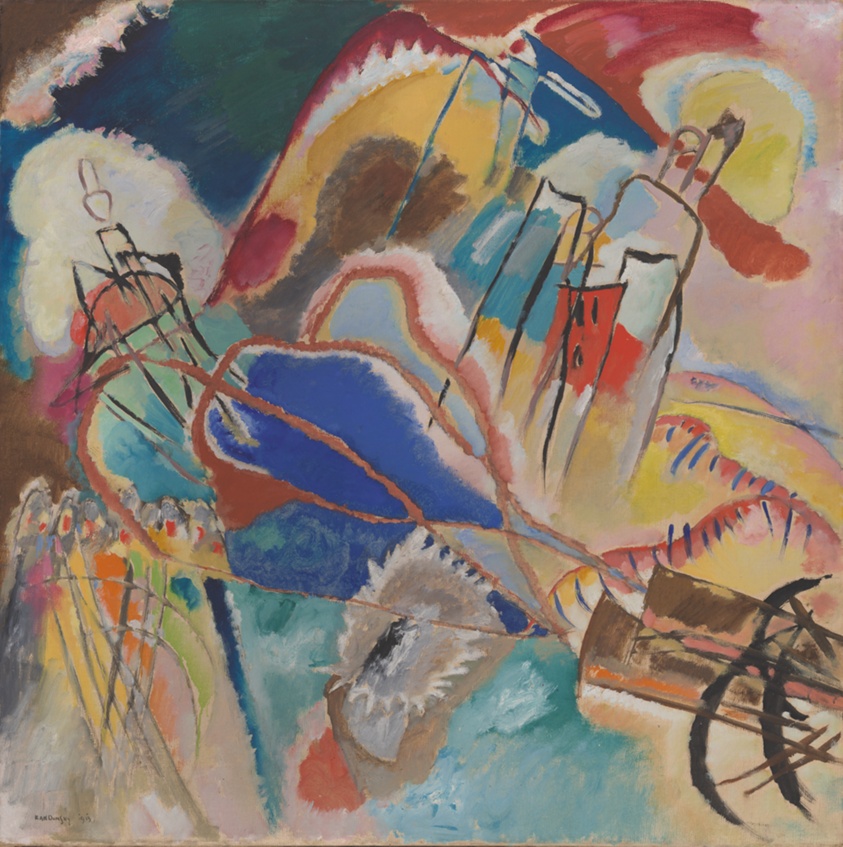
Kandinsky's abstract visual language transforms the star field into a cosmic composition of geometric forms and dynamic color interplay. The original celestial structure remains recognizable while gaining the vibrant energy and spiritual intensity that defines Kandinsky's artistic vision.
"Leonardo perfected or, in effect, invented chiaroscuro (light and dark modulated to create effects of relief or modelling), sfumato (misty, soft blending of colours) and aerial perspective, which indicates distance by grading tones and muting colour contrasts." -- History of Art, p. 363
Styles to Avoid for Astrophotography
Not every art style works well with astrophotography photography. Based on ArtFID testing:
- Michelangelo -- ArtFID 506.77 (1 Star): Michelangelo's sculptural, high-contrast figural style imposes heavy anatomical forms and dense cross-hatching onto the smooth gradients of astrophotography, producing muddy and incoherent results that obliterate celestial detail.
- Picasso -- ArtFID 501.94 (1 Star): Picasso's radical geometric fragmentation shatters the delicate spatial relationships between stars, nebulae, and dark sky, creating disorienting compositions that lose all sense of cosmic depth and scale.
- Veronese -- ArtFID 491.38 (2 Stars): Veronese's ornate Renaissance palette and crowded compositional approach fill the vast dark expanses of astrophotography with visual clutter, fighting against the minimalist elegance of night sky imagery.
- Art Nouveau -- ArtFID 489.34 (2 Stars): Art Nouveau's flowing decorative linework and intricate organic patterns overwhelm the point stars and smooth gradients of astrophotography, replacing cosmic simplicity with surface ornamentation.
- Rococo -- ArtFID 425.74 (2 Stars): Rococo's high-frequency delicate detail and pastel palette clash fundamentally with astrophotography's very low frequency profile and deep contrast, producing washed-out results that lose the drama of the night sky.
Astrophotography Photography Tips for Style Transfer
- Maximize nebula and Milky Way visibility. The top-performing styles (Morisot, Gauguin, Kandinsky) all benefit from images with rich nebula gradients and visible gas clouds. Use stacking techniques or longer exposures to bring out these features before applying style transfer.
- Preserve deep contrast in your source image. Astrophotography's signature deep contrast between bright celestial objects and dark sky is what the best styles leverage. Avoid over-processing your images with excessive noise reduction that flattens tonal range.
- Include foreground elements for compositional anchoring. A silhouetted landscape, telescope, or structure in the foreground gives the style transfer algorithm spatial context, producing more balanced results -- especially with atmospheric styles like Friedrich (ArtFID 171.39) and Romanticism (ArtFID 172.17).
- Shoot at high resolution and crop strategically. Upload images of at least 2000px on the longest side. Tight crops on specific nebulae or star clusters yield more focused style transfer results than wide-field panoramas where the algorithm must handle too much uniform dark space.
- Choose wide-field compositions over deep-sky close-ups for first attempts. Our ArtFID data shows that images with a mix of broad tonal areas and discrete bright objects (the Milky Way over a landscape, for example) consistently produce better results across all top-ranked styles than extreme deep-sky close-ups of single objects.
How to Apply Art Styles to Astrophotography Photos
Step 1: Choose Your Photo
Upload your astrophotography photograph to ArtRobot. Based on our ArtFID testing, Morisot, Gauguin, and Kandinsky produce the best results.
Step 2: Select an Art Style
Browse the art style library and pick your preferred style. Check our Art Styles catalog for inspiration or use the comparison table above to choose based on quality scores.
Step 3: Download Your Art
Generate your styled image in seconds and download in multiple resolutions -- from social media to print-ready 4K.
Try Astrophotography Style Transfer Free on ArtRobot ->
FAQ
What is the best art style for astrophotography photography?
Based on our ArtFID testing of 116 styles, Morisot delivers the best results for astrophotography with an extraordinary ArtFID score of just 8.38 -- the lowest we have measured for any content type. Her soft Impressionist brushwork complements the very low frequency visual profile of night sky photography. Gauguin (ArtFID 65.81) and Kandinsky (ArtFID 108.71) are excellent alternatives for bolder, more expressive transformations.
Why do some art styles work better for astrophotography photos?
Astrophotography has a very low frequency visual profile -- point stars, nebula gradients, and deep contrast across vast dark expanses. Styles with atmospheric, soft brushwork (like Morisot and Impressionism) harmonize naturally with this profile because they can enrich gradients without introducing noise into dark areas. Styles with high-frequency patterns or geometric fragmentation (like Picasso at ArtFID 501.94 or Michelangelo at 506.77) produce poor results because they fill the dark sky with visual clutter that destroys celestial detail.
How do I choose the right style for my astrophotography photo?
Start with our top 10 ranking table above -- every listed style scores 5 stars. For soft, dreamy results, try Morisot or Impressionism (ArtFID 153.94). For vibrant, expressive transformations, Gauguin or Expressionism (ArtFID 134.23) are strong choices. For cosmic abstraction, Kandinsky pairs naturally with celestial subjects. Browse the full Art Styles catalog to preview each style.
What astrophotography photos produce the best style transfer results?
Images with visible nebula structure, Milky Way detail, and a mix of bright celestial objects against deep dark sky yield the best results. Include a foreground element (landscape silhouette, observatory) for compositional balance. Avoid over-processed images with flattened contrast. Shoot at high resolution (2000px+ on the longest side) and consider wide-field compositions that give the algorithm both broad tonal areas and discrete bright points to work with.
Can I apply multiple art styles to the same astrophotography photo?
Absolutely, and experimenting is highly recommended. ArtRobot generates results in seconds, so you can quickly compare different styles on the same image. Our data shows all top 10 styles score 5 stars, so try Morisot for ethereal softness, Gauguin for saturated color drama, Kandinsky for abstract energy, and Chagall (ArtFID 168.24) for dreamlike whimsy -- then choose the transformation that best captures your vision of the cosmos.
Related Guides
- Best Art Styles for Astrophotography Photos
- Gothic Art Style Transfer
- Early Renaissance Style Transfer
- High Renaissance Style Transfer
- Northern Renaissance Style Transfer
- Mannerism Style Transfer
- Astrophotography Gothic Art Photo Effect
- Astrophotography Early Renaissance Photo Effect
- Astrophotography High Renaissance Photo Effect
Try It Yourself
Morisot achieved the top spot with a remarkable ArtFID of 8.38 -- the best score we have ever recorded -- but with 116 styles to explore, your perfect astrophotography transformation could be waiting. Upload your night sky photo and discover how art and cosmos collide.
Start Your Free Astrophotography Style Transfer on ArtRobot ->
Try It Yourself
Transform your own photos into stunning paintings with 80+ artist styles. Free to start.