
AI Artist & Tech Enthusiast
Animals Surrealism Photo Effect — AI Art [ArtFID Tested]
![Animals Surrealism Photo Effect — AI Art [ArtFID Tested] - ArtRobot AI Art](https://storage.googleapis.com/artrobot-storage/blog/pseo/stylized_images/surrealism/animals_03_stylized.jpg)
Salvador Dali painted melting elephants on spider legs. Max Ernst collaged bird-headed humans stalking through impossible landscapes. Rene Magritte placed bowler-hatted men where animals should be -- and animals where they should not. Surrealism has always had a complicated, fascinating relationship with the animal kingdom, treating creatures not as naturalistic subjects but as vessels for the unconscious, the uncanny, and the deeply strange. Now, neural style transfer lets you push your own animal photographs through that same dreamlike lens -- and the results are remarkable.
The animals surrealism photo effect scores 188.37 ArtFID (5/5 stars), making it one of Surrealism's strongest content pairings. This is not a subtle filter. The algorithm draws from museum-quality Surrealist paintings by Dali, Ernst, and Magritte -- all CC0 / Public Domain from the Art Institute of Chicago -- to transform your animal photos into hallucinatory, conversation-starting imagery that channels the movement's core obsession: making the familiar deeply unfamiliar.
 Animal photograph transformed into Surrealism style -- ArtFID: 188.37 (5 stars) -- Powered by ArtRobot AI
Quick Links -- Jump to: About Surrealism | Why It Works for Animals | ArtFID Quality Score | Before & After | Photography Tips | How to Apply | FAQ | Related Styles
Animals — Van Gogh Style Transfer
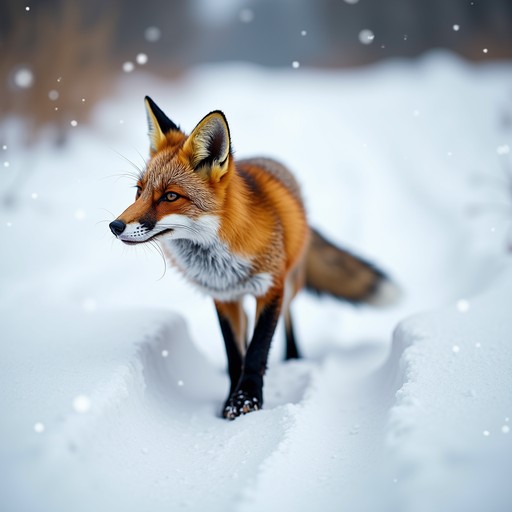
About Surrealism Art Style
Surrealism emerged in Paris in the 1920s, growing out of the Dada movement's anti-rational provocations. Where Dada destroyed, Surrealism built -- constructing elaborate visual worlds governed by dream logic, unconscious desire, and the deliberate collision of unrelated images. Andre Breton's 1924 Manifesto defined Surrealism as "pure psychic automatism" -- the attempt to express thought free from rational control, aesthetic judgment, or moral concern.
The movement split into two broad visual strategies. Automatist Surrealism (Miro, early Ernst) embraced spontaneous mark-making and biomorphic abstraction -- shapes that suggest organisms without depicting them. Veristic Surrealism (Dali, Magritte) rendered impossible scenes with photographic precision, making the impossible look disturbingly real. Both approaches produce distinctive neural style transfer signatures, but the veristic branch is particularly effective on animal photography because it preserves recognizable form while warping context, scale, and material.
Three defining visual characteristics make Surrealism immediately recognizable in style transfer output:
- Impossible juxtapositions -- Objects and creatures placed in contexts that defy logic
- Warped spatial relationships -- Scale distortions, melting forms, stretched proportions
- Hyperreal textures on unreal subjects -- Photographic detail applied to dreamlike compositions
For neural style transfer, these characteristics translate into a distinctive frequency profile. The gram matrix extracted from Surrealist paintings captures both the fine-grained textural detail of veristic rendering and the spatial distortions that make the style so visually arresting. When applied to animal photographs, the algorithm preserves the creature's identity while surrounding it with the visual vocabulary of dreams.
Why Surrealism Works for Animal Photos
Animals occupy a unique position in Surrealist art. They are simultaneously familiar and alien -- we recognize a cat, a dog, an owl, but we can never fully access their interior experience. This ontological gap is precisely what Surrealism exploits. The movement used animals as symbols of instinct, transformation, and the boundary between the rational and the irrational.
Dali's melting elephants, balanced on impossibly thin legs, became icons of the movement. Ernst's bird-alter-ego Loplop appeared across decades of work as a mediator between human consciousness and animal instinct. Leonora Carrington populated her paintings with hyenas, horses, and hybrid creatures that defied taxonomic classification. Animals were not decorative elements in Surrealism -- they were central protagonists.
This historical depth matters for neural style transfer. When the algorithm processes a Surrealist painting's gram matrix, it encounters a rich statistical vocabulary built around animal forms. The network has learned that Surrealist style involves not just surface texture but a specific relationship between organic form and spatial distortion -- one that maps naturally onto animal photographs.
The compatibility runs deeper than iconography. Animal photographs share structural qualities with Surrealist composition:
- Strong focal subjects -- A single animal commands attention, much like Surrealism's centered, object-focused compositions
- Organic forms -- Fur, feathers, scales, and skin provide rich textural material for the algorithm's style injection
- Emotional resonance -- We read expression and personality into animal faces, amplifying the uncanny effect when Surrealist distortion is applied
- Natural backgrounds -- Grass, sky, water create clean compositional fields that the algorithm can transform into dreamlike environments
The result is animal imagery that feels like it belongs in a gallery -- not a pet photo album. Surrealism does not prettify your animal photos. It makes them strange, compelling, and impossible to scroll past.
ArtFID Quality Score: Animals + Surrealism
ArtFID (Art Frechet Inception Distance) measures style transfer quality by balancing content preservation (LPIPS) and style authenticity (FID). Formula: ArtFID = (1 + LPIPS) x (1 + FID). Lower scores = better quality.
Animals + Surrealism Result
| Metric | Score | Interpretation |
|---|---|---|
| ArtFID | 188.37 | Excellent quality (5/5 stars) |
| Stars | 5/5 | Highly recommended combination |
Surrealism Across All Content Types
Surrealism is a consistently strong performer across diverse subjects. Here is how it ranks:
| Rank | Content Type | ArtFID | Stars |
|---|---|---|---|
| 1 | Flowers | 154.86 | 5 |
| 2 | Architecture | 157.97 | 5 |
| 3 | Portraits | 162.36 | 5 |
| 4 | Landscapes | 181.87 | 5 |
| 5 | Animals | 188.37 | 5 |
Key insight: Surrealism delivers 5-star results across every tested content category. This consistency is unusual -- most styles have clear strengths and weaknesses depending on subject matter. Surrealism's versatility reflects its historical breadth: the movement's artists depicted everything from portraits (Dali's self-portraits) to landscapes (Ernst's forests) to flowers (Carrington's botanical visions) to architecture (Magritte's impossible buildings). The neural network has learned a style vocabulary that works across domains.
Animals rank 5th overall, but the gap between the top scorer (Flowers at 154.86) and Animals (188.37) is modest. The practical difference in output quality is negligible -- both produce stunning results. What distinguishes the animals surrealism photo effect is its emotional impact: there is something uniquely compelling about a familiar creature rendered in the visual language of dreams.
Before & After: Animals in Surrealism Style
| Original Photo | Style Reference | AI Result |
|---|---|---|
 |
 |
|
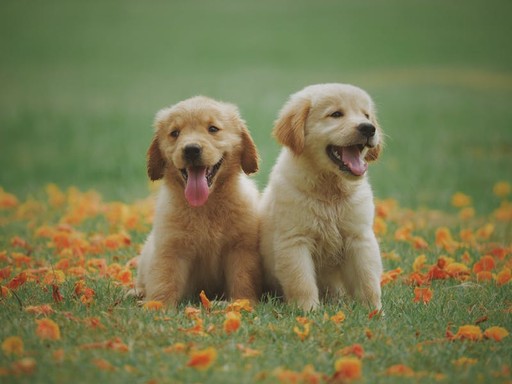
| Source photo | Inventions of the Monsters (1937) | ArtFID: 188.37 -- 5 stars |
The transformation is immediately striking. The animal retains its recognizable form -- you know what creature you are looking at -- but every surface has been reimagined through the visual logic of Surrealism. Fur textures shift into something between organic material and liquid metal. The background loses its documentary quality and becomes an environment that obeys dream rules rather than physics.
Notice how the color palette transforms. The naturalistic tones of the photograph give way to the warmer, more saturated palette characteristic of Dali's veristic technique -- burnt ambers, deep ochres, and unexpected blues that create an atmosphere of displaced reality. The animal is still present, still itself, but it now inhabits a world where the familiar rules do not quite apply.
Additional Examples
 |
|
| Original Animal Photo | Surrealism Style Result |
|
 |
| Original Animal Photo | Surrealism Style Result |
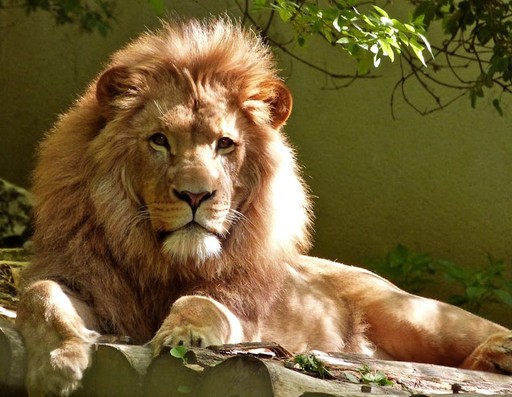
Each example demonstrates how Surrealism handles different animal subjects. The algorithm adapts its distortion strategy based on the source material -- a furry subject produces different textural transformations than a scaled or feathered one, but the dream-logic atmosphere remains consistent across all results.
Photography Tips for Best Surrealism Results
To maximize the quality of your animals surrealism photo effect, consider these shooting guidelines:
1. Isolate Your Subject. Surrealist paintings typically feature a single focal subject in a carefully composed environment. Animal photos with one clear subject and a relatively simple background produce the most striking transformations. Group shots of multiple animals create visual confusion that dilutes the uncanny effect.
2. Capture Direct Eye Contact. Surrealism thrives on the confrontational gaze. An animal looking directly at the camera creates an unsettling intensity when the Surrealist transformation is applied. Profile shots work too -- think of Ernst's bird forms -- but the frontal gaze adds a psychological dimension that amplifies the dreamlike quality.
3. Fill the Frame. Close-up and medium shots outperform wide shots for animal Surrealism. The algorithm needs enough textural detail -- fur, feathers, scales, skin -- to inject the Surrealist style effectively. A tiny animal in a vast landscape leaves too much background and not enough subject.
4. Embrace Unusual Angles. Shoot from below, from above, at extreme close range. Unconventional perspectives already destabilize the viewer's spatial expectations, priming the image for Surrealist transformation. A frog photographed from below against a bright sky already has Surrealist potential before the algorithm touches it.
5. Use Natural Light. Soft, directional natural light -- golden hour, overcast skies, dappled forest light -- provides the tonal range that the algorithm transforms most effectively. Flash photography creates flat, harsh lighting that resists the atmospheric depth Surrealism requires.
How to Apply Surrealism Style (3 Steps)
Step 1: Upload Your Animal Photo
Go to ArtRobot and upload any animal photograph -- pets, wildlife, birds, reptiles, insects. No account required. Supported formats: JPG, PNG, WebP. Resolution: 1024px+ recommended for the best detail in the Surrealist transformation.
Step 2: Select the Surrealism Style
Browse the style library and choose Surrealism. The style references include museum-quality paintings by Dali, Ernst, and Magritte from the Art Institute of Chicago. Each style displays its ArtFID quality rating, so you can compare options. For a more artist-specific result, explore the individual artist pages for Dali or Magritte.
Step 3: Download Your Dreamlike Animal Portrait
Your animals surrealism photo effect generates in seconds. Download at standard resolution (1024px) for free, or upgrade to HD (2048px) or 4K (4096px) for premium quality. The 4K option produces gallery-ready prints -- a Surrealist animal portrait makes a striking conversation piece on any wall.
3 free transfers, no signup required. Premium unlocks HD/4K, batch processing, and the full 121+ style library.
Try Animals Surrealism Style Transfer Free on ArtRobot ->
FAQ
How does Surrealism style transfer work on animal photos?
ArtRobot uses neural style transfer (NST) to extract the gram matrix -- a mathematical representation of style patterns -- from museum-quality Surrealist paintings by Dali, Ernst, and Magritte. This gram matrix captures Surrealism's characteristic spatial distortions, hyperreal textures, and dreamlike color palette. The algorithm applies these patterns to your animal photo while preserving the creature's identity and form. Animals are particularly effective subjects because their organic textures and strong focal presence align with Surrealism's compositional conventions.
What ArtFID score does Surrealism get on animals?
Surrealism scores 188.37 ArtFID on animals (5/5 stars). This places it among Surrealism's top-performing content categories, alongside portraits (162.36), flowers (154.86), architecture (157.97), and landscapes (181.87). Surrealism is one of the most consistently strong styles in the library, achieving 5-star results across all tested categories.
What types of animal photos work best with Surrealism?
Close-up portraits of individual animals with direct eye contact produce the most striking results. Pets (dogs, cats), birds of prey, exotic animals, and reptiles all transform well. The key is a clear focal subject with visible textural detail -- fur, feathers, or scales give the algorithm rich material to work with. Avoid distant wildlife shots where the animal is a small element in a large landscape.
Is Surrealism a good style for pet portraits?
Surrealism creates pet portraits that are genuinely unlike anything else in your photo library. Rather than the standard cute pet photo, you get a dreamlike, gallery-quality image that captures your pet's presence while surrounding it with the visual atmosphere of Dali or Magritte. These make exceptional gifts, wall art, and social media posts precisely because they are unexpected and conversation-starting.
Can I try the animals Surrealism effect for free?
Yes. ArtRobot offers 3 free transfers at standard resolution (1024px) with no signup, no watermark, and no account required. Upload your animal photo, select Surrealism, and download the result in seconds. Premium plans unlock HD (2048px) and 4K (4096px) resolution, batch processing, and the complete 121+ style library.
Related Styles
- Surrealism Style Transfer -- Complete guide to Surrealism across all content types with full ArtFID rankings.
- Best Art Styles for Animals -- Head-to-head comparison of every style tested on animal photos, ranked by ArtFID.
- Dog Watercolor Art -- A softer, more traditional approach to pet art. Watercolor delivers warm, painterly results.
- Pop Art Style Transfer -- Bold colors and graphic simplification for high-contrast animal portraits.
- Impressionism Style Transfer -- Light-filled, brushstroke-rich animal imagery for a more classical alternative.
Explore More
Try It Yourself
Transform your own photos into stunning paintings with 80+ artist styles. Free to start.