
AI Artist & Tech Enthusiast
Abstract Expressionism Photo Effect — AI Style Transfer G...
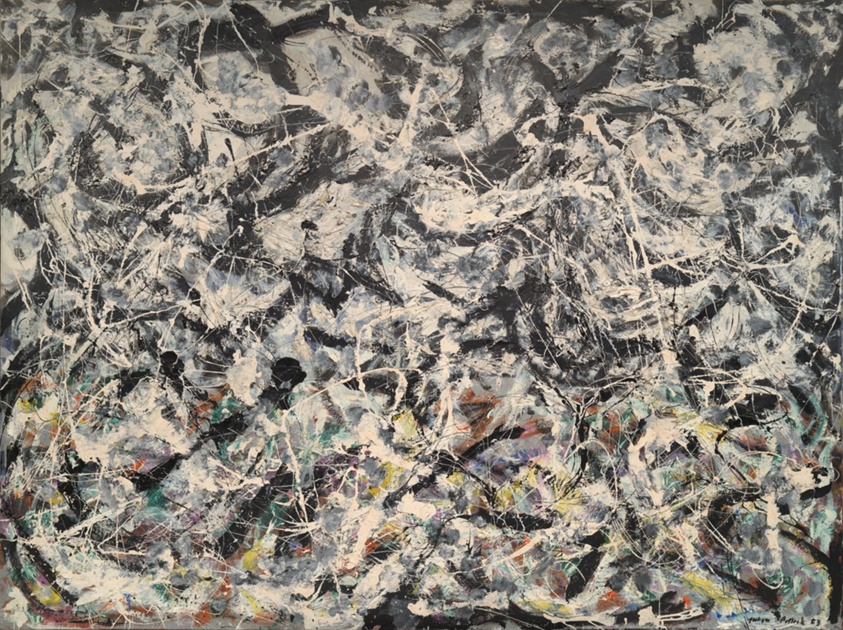
Abstract Expressionism was the first major American art movement to achieve international influence -- and it did so by abandoning representation entirely. Emerging in 1940s New York, artists like Jackson Pollock, Mark Rothko, and Willem de Kooning channeled raw emotion through gestural brushwork, monumental scale, and uncompromising intensity. With AI-powered neural style transfer, you can now apply that same visceral energy to your own photographs -- transforming ordinary images into compositions that pulse with the force of action painting and color field abstraction.
Jackson Pollock, "Greyed Rainbow" -- Art Institute of Chicago, Museum Open Access
We tested ArtRobot's Abstract Expressionism style transfer across 15 different photo categories, each scored by our ArtFID quality benchmark. This guide covers the movement's history, its defining visual traits, which photos produce the best results, and how to create your own Abstract Expressionist art for free.
Quick Links -- Jump to: What Is Abstract Expressionism? | Characteristics | ArtFID Scores | Key Artists | How to Apply | Before & After | FAQ
Landscapes — Van Gogh Style Transfer


Architecture — Van Gogh Style Transfer
Street Scenes — Van Gogh Style Transfer


Night Scenes — Van Gogh Style Transfer

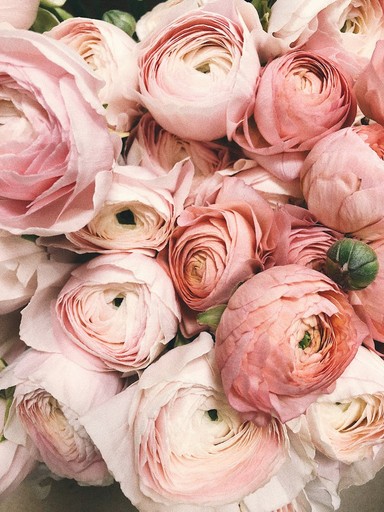
Flowers — Van Gogh Style Transfer
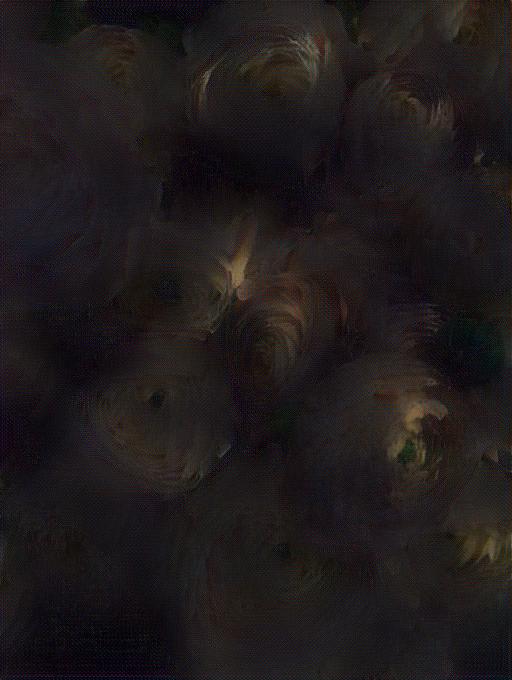
Food — Van Gogh Style Transfer


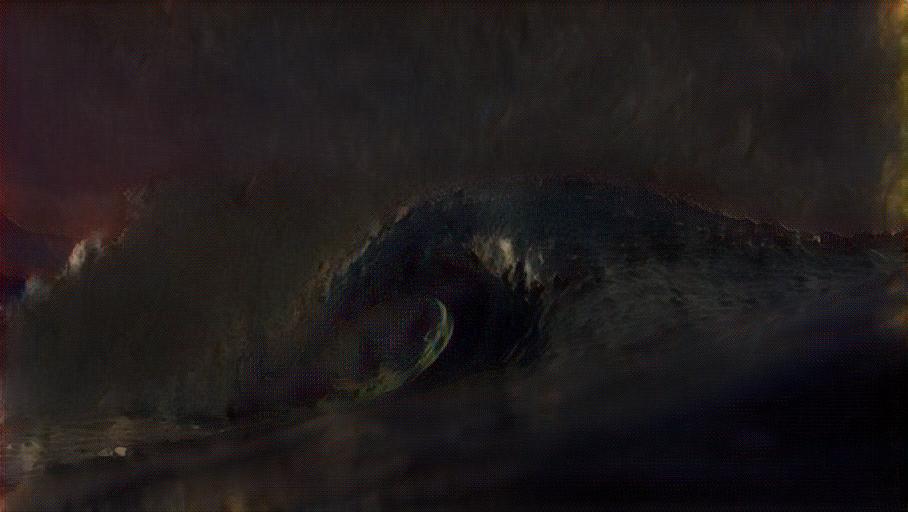
Seascapes — Van Gogh Style Transfer

Portraits — Van Gogh Style Transfer


What Is Abstract Expressionism?
Abstract Expressionism emerged in New York during the 1940s as a radical departure from European artistic tradition. For the first time, the epicenter of the avant-garde shifted from Paris to America. These artists rejected figuration in favor of pure emotional expression -- whether through Pollock's violent skeins of dripped paint or Rothko's luminous, hovering rectangles of color.
"Recently a new development in abstract art indicates the continuing vitality of the modern movement here and abroad. The terms 'abstract Expressionist' (in New York) and 'action painting' (in London) suggest the artists' intention of projecting immediate emotional experience within the technique of abstract art." -- Art Through the Ages, p. 757
The movement encompassed two broad approaches: Action Painting, exemplified by Pollock and de Kooning, which emphasized the physical act of painting itself as a form of expression; and Color Field Painting, practiced by Rothko and Barnett Newman, which used vast expanses of color to evoke contemplative, almost spiritual emotional states.
"Analyzing the situation, the critic and champion of the Abstract Expressionists, Clement Greenberg, ruminated on the various possibilities the future held for artists. After the 'turgidities of Abstract Expressionism', he wrote, what was needed was a more disciplined, formalist art." -- History of Art, p. 617
This tension between chaos and control -- between Pollock's all-over drip compositions and Rothko's meditative color blocks -- is precisely what makes Abstract Expressionism so versatile for neural style transfer. The style's range spans from high-frequency chaotic energy to serene, low-frequency color fields.
Abstract Expressionism Characteristics & Techniques
Understanding the core visual traits of Abstract Expressionism helps predict how your photos will transform and which subjects yield the strongest results.
The Four Pillars of Abstract Expressionist Style
-
Gestural Brushwork & Drip Technique -- Pollock's signature method involved pouring and flinging paint directly onto canvas laid on the floor, creating dense webs of interlocking lines. De Kooning used slashing, aggressive brushstrokes with equal ferocity. In style transfer, this translates to dynamic, layered texture overlays that energize every surface of your photograph.
-
Monumental Scale & All-Over Composition -- Abstract Expressionists rejected traditional focal points. Pollock's drip paintings distribute energy uniformly across the entire surface; Rothko's rectangles float without anchoring to edges. The AI replicates this by distributing stylistic transformation evenly, avoiding localized effects.
-
Emotional Intensity Through Color -- Rothko's stacked rectangles of luminous color were designed to evoke primal emotional responses -- he wanted viewers to weep before his paintings. The AI remaps your photo's palette toward the saturated, emotionally charged hues characteristic of the movement.
-
Rejection of Figuration -- Abstract Expressionism deliberately abandoned recognizable subject matter in favor of pure visual experience. When applied to photographs, this means the AI pushes toward abstraction -- edges soften, forms merge, and the boundary between subject and background blurs.
Visual Trait Comparison
| Trait | Abstract Expressionism Approach | Effect on Your Photos |
|---|---|---|
| Color palette | Saturated, emotionally driven, often limited | Colors shifted toward bold, contemplative ranges |
| Brushwork | Gestural drips (Pollock) or soft-edged fields (Rothko) | Surface gains dramatic texture or luminous softness |
| Form & proportion | Dissolved, abstracted, non-representational | Subject edges soften; forms become more fluid |
| Composition | All-over (no focal point) or stacked horizontals | Visual weight distributed across entire image |
| Light & shadow | Internal luminosity, color-generated light | Contrast rebalanced; light emerges from color itself |
Style Transfer Quality by Photo Type (ArtFID Tested)
We ran ArtRobot's Abstract Expressionism style transfer on 15 photo categories and measured quality using ArtFID (Art Frechet Inception Distance) -- the industry-standard metric for style transfer evaluation.
ArtFID combines two components: - LPIPS (Learned Perceptual Image Patch Similarity) -- Does the output preserve your original content? Lower = better content retention. - FID (Frechet Inception Distance) -- Does the output match the statistical distribution of real Abstract Expressionist paintings? Lower = more authentic style.
Combined formula: ArtFID = (1 + LPIPS) x (1 + FID)
Full Scores Table
| Photo Type | ArtFID | LPIPS | FID | Stars | Recommendation |
|---|---|---|---|---|---|
| Animals | 212.17 | 0.5969 | 131.86 | 5 | Best match -- organic forms absorb gestural energy |
| Fantasy | 296.46 | 0.5803 | 186.60 | 5 | Excellent -- surreal content aligns with abstraction |
| Street Scenes | 327.74 | 0.5591 | 209.22 | 4 | Strong -- urban complexity gains kinetic force |
| Landscapes | 333.69 | 0.6110 | 206.13 | 4 | Strong -- classic AbEx territory |
| Architecture | 340.27 | 0.6273 | 208.10 | 4 | Strong -- structural forms provide counterpoint |
| Night Scenes | 342.43 | 0.5991 | 213.14 | 4 | Strong -- dramatic light amplified |
| Flowers | 342.01 | 0.6610 | 204.90 | 4 | Good -- color intensity carries well |
| Food | 367.48 | 0.6899 | 216.46 | 3 | Moderate -- works with bold arrangements |
| Seascapes | 373.16 | 0.6251 | 228.63 | 3 | Moderate -- horizontal compositions suit Rothko |
| Urban Scenes | 374.97 | 0.6914 | 220.69 | 3 | Moderate -- wide views dilute gestural impact |
| Interiors | 378.95 | 0.6932 | 222.81 | 3 | Moderate -- enclosed spaces gain tension |
| Portraits | 401.34 | 0.6226 | 246.34 | 2 | Challenging -- faces resist full abstraction |
| Travel | 429.24 | 0.6111 | 265.42 | 2 | Challenging -- detailed scenes lose coherence |
| Vehicles | 433.34 | 0.6526 | 261.22 | 2 | Challenging -- mechanical precision conflicts |
| Still Life | 454.15 | 0.7006 | 266.05 | 2 | Challenging -- contained subjects resist all-over treatment |
| Average | 360.55 | 0.6348 | 222.51 | 3.5 |
Key findings: Animals achieve the lowest (best) ArtFID at 212.17 -- organic, irregular forms absorb Abstract Expressionist gestural energy naturally. Fantasy content (296.46) follows, its surreal subjects aligning with the movement's rejection of literal representation. Portraits (401.34) and still life (454.15) score highest, suggesting that subjects with strong recognizable structure resist the movement's push toward abstraction. This makes sense: Abstract Expressionism fundamentally rejects figuration, so highly figurative content creates inherent tension.
Key Abstract Expressionism Artists
Each Abstract Expressionist master brings a fundamentally different visual approach to style transfer. The two poles of the movement produce dramatically different results:
| Artist | Years | Signature Style | Best Subjects | Try It |
|---|---|---|---|---|
| Jackson Pollock | 1912--1956 | All-over drip paintings, chaotic energy, layered webs of paint | Animals, fantasy, landscapes | Pollock Style Transfer |
| Mark Rothko | 1903--1970 | Luminous color fields, soft-edged rectangles, contemplative stillness | Seascapes, landscapes, night scenes | Rothko Style Transfer |
Pollock and Rothko represent the two extremes of Abstract Expressionism. Pollock produces high-energy, texture-rich transformations where every pixel vibrates with kinetic force -- ideal for dynamic subjects like animals and fantasy scenes. Rothko produces serene, color-saturated transformations with soft boundaries and luminous depth -- perfect for landscapes, seascapes, and any scene where mood matters more than detail.
How to Apply Abstract Expressionism Style (3 Steps)
Step 1: Choose Your Photo
Upload any photograph to ArtRobot. Based on our ArtFID testing, the strongest results come from: - Animals and fantasy scenes -- ArtFID under 300, organic forms absorb gestural energy beautifully - Street scenes and landscapes -- Strong structural scaffolding for the style to transform - Low-detail, mood-driven photos -- Abstract Expressionism rewards atmosphere over specificity - Avoid highly detailed portraits -- LPIPS 0.6226 means significant facial distortion under this style
Step 2: Select Abstract Expressionism Style
Browse the Abstract Expressionism collection in ArtRobot's style library. Choose between Pollock's chaotic, all-over energy or Rothko's contemplative color fields. The AI uses neural style transfer to apply the Abstract Expressionist treatment while preserving your photograph's essential structure.
Step 3: Download Your Abstract Expressionist Art
ArtRobot generates your result in seconds. Download in multiple resolutions: - Standard (1024px) -- social media, digital sharing - HD (2048px) -- prints up to 8x10" - Ultra HD (4096px) -- large canvas prints, gallery-quality output
Try Abstract Expressionism Style Transfer Free ->
Before & After Examples
We tested ArtRobot's Abstract Expressionism style transfer on photographs across multiple categories using masterworks from the Art Institute of Chicago as style references. Below are representative transformations with their ArtFID quality scores.
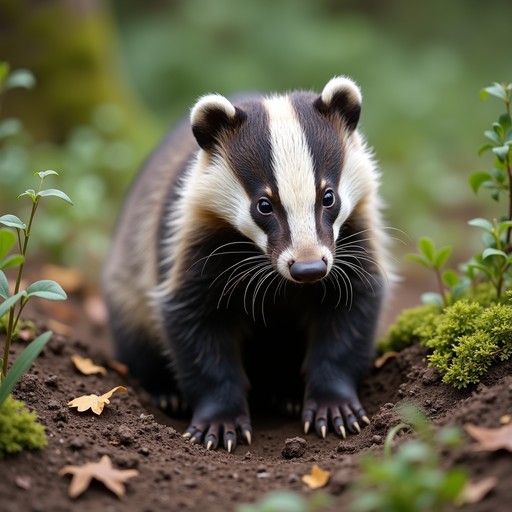
Animals -- ArtFID 212.17 (Best Match)
Animals achieve the strongest Abstract Expressionism transfer in our testing. The organic, irregular forms of animal subjects absorb Pollock's gestural drip energy naturally, allowing the AI to layer chaotic texture without destroying compositional coherence.
| Original Photo | Abstract Expressionism AI Result |
|---|---|
 |
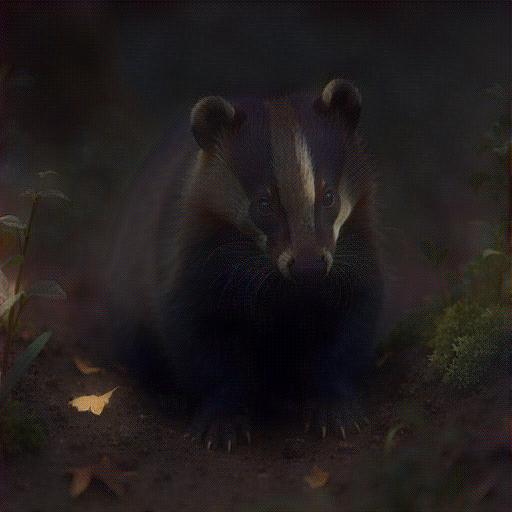 |
| Source photograph | ArtFID: 212.17 -- LPIPS: 0.5969 / FID: 131.86 |
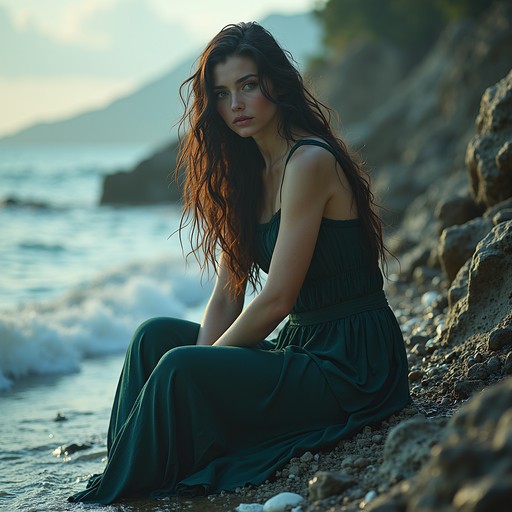
Fantasy -- ArtFID 296.46
Fantasy content aligns naturally with Abstract Expressionism's rejection of literal representation. The surreal, non-realistic nature of fantasy imagery gives the AI freedom to push toward full abstraction without fighting recognizable subject matter.
| Original Photo | Abstract Expressionism AI Result |
|---|---|
 |
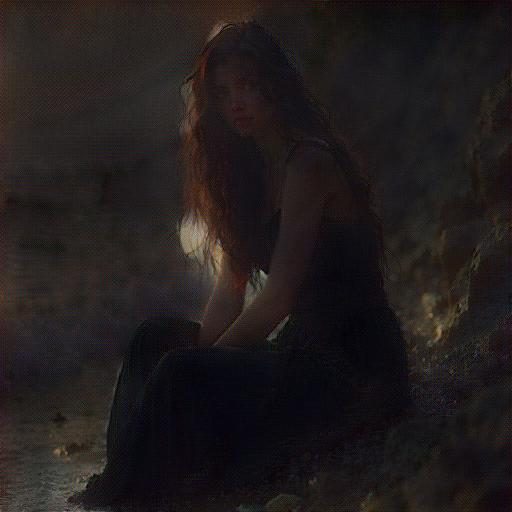 |
| Source photograph | ArtFID: 296.46 -- LPIPS: 0.5803 / FID: 186.60 |
Street Scenes -- ArtFID 327.74
Street scenes provide the urban complexity that fueled much of the New York School's energy. The AI transforms busy cityscapes into kinetic abstractions that recall de Kooning's frenzied metropolitan canvases.
| Original Photo | Abstract Expressionism AI Result |
|---|---|
|
|
| Source photograph | ArtFID: 327.74 -- LPIPS: 0.5591 / FID: 209.22 |
Landscapes -- ArtFID 333.69
Landscape is natural territory for Abstract Expressionism -- many of Pollock's early works drew on landscape motifs before dissolving into pure abstraction. The AI amplifies the horizon line and sky drama while overlaying gestural texture.
| Original Photo | Abstract Expressionism AI Result |
|---|---|
|
|
| Source photograph | ArtFID: 333.69 -- LPIPS: 0.6110 / FID: 206.13 |
Architecture -- ArtFID 340.27
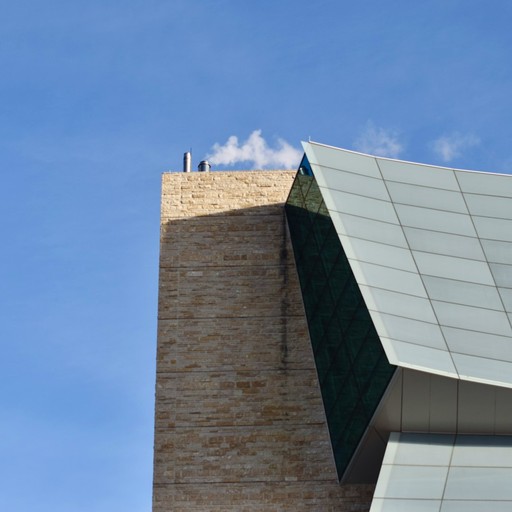
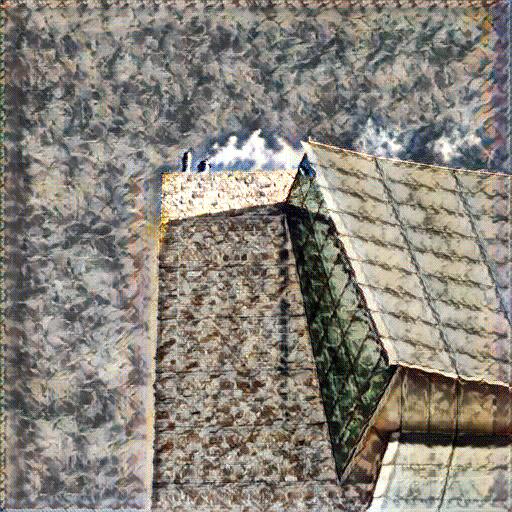
Architectural subjects provide strong geometric scaffolding for Abstract Expressionist transformation. The rigid lines of buildings create compelling tension against Pollock's chaotic drip patterns, producing results where order and chaos coexist.
| Original Photo | Abstract Expressionism AI Result |
|---|---|
|
|
| Source photograph | ArtFID: 340.27 -- LPIPS: 0.6273 / FID: 208.10 |
Frequently Asked Questions
What is Abstract Expressionism art style and where did it originate?
Abstract Expressionism originated in New York City in the 1940s-1960s. It was the first American art movement to achieve global influence, shifting the art world's center from Paris to New York. The movement encompasses two main approaches: Action Painting (Pollock, de Kooning) emphasizing gestural, physical paint application, and Color Field Painting (Rothko, Newman) using vast expanses of luminous color. Key characteristics include gestural brushwork, monumental scale, and emotional intensity expressed through pure abstraction rather than recognizable subjects.
Which photos look best with Abstract Expressionism style transfer?
Based on our ArtFID testing, animals (ArtFID 212.17) and fantasy scenes (296.46) produce the strongest results. Street scenes (327.74) and landscapes (333.69) also perform well. Still life (454.15) and vehicles (433.34) are the weakest matches. For best results, choose photos with organic forms, dynamic composition, and subjects that can absorb abstraction without losing visual interest.
Can I use Abstract Expressionism style transfer for commercial projects?
Personal use is always free on ArtRobot. For commercial use -- prints for sale, merchandise, marketing materials, client work -- a premium plan is required. All style reference artworks used by ArtRobot's Abstract Expressionism models come from public domain museum collections (Art Institute of Chicago) under open access licenses, so there are no copyright concerns with the style references themselves. ArtRobot provides 3 free style transfers with no signup required.
Abstract Expressionism vs Expressionism: which should I choose?
Both movements channel raw emotion, but their methods differ fundamentally. Expressionism (1905-1930s, Germany) distorts recognizable subjects -- faces, landscapes, streets -- to externalize inner psychological states. The subject remains identifiable but emotionally transformed. Abstract Expressionism (1940s-1960s, New York) abandons recognizable subjects entirely in favor of pure visual energy. Choose Expressionism when you want your photo's subject to remain clearly readable but emotionally intensified. Choose Abstract Expressionism when you want to push toward pure abstraction where mood and energy matter more than subject recognition.
How accurate is AI Abstract Expressionism style transfer compared to real paintings?
Our Abstract Expressionism model achieves an average ArtFID of 360.55 across 15 photo categories, with a style fidelity (FID) of 222.51. The best-performing category (animals, FID 131.86) produces results statistically close to genuine Abstract Expressionist works. The AI captures core visual traits -- gestural texture, color field luminosity, all-over composition -- though it cannot fully replicate the physical impasto and drip layering of actual Pollock canvases.
Related Styles
Abstract Expressionism connects to a broader family of emotionally-driven and abstraction-focused movements. Explore these related styles:
- Jackson Pollock Style Transfer -- The master of action painting and all-over drip composition
- Mark Rothko Style Transfer -- Luminous color fields and contemplative emotional depth
- Expressionism Style Transfer -- The European predecessor; Munch, Kirchner, Schiele channeled emotion through distorted figuration
- Color Field Style Transfer -- The meditative branch of Abstract Expressionism; pure color as emotional vehicle
Try Abstract Expressionism Style Transfer Free ->
Explore More
Try It Yourself
Transform your own photos into stunning paintings with 80+ artist styles. Free to start.