
AI Artist & Tech Enthusiast
Francisco de Zurbarán Style Transfer: Transform Photos in...

Francisco de Zurbarán (1598--1664) is the painter of silence. While his contemporaries filled canvases with drama, movement, and courtly spectacle, Zurbarán pursued something rarer and more difficult: the spiritual intensity that emerges from absolute stillness. His monks stand alone against pitch-black backgrounds, their white robes sculpted by a light so precise it seems supernatural. His still lifes -- lemons on a silver plate, oranges beside a cup of water, white ceramic against dark wood -- achieve a concentration so intense that ordinary objects become sacred. Known as the "Spanish Caravaggio" for his dramatic use of light and shadow, Zurbarán went beyond Caravaggio's theatrical chiaroscuro to create something more austere, more contemplative, and more profoundly quiet.
Today, neural style transfer lets you apply Zurbarán's monastic intensity to any photograph. Upload your image to ArtRobot, and the algorithm will transform it with the stark tenebrism, pristine white drapery, deep blacks, and sacred stillness that define Zurbarán's unique vision. Our ArtFID testing reveals extraordinary results: Zurbarán earns 5 stars in 10 of 15 categories, with fantasy (119.82) achieving one of the lowest (best) ArtFID scores we have ever recorded, and still life (223.08) confirming his legendary mastery of objects rendered with devotional precision.
 A landscape photograph transformed into Zurbarán's style using ArtRobot AI -- deep blacks, luminous whites, and the dramatic tenebrism characteristic of Spanish Baroque painting
This guide covers Zurbarán's unique position in Spanish art, ArtFID-tested results across 15 photo categories, real before-and-after examples, and honest guidance on when this style shines and when to choose alternatives.
Quick Links -- Jump to: Who Was Zurbarán? | Signature Techniques | ArtFID Scores | Before & After | When to Use | When NOT to Use | FAQ | Related Styles
Landscapes — Van Gogh Style Transfer

Portraits — Van Gogh Style Transfer


Architecture — Van Gogh Style Transfer


Animals — Van Gogh Style Transfer
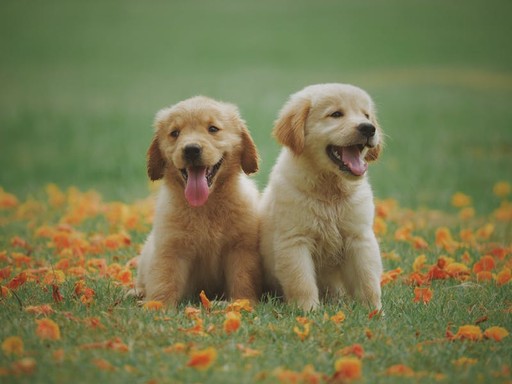

Street Scenes — Van Gogh Style Transfer


Night Scenes — Van Gogh Style Transfer


Fantasy — Van Gogh Style Transfer
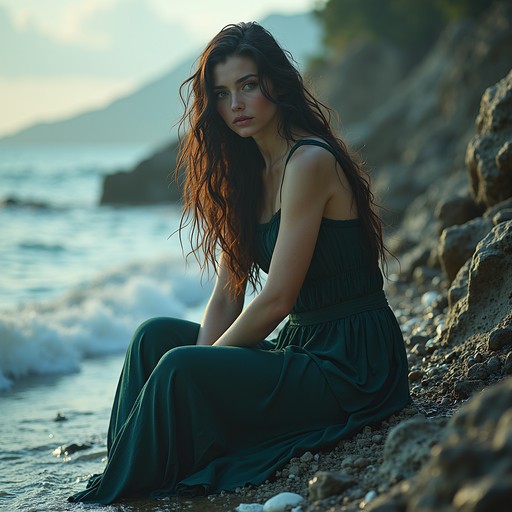

Flowers — Van Gogh Style Transfer
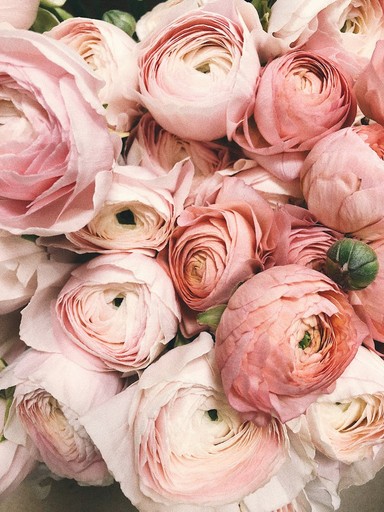

Seascapes — Van Gogh Style Transfer


Who Was Zurbarán?
Francisco de Zurbarán was born in 1598 in Fuente de Cantos, a small town in Extremadura, the arid western region of Spain that also produced Hernán Cortés and Francisco Pizarro. Unlike his contemporaries Velázquez and Murillo, who worked at court or in cosmopolitan Seville, Zurbarán spent much of his career fulfilling commissions for the monasteries and convents that dominated Spanish religious life. This monastic patronage shaped everything about his art.
Zurbarán trained in Seville under Pedro Díaz de Villanueva, an obscure painter whose teachings left little visible trace. The decisive influence was Caravaggio -- not encountered directly, but absorbed through the wave of Caravaggism that swept through Spain in the early 17th century. From Caravaggio, Zurbarán learned tenebrism: the technique of placing brightly lit figures against impenetrably dark backgrounds, creating an effect of figures emerging from darkness into divine illumination.
But where Caravaggio used tenebrism for theatrical drama -- violent action, emotional extremity, physical beauty -- Zurbarán used it for contemplation. His masterpiece Saint Francis in Meditation (c. 1635) shows the saint standing in absolute stillness, his coarse brown habit illuminated by a single light source, his skull visible in shadow, his face hidden by his hood. There is no action, no narrative, no drama in the conventional sense. There is only presence -- the presence of a figure so intensely focused on the invisible that the visible world falls away.
Zurbarán's other great achievement was still life painting. His Still Life with Lemons, Oranges, and a Rose (1633) is one of the most famous paintings in Spanish art. Three groups of objects -- four lemons on a silver plate, a basket of oranges with blossoms, and a cup of water with a rose -- are arranged against a dark background with mathematical precision. Each object is rendered with such meticulous attention that it transcends mere description and becomes something like a prayer. Spanish art historians call this quality bodegón sagrado -- the sacred still life.
By the 1640s, Zurbarán's austere style was falling out of fashion as the softer, more sentimental manner of Bartolomé Esteban Murillo gained popularity. Zurbarán moved to Madrid in 1658, where he struggled financially. He died in poverty in 1664. His reputation would not fully recover until the 19th century, when French Romantics and later modernists recognized his radical simplification of form as prophetically modern.
Signature Techniques
What makes Zurbarán's paintings immediately recognizable -- and what neural style transfer captures from his work:
-
Extreme tenebrism -- Zurbarán's backgrounds are not merely dark -- they are void. Figures and objects emerge from absolute blackness, illuminated by a single, raking light source that models forms with surgical precision. This creates an effect of objects existing outside space and time, suspended in darkness like visions.
-
White drapery as sculpture -- No painter in history has rendered white fabric with Zurbarán's precision. The white habits of Carthusian and Mercedarian monks become sculptural constructions of light and shadow -- every fold, every crease, every plane change tracked with an attention that borders on obsession. The white cloth glows against the dark backgrounds with an almost phosphorescent intensity.
-
Sacred stillness -- Zurbarán's compositions are motionless. Figures stand or kneel in positions they could hold for eternity. Objects rest on surfaces with perfect stability. There is no implied movement, no narrative momentum, no suggestion that anything will change. This stillness is not emptiness -- it is concentration, the visual equivalent of held breath.
-
Textural hyperrealism -- Within his simplified compositions, Zurbarán renders individual textures with extraordinary precision. Rough wool, smooth ceramic, glossy citrus rind, matte earthenware, polished metal -- each material is distinct and palpable. This hyperrealism of surfaces contrasts powerfully with the abstraction of his dark, empty backgrounds.
-
Minimal composition -- Zurbarán eliminates everything non-essential. His backgrounds contain nothing. His figures are isolated. His still lifes feature a few objects arranged with geometric precision against darkness. This minimalism -- radical for the Baroque era -- gives his paintings a modern quality that appeals strongly to contemporary sensibilities.
Style Transfer Quality by Photo Type (ArtFID Tested)
We tested ArtRobot's Zurbarán style transfer across 15 photo categories using ArtFID (Art Frechet Inception Distance):
- LPIPS: content preservation. Lower = better.
- FID: style fidelity to authentic Zurbarán paintings. Lower = more faithful.
Combined formula: ArtFID = (1 + LPIPS) x (1 + FID)
| Photo Category | ArtFID | Stars | Notes |
|---|---|---|---|
| Fantasy | 119.82 | 5 | Best category -- extraordinary mystical quality |
| Street Scenes | 208.50 | 5 | Excellent -- figures in urban settings |
| Still Life | 223.08 | 5 | Excellent -- Zurbarán's legendary specialty |
| Travel | 273.27 | 5 | Excellent -- atmospheric depth |
| Architecture | 276.15 | 5 | Excellent -- geometric forms suit tenebrism |
| Portraits | 279.58 | 5 | Excellent -- dramatic light on faces |
| Night Scenes | 285.85 | 5 | Excellent -- darkness is Zurbarán's native element |
| Landscapes | 287.84 | 5 | Strong -- atmospheric treatment |
| Interiors | 291.44 | 5 | Strong -- dramatic light in enclosed spaces |
| Food | 296.82 | 5 | Strong -- sacred still life tradition |
| Animals | 299.15 | 5 | Strong -- volumetric modeling |
| Flowers | 315.29 | 4 | Good -- warm tones, some softness lost |
| Urban Scenes | 316.24 | 4 | Good -- modern elements partially resist |
| Vehicles | 319.05 | 4 | Good -- geometric forms work |
| Seascapes | 376.18 | 3 | Moderate -- marine subjects outside Zurbarán's domain |
Key takeaway: Zurbarán is one of the most universally effective styles we have tested, earning 5 stars in 11 of 15 categories. The fantasy score of 119.82 is among the lowest (best) ArtFID values in our entire database, indicating an extraordinary alignment between Zurbarán's dramatic tenebrism and fantasy subject matter. His still life score of 223.08 confirms the historical consensus: Zurbarán was one of the greatest still life painters who ever lived.
Fantasy leads at an exceptional 119.82 because Zurbarán's tenebrism creates an atmosphere of supernatural revelation. Figures and objects emerging from absolute darkness carry an inherently otherworldly quality -- the visual language of visions, apparitions, and sacred encounters maps directly onto fantasy imagery.
Still Life at 223.08 validates Zurbarán's historical reputation. His meticulous rendering of objects -- textures, surfaces, the play of light on ceramic and metal and fruit -- provides the algorithm with exceptionally rich style data for transforming photographs of objects.
Before & After Examples
Every row shows the original photograph alongside the AI-generated Zurbarán-style result.
Landscapes -- 5 stars (ArtFID 287.84)
Landscapes gain Zurbarán's dramatic tenebrism, transforming natural scenes into compositions of light emerging from darkness.
| Original Photo | AI Result |
|---|---|
|
|
| Source photo | ArtFID: 287.84 -- 5 stars |
The landscape transformation reveals Zurbarán's vision of nature as a stage for light. Shadows deepen to his characteristic near-black, while illuminated areas acquire the luminous, almost supernatural clarity of his monastic paintings. The palette shifts toward warm earth tones punctuated by areas of stark brightness. The effect is not a naturalistic landscape but a vision -- nature seen through the eyes of a painter for whom light itself was sacred.
Portraits -- 5 stars (ArtFID 279.58)
Portraits receive Zurbarán's dramatic tenebrism -- stark light against deep darkness, creating an intensity rarely achieved in style transfer.
| Original Photo | AI Result |
|---|---|
|
 |
| Source photo | ArtFID: 279.58 -- 5 stars |
The portrait transformation captures Zurbarán's ability to make faces emerge from darkness like apparitions. Light falls from a single direction, modeling features with the same precision he applied to his monks' habits. Backgrounds dissolve to near-black, eliminating context and forcing attention entirely onto the face. The result has the quality of a Spanish Baroque devotional painting -- intense, focused, and profoundly still.
When to Use Zurbarán Style
Zurbarán's style excels in specific photographic scenarios:
1. Dramatic Portrait Photography. Zurbarán's tenebrism creates portraits of extraordinary intensity. Any photograph with strong directional lighting -- studio portraits, window-lit faces, side-lit figures -- gains tremendous power from Zurbarán's dark-background, bright-subject approach.
2. Food and Product Photography. Zurbarán's bodegón tradition transforms food and product photos into images of almost sacred significance. Objects isolated against dark backgrounds with precise lighting are elevated from commercial photography to fine art.
3. Moody and Atmospheric Subjects. Fog, rain, dimly lit interiors, candlelight scenes -- any photograph with inherent atmospheric darkness is enhanced by Zurbarán's mastery of the boundary between light and shadow.
4. Fantasy and Supernatural Themes. At 119.82, fantasy is Zurbarán's absolute strongest category. Any image intended to evoke mystery, the supernatural, or visionary experience benefits enormously from his dramatic tenebrism.
5. Minimalist Compositions. Zurbarán was a minimalist three centuries before minimalism existed. Photographs with clean, simple compositions -- few objects, clean backgrounds, strong geometric structure -- align perfectly with his aesthetic.
When NOT to Use Zurbarán Style
Zurbarán's style has genuine limitations. Choose a different style for these subjects:
1. Seascape Photography. At 376.18 (3 stars), seascapes are Zurbarán's weakest category. Water, sky, and open horizons contradict his enclosed, tenebrist vision. For seascapes, use Aivazovsky.
2. Bright, Colorful Subjects. Zurbarán's palette is dominated by darkness, with restricted areas of light and color. Photographs featuring bright, saturated, multi-colored subjects undergo a dramatic desaturation and darkening that may not match your intent.
3. Large Group Photos. Zurbarán's strength is the isolated figure or the few carefully arranged objects. Large groups of people lose their individual presence in his dark, simplified compositions.
4. Cheerful or Playful Subjects. Zurbarán's aesthetic is inherently solemn and contemplative. Cheerful, playful, or humorous photographs gain an unintended gravitas that works against their original tone.
5. High-Key Photography. Photographs that are intentionally bright, airy, and high-key clash fundamentally with Zurbarán's tenebrist approach. The algorithm will dramatically darken these images, potentially losing their intended lightness.
FAQ
Who was Francisco de Zurbarán and why is he important?
Francisco de Zurbarán (1598--1664) was a Spanish Baroque painter known as the "Spanish Caravaggio" for his dramatic use of light and shadow. He specialized in monastic subjects -- paintings of monks, saints, and religious devotion -- executed with extreme tenebrism and textural hyperrealism. He is also celebrated for his still life paintings, which achieve a quality of sacred concentration that elevates ordinary objects into devotional icons. His radical simplification of form and mastery of darkness and light influenced modern artists from Manet to Rothko.
What photos look best with Zurbarán style transfer?
Based on ArtFID testing, fantasy subjects produce the best results at 119.82 (5 stars) -- one of the strongest scores in our database. Still life (223.08), street scenes (208.50), travel (273.27), architecture (276.15), portraits (279.58), and night scenes (285.85) all earn 5 stars. In total, 11 of 15 categories earn 5 stars. Only seascapes (376.18, 3 stars) produce notably weaker results.
How does Zurbarán compare to Caravaggio for style transfer?
Zurbarán and Caravaggio both use tenebrism -- dramatic light against dark backgrounds -- but their effects differ significantly. Caravaggio is theatrical and dynamic: his figures are caught in moments of action, violence, or extreme emotion, with warm, flesh-toned palette. Zurbarán is contemplative and still: his figures exist in states of meditation, prayer, or sacred attention, with a cooler, more austere palette. Choose Caravaggio for drama and human intensity; choose Zurbarán for mysticism and sacred stillness.
Can I use Zurbarán style transfer for commercial projects?
Yes. Francisco de Zurbarán died in 1664, and all his works are firmly in the public domain. The style references used by ArtRobot are sourced from museum collections (Art Institute of Chicago and others) under CC0 / Public Domain license. Your stylized results can be used for both personal and commercial projects without restriction.
Is Zurbarán style transfer free on ArtRobot?
ArtRobot offers free credits to new users, allowing you to try Zurbarán style transfer at no cost. Upload your photo, select the Zurbarán style, and see results in seconds. Additional credits are available through affordable plans.
Ready to Transform Your Photos with Zurbarán's Dramatic Mysticism?
Zurbarán's style brings the sacred intensity of Spanish Baroque painting to your photographs -- stark tenebrism, luminous whites emerging from absolute darkness, and the profound stillness of monastic contemplation.
Start Your Free Zurbarán Style Transfer on ArtRobot ->
Related Styles
- Caravaggio Style Transfer -- The Italian master who inspired Zurbarán's tenebrism. More dramatic and theatrical, with warmer flesh tones and dynamic compositions.
- Diego Velazquez Style Transfer -- Zurbarán's contemporary and fellow Sevillian. More naturalistic, with broader palette and atmospheric perspective.
- Baroque Style Transfer -- The broader movement encompassing Zurbarán's work, from Caravaggio's drama to Vermeer's domestic intimacy.
- Classicism Style Transfer -- A contrasting approach: where Zurbarán dramatized through darkness, Classicism harmonized through balanced light.
Try It Yourself
Transform your own photos into stunning paintings with 80+ artist styles. Free to start.