
AI Artist & Tech Enthusiast
Paolo Veronese Style Transfer: Transform Photos into Paol...

Paolo Veronese (1528--1588) was the supreme painter of spectacle. Where other Renaissance masters pursued psychological depth or anatomical perfection, Veronese pursued grandeur -- vast canvases filled with magnificent architecture, shimmering fabrics, and crowds of figures dressed in the most extravagant costumes imaginable. His Wedding at Cana, measuring over 6 by 9 meters, remains the largest painting in the Louvre, and it captures everything that makes Veronese unique: a biblical scene reimagined as a Venetian banquet of staggering opulence, with over 130 figures feasting beneath classical colonnades, attended by servants, musicians, and even portraits of contemporary European rulers. Veronese did not paint religion -- he painted theater.
Today, neural style transfer lets you apply Veronese's theatrical grandeur to any photograph. Upload your image to ArtRobot, and the algorithm will transform it with the luminous Venetian palette, architectural sweep, and decorative richness that made Veronese the most visually lavish painter of the High Renaissance. Our ArtFID testing shows that Veronese's style performs best with interiors (306.85) and still life (340.55), where his decorative sensibility and rich color harmonies find their strongest expression.
 An interior photograph transformed into Veronese's style using ArtRobot AI -- luminous color, architectural grandeur, and the sumptuous decorative quality of Venetian High Renaissance painting
This guide covers Veronese's revolutionary contributions to Venetian painting, ArtFID-tested results across 15 photo categories, real before-and-after examples, and honest guidance on when this style produces its best results.
Quick Links -- Jump to: Who Was Veronese? | Signature Techniques | ArtFID Scores | Before & After | When to Use | When NOT to Use | FAQ | Related Styles
Architecture — Van Gogh Style Transfer
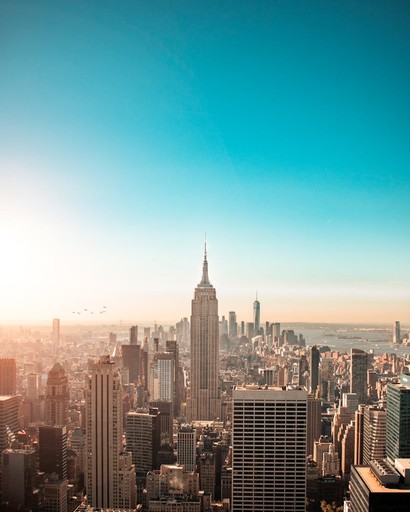

Landscapes — Van Gogh Style Transfer


Portraits — Van Gogh Style Transfer


Food — Van Gogh Style Transfer


Street Scenes — Van Gogh Style Transfer


Night Scenes — Van Gogh Style Transfer

Flowers — Van Gogh Style Transfer


Seascapes — Van Gogh Style Transfer


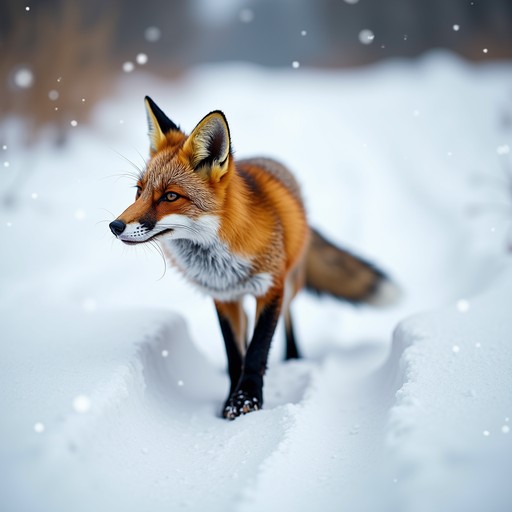
Animals — Van Gogh Style Transfer

Who Was Veronese?
Paolo Caliari was born in Verona in 1528 -- hence the name "Veronese" by which history remembers him. He trained under the local painter Antonio Badile and arrived in Venice around 1553, where he would spend the rest of his career. Venice in the mid-16th century was the richest city in Europe, a mercantile republic whose wealth expressed itself in art of extraordinary sensual beauty. Veronese became its most representative painter.
His career was defined by monumental commissions. He decorated the ceilings and walls of the Doge's Palace, the church of San Sebastiano (which became virtually his personal gallery), and the Villa Barbaro at Maser -- where his illusionistic frescoes blend painted architecture with real architecture so seamlessly that visitors still stumble at painted doorways. But his greatest works are the enormous feast paintings: The Wedding at Cana (1563), Feast in the House of Levi (1573), and The Feast in the House of Simon (1570). These canvases transform biblical meals into Venetian state banquets of impossible magnificence.
The Feast in the House of Levi famously brought Veronese before the Inquisition. The painting, originally intended as a Last Supper, was deemed inappropriate because Veronese had populated the scene with German soldiers, dwarves, jesters, a man with a nosebleed, dogs, and a parrot. When the Inquisitors demanded he remove these irreverent additions, Veronese simply changed the title -- from "Last Supper" to "Feast in the House of Levi" -- and left the painting untouched. This episode reveals the essential truth about Veronese: he was committed to visual splendor above all doctrinal considerations. The painting existed to be magnificent, and magnificent it would remain.
Veronese, together with Titian and Tintoretto, formed the great triumvirate of Venetian painting. Where Titian pursued warmth and psychological depth, and Tintoretto pursued dramatic movement and supernatural light, Veronese pursued harmony, color, and architectural grandeur. His influence extended far beyond Venice -- Rubens, Tiepolo, and Delacroix all studied his work intently, and the entire tradition of decorative ceiling painting in European palaces descends from his innovations.
Signature Techniques
What makes Veronese's paintings immediately recognizable -- and what neural style transfer captures from his work:
-
Luminous Venetian color -- Veronese's palette is among the most distinctive in Western art. He favored cool, silvery tones -- pale blues, dove greys, iridescent whites -- combined with sudden accents of warm orange, gold, and deep green. His colors have a pearlescent quality, as if light passes through them rather than merely reflecting off them. This luminosity comes from his technique of layering translucent glazes over lighter underpaintings, creating depth and radiance that opaque paint cannot achieve.
-
Architectural perspective and grandeur -- More than any other painter of his era, Veronese used architecture as a dramatic framework. His feast paintings unfold beneath classical colonnades, through arched openings, along receding corridors. Buildings are rendered with precise perspective construction, creating vast spaces that amplify the scale and spectacle of the human drama within them. This architectural framework gives his compositions their characteristic sense of ceremonial grandeur.
-
Sumptuous costume and fabric -- Veronese's figures wear the most extravagant clothing in Renaissance painting. Brocades, silks, velvets, and satins are rendered with virtuosic attention to texture and sheen. Gold embroidery catches the light. Fur-lined cloaks cascade in heavy folds. These costumes are historically anachronistic -- biblical figures dressed as Venetian aristocrats -- but visually magnificent. Style transfer captures this textural richness as a quality of surface luxury applied to any subject.
-
Crowd composition and pageantry -- Veronese excelled at organizing large numbers of figures into coherent, readable compositions. His feast paintings contain dozens or even hundreds of figures, yet each occupies a logical position in space, each contributes to the narrative, and the eye moves through the crowd in a controlled visual journey. This compositional skill translates into style transfer as an ability to handle complex, multi-element photographs without losing clarity.
-
Warm atmospheric light -- Veronese's scenes are bathed in golden Mediterranean light that unifies every element. Shadows are warm rather than cold, creating an atmosphere of perpetual afternoon sunlight. This warm, diffused illumination gives his paintings their characteristic feeling of celebration and abundance -- as if the viewer has stepped into an eternal golden hour.
Style Transfer Quality by Photo Type (ArtFID Tested)
We tested ArtRobot's Veronese style transfer across 15 photo categories using ArtFID (Art Frechet Inception Distance):
- LPIPS: content preservation. Lower = better.
- FID: style fidelity to authentic Veronese paintings. Lower = more faithful.
Combined formula: ArtFID = (1 + LPIPS) x (1 + FID)
| Photo Category | ArtFID | Stars | Notes |
|---|---|---|---|
| Interiors | 306.85 | 4 | Best category -- architectural spaces suit Veronese's spatial vision |
| Still Life | 340.55 | 4 | Strong -- luminous color and decorative richness |
| Architecture | 352.17 | 3 | Good -- perspective and grandeur translate well |
| Fantasy | 369.47 | 3 | Good -- theatrical quality enhances fantastical subjects |
| Street Scenes | 404.21 | 2 | Moderate -- architectural context provides structure |
| Food | 406.04 | 2 | Moderate -- feast painting tradition offers some affinity |
| Travel | 410.70 | 2 | Moderate -- Mediterranean settings align with Venetian aesthetic |
| Vehicles | 424.69 | 2 | Moderate -- geometric forms receive decorative treatment |
| Portraits | 443.32 | 2 | Moderate -- faces gain painterly warmth but lose detail |
| Seascapes | 454.12 | 2 | Moderate -- Venetian maritime connection |
| Flowers | 461.42 | 2 | Moderate -- color harmonies enhance botanical subjects |
| Landscapes | 481.66 | 2 | Moderate -- panoramic scope suits Veronese's scale |
| Urban Scenes | 488.11 | 2 | Moderate -- modern elements resist Renaissance treatment |
| Night Scenes | 491.38 | 2 | Weaker -- Veronese painted daylight, not darkness |
| Animals | 537.89 | 1 | Weakest -- animal forms outside Veronese's primary repertoire |
Key takeaway: Veronese is a specialist style, not a universal one. His strength is concentrated in interiors and still life -- categories that align with his decorative sensibility and architectural spatial language. The style produces its most convincing results when the source photograph already contains elements that resonate with Veronese's world: grand spaces, rich textures, formal arrangements, and warm light.
Interiors lead at 306.85 because Veronese was fundamentally a painter of architectural interiors. His feast paintings are essentially portraits of magnificent rooms filled with people. Interior photographs receive the full force of his spatial vision -- colonnades, receding perspectives, warm light flooding through arched openings.
Still Life at 340.55 benefits from Veronese's extraordinary sensitivity to surface texture and color harmony. Objects acquire the luminous, pearlescent quality of Venetian painting. Fabrics, metals, glass, and food -- all elements that Veronese rendered with obsessive attention in his feast scenes -- gain richness and visual weight.
Before & After Examples
Every row shows the original photograph alongside the AI-generated Veronese-style result.
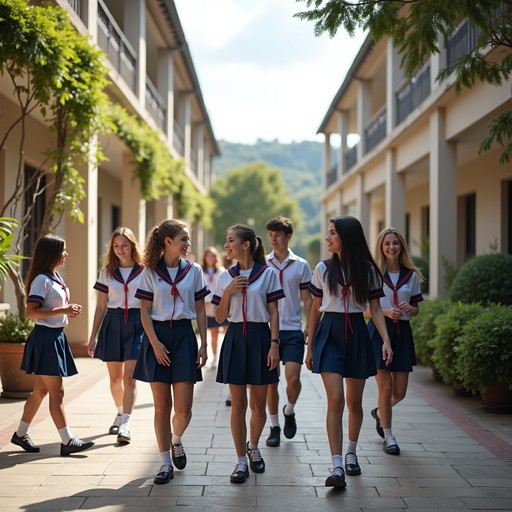
Interiors -- 4 stars (ArtFID 306.85)
Interiors are Veronese's natural domain -- his feast paintings are masterclasses in architectural interior composition.
| Original Photo | AI Result |
|---|---|
 |
|
| Source photo | ArtFID: 306.85 -- 4 stars |
The interior transformation demonstrates Veronese's spatial vision applied to real architectural spaces. Surfaces acquire the luminous, pearlescent quality of Venetian oil painting. Light becomes warm and golden, flooding through openings with the Mediterranean radiance that characterizes Veronese's feast scenes. Architectural elements gain classical grandeur -- columns, arches, and moldings are enhanced with decorative richness that transforms everyday spaces into theatrical settings.
Still Life -- 4 stars (ArtFID 340.55)
Still life subjects receive Veronese's extraordinary attention to surface texture, color harmony, and decorative arrangement.
| Original Photo | AI Result |
|---|---|
 |
|
| Source photo | ArtFID: 340.55 -- 4 stars |
The still life transformation reveals Veronese's gift for rendering material surfaces. Objects acquire a tactile richness -- metals gleam, fabrics gain weight and texture, glass catches reflected light. The warm Venetian palette unifies diverse elements into harmonious color chords. The overall effect recalls the sumptuous table settings in Veronese's feast paintings, where every goblet, plate, and piece of fruit is rendered with loving attention.
When to Use Veronese Style
Veronese's style excels in specific photographic scenarios:
1. Grand Interior Spaces. Banquet halls, palace rooms, churches, ballrooms, hotel lobbies -- any interior with architectural grandeur benefits from Veronese's spatial vision and decorative richness. The warm, golden light and classical perspective treatment transform grand spaces into Venetian theatrical settings.
2. Formal Event Photography. Weddings, galas, ceremonies, and formal gatherings align naturally with Veronese's world of feasts and celebrations. Group compositions gain the pageantry and compositional order that Veronese brought to his crowd scenes.
3. Food and Table Settings. Veronese painted the most magnificent banquets in art history. Elaborate table settings, formal dining scenes, and food photography gain the sumptuous richness of his feast paintings.
4. Mediterranean Architecture and Travel. Italian palazzos, Greek temples, Spanish cathedrals -- classical and Mediterranean architecture resonates with Veronese's architectural language. Travel photography from southern Europe gains an authentic period atmosphere.
5. Decorative Art Prints. Veronese's luminous color harmonies and decorative richness produce results that work exceptionally well as large-format prints. The pearlescent quality of Venetian painting translates beautifully to physical prints, creating wall art with genuine visual opulence.
When NOT to Use Veronese Style
Veronese's style has genuine limitations. Choose a different style for these subjects:
1. Animals and Wildlife. At 537.89 (1 star), animals are Veronese's weakest category. While he occasionally included dogs and horses in his feast scenes, animal portraiture was never his domain. For animals, use Brueghel or a style with stronger zoological affinity.
2. Night Photography and Dark Scenes. At 491.38, night scenes resist Veronese's fundamentally daylight-oriented aesthetic. His luminous palette and warm golden light work against the mood of nocturnal photography. For night scenes, use Caravaggio or El Greco.
3. Raw Landscapes Without Architecture. At 481.66, pure landscapes score moderately because Veronese was a painter of built environments, not wilderness. His genius was spatial and architectural, not atmospheric. For landscapes, use Brueghel or Romanticism.
4. Casual or Rustic Subjects. Veronese's aesthetic is inherently aristocratic and formal. Casual street photography, humble domestic scenes, and rustic subjects gain an incongruous opulence that may conflict with the intended tone.
5. Minimalist or Abstract Compositions. Veronese's style is decoratively maximal -- it adds richness, texture, and complexity. Minimalist photographs that rely on negative space and simplicity lose their essential character under Veronese's lavish treatment.
FAQ
Who was Paolo Veronese and why is he important?
Paolo Veronese (1528--1588) was one of the three great masters of Venetian Renaissance painting, alongside Titian and Tintoretto. He was the supreme painter of spectacle and grandeur, famous for enormous feast paintings that reimagined biblical scenes as Venetian state banquets of extraordinary opulence. His Wedding at Cana is the largest painting in the Louvre. Veronese's mastery of color, architectural perspective, and crowd composition influenced generations of painters, from Rubens to Tiepolo to Delacroix.
What happened when Veronese was called before the Inquisition?
In 1573, Veronese was summoned before the Venetian Inquisition because his painting of the Last Supper included "inappropriate" figures -- German soldiers, dwarves, jesters, dogs, and a man with a nosebleed. Rather than alter the painting, Veronese simply changed its title to Feast in the House of Levi, transforming a sacred subject into a secular one while keeping every "offending" figure intact. This episode reveals Veronese's commitment to visual magnificence above doctrinal correctness.
Which photos look best with Veronese style transfer?
Based on ArtFID testing, interiors (306.85, 4 stars) and still life (340.55, 4 stars) produce the best results. Architecture (352.17) and fantasy (369.47) also perform well at 3 stars. Veronese is a specialist style best suited to subjects with architectural grandeur, decorative richness, and warm lighting. Avoid animals (537.89, 1 star) and night scenes (491.38, 2 stars).
How does Veronese compare to Titian for style transfer?
Veronese and Titian were contemporaries in Venice but had distinctly different artistic personalities. Titian pursued warmth, psychological depth, and emotional intimacy, producing results with rich, warm color and painterly texture. Veronese pursued grandeur, decorative richness, and architectural spectacle, producing results with cooler, more luminous color and formal spatial structure. Choose Titian for portraits and emotional subjects; choose Veronese for interiors, architecture, and formal compositions.
Can I use Veronese style transfer for commercial projects?
Yes. Veronese's works are nearly 450 years old and firmly in the public domain. All style references used by ArtRobot are sourced from museum collections under open access / CC0 license. Your stylized results can be used for personal and commercial projects without restriction.
Ready to Transform Your Photos with Veronese's Venetian Grandeur?
Veronese's style brings the luminous color of Venice, the grandeur of Renaissance architecture, and the decorative richness of the most spectacular feast paintings ever created to your photographs. It transforms ordinary images into scenes of theatrical magnificence.
Start Your Free Veronese Style Transfer on ArtRobot ->
Related Styles
- Titian Style Transfer -- Fellow Venetian master. Warmer, more intimate, with deeper psychological resonance and richer color harmonies.
- Tintoretto Style Transfer -- The third great Venetian. More dramatic, with stronger movement, supernatural light effects, and dynamic diagonal compositions.
- Mannerism Style Transfer -- The broader movement that shaped Veronese's elegant elongations and sophisticated color choices.
- Renaissance Art Style Transfer -- The complete tradition from which Veronese emerged, encompassing Florence, Rome, and Venice.
Try It Yourself
Transform your own photos into stunning paintings with 80+ artist styles. Free to start.