
AI Artist & Tech Enthusiast
Understanding Vincent van Gogh Through Close Looking and a Research-Only AI Cohort
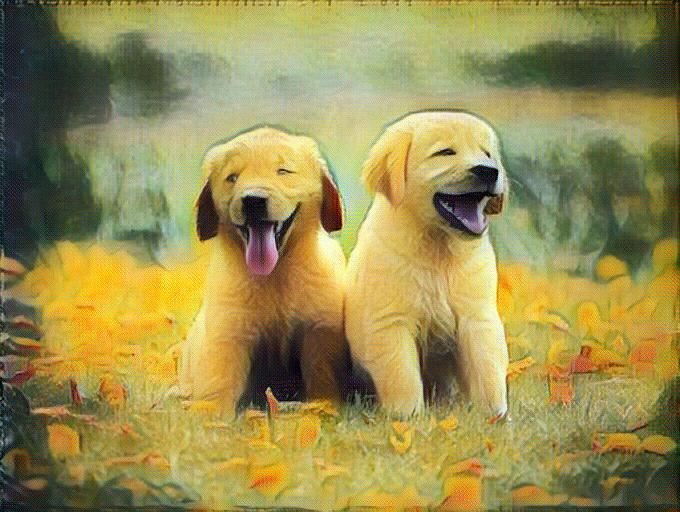
Vincent van Gogh is best understood by looking at specific formal decisions—line, color, surface, space, and composition—rather than by treating an artist's name or movement label as a filter recipe. This guide pairs authority-checked object records with a frozen three-image AI experiment. The experiment is research evidence only: it does not establish an official, exact, or artist-authored product preset.
Evidence boundary
This page discusses Vincent van Gogh for education and comparison. The research cohort is not proof that ArtRobot offers a preset named for Vincent van Gogh.
The three historical references below are authority-verified works created by Vincent van Gogh; portraits of the artist, signatures, studio records, and ‘after/workshop/attributed’ objects are excluded. Historical works and AI outputs are kept in separate sections so readers can tell catalogue evidence from computational results.
Historical reference objects
| Item | Object | Artist / maker | Date | Medium | Authority |
|---|---|---|---|---|---|
| 1 | Wheat Field with Cypresses | Vincent van Gogh | 1889 | Oil on canvas | MET object record |
| 2 | Irises | Vincent van Gogh | 1890 | Oil on canvas | MET object record |
| 3 | Self-Portrait with a Straw Hat (obverse: The Potato Peeler) | Vincent van Gogh | 1887 | Oil on canvas | MET object record |
Reference 1: Wheat Field with Cypresses
The authority record attributes this object to Vincent van Gogh. It records the medium as Oil on canvas. It dates the object 1889. Begin with what can be checked in the image: the dominant light-dark structure, the direction and density of marks, the relation of figure to ground, and the visible handling of surface and texture. Those visible relationships—not the artist's name alone—are the defensible basis for comparison. The linked institutional record supplies the object fact; any reading of mood or meaning remains interpretation.
Reference 2: Irises
The authority record attributes this object to Vincent van Gogh. It records the medium as Oil on canvas. It dates the object 1890. Begin with what can be checked in the image: the dominant light-dark structure, the direction and density of marks, the relation of figure to ground, and the visible handling of surface and texture. Those visible relationships—not the artist's name alone—are the defensible basis for comparison. The linked institutional record supplies the object fact; any reading of mood or meaning remains interpretation.
Reference 3: Self-Portrait with a Straw Hat (obverse: The Potato Peeler)
The authority record attributes this object to Vincent van Gogh. It records the medium as Oil on canvas. It dates the object 1887. Begin with what can be checked in the image: the dominant light-dark structure, the direction and density of marks, the relation of figure to ground, and the visible handling of surface and texture. Those visible relationships—not the artist's name alone—are the defensible basis for comparison. The linked institutional record supplies the object fact; any reading of mood or meaning remains interpretation.
What to look for
Use the references to compare relationships rather than hunt for superficial resemblance:
- Structure: identify the largest shapes and the main visual emphasis before looking at detail.
- Line and edge: distinguish firm contour, broken edge, and soft transition; each organizes attention differently.
- Value and color: compare light-dark grouping and color intervals, not a single sampled palette.
- Surface and medium: when the authority record supplies a medium, relate visible grain, wash, impasto, or graphic mark to that documented material; otherwise keep the observation medium-neutral.
- Space: note whether depth is built through overlap, scale, perspective, atmosphere, or deliberate flattening.
These are visual observations. Claims about intention, symbolism, or influence require separate scholarly support and are not inferred from the AI cohort.
The frozen AI research cohort
The cohort contains three licensed input photographs, three authority-checked public-domain reference objects, and three generated results. Each triplet should appear in this order and with an explicit label:
- Input photograph — licensed source material, not a historical artwork.
- Historical reference — museum object metadata and rights record shown above.
- AI research result — a computational transformation, not an authentic work by Vincent van Gogh.
Cohort item 1
Licensed Input + Historical Reference = AI Research Result
Research-only comparison using the documented museum object below. No Vincent van Gogh preset is available or automatically selected.


Cohort item 2
Licensed Input + Historical Reference = AI Research Result
Research-only comparison using the documented museum object below. No Vincent van Gogh preset is available or automatically selected.


Cohort item 3
Licensed Input + Historical Reference = AI Research Result
Research-only comparison using the documented museum object below. No Vincent van Gogh preset is available or automatically selected.


The cohort was evaluated twice with the same frozen files. Both runs returned the same recorded result: ArtFID 331.58, LPIPS 0.4755, and FID 223.72, with 3 paired samples. These numbers describe only this small cohort; they do not validate a universal style, artistic authenticity, or a production preset.
How to interpret the comparison
A useful comparison asks what survived and what changed. Check whether the main subject remains recognizable, whether the generated image borrows broad relationships of value and texture, and where photographic detail conflicts with the historical medium. A generated surface may resemble a wash, drawing, print, or painted texture while lacking the physical process, scale, and historical function of the reference object.
The visual audit marked all three results usable for this bounded research presentation. That judgment means the subject and intended comparison remain legible; it is not an attribution judgment and does not make the output a work “by” Vincent van Gogh.
Practical, honest next step
If you explore a photo with ArtRobot, browse the currently available general styles, choose a broadly described visual treatment, and compare the output with the formal traits above. Do not expect an exact artist replica. For this page, no production Style ID is attached, so the interface must not auto-select or advertise a Vincent van Gogh preset. Keep the historical reference credit and the AI-result label visible wherever the cohort appears.
FAQ
Is this an official Vincent van Gogh filter or preset?
No. production_style_id is null, and the cohort is research-only.
Are the AI images works by Vincent van Gogh?
No. They are modern computational outputs made from licensed photographs and separately documented historical references.
What does the ArtFID score prove?
It records a repeatable measurement for these three frozen pairs. It does not prove authenticity, authorship, historical accuracy, or performance on other images.
Try It Yourself
Transform your own photos into stunning paintings with 80+ artist styles. Free to start.