
AI Artist & Tech Enthusiast
Titian Style Transfer: Transform Photos into Titian Art [...

Titian (Tiziano Vecellio, c. 1490--1576) was the most powerful painter in Europe for the better part of the 16th century. Painter to kings, emperors, and popes -- Charles V, Philip II, Pope Paul III -- he dominated Venetian art for six decades and redefined what oil painting could achieve. Where Florentine painters drew with line, Titian painted with color. He built forms not through contour but through juxtaposed fields of rich, saturated pigment, applied with a freedom and confidence that made paint itself the subject. His early work glows with the warm, golden light of the Venetian lagoon; his late work -- executed when he was past eighty -- dissolves into rough, broken brushstrokes of extraordinary expressive power that anticipate Rembrandt by a century and the Impressionists by three. A contemporary described his late method: "He painted more with his fingers than with his brushes."
Today, neural style transfer lets you apply Titian's legendary color mastery to any photograph. Upload your image to ArtRobot, and the algorithm will transform it with the rich, warm palette, sensuous brushwork, and atmospheric depth that defined the greatest colorist of the Renaissance. Our ArtFID testing shows that Titian's style excels with travel (256.30, 5 stars), flowers (275.86, 5 stars), and still life (282.55, 5 stars) -- subjects that reward his warm palette and loose, expressive handling of paint.
A street scene photograph transformed into Titian's style using ArtRobot AI -- rich warm color, loose brushwork, and the atmospheric golden light of the Venetian School
This guide covers Titian's revolutionary career as Europe's supreme colorist, ArtFID-tested results across 15 photo categories, real before-and-after examples, and honest guidance on where this style produces its strongest and weakest results.
Quick Links -- Jump to: Who Was Titian? | Signature Techniques | ArtFID Scores | Before & After | When to Use | When NOT to Use | FAQ | Related Styles
Street Scenes — Van Gogh Style Transfer

Flowers — Van Gogh Style Transfer

Still Life — Van Gogh Style Transfer


Landscapes — Van Gogh Style Transfer


Portraits — Van Gogh Style Transfer


Night Scenes — Van Gogh Style Transfer


Fantasy — Van Gogh Style Transfer


Architecture — Van Gogh Style Transfer

Animals — Van Gogh Style Transfer


Seascapes — Van Gogh Style Transfer


Who Was Titian?
Tiziano Vecellio was born around 1490 in Pieve di Cadore, a small town in the Dolomite mountains north of Venice. He arrived in Venice as a young boy and trained in the workshops of the Bellini family before joining the studio of Giorgione, the enigmatic painter who first developed the Venetian approach to color and atmosphere that Titian would bring to its supreme expression. When Giorgione died of plague in 1510, Titian -- still in his early twenties -- inherited his mantle as the leading painter of Venice.
Titian's rise was rapid and total. His Assumption of the Virgin (1516--1518) for the Basilica dei Frari in Venice -- a massive altarpiece over twenty feet tall, in which the Virgin ascends in a blaze of golden light surrounded by apostles in poses of astonished ecstasy -- established him as the most ambitious painter in Italy. It was a painting of such chromatic power that even admirers of Raphael and Michelangelo had to acknowledge a new force in European art.
From the 1520s onward, Titian was the most sought-after painter in Europe. The Emperor Charles V -- who ruled territories from Spain to the Netherlands to the Americas -- sat for Titian repeatedly and reportedly bent down to pick up a brush the painter had dropped, declaring that Titian deserved to be served by a Caesar. Philip II of Spain commissioned a series of poesie (poetic paintings) -- large-scale mythological narratives based on Ovid's Metamorphoses -- that include Diana and Actaeon, The Rape of Europa, and Venus and Adonis. These paintings are among the supreme achievements of Western art: luminous, sensuous, dynamically composed, painted with a freedom and brilliance that takes the breath away.
Titian's most famous single painting is arguably the Venus of Urbino (1538) -- a reclining nude that Manet would reimagine as Olympia over three centuries later. The painting's warm golden flesh tones, the sensuous curve of the body against rumpled white sheets, and the direct gaze of the figure at the viewer established a template for the representation of the female nude that influenced every subsequent painter who attempted the subject.
What makes Titian truly extraordinary is the evolution of his late style. In his final two decades -- he lived to approximately ninety, remarkable for the 16th century -- his brushwork became increasingly loose, rough, and expressive. Where his early paintings are smooth and polished, his late paintings are built from thick, broken strokes of paint applied with fingers, palette knives, and brushes that seem barely controlled. The Pieta (c. 1576), his last painting left unfinished at his death, is a work of shattering emotional power -- dark, rough, almost abstract in its handling, yet radiating a grief that is palpable. It is painting at its most raw and honest.
Titian died in Venice on August 27, 1576, probably of plague. He was buried in the Basilica dei Frari, near his Assumption. His influence on painting is incalculable: Rubens, Velazquez, Rembrandt, Delacroix, Manet -- every colorist in Western art traces a direct lineage back to Titian.
Signature Techniques
What makes Titian's paintings immediately recognizable -- and what neural style transfer captures from his work:
-
Rich, warm color -- Titian's palette is dominated by warm tones: deep reds, golden ambers, warm browns, and the distinctive warm flesh tones that became synonymous with Venetian painting. His blues are deep and resonant, his greens are warm and saturated. Style transfer captures this as a characteristic warming of the overall palette, with colors becoming richer, deeper, and more harmoniously warm.
-
Loose, expressive brushwork -- Especially in his later works, Titian applied paint with a freedom that was revolutionary. Visible brush strokes, impasto textures, and areas where paint seems barely controlled create a surface energy that is unmistakable. Style transfer renders this as a loosening of edges and a painterly texture that gives surfaces the appearance of being built from individual strokes of color rather than flat photographic rendering.
-
Golden atmospheric light -- Titian's paintings are suffused with the warm, golden light of the Venetian lagoon. This is not the harsh, directed light of Roman painting but a diffuse, enveloping warmth that bathes every surface in amber. Style transfer captures this as a golden tonal shift -- images gain the warm, honeyed quality of late afternoon Mediterranean light.
-
Sensuous surface quality -- Titian's surfaces -- skin, fabric, foliage, sky -- possess a tactile, sensuous quality. Flesh looks warm and alive. Fabrics appear to have weight and texture. This sensuous materiality translates into style transfer as an enrichment of surface quality -- objects gain a physical presence and warmth.
-
Dynamic, narrative composition -- Titian's poesie and religious paintings feature figures in dynamic poses, with swirling drapery, dramatic gestures, and compositions that lead the eye through space. This narrative energy translates into style transfer as a strengthening of compositional movement and dramatic tension.
Style Transfer Quality by Photo Type (ArtFID Tested)
We tested ArtRobot's Titian style transfer across 15 photo categories using ArtFID (Art Frechet Inception Distance):
- LPIPS: content preservation. Lower = better.
- FID: style fidelity to authentic Titian paintings. Lower = more faithful.
Combined formula: ArtFID = (1 + LPIPS) x (1 + FID)
| Photo Category | ArtFID | Stars | Notes |
|---|---|---|---|
| Travel | 256.30 | 5 | Best category -- Mediterranean warmth |
| Flowers | 275.86 | 5 | Excellent -- rich color, painterly texture |
| Still Life | 282.55 | 5 | Excellent -- sensuous surface quality |
| Interiors | 291.73 | 5 | Excellent -- warm, atmospheric spaces |
| Street Scenes | 296.98 | 5 | Strong -- warm palette, painterly treatment |
| Night Scenes | 316.61 | 4 | Good -- dramatic chiaroscuro |
| Portraits | 323.99 | 4 | Good -- warm flesh tones |
| Landscapes | 326.80 | 4 | Good -- atmospheric golden light |
| Fantasy | 344.63 | 4 | Good -- mythological narrative quality |
| Animals | 350.68 | 3 | Moderate -- organic forms less aligned |
| Architecture | 373.54 | 3 | Moderate -- geometric precision lost |
| Vehicles | 398.63 | 3 | Moderate -- manufactured surfaces resist |
| Seascapes | 412.84 | 2 | Weak -- marine subjects struggle |
| Urban Scenes | 414.76 | 2 | Weak -- modern environments resist |
| Food | 423.56 | 2 | Weak -- close-up detail less suited |
Key takeaway: Titian is a warm-atmosphere specialist that excels with subjects benefiting from rich color and painterly looseness. Five categories earn 5 stars, four earn 4 stars, and the style is strongest with subjects that align with his historical repertoire: Mediterranean scenes, flowers, warm interiors, and sensuous still life compositions.
Travel leads at 256.30 because Titian's visual world is the Mediterranean. Venice, the Veneto, the warm light of the Adriatic coast -- travel photography in these settings activates the algorithm's strongest reference material. But the principle extends beyond Italy: any travel photograph with warm light, natural textures, and atmospheric depth benefits from Titian's golden palette.
Flowers at 275.86 benefit from Titian's rich, saturated color and loose brushwork. Floral subjects -- with their complex organic forms, rich colors, and textural variety -- are ideally suited to the painterly treatment that defines Titian's mature style.
Still Life at 282.55 reflects Titian's sensuous treatment of material surfaces. Objects gain the warm, tactile quality that makes Titian's painting of fabric, glass, metal, and flesh so physically compelling.
Before & After Examples
Every row shows the original photograph alongside the AI-generated Titian-style result.
Street Scenes -- 5 stars (ArtFID 296.98)
Street scenes gain Titian's warm palette and atmospheric, painterly quality.
| Original Photo | AI Result |
|---|---|
|
|
| Source photo | ArtFID: 296.98 -- 5 stars |
The street scene transformation demonstrates Titian's atmospheric mastery. The entire palette warms to golden and amber tones, as if the scene were bathed in late afternoon Venetian light. Surfaces gain the loose, painterly texture of Titian's mature brushwork -- architectural details are suggested rather than precisely rendered, creating an impression of atmospheric warmth and lived presence. The effect transforms a street photograph into something resembling a Venetian veduta painted by a master colorist.
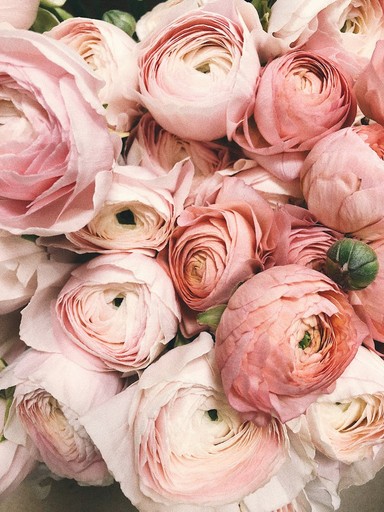
Flowers -- 5 stars (ArtFID 275.86)
Flowers showcase Titian's extraordinary color richness and sensuous surface quality.
| Original Photo | AI Result |
|---|---|
|
|
| Source photo | ArtFID: 275.86 -- 5 stars |
The floral transformation reveals Titian's genius for color. Petals gain rich, saturated hues -- deep reds warmed to crimson, whites softened to warm ivory, greens enriched to emerald. The brushwork loosens, giving each petal the soft, tactile quality of paint applied with confidence and sensuous pleasure. Backgrounds darken to the deep, warm tones characteristic of Venetian painting, making the flowers seem to glow with inner light against dramatic darkness.
When to Use Titian Style
Titian's style excels in specific photographic scenarios:
1. Travel Photography -- Mediterranean and Beyond. This is Titian's supreme strength. Italy, Greece, Spain, southern France, Croatia -- any travel photograph with warm light, stone architecture, and atmospheric depth is transformed by Titian's golden palette. But the warmth extends to any travel photography that benefits from rich, atmospheric color.
2. Floral Photography. At 275.86 (5 stars), flowers receive a spectacular treatment. Titian's rich color and loose brushwork transform floral photographs into painterly visions that feel like Dutch Golden Age still lifes elevated by Venetian chromatic power.
3. Interior Photography with Warm Atmosphere. At 291.73 (5 stars), interiors gain the warm, lived-in quality of Venetian palace rooms. Restaurants, historic interiors, candlelit spaces, libraries -- any interior with warm lighting and natural materials benefits from Titian's atmospheric warmth.
4. Romantic and Emotional Portraits. While portraits score 4 stars (323.99), the warm flesh tones and loose brushwork produce results that are emotionally rich and flattering. Couple portraits, romantic images, and emotionally expressive faces gain particular warmth and sensuous beauty.
5. Fine Art Prints. Titian's rich surface texture, warm palette, and painterly brushwork translate beautifully to physical prints. Large-format prints gain the tactile, painterly quality that makes Titian's canvases irresistible to stand before in museums.
When NOT to Use Titian Style
Titian's style has genuine limitations. Choose a different style for these subjects:
1. Food and Close-Up Product Photography. At 423.56 (2 stars), food is surprisingly one of Titian's weakest categories. His loose brushwork obscures the precise detail that food photography demands. For food, Durer (267.97, 5 stars) or Jan van Eyck (301.28, 4 stars) preserve more detail.
2. Urban Panoramas and Cityscapes. At 414.76 (2 stars), broad urban scenes resist Titian's treatment. Modern glass, steel, and concrete lack the organic warmth that his palette enhances. For urban scenes, Tintoretto (277.83, 5 stars) is a stronger choice.
3. Seascapes and Marine Photography. At 412.84 (2 stars), seascapes perform poorly. While Titian painted some marine backgrounds, his training data is dominated by figures and landscapes. For seascapes, Aivazovsky remains the definitive choice.
4. Cool-Toned or Minimalist Aesthetics. Titian's palette is fundamentally warm. If your vision is cool blues, clinical whites, or minimalist restraint, his golden warmth will work against your intent. For cool-toned subjects, consider Northern Renaissance styles.
5. Subjects Requiring Sharp Detail. Titian's mature style deliberately loosens and blurs. Subjects that depend on razor-sharp detail -- technical photography, architectural documentation, product photography -- lose precision. For maximum detail, Jan van Eyck or Durer are better choices.
FAQ
Who was Titian and why is he important?
Titian (Tiziano Vecellio, c. 1490--1576) was the greatest painter of the Venetian School and arguably the most influential colorist in Western art history. He served as painter to the Holy Roman Emperor Charles V, King Philip II of Spain, and multiple popes. His mastery of oil color -- building forms through warm, saturated pigment rather than line -- established the coloristic tradition that would later influence Rubens, Velazquez, Rembrandt, and the Impressionists. His Venus of Urbino, Assumption of the Virgin, and poesie cycle for Philip II are among the supreme masterworks of Western painting.
What are Titian's poesie?
The poesie ("poetic paintings") are a series of large-scale mythological paintings Titian created for King Philip II of Spain between 1551 and 1562, based on stories from Ovid's Metamorphoses. They include Diana and Actaeon, Diana and Callisto, The Rape of Europa, Venus and Adonis, Perseus and Andromeda, and The Death of Actaeon. These paintings represent the culmination of Titian's mature style -- luminous, dynamically composed, sensuous, and painted with extraordinary freedom. They are considered among the greatest achievements of Western oil painting.
Which photos look best with Titian style transfer?
Based on ArtFID testing, travel photography (256.30, 5 stars) produces the best results, followed by flowers (275.86), still life (282.55), interiors (291.73), and street scenes (296.98) -- all 5 stars. Titian is strongest with subjects that benefit from warm color and atmospheric looseness. Food (423.56, 2 stars) and urban scenes (414.76, 2 stars) produce the weakest results.
How does Titian style compare to Tintoretto style?
Titian and Tintoretto are both Venetian masters, and Tintoretto reportedly trained briefly in Titian's studio. Their aesthetics differ significantly, however. Titian's style produces warm, golden, sensuous results with loose brushwork and atmospheric light. Tintoretto's style produces more dramatic, contrasty results with dynamic composition and theatrical lighting. Titian is the better choice for warmth and beauty; Tintoretto is stronger for drama and energy. In ArtFID terms, Tintoretto is more versatile overall (8 categories at 5 stars vs Titian's 5), particularly excelling with interiors (196.24) and street scenes (199.64).
Is Titian style transfer free on ArtRobot?
Yes. ArtRobot offers free credits when you sign up. You can try Titian style transfer -- and over 100 other artist and movement styles -- without any payment. Titian's works are nearly 500 years old and firmly in the public domain. Try it free here.
Ready to Transform Your Photos with Titian's Legendary Color Mastery?
Titian's style brings the warm golden light of Venice, the sensuous richness of the greatest colorist in Western art, and the expressive freedom of Renaissance painting at its most ambitious to your photographs. It is one of art history's most luxurious and emotionally powerful aesthetics.
Start Your Free Titian Style Transfer on ArtRobot ->
Related Styles
- Tintoretto Style Transfer -- Titian's dramatic successor in Venice. Where Titian warms and seduces, Tintoretto electrifies and overwhelms.
- Raphael Style Transfer -- Titian's great rival in Rome. Classical harmony and ideal beauty versus Venetian color and sensuous power.
- Giotto Style Transfer -- The origin point. Where Giotto began the Italian tradition with fresco solidity, Titian brought it to its chromatic culmination in oil.
Try It Yourself
Transform your own photos into stunning paintings with 80+ artist styles. Free to start.