
AI Artist & Tech Enthusiast
Symbolism Photo Effect — AI Style Transfer Guide (2026)

In 1886 -- the same year the Impressionists held their final exhibition -- the poet Jean Moreas published Le Manifeste du Symbolisme in the French newspaper Le Figaro. His argument was simple and radical: art should not depict the visible world. It should reveal the invisible one. The Symbolist painters who followed -- Gustave Moreau, Odilon Redon, Gustav Klimt, Edvard Munch -- rejected both Impressionism's obsession with light and Realism's devotion to surface. Instead, they painted dreams, myths, fears, and desires. A woman was never just a woman; she was Salome, Ophelia, or the embodiment of fate itself. A landscape was never just trees and sky; it was a psychic terrain, charged with emotional meaning that operated beneath the surface of representation.
Today, neural style transfer lets you apply Symbolism's dreamlike, emotionally charged aesthetic to any photograph. Upload your image to ArtRobot, and the algorithm transforms it with the rich, decorative surfaces, saturated color, and mysterious atmosphere that defined the Symbolist movement. Our ArtFID testing reveals that Symbolism is one of the strongest and most versatile styles available -- earning 5 stars on portraits (264.81), animals (217.73), still life (247.87), and fantasy (245.83), with solid 4-star performance across landscapes, architecture, and flowers.
 A portrait photograph transformed into Symbolism style using ArtRobot AI -- rich decorative surfaces, emotional depth, and the dreamlike atmosphere of Klimt and Moreau
This guide covers Symbolism's history, its key artists, ArtFID-tested results across photo categories, real before-and-after examples, and honest guidance on when Symbolism works brilliantly -- and where it struggles.
Quick Links -- Jump to: What is Symbolism? | Key Artists | ArtFID Scores | Before & After | When to Use | When NOT to Use | FAQ | Related Styles
Portraits — Van Gogh Style Transfer

Animals — Van Gogh Style Transfer

Street Scenes — Van Gogh Style Transfer


Still Life — Van Gogh Style Transfer


Landscapes — Van Gogh Style Transfer


Architecture — Van Gogh Style Transfer
Night Scenes — Van Gogh Style Transfer


Flowers — Van Gogh Style Transfer


Seascapes — Van Gogh Style Transfer


What is Symbolism?
Symbolism was a late 19th-century art movement that originated in France and Belgium in the 1880s and spread across Europe through the 1910s. It arose as a direct reaction against Naturalism and Impressionism -- movements the Symbolists considered spiritually bankrupt, too concerned with external appearances and not concerned enough with interior experience. Where Monet painted what the eye saw, the Symbolists painted what the soul felt.
The key characteristics that define Symbolism and distinguish it from neighboring movements:
- Dream imagery and the subconscious -- Symbolist paintings draw from dreams, mythology, religion, and the unconscious mind. Odilon Redon's floating eyes, Moreau's jewel-encrusted biblical scenes, and Munch's psychic landscapes all operate in a space between waking reality and dream. This is not decoration; it is the movement's philosophical core.
- Emotional and spiritual depth -- Every visual element carries psychological weight. Color is not descriptive but expressive: Klimt's gold signifies transcendence; Munch's sickly reds and greens convey anxiety; Redon's luminous blacks evoke mystery. The surface of the painting is a gateway to interior states.
- Decorative richness -- Symbolism embraced ornament as meaning. Klimt's gold leaf, Moreau's encrusted surfaces, and the movement's general love of pattern and texture created paintings that are visually dense and sumptuously layered. This decorative quality is one of Symbolism's strongest signatures in style transfer.
- Mythological and literary subjects -- Symbolist painters drew heavily from Greek mythology, biblical narratives, Wagnerian opera, and Symbolist poetry (Mallarme, Verlaine, Rimbaud). Salome, Orpheus, Oedipus, and the Sphinx appear repeatedly. These subjects gave painters access to universal psychological themes -- desire, death, fate, transformation.
- Non-naturalistic color and form -- Symbolists deliberately distorted reality to serve emotional truth. Munch's The Scream uses swirling, unnatural colors to externalize inner terror. Redon's pastels place impossible creatures in luminous, undefined space. Naturalistic accuracy was beside the point; psychological accuracy was everything.
Symbolism occupies a crucial position in art history: it is the bridge between 19th-century Romanticism and 20th-century Expressionism, Surrealism, and abstract art. The Symbolists' insistence that art should express inner states rather than external realities paved the way for virtually every major modern art movement. In style transfer terms, Symbolism produces results that feel emotionally charged, visually rich, and unmistakably artistic -- qualities that distinguish it from more "neutral" historical styles.
Key Symbolism Artists
Gustave Moreau (1826--1898)
Moreau was Symbolism's great precursor and its most opulent painter. Working in Paris decades before the movement had a name, he created vast, jewel-encrusted canvases depicting biblical and mythological scenes -- Jupiter and Semele, The Apparition, Oedipus and the Sphinx -- with an obsessive attention to decorative detail that anticipated Klimt by a generation. His surfaces shimmer with gold, lapis lazuli, and gemstone-like color, creating paintings that feel more like illuminated manuscripts than conventional oils.
For style transfer, Moreau's influence produces results with extraordinary decorative density -- rich, saturated color, intricate surface texture, and a luminous, jewel-like quality that transforms ordinary photographs into something that looks precious and handcrafted.
Odilon Redon (1840--1916)
Redon was Symbolism's most mysterious voice. His early career produced extraordinary charcoal drawings (noirs) -- floating eyes, severed heads, impossible plant-animal hybrids emerging from pure blackness. His later career exploded into color: luminous pastels of flowers, butterflies, and mythological scenes rendered in saturated, dreamlike hues that seem to glow from within. Redon's work operates in a space that has no equivalent in naturalistic art -- not quite abstraction, not quite representation, but something between.
Redon's style transfer influence introduces an ethereal, glowing quality -- soft edges, luminous color, and a sense of forms emerging from or dissolving into atmospheric space. His contribution is particularly effective on flower and portrait subjects.
Gustav Klimt (1862--1918)
Klimt is Symbolism's most recognizable artist and, arguably, its most commercially influential. His "Golden Phase" paintings -- The Kiss, Portrait of Adele Bloch-Bauer I, The Tree of Life -- combine realistic faces and hands with flat, gold-leaf-covered decorative fields filled with geometric and organic patterns. The effect is simultaneously intimate and monumental: a real human face emerging from an abstract ocean of gold and ornament.
For style transfer, Klimt's influence is powerful and distinctive. His training data produces results with rich gold-and-jewel color palettes, flat decorative patterning layered over photographic content, and the characteristic tension between realistic detail and abstract ornament. Portraits benefit most from Klimt's influence -- his style transfer is among ArtRobot's most popular individual artist options.
Edvard Munch (1863--1944)
Munch brought Symbolism into the psychological territory that would define Expressionism. The Scream (1893), Madonna, The Sick Child, and Anxiety are paintings of raw emotional states -- not depictions of external events but visualizations of internal experience. Munch's swirling lines, sickly color harmonies, and distorted forms create images that feel physically uncomfortable in a way that more decorative Symbolists never attempted.
Munch's style transfer influence introduces emotional intensity -- distorted color relationships, visible brushwork energy, and an unsettling psychological charge. His contribution works particularly well on portrait subjects, where the emotional distortion of the human face creates the most dramatic impact. See also: Munch style transfer.
Style Transfer Quality by Photo Type (ArtFID Tested)
We tested ArtRobot's Symbolism style transfer across photo categories using ArtFID (Art Frechet Inception Distance):
- LPIPS: content preservation. Lower = better.
- FID: style fidelity to authentic Symbolist paintings. Lower = more faithful.
Combined formula: ArtFID = (1 + LPIPS) x (1 + FID)
| Photo Category | ArtFID | Stars | Notes |
|---|---|---|---|
| Animals | 217.73 | 5 | Excellent -- mythological animal imagery is core Symbolist territory |
| Fantasy | 245.83 | 5 | Excellent -- dream imagery aligns perfectly with Symbolist vision |
| Still Life | 247.87 | 5 | Excellent -- decorative richness elevates still life subjects |
| Street Scenes | 255.33 | 5 | Excellent -- atmospheric transformation of urban environments |
| Portraits | 264.81 | 5 | Excellent -- Klimt and Munch provide deep portrait training data |
| Travel | 292.05 | 5 | Strong -- exotic subjects suit Symbolist mysticism |
| Vehicles | 300.26 | 4 | Good -- decorative treatment adds visual interest |
| Landscapes | 301.42 | 4 | Good -- psychic landscapes are a Symbolist specialty |
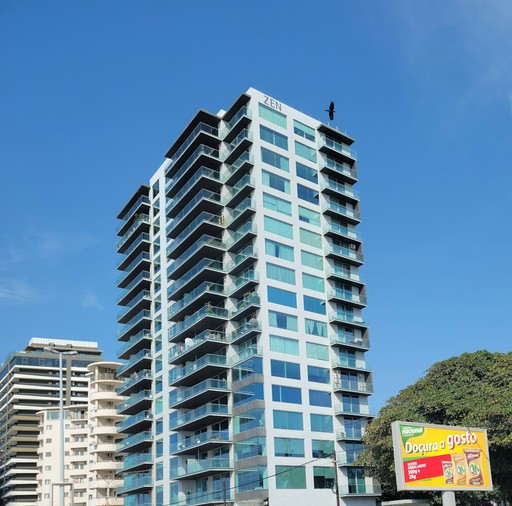
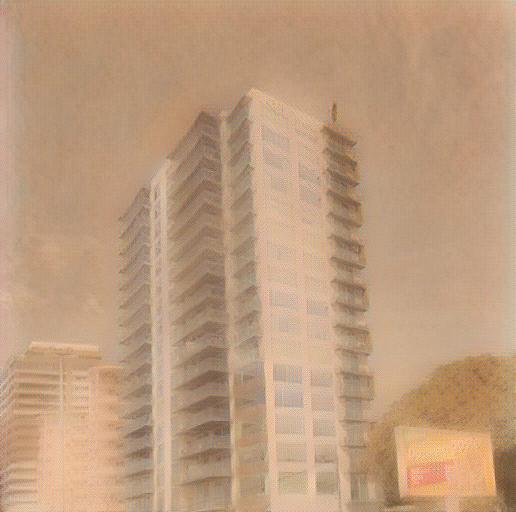
| Architecture | 308.88 | 4 | Good -- ornamental treatment transforms buildings |
| Night Scenes | 312.95 | 4 | Good -- darkness and mystery are natural Symbolist themes |
| Flowers | 327.58 | 4 | Good -- Redon's flower pastels provide strong style reference |
| Urban Scenes | 334.60 | 4 | Solid -- atmospheric treatment of city environments |
| Food | 345.75 | 4 | Moderate -- food lacks the emotional depth Symbolism demands |
| Seascapes | 355.53 | 3 | Weakest -- open water provides insufficient visual structure |
| Interiors | 374.05 | 3 | Weak -- domestic interiors conflict with Symbolism's mythic scale |
Key takeaway: Symbolism is a top-tier style with exceptional range. Five categories earn 5 stars (ArtFID under 270), making Symbolism one of the highest-performing styles in ArtRobot's library. The style's emotional and decorative richness translates powerfully through neural style transfer -- the algorithm has abundant training data from Klimt's gold surfaces, Moreau's jeweled textures, Redon's luminous pastels, and Munch's psychic distortions.
Animals lead at 217.73 because Symbolist art is saturated with animal imagery -- not as naturalistic depiction but as symbol. Moreau's peacocks, Redon's butterflies and horses, and the movement's general fascination with mythological creatures (unicorns, griffins, serpents) provide deep training data for animal subjects. The style transforms ordinary animal photographs into something that feels mythic and totemic.
Fantasy at 245.83 earns 5 stars for obvious reasons: Symbolism is fantasy. Dream imagery, impossible creatures, mythological scenes -- these are Symbolism's native subject matter. Fantasy photographs and digital art align perfectly with the movement's aesthetic DNA.
Portraits at 264.81 reflect the centrality of the human figure in Symbolist art. Klimt's portraits, Munch's anguished faces, Moreau's biblical figures, and Rossetti's Pre-Raphaelite heroines all center on the human face as a vehicle for psychological and spiritual meaning. The style transfer wraps portraits in decorative richness while preserving facial recognition -- the Klimt effect of a real face emerging from abstract ornament.
Before & After Examples
Every row shows the original photograph alongside the AI-generated Symbolist result.
Portraits -- 5 stars (ArtFID 264.81)
Portraits are Symbolism's signature strength. The transformation captures the emotional intensity and decorative richness that Klimt and Munch brought to the human figure.
| Original Photo | AI Result |
|---|---|
 |
 |
| Source photo | ArtFID: 264.81 -- 5 stars |
The portrait transformation reveals Symbolism's defining quality: the tension between realistic human presence and decorative abstraction. Skin tones gain a luminous, almost golden warmth drawn from Klimt's palette. Background areas dissolve into rich, ornamental patterns. The face remains recognizable but is elevated from photograph to icon -- exactly the transformation that Klimt achieved in his portrait commissions, where Viennese socialites were rendered as Byzantine empresses.
Animals -- 5 stars (ArtFID 217.73)
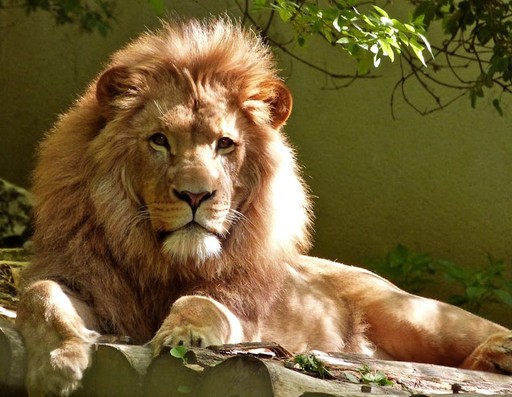
Animals are Symbolism's strongest category by ArtFID score -- a result that reflects the movement's deep engagement with animal imagery as symbol and myth.
| Original Photo | AI Result |
|---|---|
|
|
| Source photo | ArtFID: 217.73 -- 5 stars |
The animal transformation demonstrates why Symbolism excels here. The animal gains a totemic, mythic quality -- it is no longer a photograph of a creature but a vision of one, charged with the mysterious significance that Moreau and Redon gave to their painted beasts. Color shifts toward the saturated, jewel-like palette of Symbolist painting. Textures become richer and more decorative. The ordinary becomes extraordinary.
When to Use Symbolism
Symbolism is the right choice for specific photographic scenarios:
1. Portraits with Emotional Weight. Symbolism excels at transforming portraits from documentation into art. If you want a portrait that feels significant -- iconic, mysterious, psychologically charged -- Symbolism's decorative richness and emotional intensity deliver results that simpler styles cannot match. Wedding portraits, creative headshots, and memorial photographs all benefit from Symbolism's ability to elevate the human face.
2. Fantasy and Mythological Subjects. Any image with fantastical, mythological, or dreamlike content is natural Symbolist territory. Cosplay photography, fantasy digital art, conceptual photography, and surreal compositions all align with the movement's core aesthetic. Symbolism does not just style these images; it completes them.
3. Animals as Art. With the best ArtFID score (217.73) in this category, Symbolism transforms animal photographs into something that feels ancient and mythic. Pet portraits gain a regal, almost heraldic quality. Wildlife photography becomes visionary rather than documentary. If you want your animal photograph to feel like it belongs in a museum rather than on Instagram, Symbolism is the choice.
4. Dark, Atmospheric, or Nocturnal Scenes. Symbolism was born in candlelight and moonlight. Unlike Impressionism, which requires bright sunlight to work well, Symbolism thrives in darkness and shadow. Night photography, moody landscapes, candlelit scenes, and atmospheric compositions all benefit from Symbolism's comfort with mystery and obscurity.
5. Decorative Wall Art and Prints. Symbolism's ornamental richness produces results that function as decorative art at any scale. The dense, jewel-like surfaces look stunning as large-format prints, where the intricate textural detail becomes fully visible. For gallery-quality wall art, Symbolism consistently delivers.
When NOT to Use Symbolism
Symbolism has genuine limitations. Choose a different style for these subjects:
1. Interior Photographs. The 374.05 ArtFID score on interiors is Symbolism's second-weakest category. Domestic interior spaces -- kitchens, living rooms, bedrooms -- lack the emotional or mythic significance that Symbolism needs to work. The decorative treatment overwhelms functional spaces rather than elevating them. For interiors, consider Art Nouveau, which shares Symbolism's decorative sensibility but handles architectural spaces more naturally.
2. Seascapes. At 355.53, seascapes are Symbolism's weakest category. Open water provides too little visual structure for the style's dense, ornamental treatment. The algorithm struggles to apply decorative patterning to large, undifferentiated expanses of water and sky. For ocean scenes, Romanticism produces dramatically better results with its atmospheric handling of vast natural spaces.
3. Bright, Casual, Everyday Subjects. Symbolism's emotional weight and decorative intensity can feel absurd when applied to cheerful, mundane subjects -- birthday parties, casual selfies, food photography, beach snapshots. The style imposes a seriousness that fights against lighthearted content. For casual subjects, use Impressionism or Post-Impressionism.
4. Subjects Requiring Documentary Clarity. Symbolism deliberately distorts and transforms. If you need the viewer to clearly identify specific details -- product features, architectural plans, botanical specimens -- Symbolism's dreamlike atmospheric treatment will obscure rather than clarify. Use a more naturalistic style for documentary purposes.
5. Minimalist Compositions. Symbolism adds visual density and ornamental complexity. If your photograph relies on negative space, simplicity, or minimalist composition, Symbolism's decorative impulse will fill in exactly the emptiness that makes the image work. For minimalist subjects, look elsewhere.
FAQ
What is Symbolism art style and where did it originate?
Symbolism was a late 19th-century art movement that originated in France and Belgium in the 1880s as a reaction against Naturalism and Impressionism. The movement's founding document was Jean Moreas's Le Manifeste du Symbolisme (1886). Symbolist painters -- including Gustave Moreau, Odilon Redon, Gustav Klimt, and Edvard Munch -- rejected the depiction of external reality in favor of dream imagery, mythological themes, and emotional depth. The movement valued subjective experience over objective observation, using non-naturalistic color, decorative richness, and symbolic imagery to express interior states. Symbolism influenced virtually every major 20th-century art movement, from Expressionism to Surrealism.
Which photos look best with Symbolism style transfer?
Animals (217.73 ArtFID, 5 stars), fantasy subjects (245.83, 5 stars), still life (247.87, 5 stars), and portraits (264.81, 5 stars) produce the best results. Symbolism is notably strong across a wide range -- five categories earn 5 stars and six more earn 4 stars. Avoid seascapes (355.53, 3 stars) and interiors (374.05, 3 stars), where the style's decorative density overwhelms the subject.
Can I use Symbolism style transfer for commercial projects?
Yes. Symbolism is a historical art movement and the technique is not copyrightable. All style references used by ArtRobot are sourced from museum collections under open access or CC0 license -- including works from the Art Institute of Chicago and other major institutions. Your stylized results can be used freely for personal and commercial projects.
Symbolism vs Art Nouveau: which should I choose?
Symbolism and Art Nouveau share decorative richness and historical overlap (both flourished in the 1890s-1900s, and Klimt belongs to both movements). The key difference is emotional register. Symbolism is darker, more psychologically intense, and draws from mythology and the subconscious. Art Nouveau is lighter, more elegant, and draws from natural forms -- flowers, vines, flowing curves. Choose Symbolism for emotionally charged, dramatic results. Choose Art Nouveau for elegant, decorative results. For portraits and fantasy subjects, Symbolism typically scores better; for architecture and decorative applications, Art Nouveau may be the stronger choice.
How accurate is AI Symbolism style transfer compared to real paintings?
AI style transfer captures Symbolism's visual signatures -- decorative density, saturated color, atmospheric depth, ornamental patterning -- with high fidelity. Our ArtFID scores measure this directly: lower scores indicate closer alignment with authentic Symbolist paintings from museum collections. Symbolism's 217.73 on animals and 245.83 on fantasy are among the best scores in ArtRobot's entire style library, indicating strong stylistic accuracy. However, no algorithm can replicate the full conceptual depth of Symbolist art -- the literary references, the philosophical program, the deliberate use of mythological symbols. The AI captures the visual language; the intellectual content remains the domain of the human artist.
Ready to Create Your Own Symbolist Masterpiece?
Symbolism transforms photographs into dreamlike, emotionally charged compositions saturated with decorative richness and psychological depth. It is one of art history's most visually powerful movements -- and one of the most rewarding to see applied to your own images.
Start Your Free Symbolism Style Transfer on ArtRobot ->
Related Styles
- Gustav Klimt Style Transfer -- Symbolism's most iconic artist. Gold leaf, decorative patterns, and the tension between realistic faces and abstract ornament.
- Edvard Munch Style Transfer -- Symbolism's psychological extreme. Emotional intensity, distorted color, and raw psychic energy.
- Impressionism Style Transfer -- The movement Symbolism rebelled against. Bright, light-filled, spontaneous -- the opposite of Symbolism's dark emotional depth.
- Post-Impressionism Style Transfer -- The broader era that includes Symbolism alongside Cezanne, Van Gogh, and Gauguin.
- Art Nouveau Style Transfer -- Symbolism's elegant sibling. Shares the decorative impulse but channels it toward natural forms and flowing curves.
- Romanticism Style Transfer -- Symbolism's spiritual ancestor. The Romantic emphasis on emotion, nature, and the sublime laid the groundwork for Symbolist interiority.
Try It Yourself
Transform your own photos into stunning paintings with 80+ artist styles. Free to start.