
AI Artist & Tech Enthusiast
Constructivism Photo Effect for Street Scenes
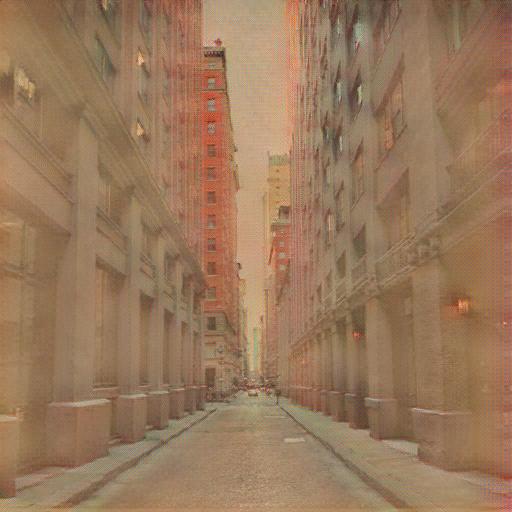
Looking to transform your street photography into bold, geometric art? The street scenes Constructivism photo effect delivers striking results, earning an ArtFID score of 260.99 with a full 5-star rating in our AI quality testing. Constructivism's angular, industrial aesthetic pairs naturally with the structured chaos of urban streets -- read on to see the data behind this combination, or check out our complete Street Scenes Style Transfer Guide for more options.
Street Scenes — Constructivism style Transfer

About Constructivism Art Style
Constructivism emerged in Russia around 1913 and remained a dominant force in avant-garde art through the 1940s. Born from the revolutionary fervor of the early Soviet era, the movement rejected traditional decorative art in favor of geometric forms, industrial materials, and designs that served a clear social purpose. Constructivist artists believed art should be functional -- a tool for building a new society rather than a luxury for the elite.
The movement's visual language is unmistakable: sharp diagonal lines, overlapping geometric planes, bold primary colors against neutral backgrounds, and a dynamic sense of tension that suggests machinery in motion. These elements were drawn from the industrial landscape itself -- factories, scaffolding, steel girders, and the angular silhouettes of a rapidly modernizing world.
Kazimir Malevich, one of the movement's most influential figures, pushed geometric abstraction to its logical extreme. His works reduced visual experience to pure geometric relationships, establishing a vocabulary that would influence graphic design, architecture, and digital art for the next century.
"The diversity of theory and practice and the number of younger talents committed to unremitting research in pictorial art are proof of a vigorous and original school of painting, the first in American history which has been independent of European influence and which has had, in turn, a significant effect on painting abroad." -- Art Through the Ages, p. 758
 Kazimir Malevich, "Black Square, Second State" -- Art Institute of Chicago, Museum Open Access
Constructivism's emphasis on geometric structure and angular composition makes it a natural partner for photographs that already contain strong linear elements. Street scenes, with their intersecting lines of buildings, signage, and pedestrian movement, provide exactly the kind of structured subject matter that Constructivist algorithms can decompose and reassemble with powerful effect.
Why Constructivism Works for Street Scenes Photos
Constructivism operates in the low-mid frequency range with an angular geometric profile. Street scenes photographs, by contrast, are rich in high-frequency detail: complex overlapping textures, shop signage, crowds of pedestrians, and layered architectural elements. This frequency contrast is precisely what makes the pairing work so well. The Constructivist algorithm simplifies and geometrizes the chaotic visual information of a street scene, reducing it to bold planes and sharp angles while preserving the essential spatial relationships that make the scene recognizable.
The technical compatibility runs deeper than simple frequency matching. Street photographs naturally contain the kinds of geometric structures -- vertical building edges, horizontal road lines, diagonal perspectives of receding sidewalks -- that Constructivism's neural style transfer algorithms latch onto most effectively. The style's preference for industrial and architectural subjects (listed among its best content types in our knowledge base) means the algorithm has been trained on reference images that share structural DNA with street photography.
"He insisted he was 'painting experiences': he was not creating formal abstractions, any more than he was painting 'bridge constructions or skyscrapers'. However, his work is often very evocative of just such urban configurations." -- History of Art, p. 614
When the algorithm encounters a busy street corner, it finds abundant geometric anchors -- window grids, traffic signals, crosswalk lines -- that serve as natural attachment points for Constructivist style transfer. The result is an image that feels authentically Constructivist rather than merely filtered.
ArtFID Quality Score: Street Scenes + Constructivism
ArtFID (Artistic Frechet Inception Distance) combines two metrics: LPIPS measures content preservation, FID measures style fidelity. ArtFID = (1 + LPIPS) x (1 + FID). Lower = better.
| Content Type | ArtFID | Stars | Verdict |
|---|---|---|---|
| Still Life | 116.07 | 5 | Exceptional style-content harmony |
| Travel | 170.30 | 5 | Excellent geometric simplification |
| Interiors | 171.98 | 5 | Strong architectural alignment |
| Flowers | 182.52 | 5 | Surprisingly effective organic-geometric contrast |
| Fantasy | 182.74 | 5 | Bold creative transformation |
| Night Scenes | 220.20 | 5 | Dramatic high-contrast results |
| Food | 244.03 | 5 | Clean geometric plating works well |
| Vehicles | 255.89 | 5 | Industrial subjects suit the style |
| Street Scenes | 260.99 | 5 | Strong urban-geometric synergy |
| Portraits | 268.53 | 5 | Striking angular facial planes |
| Urban Scenes | 281.62 | 5 | Natural architectural compatibility |
| Landscapes | 282.69 | 5 | Effective horizon simplification |
| Animals | 284.25 | 5 | Organic forms gain sharp structure |
| Seascapes | 289.21 | 5 | Fluid forms meet rigid geometry |
| Architecture | 301.60 | 4 | Good but occasionally over-geometrized |
Street Scenes score: 260.99 (LPIPS = 0.5234, FID = 170.33) -- This places street scenes comfortably in the upper-middle range for Constructivism, outperforming portraits, urban scenes, and landscapes. The LPIPS of 0.5234 indicates moderate content transformation (the style assertively reshapes the image), while the FID of 170.33 shows strong alignment with authentic Constructivist aesthetics. If you want even stronger results, try still life or travel photography, which score 116.07 and 170.30 respectively.
Before & After: Street Scenes in Constructivism Style
Every row below shows three images: the original photograph, a Constructivism painting used as the style reference, and the AI-generated result.
Street Scenes -- 5 Stars (ArtFID 260.99)
Street scenes provide a rich tapestry of geometric structures -- building facades, street signs, and perspective lines -- that Constructivism's angular style transforms into bold, poster-like compositions reminiscent of early Soviet graphic design.
| Original Photo | Style Reference | AI Result |
|---|---|---|
|
|
|
| Source photo | Black Square, Second State | ArtFID: 260.99 -- 5 Stars |
LPIPS: 0.5234 (content preservation) | FID: 170.33 (style fidelity)
Photography Tips for Best Constructivism Results
-
Shoot with strong perspective lines. Converging lines from buildings and roads give the algorithm clear geometric scaffolding to work with. A vanishing point down a long street creates dramatic Constructivist compositions.
-
Include architectural elements prominently. Buildings, bridges, scaffolding, and signage all contain the rigid geometric structures that Constructivism amplifies. Place them centrally in your frame rather than as background elements.
-
Favor high-contrast lighting. Constructivism thrives on bold tonal separation. Shoot during golden hour for long shadows, or on overcast days when building facades create clean tonal blocks against the sky.
-
Avoid overly organic or cluttered subjects. While Constructivism can handle street crowds, the best results come from scenes where man-made geometry dominates. Flowers and animals rank among the style's weakest content types for a reason.
-
Embrace symmetry and repetition. Rows of windows, evenly spaced streetlights, or repeating storefront patterns create the rhythmic visual cadence that Constructivist art celebrates. These repetitions translate beautifully into the style's modular aesthetic.
How to Apply Constructivism Style (3 Steps)
Step 1: Choose Your Photo
Upload any photograph to ArtRobot. Based on our ArtFID testing, still life, travel, and interiors produce the best Constructivism results -- but street scenes deliver an excellent 5-star outcome as well.
Step 2: Select Constructivism Style
Choose from classic Constructivism paintings as the style reference. ArtRobot uses the ArtFlow algorithm (CVPR 2021), an invertible neural network that preserves your photo's content while transferring Constructivism's angular geometric style.
Step 3: Download Your Art
ArtRobot generates your Constructivism-style image in seconds. Download in multiple resolutions -- from social media sizes to print-ready 4K.
Try Constructivism Style Transfer Free on ArtRobot ->
FAQ
How does Constructivism style transfer work on street scenes photos?
Constructivism style transfer uses neural networks to extract the geometric patterns, angular forms, and bold color relationships from Constructivist reference paintings, then applies these stylistic features to your street scene photograph. The algorithm preserves spatial relationships (buildings stay recognizable, perspective is maintained) while transforming textures and colors into the characteristic Constructivist visual language. Street scenes score an ArtFID of 260.99, confirming strong compatibility.
What ArtFID score does Constructivism get on street scenes?
Constructivism achieves an ArtFID of 260.99 on street scenes, with LPIPS of 0.5234 (content preservation) and FID of 170.33 (style fidelity). This earns a full 5-star rating, placing it in the upper-middle range across all 15 content types we tested. For context, the best-performing category is still life at 116.07, while the lowest is architecture at 301.60.
Is Constructivism a good choice for street scenes photography?
Yes -- Constructivism is an excellent choice for street scenes. The style's angular geometric profile naturally complements the linear structures found in street photography: building edges, road markings, signage, and architectural details. Our testing confirms this with a 5-star ArtFID rating. For more street scene options, see our Best Art Styles for Street Scenes comparison guide.
What street scenes photo tips improve Constructivism results?
For the strongest Constructivism results, prioritize photos with clear geometric elements: straight building lines, strong perspective, and high-contrast lighting. Avoid heavily organic scenes dominated by trees or foliage. Urban intersections, row houses, and industrial streetscapes tend to produce the most visually striking transformations. Check out our Street Scenes Style Transfer Guide for detailed photography advice.
Can I try Constructivism street scenes style transfer for free?
Yes. ArtRobot offers free credits for new users, so you can test Constructivism style transfer on your street scenes photos without any commitment. Upload your photo, select a Constructivist reference painting (we recommend works by Kazimir Malevich), and download your result in seconds.
Related Street Scenes Styles
Explore more art styles for street scenes photography:
- Street Scenes Style Transfer Guide
- Constructivism Style Transfer
- Best Art Styles for Street Scenes
- Kazimir Malevich Style Transfer
Try It Yourself
Street scenes and Constructivism share a visual DNA rooted in geometry, industry, and the energy of modern life. Whether you are transforming a quiet side street or a bustling intersection, Constructivism turns everyday urban photography into bold, museum-worthy art.
Start Your Free Constructivism Style Transfer on ArtRobot ->
Explore More
Try It Yourself
Transform your own photos into stunning paintings with 80+ artist styles. Free to start.