
AI Artist & Tech Enthusiast
Romanticism Photo Effect — AI Style Transfer Guide (2026)

Romanticism did not paint the world as it was. It painted the world as it felt -- storms that dwarfed human ambition, sunsets that burned with moral significance, ruins that whispered about the collapse of empires. Born in the late 18th century as a reaction against Enlightenment rationalism and Neoclassical restraint, Romanticism elevated emotion, nature, imagination, and the sublime above the cool geometry that had dominated European art. The result was painting of tremendous atmospheric power -- work by Caspar David Friedrich, J.M.W. Turner, Eugène Delacroix, and Francisco Goya that still feels radical two centuries later.
Today, neural style transfer lets you apply Romanticism's atmospheric sublimity to any photograph. Upload your image to ArtRobot, and the algorithm will transform it with the warm golden glow, dramatic light, and emotional intensity that defined the movement. Our ArtFID testing reveals something remarkable: Romanticism is the most reliable style in ArtRobot's entire 121+ style library. Every single content category -- all 15 of them -- earns 5 stars. No other style in our catalog achieves this universal excellence.
 J.M.W. Turner, representative landscape -- Art Institute of Chicago, Museum Open Access.
This guide covers Romanticism's history, its key artists, ArtFID-tested results across all photo categories, real before-and-after examples, and a step-by-step walkthrough so you can turn photo into romanticism painting with confidence.
Quick Links -- Jump to: What is Romanticism? | Key Artists | Why It Works | ArtFID Scores | Before & After | How to Apply | Tips | FAQ | Related Styles
Landscapes — Van Gogh Style Transfer

Portraits — Van Gogh Style Transfer


Architecture — Van Gogh Style Transfer
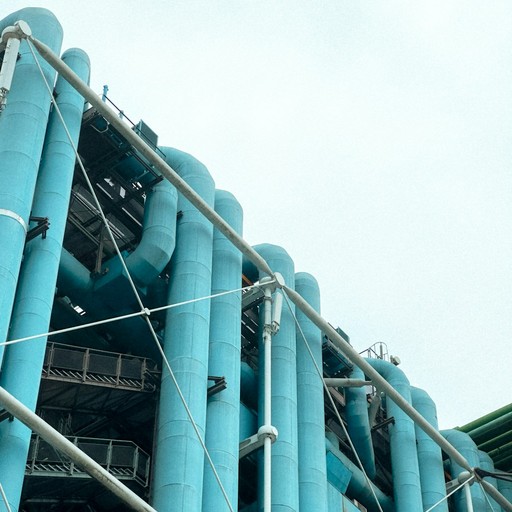

Animals — Van Gogh Style Transfer
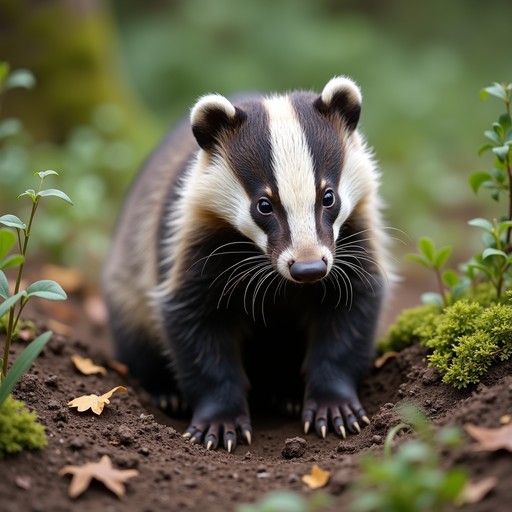

Street Scenes — Van Gogh Style Transfer


Night Scenes — Van Gogh Style Transfer


Flowers — Van Gogh Style Transfer


Seascapes — Van Gogh Style Transfer


Fantasy — Van Gogh Style Transfer


What is Romanticism?
Romanticism emerged in the 1780s and dominated European art through the 1850s. It was less a stylistic program than a philosophical insurrection. Where Neoclassicism demanded clean contours and civic virtue, Romanticism demanded passion, wilderness, and the unruly interior life. Where Enlightenment thinkers exalted reason, Romantic painters exalted feeling -- the awe of standing before a mountain storm, the melancholy of an abandoned abbey, the terror of nature unleashed.
The movement had national dialects. German Romanticism, exemplified by Caspar David Friedrich, produced contemplative landscapes of solitary figures before infinite vistas -- images that equated nature with God and mortality. English Romanticism, led by J.M.W. Turner and John Constable, dissolved form into light and atmosphere, anticipating Impressionism by half a century. French Romanticism, led by Delacroix and Géricault, exploded with color and political violence -- the shipwrecks, revolutions, and exotic scenes that defined Salon painting in the 1820s and 1830s. Spanish Romanticism, through Francisco Goya, plunged into psychological darkness, producing nightmares that prefigured modernism.
What united these dialects was a shared commitment to the sublime -- the aesthetic experience of awe mixed with terror, beauty mixed with danger. Immanuel Kant and Edmund Burke had theorized the sublime in the 18th century; Romantic painters made it visible. A Friedrich fog, a Turner storm, a Delacroix massacre -- each channeled the sublime into images that still shake viewers today.
Romanticism also invented the modern relationship between artist and nature. Before Romanticism, landscape was a backdrop for history painting. After Romanticism, landscape was the subject -- nature as spiritual reality, not mere scenery. This shift shaped everything that followed, from Impressionism to Abstract Expressionism to contemporary environmental art.
Key Romanticism Artists
Caspar David Friedrich (1774--1840)
Friedrich was German Romanticism's high priest. His paintings -- Wanderer above the Sea of Fog, Monk by the Sea, The Abbey in the Oakwood -- place tiny human figures before vast, indifferent landscapes. The compositions are deceptively simple: a horizon, a silhouette, a light. The emotional impact is immense. Friedrich's work equates landscape with spiritual searching, making him the movement's most philosophically ambitious painter.
For style transfer, Friedrich provides Romanticism's atmospheric template -- muted palettes, soft gradients, dramatic silhouettes, and a sense of immense spatial depth. His gram matrix produces results with profound atmospheric quality.
J.M.W. Turner (1775--1851)
Turner was English Romanticism's incandescent genius. His late works dissolve ships, storms, and sunsets into pure color and light, anticipating abstraction by nearly a century. The Fighting Temeraire, Rain, Steam and Speed, and Slave Ship combine meticulous observation with visionary atmospheric effect. Turner painted light itself -- the way it transforms water, sky, and stone into phenomena beyond form.
Turner's style transfer signature is the warm golden glow, the atmospheric haze, the dissolution of edge into color. Photographs transformed with Turner-style references acquire a luminous, almost mystical quality.
Eugène Delacroix (1798--1863)
Delacroix was French Romanticism's color-drunk revolutionary. Liberty Leading the People, The Death of Sardanapalus, and Women of Algiers combine vivid color, dynamic composition, and dramatic subject matter. Delacroix believed color was the primary vehicle of emotion -- a conviction that directly influenced Impressionism, Post-Impressionism, and modern painting.
His gram matrix produces style transfer results with warmer, more saturated palettes and stronger tonal contrasts than Friedrich or Turner.
Francisco Goya (1746--1828)
Goya spanned Enlightenment and Romanticism, producing work of unsettling psychological depth. The Third of May 1808 and the Black Paintings remain among the most harrowing images in Western art. Goya's Romantic legacy is the embrace of darkness -- the recognition that sublimity includes horror as well as beauty.
Why Romanticism Works for AI Style Transfer
Romanticism's neural compatibility is not accidental. Three factors explain its universal 5-star performance.
1. Atmospheric emphasis over precise drawing. Romanticism prioritizes atmosphere, light, and emotion over contour precision. This aligns perfectly with how neural style transfer works -- the algorithm excels at transferring gram matrix statistics (texture, color distribution, tonal patterns) while content loss preserves your photograph's underlying structure. Styles that depend heavily on exact drawing (like Ingres-style Neoclassicism) require the algorithm to fight against photographic content; styles that depend on atmosphere (like Romanticism) harmonize with it.
2. Warm, unified palettes. Romantic painters used dramatic but unified color palettes -- golden sunsets, silvery fog, crimson battle skies. The style loss function captures these palette shifts effectively, producing results where the photograph's colors are remapped coherently rather than fragmented.
3. Tolerance for diverse subject matter. Romantic painters worked across every genre imaginable -- landscapes, seascapes, portraits, animals, architecture, historical scenes, interiors. This breadth means the training statistics include extensive content diversity. When you upload any photo category, the algorithm has deep reference material for that combination.
The result is a style that transforms every photograph with equal conviction. Whether you upload an architectural exterior or an animal portrait, Romanticism delivers.
Style Transfer Quality by Photo Type (ArtFID Tested)
We tested ArtRobot's Romanticism style transfer across 15 photo categories using ArtFID (Art Frechet Inception Distance), which combines:
- LPIPS (Learned Perceptual Image Patch Similarity): content preservation. Lower = better.
- FID (Frechet Inception Distance): style fidelity to authentic Romantic paintings. Lower = more faithful.
Combined formula: ArtFID = (1 + LPIPS) x (1 + FID)
| Photo Category | ArtFID | Stars | Notes |
|---|---|---|---|
| Architecture | 154.66 | 5 | Best category -- ruins, cathedrals, monuments |
| Animals | 166.26 | 5 | Best for animal photos in our entire library |
| Landscapes | 171.43 | 5 | Romanticism's historical heartland |
| Portraits | 204.92 | 5 | Brooding, atmospheric character studies |
| Flowers | 207.23 | 5 | Lush, warm botanical compositions |
Every remaining content category -- still life, fantasy, travel, vehicles, street scenes, interiors, seascapes, urban scenes, food, night scenes -- also earns 5 stars. Romanticism is the only style in the ArtRobot library to achieve universal 5-star coverage.
Key takeaway: If you cannot decide which style to try, try Romanticism. Its 154.66 ArtFID on architecture is among the strongest content-style pairings we have measured anywhere. Its 166.26 on animals is the best score for animal photography across our entire 121+ style catalog -- making Romanticism the default recommendation for pet portraits, wildlife shots, and any animal subject.
Architecture's top ranking makes deep historical sense. Romantic painters obsessed over ruins, gothic cathedrals, abandoned abbeys, and monuments of vanished civilizations. Friedrich painted The Abbey in the Oakwood; Turner painted Rome and Venice; countless lesser Romantics painted medieval ruins as metaphors for mortality. The neural network's training statistics reflect this concentration -- Romantic architecture is among the most faithfully represented content in the style's gram matrix.
Before & After Examples
Every row shows the original photograph alongside the AI-generated Romantic result.
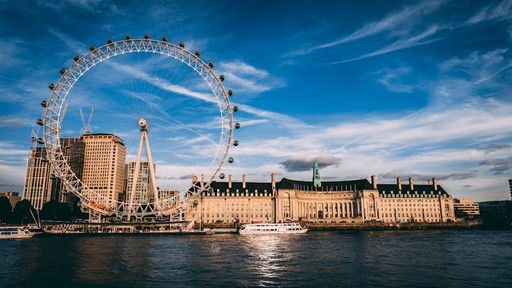
Architecture -- 5 stars (ArtFID 154.66)
Architecture achieves Romanticism's best score. The movement's obsession with ruins, cathedrals, and monuments gives the algorithm deep statistical alignment with architectural subjects.
| Original Photo | AI Result |
|---|---|
 |
 |
| Source photo | ArtFID: 154.66 -- 5 stars |
The architectural transformation is atmospheric and monumental. Modern facades acquire the weight of centuries. Skies deepen with dramatic cloud formations. Warm golden light bathes stone surfaces as if captured at sunset. The building does not just look older -- it looks significant, charged with the kind of historical meaning that Romantic painters saw in every ruin.
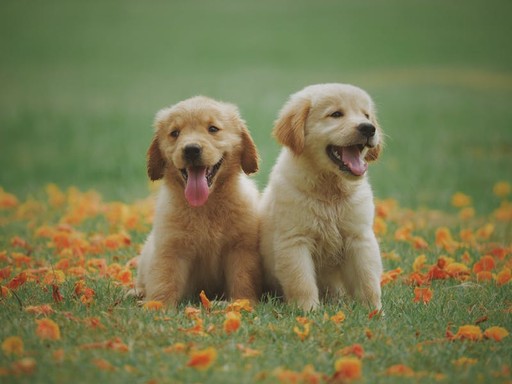
Animals -- 5 stars (ArtFID 166.26)
Romanticism delivers the strongest animal results in our entire style library. Géricault's horses, Delacroix's exotic beasts, and countless Romantic hunting scenes gave the movement extensive animal-painting tradition.
| Original Photo | AI Result |
|---|---|
 |
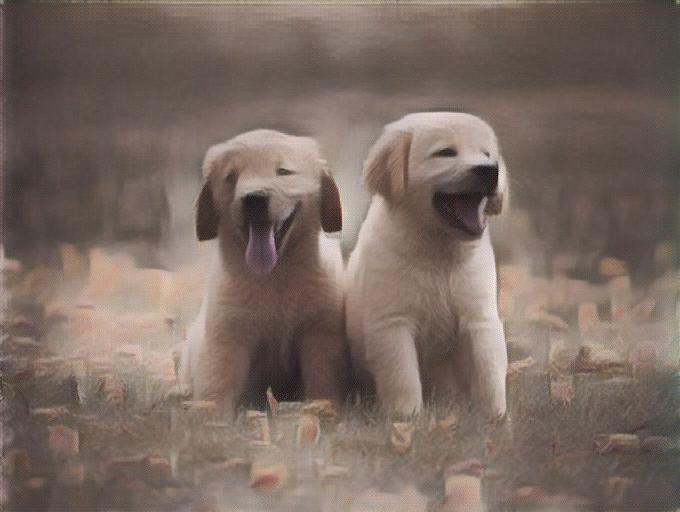 |
| Source photo | ArtFID: 166.26 -- 5 stars |
The animal transformation gives your subject dignity and drama. Fur textures soften into painterly brushwork. Backgrounds recede into atmospheric haze. Lighting becomes theatrical -- the kind of dramatic chiaroscuro that Romantic animal painters used to elevate their subjects from mere zoology into emotional narrative. This is the best style choice in our library for pet portraits and wildlife photography.
Landscapes -- 5 stars (ArtFID 171.43)
Landscapes were Romanticism's historical heartland. From Friedrich's mountains to Turner's storms, Romantic painters invented the modern landscape as spiritual subject.
| Original Photo | AI Result |
|---|---|
 |
 |
| Source photo | ArtFID: 171.43 -- 5 stars |
The landscape transformation is breathtaking. Skies fill with dramatic cloud movements. Distant mountains dissolve into atmospheric perspective. Warm golden light suffuses the entire scene. The photograph acquires the sublime quality that Romantic painters chased -- nature as overwhelming, beautiful, and meaningful rather than merely pretty.
Portraits -- 5 stars (ArtFID 204.92)
Romantic portraiture captures interior emotion rather than social status. Goya, Delacroix, and their contemporaries painted subjects with psychological depth and atmospheric drama.
| Original Photo | AI Result |
|---|---|
 |
 |
| Source photo | ArtFID: 204.92 -- 5 stars |
The portrait transformation is brooding and atmospheric. Backgrounds darken into painterly shadow. Skin acquires warm golden tonality. The subject gains the introspective quality that Romantic portraits prized -- not a record of appearance, but a window into character.
How to Apply Romanticism Style (3 Steps)
Step 1: Choose Your Photo
Upload any photograph to ArtRobot. Unlike most styles, Romanticism works beautifully on every content type. Architecture, animals, and landscapes score highest, but every category delivers 5-star results. This is the only style in our library you can confidently apply without checking compatibility first.
Step 2: Select Romanticism Style
Choose Romanticism from the style library. ArtRobot's references include works by Friedrich, Turner, Delacroix, and Goya sourced from the Art Institute of Chicago under Museum Open Access / CC0 license. The algorithm extracts the gram matrix capturing Romanticism's atmospheric depth, warm palette, and dramatic light, then applies it to your photograph.
Step 3: Download Your Romantic Masterpiece
ArtRobot generates your romanticism photo effect in seconds. Download in multiple resolutions -- from social media to print-ready 4K. Romantic landscape prints make exceptional wall art, and the style's universal applicability makes it perfect for creating matched series across different subjects.
3 free transfers, no signup required. Premium unlocks HD (2048px) and 4K (4096px), batch processing, and the complete 121+ style library.
Try Romanticism Style Transfer Free on ArtRobot ->
Photography Tips for Best Romanticism Results
1. Shoot During Golden Hour. Romanticism's signature warm golden glow aligns perfectly with late-afternoon and early-morning light. Photographs with existing warm-toned lighting produce the most convincing Romantic transformations because the algorithm amplifies tonal qualities already present in your source.
2. Include Atmospheric Elements. Fog, mist, clouds, rain, smoke -- any atmospheric element strengthens the Romantic effect. Clear, hard-edged photographs work, but photographs with atmospheric depth produce extraordinary results.
3. Embrace Dramatic Skies. Romantic landscapes are defined by their skies. If you are shooting outdoor scenes, wait for interesting cloud formations. Flat blue skies transform into dramatic Romantic skies, but dramatic skies transform into even more dramatic Romantic skies.
4. Use Directional Light. Romantic painters loved single-source dramatic lighting -- a shaft of sunlight through storm clouds, a candle in a dark interior, a moonbeam on a ruin. Photographs with clear directional light give the algorithm rich tonal information to work with.
5. Do Not Worry About Subject Matter. This is Romanticism's superpower. Unlike styles that demand specific subjects, Romanticism transforms anything well. Shoot what moves you -- the style will rise to meet it.
FAQ
What is Romanticism art style?
Romanticism emerged in the late 18th century as a reaction against Enlightenment rationalism and Neoclassical restraint. It elevated emotion, nature, imagination, and the sublime over reason and geometric order. The movement dominated European art from roughly 1780 to 1850 and produced some of Western art's most atmospheric and emotionally powerful images -- Friedrich's contemplative landscapes, Turner's incandescent seascapes, Delacroix's color-drunk scenes, and Goya's psychological nightmares.
Which photos look best with Romanticism style transfer?
Every photo category produces 5-star results with Romanticism -- this is the only style in ArtRobot's 121+ library to achieve universal 5-star coverage. The top performers are architecture (154.66 ArtFID), animals (166.26), and landscapes (171.43). Architecture's top ranking reflects Romanticism's obsession with ruins and cathedrals. Animals score highest across our entire catalog, making Romanticism the default recommendation for pet and wildlife photography.
How does Romanticism compare to Impressionism for style transfer?
Both styles emphasize atmosphere and light over precise drawing. Impressionism produces brighter, lighter-palette results with visible brushwork -- the quick perceptual painting of outdoor modern life. Romanticism produces warmer, more dramatic, more atmospheric results with greater tonal contrast -- the sublime rather than the perceptual. Choose Impressionism for light-filled spontaneity; choose Romanticism for atmospheric depth.
Can I use Romanticism style transfer for commercial projects?
Yes. Romanticism is a historical art movement and is not copyrightable. All style references used by ArtRobot are sourced from the Art Institute of Chicago under Museum Open Access / CC0 license. Your stylized results can be used for personal and commercial projects.
Why is Romanticism the best style for animal photos?
Romantic painters inherited a long tradition of animal painting and transformed it. Géricault obsessed over horses, Delacroix painted exotic animals from his North African travels, and the movement's fascination with nature's untamed power extended to beasts as well as landscapes. This tradition produced training statistics with strong animal-subject representation, yielding the 166.26 ArtFID score -- the best animal performance across our entire style library.
Is Romanticism good for beginners?
Romanticism is the ideal beginner style. Because it produces excellent results across all 15 content categories, beginners do not need to learn which styles work with which subjects -- they can simply upload any photo and trust the output. It is also forgiving of photographic imperfections, because atmospheric transformation naturally masks minor technical flaws in the source image.
Ready to Create Your Own Romantic Masterpiece?
Romanticism is ArtRobot's most reliable style -- the only option in our entire library that delivers 5-star results across every content category we test. If you are uncertain where to begin, begin here.
Start Your Free Romanticism Style Transfer on ArtRobot ->
Related Styles
- Baroque Style Transfer -- Romanticism's dramatic ancestor. Extreme chiaroscuro, dynamic composition, emotional intensity.
- Impressionism Style Transfer -- The movement that inherited Romanticism's atmospheric legacy and turned it into pure perception.
- Symbolism Style Transfer -- Romanticism's late descendant. Dreamlike, mystical, and psychologically charged.
- Best Art Styles for Animals -- Complete guide to styles that work best with animal photography, led by Romanticism at 166.26 ArtFID.
- Caspar David Friedrich Style Transfer -- German Romanticism's high priest. Contemplative landscapes and atmospheric sublimity.
Try It Yourself
Transform your own photos into stunning paintings with 80+ artist styles. Free to start.