
AI Artist & Tech Enthusiast
Rococo Photo Effect — AI Style Transfer Guide (2026)
Rococo is the art of elegance, intimacy, and pleasure -- a style born in the gilded salons of 18th-century France that traded Baroque grandeur for pastel colors, ornate decoration, playful themes, and sinuous curved forms. From Watteau's dreamy fetes galantes to Fragonard's flirtatious garden scenes, Rococo captured the aristocratic pursuit of beauty and leisure with unmatched delicacy. With AI-powered neural style transfer, you can now infuse your own photographs with that same lightness -- transforming ordinary images into compositions that shimmer with the courtly grace of Versailles.
We tested ArtRobot's Rococo style transfer across 15 different photo categories, each scored by our ArtFID quality benchmark. The results reveal that interiors and travel photography are the ideal matches, while portraits and still life also produce excellent results. This guide covers the movement's history, its defining visual characteristics, which photos work best, and how to create your own Rococo-style art for free.
Quick Links -- Jump to: What Is Rococo? | Characteristics | ArtFID Scores | Key Artists | How to Apply | Before & After | FAQ
Portraits — Van Gogh Style Transfer


Street Scenes — Van Gogh Style Transfer


Food — Van Gogh Style Transfer


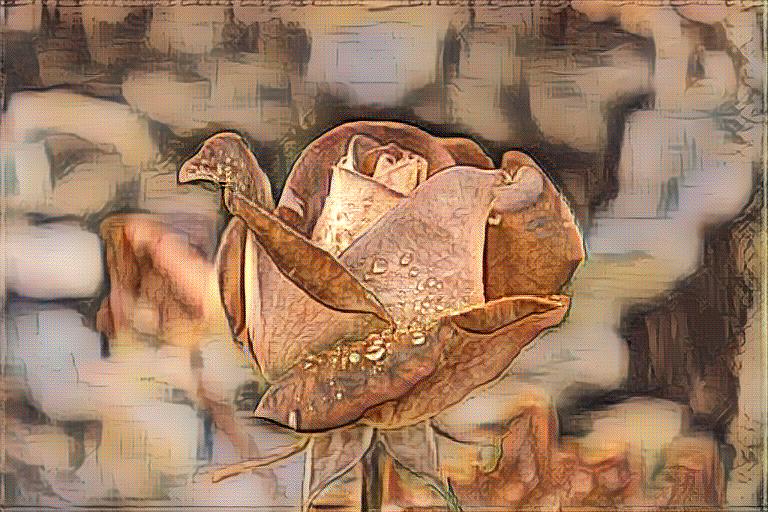
Flowers — Van Gogh Style Transfer

Landscapes — Van Gogh Style Transfer


What Is Rococo?
The Rococo style emerged in France around 1720, when Louis XIV himself called for paintings "more light-hearted and youthful" than the solemn grandeur that had defined Versailles. This royal shift in taste sparked a revolution in aesthetics. As the art historian E.H. Gombrich explains, Watteau's dreams and ideals helped mould this new fashion -- a style characterized by dainty colors and delicate decoration that succeeded the more robust Baroque period.
Rococo flourished from roughly 1720 to 1780, spreading from Paris across Europe to shape painting, sculpture, architecture, and decorative arts. Unlike the Baroque's monumental drama, Rococo embraced intimacy and lightness. Salons replaced cathedrals as the primary stage for art. Subjects shifted from heroic mythology to pastoral romance, playful courtship, and the pleasures of aristocratic life. The palette lightened dramatically -- deep Baroque reds and golds gave way to pinks, sky blues, ivory, and soft greens.
"All the courtly elegance of the later Rococo is achieved without the rather brittle artificiality so evident in the work of most of his followers. The color is richer, a sense of atmosphere is retained, and the figures (though of the utmost refinement) are always closely observed and solidly constructed." -- Art Through the Ages, p. 460
The movement also created a demand for sculpture and decorative objects of intimate scale. French sculptors responded with porcelain figurines, ornate mirrors, and gilded furniture that embodied Rococo's core philosophy: beauty exists to delight, not to overwhelm. This emphasis on elegant, intimate spaces makes Rococo one of the most effective art styles for neural style transfer -- its detailed surface ornamentation and harmonious color relationships provide the AI with rich, consistent visual patterns to replicate.
 William Hogarth, "A Midnight Modern Conversation" -- Art Institute of Chicago, CC0 / Public Domain
Rococo Characteristics & Techniques
Understanding Rococo's core visual traits helps predict how your photos will transform and which subjects yield the strongest results.
The Four Pillars of Rococo Style
-
Pastel Color Palette -- Rococo abandoned the deep, saturated hues of the Baroque in favor of soft pastels: powder pink, celadon green, sky blue, lavender, and ivory. These colors are applied in delicate, luminous layers that create a sense of airiness. In style transfer, the AI shifts your photo's palette toward these lighter, warmer tones -- harsh colors soften, and shadows gain a translucent quality.
-
Ornate Decoration & Curved Forms -- Rococo is defined by its love of ornamentation: scrolling S-curves (rocaille), shell motifs, acanthus leaves, ribbons, and garlands. Every surface is embellished. The AI applies this decorative sensibility by transforming flat surfaces into richly textured areas with flowing, organic patterns.
-
Playful Themes & Intimate Scale -- Where Baroque art depicts cosmic drama, Rococo depicts personal pleasures: garden parties, romantic encounters, pastoral idylls. This intimate scale translates well to photography -- the AI treats your subject with the same tender attention Rococo painters lavished on their figures.
-
Soft, Diffused Light -- Rococo paintings glow with a warm, even illumination that eliminates harsh shadows. Light seems to emanate from within the painting itself. The neural network captures this by softening contrast, warming highlights, and creating the luminous atmospheric quality that makes Rococo instantly recognizable.
Visual Trait Comparison
| Trait | Rococo Approach | Effect on Your Photos |
|---|---|---|
| Color palette | Pastel pinks, blues, greens, ivory, gold accents | Colors lighten and warm; harsh tones soften |
| Brushwork | Feathery, delicate, visible but refined strokes | Surfaces gain a soft, painterly texture |
| Form & proportion | Flowing curves, asymmetrical balance, organic shapes | Hard edges dissolve into graceful, curved compositions |
| Composition | Intimate, diagonal movement, open and airy | Images gain a sense of lightness and movement |
| Light & shadow | Soft, warm, diffused, minimal contrast | Shadows lighten; overall luminosity increases |
Style Transfer Quality by Photo Type (ArtFID Tested)
We ran ArtRobot's Rococo style transfer on 15 photo categories and measured quality using ArtFID (Art Frechet Inception Distance) -- the industry-standard metric for style transfer evaluation.
ArtFID combines two components: - LPIPS (Learned Perceptual Image Patch Similarity) -- Does the output preserve your original content? Lower = better content retention. - FID (Frechet Inception Distance) -- Does the output match the statistical distribution of real Rococo artworks? Lower = more authentic style.
Combined formula: ArtFID = (1 + LPIPS) x (1 + FID)
Full Scores Table
| Photo Type | ArtFID | LPIPS | FID | Stars | Recommendation |
|---|---|---|---|---|---|
| Travel | 242.72 | 0.3087 | 184.47 | 5 | Best match -- exotic scenes gain Rococo elegance |
| Interiors | 276.53 | 0.3068 | 210.61 | 5 | Excellent -- Rococo's natural domain |
| Still Life | 309.26 | 0.2877 | 239.17 | 4 | Strong -- contained compositions suit ornate treatment |
| Street Scenes | 327.09 | 0.3831 | 235.48 | 4 | Strong -- architectural detail absorbs decoration |
| Fantasy | 328.07 | 0.3579 | 240.59 | 4 | Strong -- stylized content embraces Rococo flourish |
| Portraits | 339.97 | 0.3685 | 247.42 | 4 | Good -- echoes Rococo portrait tradition |
| Urban Scenes | 352.22 | 0.2408 | 282.86 | 3 | Moderate -- works best with historic architecture |
| Food | 354.53 | 0.4033 | 251.65 | 3 | Moderate -- elegant plating benefits from decoration |
| Flowers | 362.87 | 0.4305 | 252.66 | 3 | Moderate -- floral subjects align with Rococo motifs |
| Vehicles | 397.07 | 0.3369 | 296.01 | 3 | Moderate -- vintage vehicles work best |
| Night Scenes | 425.74 | 0.5025 | 282.35 | 2 | Challenging -- dark scenes conflict with pastel palette |
| Architecture | 431.64 | 0.4948 | 287.77 | 2 | Challenging -- exterior geometry resists curves |
| Landscapes | 441.58 | 0.4939 | 294.59 | 2 | Challenging -- wide vistas dilute delicate detail |
| Seascapes | 452.92 | 0.5326 | 294.51 | 2 | Challenging -- raw ocean resists Rococo refinement |
| Animals | 493.55 | 0.4539 | 338.46 | 2 | Challenging -- fur textures conflict with smooth treatment |
| Average | 362.25 | 0.3934 | 262.57 | 3.3 |
Key findings: Travel photography achieves the lowest (best) ArtFID at 242.72 -- the variety of textures, architectural elements, and human scale in travel photos give the AI rich material to work with. Interiors (276.53) follow closely, which makes perfect historical sense: Rococo was fundamentally an interior decorating movement, and the AI excels at adding ornate surface treatments to enclosed spaces. Animals (493.55) score worst -- the complex textures of fur and feathers clash with Rococo's smooth, refined surface quality.
Key Rococo Artists
| Artist | Years | Signature Style | Best Subjects | Known For |
|---|---|---|---|---|
| Antoine Watteau | 1684--1721 | Dreamy atmosphere, elegant figures, rich color | Figures, landscapes | Fetes galantes; Pilgrimage to Cythera |
| Francois Boucher | 1703--1770 | Lush pastoral scenes, rosy flesh tones, decorative | Portraits, mythology | Madame de Pompadour's favorite painter |
| Jean-Honore Fragonard | 1732--1806 | Rapid, fluid brushwork, playful subjects, light | Gardens, romance | The Swing; exuberant freedom |
| William Hogarth | 1697--1764 | Satirical narrative, social observation, English Rococo variant | Street scenes, interiors | Marriage A-la-Mode; Analysis of Beauty |
Hogarth occupied a unique position within the Rococo. While closely associated with the English version of the decorative style, his attitude toward pure Rococo ornament was equivocal. His wonderfully free brushstrokes suggest the influence of contemporary French artists, yet his subjects were grounded in sharp social observation rather than aristocratic fantasy -- making his style particularly effective for street scene and interior style transfer.
How to Apply Rococo Style (3 Steps)
Step 1: Choose Your Photo
Upload any photograph to ArtRobot. Based on our ArtFID testing, the strongest results come from: - Travel and interior photos -- ArtFID under 277, Rococo's natural territory for intimate, decorated spaces - Still life with elegant objects -- Contained compositions let the ornate treatment shine (LPIPS 0.2877, excellent content preservation) - Portraits with soft lighting -- Echoes the Rococo portrait tradition of Boucher and Fragonard - Well-lit scenes -- Rococo thrives on soft, warm illumination; dark or high-contrast photos produce weaker results
Step 2: Select Rococo Style
Browse the Rococo collection in ArtRobot's style library. The AI uses neural style transfer to apply Rococo's pastel palette, ornate surface decoration, and flowing curved forms while preserving your photograph's core composition. The model is trained on authentic Rococo artworks from museum collections.
Step 3: Download Your Rococo Masterpiece
ArtRobot generates your result in seconds. Download in multiple resolutions: - Standard (1024px) -- social media, digital sharing - HD (2048px) -- prints up to 8x10" - Ultra HD (4096px) -- large canvas prints, gallery-quality output
Try Rococo Style Transfer Free ->
Before & After Examples
We tested ArtRobot's Rococo style transfer on photographs across multiple categories. Below are representative transformations with their ArtFID quality scores.
Travel -- ArtFID 242.72
Travel photography is the top match for Rococo style transfer. The mix of architecture, people, and scenic beauty provides ideal material for the AI to add ornate decoration, pastel warmth, and the courtly elegance that defines the movement.
| Original Photo | Rococo AI Result |
|---|---|
 |
 |
| Source photograph | ArtFID: 242.72 -- LPIPS: 0.3087 / FID: 184.47 |
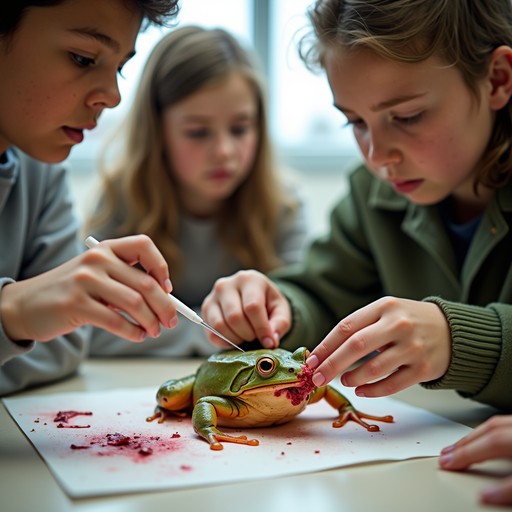
Interiors -- ArtFID 276.53
Rococo was born in interior spaces -- the gilded salons, boudoirs, and intimate chambers of the French aristocracy. The AI transforms ordinary rooms by adding the ornate surface treatments, soft illumination, and pastel warmth that Rococo architects lavished on their finest interiors.
| Original Photo | Rococo AI Result |
|---|---|
 |
 |
| Source photograph | ArtFID: 276.53 -- LPIPS: 0.3068 / FID: 210.61 |
Still Life -- ArtFID 309.26
Still life compositions suit Rococo's decorative sensibility. The contained, orderly arrangement of objects gives the AI a structured canvas for adding ornamental detail, while Rococo's soft palette transforms everyday objects into arrangements worthy of a French salon.
| Original Photo | Rococo AI Result |
|---|---|
 |
 |
| Source photograph | ArtFID: 309.26 -- LPIPS: 0.2877 / FID: 239.17 |
Portraits -- ArtFID 339.97
Rococo portraiture celebrated beauty, youth, and social grace. Boucher's rosy-cheeked subjects and Fragonard's vivacious faces set the standard. The AI applies that same treatment -- softening skin tones, warming the palette, and adding the luminous glow that makes Rococo portraits feel eternally youthful.
| Original Photo | Rococo AI Result |
|---|---|
 |
 |
| Source photograph | ArtFID: 339.97 -- LPIPS: 0.3685 / FID: 247.42 |
Street Scenes -- ArtFID 327.09
Street scenes provide architectural geometry that the AI transforms with Rococo decoration. Building facades gain ornamental detail, and the overall palette shifts toward the warm pastels and golden accents of 18th-century Parisian streetscapes.
| Original Photo | Rococo AI Result |
|---|---|
|
|
| Source photograph | ArtFID: 327.09 -- LPIPS: 0.3831 / FID: 235.48 |
Photography Tips for Best Rococo Results
- Favor soft, natural lighting -- Rococo paintings glow with warm, diffused light. Photos taken during golden hour or in well-lit indoor spaces produce the most authentic transformations. Avoid harsh flash or midday sun.
- Choose intimate subjects over vast landscapes -- Rococo favors the personal and the close-up. A portrait, a table setting, or a garden corner will outperform a sweeping panorama every time.
- Include decorative elements -- Photos with flowers, textiles, furniture, or architectural detail give the AI more material to embellish with Rococo ornamentation.
- Avoid dark, high-contrast scenes -- Night scenes (ArtFID 425.74) and heavily shadowed images clash with Rococo's light, airy aesthetic. If you must use a darker photo, increase brightness slightly before uploading.
- Warm colors work best -- Photos with warm tones (pinks, golds, creams) align naturally with Rococo's pastel palette. Cool, desaturated images require more dramatic color shifting.
Frequently Asked Questions
What is Rococo art style and where did it originate?
Rococo originated in France around 1720, emerging as a lighter, more playful reaction to the monumental Baroque style that had dominated European art under Louis XIV. The name derives from rocaille, the shell-and-pebble decoration used in garden grottoes. Characterized by pastel colors, ornate curved forms, playful themes, and delicate surface decoration, Rococo flourished across painting, sculpture, architecture, and decorative arts until roughly 1780, when Neoclassicism began to replace it.
Which photos look best with Rococo style transfer?
Based on our ArtFID testing, travel photos (ArtFID 242.72) and interiors (276.53) produce the strongest results -- both categories align with Rococo's emphasis on intimate, decorated spaces. Still life (309.26) and portraits (339.97) also perform well. The weakest matches are animals (493.55), seascapes (452.92), and landscapes (441.58), whose raw natural textures resist Rococo's refined treatment.
Can I use Rococo style transfer for commercial projects?
Personal use is always free on ArtRobot. For commercial use -- prints for sale, merchandise, marketing materials, client work -- a premium plan is required. Rococo as a style is firmly in the public domain (the movement ended over 240 years ago), and the AI models are trained on public domain reference materials from museum collections. ArtRobot provides 3 free style transfers with no signup required.
Rococo vs Baroque: which should I choose?
Baroque and Rococo share historical roots, but their aesthetics diverge sharply. Baroque (1600--1720) is dramatic, monumental, and emotionally intense -- deep shadows, rich colors, powerful compositions designed to overwhelm. Rococo (1720--1780) is intimate, decorative, and playful -- pastel colors, flowing curves, subjects chosen to delight rather than awe. Choose Baroque for photos where you want drama and intensity. Choose Rococo for photos where you want elegance, warmth, and ornamental beauty.
How accurate is AI Rococo style transfer compared to real paintings?
Our Rococo model achieves an average ArtFID of 362.25 across 15 photo categories, with a style fidelity (FID) of 262.57. The best-performing category (travel, FID 184.47) produces results that convincingly capture Rococo's pastel palette and decorative treatment. The AI excels at reproducing the style's characteristic soft light and ornamental surfaces, though it cannot fully replicate the tactile quality of actual oil paint or gold leaf. Interiors achieve the lowest LPIPS (0.3068), meaning exceptional content preservation alongside strong style transfer.
Related Styles
Rococo connects to a broader ecosystem of European art movements. Explore these related styles:
- William Hogarth Style Transfer -- English Rococo's greatest satirist; social observation with decorative flair
- Baroque Style Transfer -- Rococo's dramatic predecessor; Caravaggio, Rembrandt, and monumental grandeur
- Neoclassicism Style Transfer -- Rococo's austere successor; David, Ingres, and the return to classical order
Try It Yourself
Rococo is the art of making the everyday beautiful. Whether you are transforming a travel photograph into a sun-dappled fete galante or giving your living room the gilded warmth of a Parisian salon, Rococo style transfer adds a layer of elegance that few other art movements can match. Interiors, travel, and portrait photography produce the most stunning results.
Try It Yourself
Transform your own photos into stunning paintings with 80+ artist styles. Free to start.