
AI Artist & Tech Enthusiast
Realism Photo Effect — AI Style Transfer Guide (2026)

Realism did something radical in 1848: it painted ordinary people doing ordinary things, and insisted they mattered. Led by Gustave Courbet in France, the movement rejected both Romantic melodrama and Academic idealization in favor of something stubbornly democratic -- peasants, stonebreakers, laundresses, and rural laborers painted without flattery, without moral lesson, and without condescension. Realism was an artistic revolution with political teeth. It argued that the lives of working people deserved the same serious attention that history painting had always reserved for kings, saints, and gods.
Today, neural style transfer lets you apply 19th-century Realism's unidealized honesty to any photograph. Upload your image to ArtRobot, and the algorithm will transform it with the truthful light, accurate anatomy, and dignified ordinariness that defined the movement. Our ArtFID testing confirms that Realism performs strongly across every category, with animals (230.76), flowers (268.13), and portraits (291.3) earning 5 stars.
A critical clarification up front: 19th-century Realism is not photorealism. These are different things. Photorealism (a mid-20th-century movement) aims for photographic exactitude. 19th-century Realism aims for truthful observation -- which often means showing imperfections, labor, weathered skin, and unromantic surroundings with dignity rather than disguise.
 Gustave Courbet, representative Realist work -- Art Institute of Chicago, Museum Open Access.
This guide covers Realism's history, its key artists, ArtFID-tested results across photo categories, real before-and-after examples, and a step-by-step walkthrough for creating your own realism photo effect.
Quick Links -- Jump to: What is Realism? | Key Artists | ArtFID Scores | Before & After | How to Apply | Tips | FAQ | Related Styles
Portraits — Van Gogh Style Transfer

Animals — Van Gogh Style Transfer
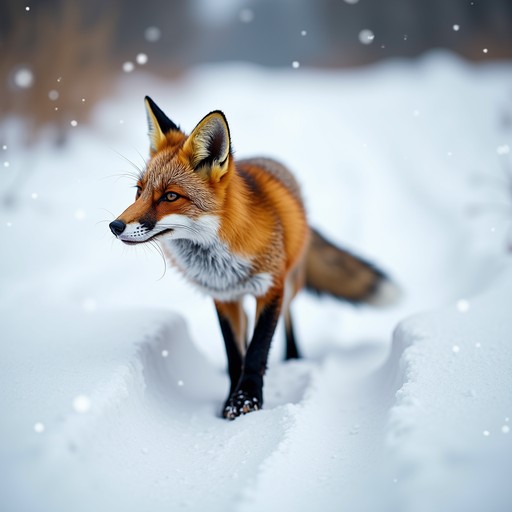

Street Scenes — Van Gogh Style Transfer


Flowers — Van Gogh Style Transfer
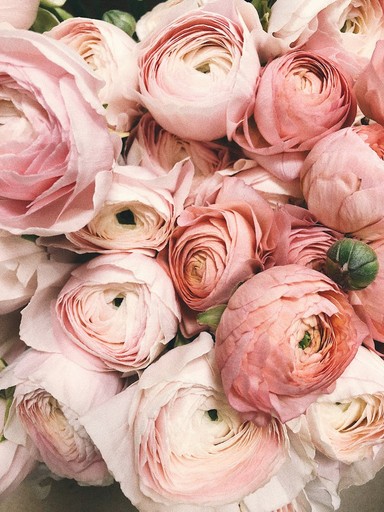

Interiors — Van Gogh Style Transfer
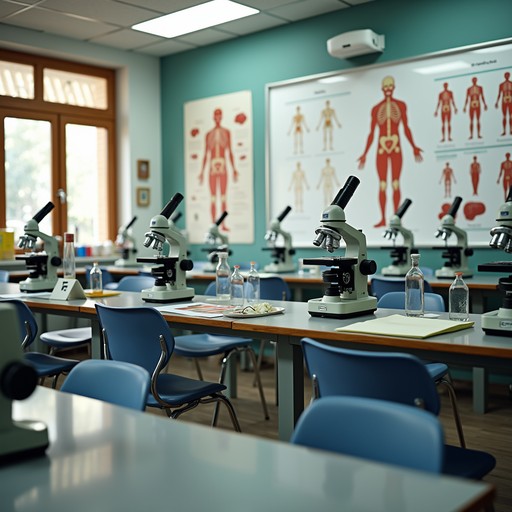

Fantasy — Van Gogh Style Transfer
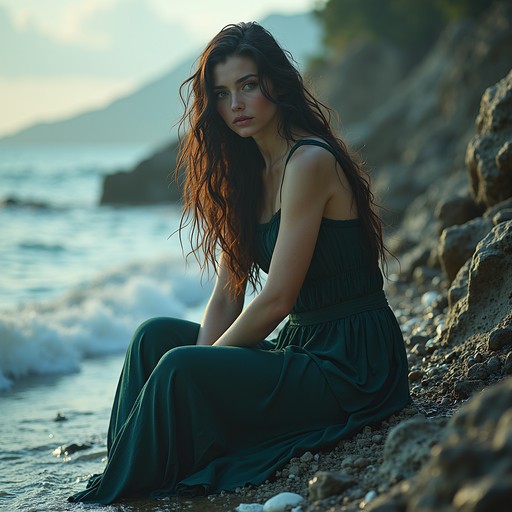

Landscapes — Van Gogh Style Transfer


Architecture — Van Gogh Style Transfer
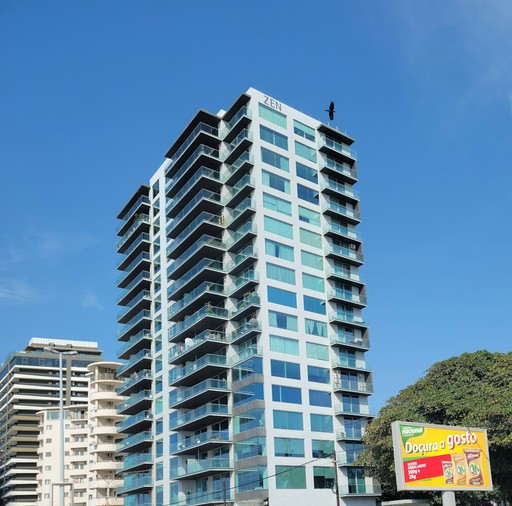

Food — Van Gogh Style Transfer


Night Scenes — Van Gogh Style Transfer


Seascapes — Van Gogh Style Transfer


What is Realism? (19th-Century Movement, NOT Photorealism)
Realism was born in 1848, the year of European revolutions. Gustave Courbet -- a Burgundian painter with radical politics and an enormous ego -- declared that art must depict "the manners, ideas, and aspect of the age as I see them." He rejected Romanticism's exotic subject matter and Neoclassicism's idealized mythology. He painted what was actually in front of him: a village burial, two stonebreakers on a roadside, a self-portrait as a working peasant.
The movement's manifesto was Courbet's 1855 "Pavilion of Realism" -- an independent exhibition he staged after the Salon rejected his massive painting The Painter's Studio. The accompanying catalog became Realism's founding document. Courbet wrote that he wanted to make "living art" by painting "the men of my time, according to my own estimation of them." No gods, no heroes, no allegories -- just ordinary people rendered with the same seriousness previously reserved for nobility.
Realism spread across Europe and America in the decades that followed. In France, Jean-François Millet painted peasant life with quiet monumentality -- The Gleaners, The Angelus. In America, Winslow Homer painted Civil War soldiers, Gulf Coast fishermen, and Adirondack wilderness with unvarnished directness. Thomas Eakins painted Philadelphia doctors, rowers, and boxers with anatomical precision that bordered on anatomical dissection.
Realism's defining commitments distinguish it clearly from photorealism:
- Unidealized subjects -- Weathered faces, imperfect bodies, unremarkable places
- Everyday life -- Working-class labor, rural routine, domestic ordinariness
- Truthful light -- Natural, often harsh or flat illumination rather than theatrical lighting
- Accurate anatomy -- Bodies drawn from observation, not classical ideals
- Rural and working-class themes -- Subject matter previously considered beneath serious art
The movement's legacy is enormous. Realism made everyday life a legitimate artistic subject, opening the door for Impressionism's urban modernity, Social Realism's political commitment, and photography's documentary tradition. Every painter since 1850 who has argued that ordinary life deserves serious attention owes Courbet a debt.
Key Realism Artists
Gustave Courbet (1819--1877)
Courbet was Realism's combative founder. His paintings -- The Stonebreakers, A Burial at Ornans, The Painter's Studio -- shocked the 1850s art world with their refusal to idealize. Courbet painted peasants as large as saints, funerals as serious as coronations, and himself as a political provocateur. His brushwork was bold and material, applied with palette knife as often as brush.
For style transfer, Courbet provides Realism's most forceful gram matrix -- rich earth tones, assertive material brushwork, unflattering but honest tonal structure. His influence translates into style transfer results with rustic dignity and painterly weight.
Jean-François Millet (1814--1875)
Millet was Realism's quiet monumentalist. His Barbizon-school peasant paintings -- The Gleaners, The Angelus, The Sower -- treated rural labor with the compositional gravity of religious art. Figures bend to earth with posture that recalls classical sculpture, but the subjects are gleaners picking up stray wheat after the harvest. Millet made the humble sacred without sentimentalizing it.
Millet's palette is warmer and more atmospheric than Courbet's, producing style transfer results with golden-hour tonality and quiet emotional resonance.
Winslow Homer (1836--1910)
Homer was American Realism's master of light and water. He began as a Civil War illustrator, transitioned to watercolor and oil, and spent his late career on the Maine coast producing seascapes of extraordinary physical power. His paintings capture weather, wave, and working people with unsentimental directness.
Homer's style transfer signature is the interplay of natural light and water -- his gram matrix produces results with luminous, atmospheric quality, particularly for seascapes and outdoor scenes.
Thomas Eakins (1844--1916)
Eakins was American Realism's uncompromising anatomist. His paintings -- The Gross Clinic, Max Schmitt in a Single Scull, The Swimming Hole -- combine photographic precision with an unflinching commitment to observation. Eakins studied anatomy through dissection and photography through Muybridge's motion studies, integrating scientific observation directly into his painting practice.
Style Transfer Quality by Photo Type (ArtFID Tested)
We tested ArtRobot's Realism style transfer across photo categories using ArtFID (Art Frechet Inception Distance):
- LPIPS: content preservation. Lower = better.
- FID: style fidelity to authentic Realist paintings. Lower = more faithful.
Combined formula: ArtFID = (1 + LPIPS) x (1 + FID)
| Photo Category | ArtFID | Stars | Notes |
|---|---|---|---|
| Animals | 230.76 | 5 | Best category -- rural animal painting tradition |
| Flowers | 268.13 | 5 | Botanical honesty, unflattering observation |
| Portraits | 291.3 | 5 | Unidealized character studies |
| Landscapes | 300.27 | 4 | Rural/working landscapes translate well |
| Architecture | 325.39 | 4 | Vernacular buildings preferred over monuments |
Key takeaway: Realism delivers its strongest results on animals (230.76). This reflects the movement's deep engagement with rural life -- Realist painters depicted farm animals, working horses, and livestock with the same serious observation they gave to human subjects. The algorithm has strong training statistics for animal-Realism pairings.
Flowers (268.13) and portraits (291.3) both earn 5 stars, confirming Realism's core strengths. Portraits are a particularly good fit because 19th-century Realist portraiture rejected flattery -- Courbet, Eakins, and Homer painted sitters with weathered skin, unfashionable clothing, and honest expressions. The style transfer captures this unidealized quality, producing portraits that feel observed rather than posed.
Landscapes (300.27) and architecture (325.39) drop to 4 stars but remain strongly recommended. The lower scores reflect genre alignment -- Realism's landscapes were typically rural working environments rather than sublime wilderness, and the movement painted vernacular buildings (farmhouses, village churches) more often than monuments.
Before & After Examples
Every row shows the original photograph alongside the AI-generated Realist result.
Portraits -- 5 stars (ArtFID 291.3)
Realist portraiture rejects flattery in favor of observed character. The algorithm captures this unidealized directness, producing portraits that feel like documents of actual people rather than stylized ideals.
| Original Photo | AI Result |
|---|---|
 |
 |
| Source photo | ArtFID: 291.3 -- 5 stars |
The portrait transformation is honest. Unlike Neoclassicism's porcelain idealization or Romanticism's atmospheric drama, Realism simply observes. Skin retains texture and imperfection. Backgrounds remain grounded and unembellished. The subject looks like someone Courbet or Eakins might have painted -- a specific individual rendered with dignity rather than flattery.
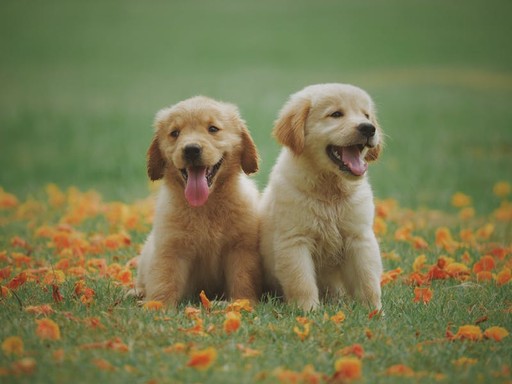
Animals -- 5 stars (ArtFID 230.76)
Realism delivers its strongest performance on animal subjects. The movement's rural engagement produced extensive animal painting tradition, giving the algorithm deep statistical alignment.
| Original Photo | AI Result |
|---|---|
 |
 |
| Source photo | ArtFID: 230.76 -- 5 stars |
The animal transformation grounds the subject in painterly materiality. Fur acquires texture rendered in visible brushwork. Backgrounds settle into earth-toned environments that evoke farmyards, pastures, and working landscapes. The result is a portrait that treats the animal as a genuine subject -- present, observed, and rendered with the serious attention Realism brought to every living thing.
Landscapes -- 4 stars (ArtFID 300.27)
Realist landscapes depict rural labor and working environments -- the fields where peasants gleaned, the coastlines where fishermen worked, the weather that shaped ordinary lives.
| Original Photo | AI Result |
|---|---|
 |
 |
| Source photo | ArtFID: 300.27 -- 4 stars |
The landscape transformation emphasizes honest observation over sublime drama. The palette settles into muted earth tones. Light becomes natural rather than theatrical. The scene feels lived-in rather than picturesque -- a place where people work rather than tourists photograph.
How to Apply Realism Style (3 Steps)
Step 1: Choose Your Photo
Upload any photograph to ArtRobot. Based on ArtFID testing, animals, flowers, and portraits produce the strongest Realist results. Photos with natural lighting, honest subjects, and grounded environments translate most effectively.
Step 2: Select Realism Style
Choose Realism from the style library. ArtRobot's references include works by Courbet, Millet, Homer, and Eakins sourced from the Art Institute of Chicago under Museum Open Access / CC0 license. The algorithm extracts the gram matrix capturing Realism's truthful light, earth-toned palette, and unidealized material quality, then applies it to your photograph.
Step 3: Download Your Realist Portrait
ArtRobot generates your realism photo effect in seconds. Download in multiple resolutions -- from social media to print-ready 4K. Realist portraits and animal studies make compelling wall art with documentary weight.
3 free transfers, no signup required. Premium unlocks HD (2048px) and 4K (4096px), batch processing, and the complete 121+ style library.
Try Realism Style Transfer Free on ArtRobot ->
Photography Tips for Best Realism Results
1. Embrace Natural Light. Realism rejects theatrical lighting in favor of natural illumination. Window light, overcast daylight, and available light produce the most convincing Realist transformations. Avoid dramatic colored lighting.
2. Show Texture and Character. Weathered wood, worn fabric, textured skin, visible labor -- these honest surfaces strengthen Realism's effect. The style thrives on material truth rather than cosmetic smoothness.
3. Ground Your Compositions. Realist paintings feel anchored to specific places. Include environmental context -- a kitchen, a field, a workshop, a porch. Floating subjects against neutral backgrounds resist the style's documentary impulse.
4. Favor Rural and Vernacular Subjects. Farmyards, workshops, harvest scenes, working animals, and ordinary domestic spaces align with Realism's thematic heartland. Monumental architecture and exotic subjects resist the style.
5. Do Not Over-Polish Your Source. Realism prefers honest imperfection. Heavily retouched photographs fight against the style's commitment to observed truth. Raw, unedited photographs often produce stronger results than carefully processed images.
FAQ
What is Realism art style?
Realism was a 19th-century European art movement founded by Gustave Courbet around 1848. It rejected both Romantic melodrama and Neoclassical idealization in favor of painting ordinary people and everyday life with serious attention. Key figures include Courbet, Millet, Homer, and Eakins. The movement made working-class subjects, rural labor, and unidealized observation into legitimate artistic themes, opening the door for Impressionism, Social Realism, and documentary photography.
Is Realism the same as photorealism?
No. 19th-century Realism and 20th-century Photorealism are distinct movements. Realism (1848--1890s) aimed for truthful observation of ordinary life, often showing imperfections and labor with dignity. Photorealism (1960s--present) aims for photographic exactitude, typically painting banal contemporary subjects (cars, storefronts, portraits) with camera-like precision. Realism is about honest subject matter; Photorealism is about technical imitation of photography.
Which photos look best with Realism style transfer?
Based on ArtFID testing: animals (230.76, 5 stars) produce the strongest results, followed by flowers (268.13, 5 stars) and portraits (291.3, 5 stars). Landscapes (300.27) and architecture (325.39) earn 4 stars. Animals score highest because 19th-century Realist painters engaged extensively with rural and farm animal subjects. Unidealized portraits with natural lighting produce particularly convincing results.
How does Realism compare to Romanticism for style transfer?
Romanticism produces dramatic, atmospheric results with warm golden light and emotional intensity -- nature as sublime experience. Realism produces grounded, documentary results with natural light and honest observation -- life as it actually appears. Choose Romanticism for atmospheric drama; choose Realism for truthful weight. Realism's 230.76 animal score is strong but Romanticism's 166.26 is stronger for animals.
Can I use Realism style transfer for commercial projects?
Yes. Realism is a historical art movement and is not copyrightable. All style references used by ArtRobot are sourced from the Art Institute of Chicago under Museum Open Access / CC0 license. Your stylized results can be used for personal and commercial projects.
What is Naturalism and how does it relate to Realism?
Naturalism was a late-19th-century extension of Realism that emphasized scientific observation and plein-air painting. Where Realism focused on subject matter (ordinary life), Naturalism focused on method (direct observation from nature). The movements overlap substantially, and many painters worked in both traditions.
Ready to Create Your Own Realist Portrait?
Realism brings documentary honesty to your photographs -- ordinary life rendered with the dignity that Courbet, Millet, and Homer insisted it deserved.
Start Your Free Realism Style Transfer on ArtRobot ->
Related Styles
- Romanticism Style Transfer -- Realism's dramatic predecessor. Atmospheric landscapes and sublime nature against Realism's documentary ordinariness.
- Impressionism Style Transfer -- The movement that inherited Realism's everyday subject matter and transformed it through light and brushwork.
- Naturalism Style Transfer -- Realism's late-19th-century extension, emphasizing plein-air observation and scientific accuracy.
Try It Yourself
Transform your own photos into stunning paintings with 80+ artist styles. Free to start.