
AI Artist & Tech Enthusiast
Pre-Raphaelite Brotherhood Photo Effect — AI Style Transf...

In 1848, three young English painters -- Dante Gabriel Rossetti, John Everett Millais, and William Holman Hunt -- declared war on the entire trajectory of European art since Raphael. They believed that post-Renaissance painting had become formulaic, dark, and dishonest, trading the vivid detail and spiritual sincerity of medieval art for academic tricks and muddy chiaroscuro. Their solution was radical: reject everything after Raphael, return to the jewel-like color, meticulous botanical detail, and narrative intensity of late medieval and early Renaissance painting, and apply those principles to modern subjects painted from direct observation. They called themselves the Pre-Raphaelite Brotherhood, and the movement they launched would transform Victorian visual culture, inspire the Arts and Crafts movement, and produce some of the most visually stunning paintings in Western art history.
Today, neural style transfer lets you apply the Pre-Raphaelite aesthetic -- those vivid jewel-like colors, that luminous skin, that almost hallucinatory level of detail -- to any photograph. Upload your image to ArtRobot, and the algorithm will transform it with the rich symbolism, meticulous texture, and saturated palette that defined the Brotherhood and its followers. Our ArtFID testing shows strong results across the board, with animals (198.36) and portraits (206.72) leading as the strongest categories -- the Pre-Raphaelite commitment to detail preserves fur texture and facial features with exceptional fidelity.
 Portrait subject -- the kind of face the Pre-Raphaelites would have framed with flowing hair, medieval costume, and symbolic flowers.
This guide covers the Pre-Raphaelite Brotherhood's history, its key artists, ArtFID-tested results across photo categories, real before-and-after examples, and a step-by-step walkthrough so you can turn photo into Pre-Raphaelite painting with confidence.
Quick Links -- Jump to: What is Pre-Raphaelite Art? | Key Artists | Why It Works | ArtFID Scores | Before & After | How to Apply | Tips | FAQ | Related Styles
Landscapes — Van Gogh Style Transfer

Portraits — Van Gogh Style Transfer


Animals — Van Gogh Style Transfer
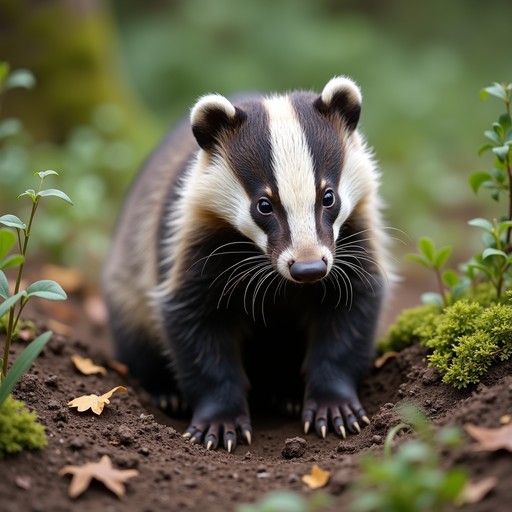

Street Scenes — Van Gogh Style Transfer


Flowers — Van Gogh Style Transfer


Architecture — Van Gogh Style Transfer

Food — Van Gogh Style Transfer


Night Scenes — Van Gogh Style Transfer


What is Pre-Raphaelite Art?
The Pre-Raphaelite Brotherhood (PRB) was founded in London in 1848 by three Royal Academy students: Dante Gabriel Rossetti, John Everett Millais, and William Holman Hunt. They aimed to recover the vivid color, meticulous detail, and spiritual sincerity of painting before Raphael (1483--1520), rejecting the dark palettes and formulaic compositions of academic art.
Their technical revolution was crucial. Pre-Raphaelite painters worked on a wet white ground -- fresh zinc white rather than conventional dark grounds. This produced the luminous, almost stained-glass quality that defines the movement. Colors glow from within. Skin appears translucent. Fabrics shimmer. Subjects drew from Arthurian legend, Dante's poetry, Shakespeare, and Tennyson -- medieval and mythological narratives rendered with hallucinatory naturalistic detail. Millais' Ophelia (1851--52) exemplifies the method: a drowning woman in a stream where every plant species is botanically identifiable.
The movement evolved from the early Brotherhood's moral seriousness (1848--1854) toward the later aestheticism of Rossetti and Edward Burne-Jones -- beauty as its own justification, connecting to Symbolism, Art Nouveau, and the broader Aesthetic Movement. The Pre-Raphaelite visual vocabulary is unmistakable: jewel-toned colors, meticulous botanical and textile detail, flowing hair, luminous skin, and compositions dense with symbolic meaning.
Key Pre-Raphaelite Artists
Dante Gabriel Rossetti (1828--1882)
Rossetti was the Brotherhood's charismatic center. His paintings -- Proserpine, Beata Beatrix, Lady Lilith -- established the Pre-Raphaelite "type": women with heavy-lidded eyes, cascading hair, and an atmosphere of sensuous melancholy. For style transfer, Rossetti provides the richest color and texture signatures -- deep jewel tones, luminous skin, and elaborate textile patterns.
John Everett Millais (1829--1896)
Millais was the Brotherhood's most technically gifted painter. Ophelia remains the movement's most famous image -- every leaf, flower, and ripple rendered with botanical precision while the overall composition achieves dreamlike beauty. His contribution to the gram matrix is extraordinary naturalistic detail -- every surface observed and rendered with loving precision.
William Holman Hunt (1827--1910)
Hunt maintained the Brotherhood's founding principles most faithfully. The Light of the World and The Scapegoat apply Pre-Raphaelite technique to moral and religious subjects with hallucinatory intensity. His contribution is vivid, saturated color where every object carries symbolic meaning alongside visual beauty.
Edward Burne-Jones (1833--1898)
Burne-Jones became the movement's most important second-generation painter. The Golden Stairs and the Briar Rose series moved the aesthetic toward pure visual poetry -- figures elongating into graceful arabesques, colors cooling into silvery blues, compositions flattening into decorative patterns that directly influenced Art Nouveau.
Why the Pre-Raphaelite Style Works for AI Style Transfer
The Pre-Raphaelite style's strong neural compatibility -- particularly its excellent animal and portrait scores -- stems from three distinctive characteristics.
1. Extreme detail preservation. Pre-Raphaelite painters were obsessed with detail. Every blade of grass, every thread in a fabric, every strand of hair was rendered with meticulous precision. This detail density creates a gram matrix rich in high-frequency texture information, which means the style transfer algorithm has abundant material for preserving fine details in your photograph. This is why animal subjects score so well -- fur texture, feather patterns, and whiskers survive the transformation intact, rendered in Pre-Raphaelite style rather than dissolved into abstract brushwork.
2. Luminous, saturated color on bright grounds. The Pre-Raphaelite technique of painting on wet white ground produced colors that glow from within -- vivid reds, deep blues, emerald greens, golden yellows against a luminous base. The style loss function captures this saturated-on-bright quality and applies it to your photograph, remapping colors into the jewel-like range without losing tonal structure. The result is photographs that appear to emit light rather than merely reflect it.
3. Strong figure-ground relationships. Pre-Raphaelite compositions place highly detailed figures against equally detailed but visually distinct backgrounds. This clear figure-ground separation aligns well with neural style transfer's dual optimization of content loss and style loss -- the algorithm preserves the photograph's compositional structure (content) while applying the Pre-Raphaelite's textural richness (style) in a way that respects the boundary between subject and setting.
Style Transfer Quality by Photo Type (ArtFID Tested)
We tested ArtRobot's Pre-Raphaelite style transfer across photo categories using ArtFID (Art Frechet Inception Distance), which combines:
- LPIPS (Learned Perceptual Image Patch Similarity): content preservation. Lower = better.
- FID (Frechet Inception Distance): style fidelity to authentic Pre-Raphaelite paintings. Lower = more faithful.
Combined formula: ArtFID = (1 + LPIPS) x (1 + FID)
| Photo Category | ArtFID | Stars | Notes |
|---|---|---|---|
| Animals | 198.36 | 5 | Best category -- detail preserves fur and feather texture |
| Portraits | 206.72 | 5 | Luminous skin, flowing hair, jewel-toned color |
| Flowers | 216.22 | 5 | Botanical precision meets Pre-Raphaelite color |
| Landscapes | 283.07 | 5 | Mythological atmosphere applied to natural scenes |
| Architecture | 303.79 | 4 | Medieval and Gothic sensibility |
Key takeaway: Animals and portraits are the Pre-Raphaelite style's strongest categories, and the reasons are rooted in the movement's own obsessions. Pre-Raphaelite painters rendered every surface with extraordinary precision -- the texture of fur, the sheen of feathers, the translucency of skin, the weight of flowing hair. This detail-preservation tradition produces a gram matrix that excels at transforming subjects where fine texture matters most. The 198.36 animal ArtFID reflects the algorithm's ability to render fur and feather in Pre-Raphaelite style while preserving the textural information that makes animal subjects compelling.
The 206.72 portrait score confirms the Pre-Raphaelite style's natural affinity for human subjects. The movement essentially invented the Victorian portrait aesthetic -- luminous skin, flowing hair, rich fabric, symbolic background elements -- and this tradition gives the gram matrix deep statistical alignment with photographic portraits. The result is portraits that look like they belong in a Rossetti painting, with the subject's features preserved in full detail while colors, lighting, and atmosphere shift into the Pre-Raphaelite register.
Architecture receives 4 stars at 303.79 -- still a strong result, and one that reflects the Pre-Raphaelite fondness for Gothic and medieval architecture. Buildings acquire a storybook quality, as if they belong in an Arthurian legend illustrated by Burne-Jones.
Before & After Examples
Every row shows the original photograph alongside the AI-generated Pre-Raphaelite result.
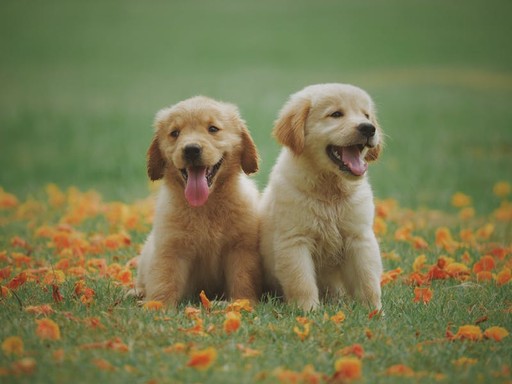
Animals -- 5 stars (ArtFID 198.36)
Animals achieve the Pre-Raphaelite style's strongest score. The movement's obsessive detail preservation renders fur, feather, and scale with the same meticulous precision that Millais brought to every blade of grass in Ophelia.
| Original Photo | AI Result |
|---|---|
 |
 |
| Source photo | ArtFID: 198.36 -- 5 stars |
The animal transformation is striking. Fur textures are preserved with remarkable fidelity but rendered in the Pre-Raphaelite's saturated, luminous palette -- individual hairs become visible brushstrokes of jewel-toned color. Backgrounds shift into the rich, botanically detailed settings that characterized Pre-Raphaelite compositions. The animal acquires the almost heraldic quality of a creature from medieval manuscript illumination -- detailed, dignified, and glowing with inner light. This is the style to choose when you want animal portraits that feel both naturalistic and enchanted.
Portraits -- 5 stars (ArtFID 206.72)
Portraiture was central to the Pre-Raphaelite vision. From Rossetti's iconic women to Millais' psychological studies, the movement produced some of Victorian painting's most memorable faces.
| Original Photo | AI Result |
|---|---|
 |
|
| Source photo | ArtFID: 206.72 -- 5 stars |
The portrait transformation is luminous and detailed. Skin acquires the translucent, glowing quality of Pre-Raphaelite painting -- the technique of working on a white ground gives the algorithm a tonal template that makes skin appear lit from within. Hair gains richness and texture. Colors throughout the image shift into the movement's jewel-like register -- deep reds, rich greens, warm golds. The subject retains their identity completely while entering the world of Rossetti and Millais -- a Victorian enchantment applied to a modern face.
Flowers -- 5 stars (ArtFID 216.22)
The Pre-Raphaelites were among art history's most meticulous botanical painters. Flowers carried symbolic meaning in their work -- lilies for purity, roses for passion, poppies for sleep and death -- and were rendered with scientific precision.
| Original Photo | AI Result |
|---|---|
|
|
| Source photo | ArtFID: 216.22 -- 5 stars |
The flower transformation is exquisite. Petals acquire the saturated, luminous quality of Pre-Raphaelite botanical painting -- colors intensify into jewel tones while individual details remain crisp. Leaves and stems gain the meticulous definition that characterized Pre-Raphaelite nature studies. The overall composition takes on the quality of a medieval herbal or an illustrated manuscript page -- each bloom rendered as both a natural specimen and a symbolic object. If you photograph flowers regularly, the Pre-Raphaelite style produces results with a richness and depth that few other styles can match.
How to Apply Pre-Raphaelite Style (3 Steps)
Step 1: Choose Your Photo
Upload any photograph to ArtRobot. Animals and portraits produce the strongest results, but flowers, landscapes, and architecture all achieve excellent scores. The Pre-Raphaelite style is especially effective with subjects that have rich textural detail -- fur, hair, fabric, foliage.
Step 2: Select Pre-Raphaelite Style
Choose Pre-Raphaelite from the style library. ArtRobot's references include works by Rossetti, Millais, Hunt, and Burne-Jones sourced from museum open access collections under CC0 license. The algorithm extracts the gram matrix capturing the Pre-Raphaelite's luminous color, extreme detail, and jewel-toned palette, then applies it to your photograph.
Step 3: Download Your Pre-Raphaelite Masterpiece
ArtRobot generates your Pre-Raphaelite photo effect in seconds. Download in multiple resolutions -- from social media to print-ready 4K. Pre-Raphaelite-style prints are magnificent as wall art -- the vivid colors and meticulous detail reward close viewing at large scale, making them ideal for gallery-quality prints.
3 free transfers, no signup required. Premium unlocks HD (2048px) and 4K (4096px), batch processing, and the complete 121+ style library.
Try Pre-Raphaelite Style Transfer Free on ArtRobot ->
Photography Tips for Best Pre-Raphaelite Results
1. Maximize Detail in Your Source. The Pre-Raphaelite style's strength is detail preservation. Photographs shot at high resolution, in sharp focus, with rich textural information produce the best results. The algorithm needs detail to work with -- a blurry source produces a blurry Pre-Raphaelite painting.
2. Use Warm, Rich Lighting. The Pre-Raphaelite palette is saturated and warm. Photographs taken in warm natural light -- golden hour, window light, candlelight -- align most naturally with the movement's color range. Cool fluorescent lighting can work, but the results feel more authentic with warm-toned sources.
3. Include Botanical Elements. If you are shooting portraits or outdoor scenes, include flowers, leaves, or natural settings in the composition. The Pre-Raphaelites painted their subjects surrounded by meticulous botanical detail, and the algorithm's gram matrix responds to plant material with particular effectiveness.
4. Try Subjects with Flowing Hair or Fabric. The Pre-Raphaelite aesthetic is defined by flowing lines -- cascading hair, draped fabric, winding vines. Photographs featuring these elements give the algorithm opportunities to produce the sinuous, decorative quality that makes Pre-Raphaelite painting instantly recognizable.
5. Embrace Close-Up and Medium Shots. Pre-Raphaelite painting rewards intimate viewing distances. Close-up portraits, macro flower photography, and medium-shot animal portraits produce results where the style's detail richness is most visible. Distant landscape shots work, but the Pre-Raphaelite's unique qualities shine brightest when there is surface texture to transform.
FAQ
What is the Pre-Raphaelite art style?
The Pre-Raphaelite Brotherhood was founded in London in 1848 by Dante Gabriel Rossetti, John Everett Millais, and William Holman Hunt. The movement rejected academic painting conventions inherited from Raphael onward, returning instead to the vivid color, meticulous detail, and spiritual sincerity of medieval and early Renaissance art. Pre-Raphaelite paintings are characterized by jewel-like saturated colors, luminous skin, extreme botanical and textile detail, flowing hair, medieval and mythological subjects, and rich symbolic meaning. The movement profoundly influenced Victorian visual culture and connected to Symbolism, Art Nouveau, and the Aesthetic Movement.
Why are animals the strongest category for Pre-Raphaelite style transfer?
The Pre-Raphaelite movement's obsessive detail preservation creates a gram matrix exceptionally rich in high-frequency texture information. This translates directly into superior animal results because fur, feather, and scale textures are preserved and rendered in Pre-Raphaelite style rather than dissolved into abstract brushwork. The 198.36 ArtFID score reflects this -- animal subjects emerge from the transformation with their textural identity intact, wrapped in the movement's luminous, jewel-toned palette.
How does the Pre-Raphaelite style compare to Art Nouveau for style transfer?
The Pre-Raphaelite movement directly influenced Art Nouveau, and both styles share flowing, decorative qualities. However, Pre-Raphaelite painting emphasizes naturalistic detail and narrative content -- every surface is observed and rendered with precision. Art Nouveau abstracts natural forms into stylized decorative patterns. Choose Pre-Raphaelite for richly detailed, narrative results; choose Art Nouveau for more stylized, pattern-oriented transformations.
Which famous Pre-Raphaelite paintings should I know?
The most celebrated works include Millais' Ophelia (1851--52), Rossetti's Proserpine (1874), Hunt's The Light of the World (1853--54), Burne-Jones' The Golden Stairs (1880), and John William Waterhouse's The Lady of Shalott (1888). These paintings exemplify the movement's range -- from Millais' botanical precision to Rossetti's sensuous beauty to Burne-Jones' decorative elegance.
Can I use Pre-Raphaelite style transfer for commercial projects?
Yes. The Pre-Raphaelite Brotherhood is a historical art movement and is not copyrightable. All style references used by ArtRobot are sourced from museum open access collections under CC0 license. Your stylized results can be used for personal and commercial projects.
Is the Pre-Raphaelite style good for portrait photography?
Excellent. Portraits achieve a strong 206.72 ArtFID score -- 5 stars. The Pre-Raphaelite movement essentially defined the Victorian portrait aesthetic: luminous skin, flowing hair, rich color, detailed texture. The algorithm's gram matrix has deep statistical alignment with portrait subjects, producing results where faces glow with the translucent, almost supernatural luminosity that Rossetti and Millais achieved through their wet-white-ground technique.
Ready to Create Your Own Pre-Raphaelite Masterpiece?
The Pre-Raphaelite style brings vivid jewel-toned color, meticulous detail, and luminous atmosphere to every photograph. Animals and portraits lead with the strongest scores, but every subject benefits from the movement's extraordinary visual richness.
Start Your Free Pre-Raphaelite Style Transfer on ArtRobot ->
Related Styles
- Romanticism Style Transfer -- The Pre-Raphaelites' emotional predecessor. Atmospheric sublimity, dramatic light, and the power of nature.
- Symbolism Style Transfer -- The Pre-Raphaelites' spiritual descendant. Dreamlike imagery, psychological depth, and mystical atmosphere.
- Art Nouveau Style Transfer -- Directly influenced by Pre-Raphaelite flowing forms. Decorative elegance and organic pattern.
- Best Art Styles for Animals -- Complete guide to styles that work best with animal photography, featuring the Pre-Raphaelite's exceptional detail preservation.
Try It Yourself
Transform your own photos into stunning paintings with 80+ artist styles. Free to start.