
AI Artist & Tech Enthusiast
Portraits Ukiyo-e Photo Effect — AI Art [ArtFID Tested]
![Portraits Ukiyo-e Photo Effect — AI Art [ArtFID Tested] - ArtRobot AI Art](https://storage.googleapis.com/artrobot-storage/blog/pseo/stylized_images/ukiyo-e/portraits_hd_07_stylized.jpg)
Japanese woodblock prints transformed portraiture into something Western art never attempted -- faces rendered through flat color planes, precise outlines, and a deliberate rejection of three-dimensional modeling. Where European portrait traditions pursued lifelike depth through chiaroscuro and perspective, ukiyo-e masters like Sharaku and Utamaro captured personality through bold contours, exaggerated expressions, and decorative patterning. We tested this East-meets-West combination using ArtFID quality scoring: the portraits ukiyo-e photo effect scores 301.74 (4 stars), with solid content preservation (LPIPS: 0.3849) and authentic style fidelity (FID: 216.88).
ArtRobot's Ukiyo-e style transfer uses museum-quality references from the Art Institute of Chicago -- all CC0 / Public Domain. This page breaks down the data, shows real before-and-after examples, and walks you through creating your own portrait ukiyo-e photo effect in seconds.
 Portrait photograph transformed into Ukiyo-e style -- Powered by ArtRobot AI
Quick Links -- Jump to: About Ukiyo-e | Why It Works for Portraits | ArtFID Quality Score | Before & After | How to Apply | FAQ | Related Styles
Portraits — Van Gogh Style Transfer

About Ukiyo-e Art Style
Ukiyo-e -- literally "pictures of the floating world" -- flourished in Japan from the 17th through 19th centuries. These woodblock prints depicted the transient pleasures of urban life: kabuki actors, courtesans, landscapes, and seasonal scenes. The technique demanded precision: an artist drew the design, a carver cut the wood blocks (one per color), and a printer pressed paper against the inked blocks by hand.
The visual language of ukiyo-e is instantly recognizable: - Bold outlines -- Every form is defined by strong, clean contour lines - Flat color areas -- Large planes of unmodulated color replace Western-style tonal gradients - Minimal shading -- Depth is suggested through overlapping planes rather than light-and-shadow modeling - Decorative patterning -- Textile patterns, wave motifs, and botanical details fill compositions with ornamental richness
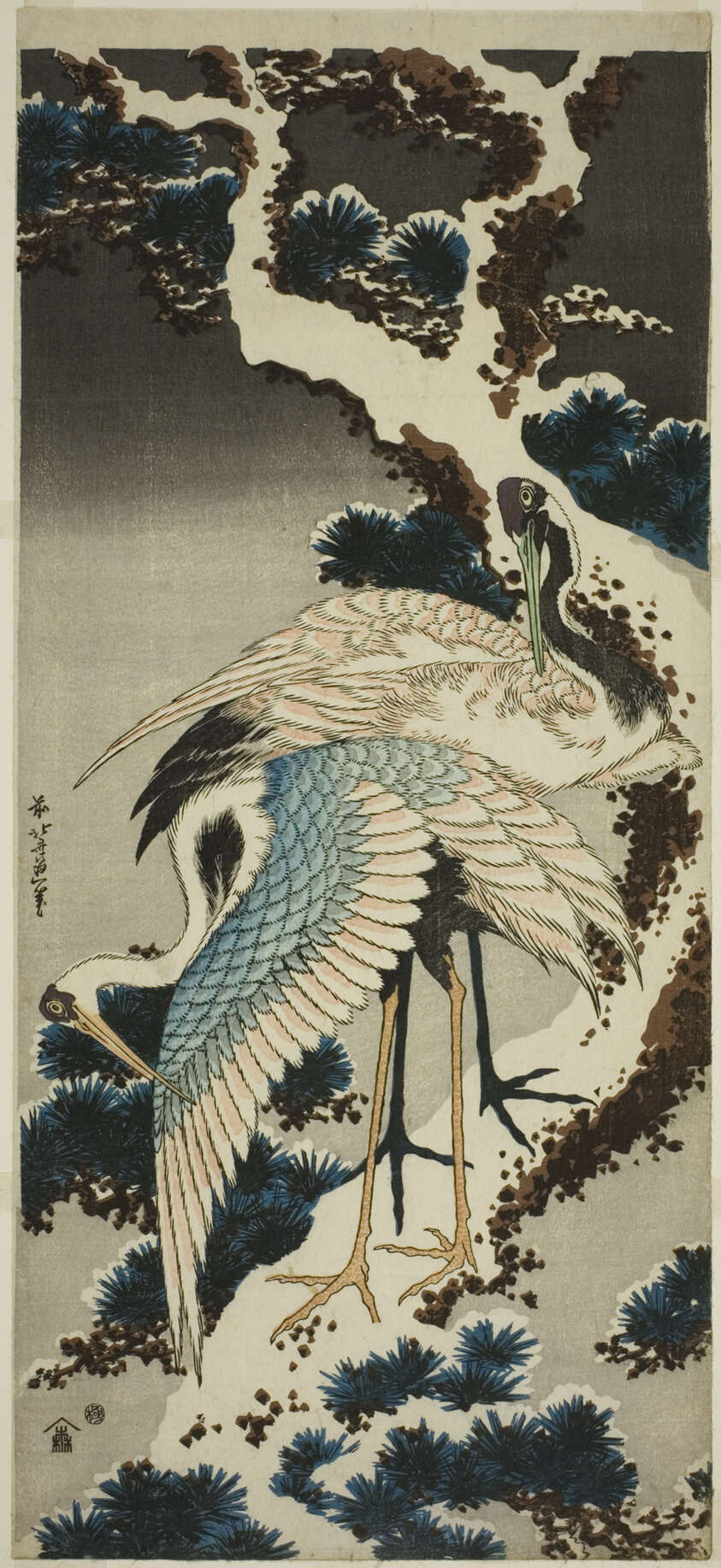 Ukiyo-e woodblock print -- Art Institute of Chicago, Museum Open Access.
For portraits specifically, ukiyo-e developed a distinct genre called yakusha-e (actor prints) and bijin-ga (beauty prints). Masters like Toshusai Sharaku created kabuki actor portraits of extraordinary psychological intensity -- exaggerated features and bold expressions captured in just a few decisive lines. Kitagawa Utamaro's beauty prints rendered women through elegant contours and subtle color harmonies that influenced artists from Degas to Klimt.
In neural style transfer, these characteristics create a distinctive frequency profile: strong edge detection combined with flat color regions. The algorithm picks up the bold outlines and translates them into clean contour effects while compressing tonal gradients into flat color planes.
Why Ukiyo-e Works for Portrait Photos
The portrait ukiyo-e combination produces a distinctive visual effect that sits between illustration and fine art. Three factors drive its effectiveness:
1. Clean Edge Translation. Facial features -- eyes, eyebrows, nose, lips, jawline -- are naturally defined by edges. Ukiyo-e's emphasis on bold contours maps naturally onto these facial boundaries, producing results where features are outlined with the clean precision of a woodblock print.
2. Flat Color Simplification. Ukiyo-e's flat color areas simplify the tonal complexity of a photograph into a reduced palette. Skin tones become unified planes. Shadows become solid shapes rather than gradients. This simplification creates an immediately recognizable "print" aesthetic -- your portrait looks like it was carved into a woodblock and hand-pressed.
3. Cultural Contrast. The tension between a Western photographic portrait and a Japanese printmaking aesthetic creates visual interest. The face remains recognizable, but the rendering technique is unmistakably Eastern -- a cultural mashup that produces something genuinely new.
The LPIPS score of 0.3849 reflects moderate content transformation. The algorithm is clearly imposing the ukiyo-e aesthetic -- flattening tones, strengthening edges, simplifying color -- while preserving enough structural information for the subject to remain identifiable. The FID of 216.88 confirms that the results genuinely resemble authentic ukiyo-e prints rather than generic "cartoon" effects.
ArtFID Quality Score: Portraits + Ukiyo-e
ArtFID (Art Frechet Inception Distance) measures style transfer quality by balancing content preservation (LPIPS) and style authenticity (FID). Formula: ArtFID = (1 + LPIPS) x (1 + FID). Lower scores = better quality.
Portraits + Ukiyo-e Result
| Metric | Score | Interpretation |
|---|---|---|
| ArtFID | 301.74 | Good quality (4/5 stars) |
| LPIPS | 0.3849 | Moderate content preservation -- facial features readable |
| FID | 216.88 | Good style authenticity -- recognizably ukiyo-e |
| Stars | 4/5 | Recommended combination |
Comparison: Ukiyo-e vs. Hokusai on Portraits
Hokusai -- the most internationally famous ukiyo-e artist -- offers an artist-specific alternative. How does the generic Ukiyo-e style compare?
| Style / Artist | ArtFID | LPIPS | FID | Stars |
|---|---|---|---|---|
| Ukiyo-e (Style) | 301.74 | 0.3849 | 216.88 | 4 |
| Hokusai | Varies | Varies | Varies | 4 |
The generic Ukiyo-e style draws from a broader range of woodblock print references, producing results that capture the general aesthetic of the tradition. Hokusai's specific style introduces his characteristic dynamic linework and bolder compositional energy -- particularly effective when you want results that evoke "The Great Wave" rather than the quieter elegance of bijin-ga prints.
Where Portraits Rank Across All Ukiyo-e Categories
Ukiyo-e performs variably across content types. Some combinations achieve exceptional results -- notably flowers, which score among the best in our entire benchmark database. Portraits occupy a solid middle position:
| Content Type | ArtFID | Stars | Notes |
|---|---|---|---|
| Flowers | 109.11 | 5 | One of the best combinations in entire library |
| Portraits | 301.74 | 4 | Solid -- clean contour effects on faces |
The significant gap between flowers (109.11) and portraits (301.74) reflects the historical priorities of ukiyo-e: floral compositions (kacho-e) were one of the tradition's primary genres, while the specific approach to human faces in woodblock prints differs substantially from photographic portraiture.
Before & After: Portraits in Ukiyo-e Style
| Original Photo | Style Reference | AI Result |
|---|---|---|
 |
|
 |
| Source photo | Cranes on Snow-Covered Pine | ArtFID: 301.74 -- 4 stars |
LPIPS: 0.3849 (content preservation) | FID: 216.88 (style fidelity)
Notice the transformation: photographic tonal gradients compress into flatter color areas. Facial contours gain the clean, decisive linework characteristic of woodblock printing. The color palette shifts toward the muted, natural pigment tones of traditional Japanese prints -- indigo, ochre, soft greens, and warm skin tones rendered as unified planes rather than complex gradients.
The background undergoes a particularly striking transformation. Photographic depth-of-field effects are replaced with the flat, decorative space of ukiyo-e -- no atmospheric perspective, no depth blur, just a composed arrangement of color shapes that frame the subject.
Photography Tips for Best Ukiyo-e Portrait Results
1. Choose Clean, Well-Defined Features. Ukiyo-e relies on strong contours. Portraits with clearly defined facial features -- sharp jawlines, defined eyebrows, visible lip contours -- give the algorithm the strongest edges to translate into woodblock-style lines.
2. Use Even Lighting. Harsh shadows create complex tonal patterns that resist ukiyo-e's flat-color simplification. Soft, even front lighting produces the cleanest results -- think overcast sky or studio softbox rather than dramatic side lighting.
3. Simple, Uncluttered Backgrounds. Traditional ukiyo-e portraits often feature plain or minimally decorated backgrounds. A clean backdrop lets the algorithm focus its contour-finding on the face and figure.
4. Consider Profile or Three-Quarter Views. Japanese portrait prints often depicted subjects in three-quarter or profile views, where the contour of the face creates a single, elegant line. These angles produce the most authentically ukiyo-e results.
How to Apply Ukiyo-e to Portraits (3 Steps)
Step 1: Upload Your Portrait
Go to ArtRobot and upload any portrait photograph. Headshots, selfies, and figure portraits all work well. No account required. Supported formats: JPG, PNG, WebP. Resolution: 1024px+ recommended for clean contour rendering.
Step 2: Select Ukiyo-e Style
Browse the style library and choose Ukiyo-e for the traditional woodblock print aesthetic. Also consider Hokusai for a more dynamic, artist-specific result. Each style displays its ArtFID quality rating for comparison.
Step 3: Download Your Result
Your portraits ukiyo-e photo effect generates in seconds. Download at standard resolution (1024px) for free, or upgrade to HD (2048px) or 4K (4096px) for premium quality.
3 free transfers, no signup required. Premium unlocks HD/4K, batch processing, and the full 121+ style library.
Try Portraits Ukiyo-e Style Transfer Free on ArtRobot ->
FAQ
How does Ukiyo-e style transfer work on portrait photos?
ArtRobot uses neural style transfer to extract the gram matrix from museum-quality ukiyo-e woodblock prints. This mathematical representation captures the bold outlines, flat color areas, and minimal shading characteristic of Japanese print aesthetics. The algorithm applies these patterns to your portrait while preserving facial identity. The result looks like your photo was redrawn as a woodblock print -- clean contours, flat color planes, and the distinctive decorative quality of ukiyo-e.
What ArtFID score does Ukiyo-e get on portraits?
Ukiyo-e scores 301.74 ArtFID on portraits (4/5 stars), with LPIPS of 0.3849 (content preservation) and FID of 216.88 (style authenticity). This is a solid "good quality -- recommended" rating, producing portraits with clean contour effects and authentic woodblock print aesthetics.
Is Ukiyo-e good for portrait style transfer?
Yes, with a 4-star rating. Ukiyo-e produces distinctive, visually striking portrait effects that look genuinely different from Western art styles. The bold contours and flat color simplification create a clean, illustrative quality. For the strongest Japanese-influenced portrait results, also consider Hokusai for more dynamic linework.
How does Ukiyo-e compare to anime style for portraits?
Ukiyo-e and anime share historical DNA -- anime's visual language descends from ukiyo-e through manga. However, the neural style transfer results differ significantly. Ukiyo-e produces a traditional, hand-crafted woodblock print aesthetic with muted natural pigment tones. Anime produces a modern, digitally clean look with saturated colors and simplified features. Choose ukiyo-e for artistic, traditional results; choose anime for contemporary pop-culture effects.
Can I try Ukiyo-e portrait style transfer for free?
Yes. ArtRobot offers 3 free transfers at standard resolution (1024px) with no signup and no account required. Upload your portrait, select Ukiyo-e, and download in seconds. Premium plans unlock HD (2048px) and 4K (4096px), batch processing, and the complete 121+ style library.
Related Styles
- Ukiyo-e Style Transfer -- Complete guide to Ukiyo-e across all content types with full ArtFID rankings.
- Hokusai Style Transfer -- The master of "The Great Wave." Dynamic linework and bold compositions.
- Anime Art Style -- Modern descendant of the ukiyo-e tradition. Clean, digitally precise, and pop-culture-inflected.
- Flowers Ukiyo-e Photo Effect -- One of the best scoring combinations in our entire library (ArtFID: 109.11).
- Portraits Style Transfer Guide -- Every art style tested on portraits, ranked by ArtFID.
Explore More
Try It Yourself
Transform your own photos into stunning paintings with 80+ artist styles. Free to start.