
AI Artist & Tech Enthusiast
Portraits Cubism Photo Effect — AI Art [ArtFID Tested]
![Portraits Cubism Photo Effect — AI Art [ArtFID Tested] - ArtRobot AI Art](https://storage.googleapis.com/artrobot-storage/blog/pseo/stylized_images/cubism/portraits_hd_06_stylized.jpg)
What happens when you shatter a human face into geometric planes and reassemble it from five angles at once? You get Cubist portraiture -- one of the most iconic visual effects in 20th-century art, and one of the strongest performing combinations in our ArtFID benchmarks. We tested the portraits cubism photo effect using scientific quality scoring, and the results confirm what Picasso and Braque demonstrated a century ago: the human face is the ideal canvas for Cubist deconstruction. ArtFID score: 243.92 (5 stars), with strong content preservation (LPIPS: 0.3415) and authentic style fidelity (FID: 180.82).
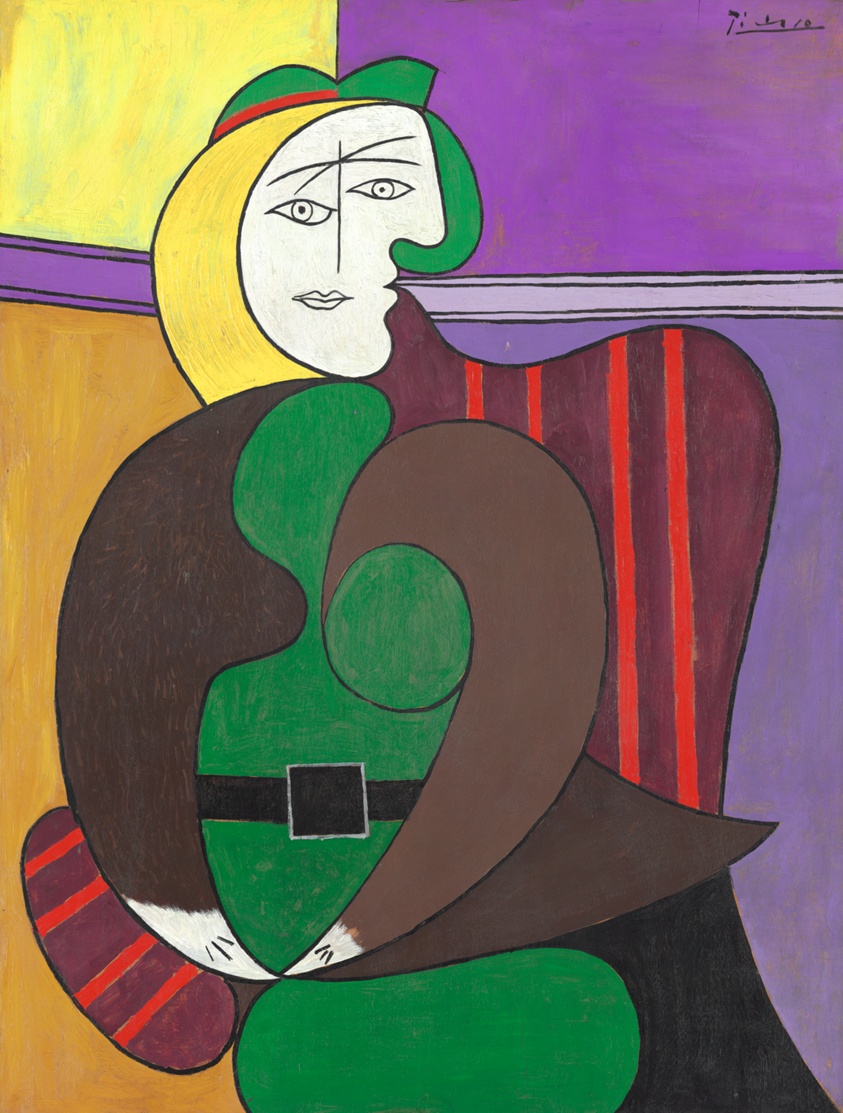
ArtRobot's Cubism style transfer uses museum-quality references from the Art Institute of Chicago -- all CC0 / Public Domain -- including Picasso's The Red Armchair and Daniel-Henry Kahnweiler. This page breaks down the data, compares Cubism to individual Cubist artists on portraits, shows real before-and-after examples, and walks you through creating your own portrait cubism photo effect in seconds.
 Portrait photograph transformed into Cubism style -- Powered by ArtRobot AI
Quick Links -- Jump to: About Cubism | Why It Works for Portraits | ArtFID Quality Score | Before & After | How to Apply | FAQ | Related Styles
Portraits — Van Gogh Style Transfer

About Cubism Art Style
Cubism emerged between 1907 and the 1920s as perhaps the most radical visual revolution in Western art history. Pioneered by Pablo Picasso and Georges Braque, it abandoned the single fixed viewpoint that had governed European painting since the Renaissance. Instead, Cubist works present subjects from multiple angles simultaneously -- a face seen from the front and in profile at the same time, overlapping and merging on a single picture plane.
The movement evolved through two phases. Analytical Cubism (1909--1912) fragmented subjects into near-monochrome faceted planes -- angular, austere, and almost sculptural. Synthetic Cubism (1912--1920s) reintroduced color and collage elements, building compositions from flat colored shapes and typographic fragments.
For portraiture specifically, Cubism produced some of art history's most recognizable images. Picasso's portraits of Dora Maar, Daniel-Henry Kahnweiler, and Ambroise Vollard became defining works of 20th-century art -- faces fractured into geometric facets that somehow remain psychologically penetrating.
Three core characteristics define the Cubist portrait: - Fragmented facial features -- Eyes, nose, and mouth displaced and rearranged across angular planes - Multiple simultaneous viewpoints -- Profile and frontal views merged into a single composition - Geometric simplification -- Organic facial curves reduced to triangles, rectangles, and trapezoids
Why Cubism Works for Portrait Photos
Portrait photography and Cubism share a surprising compatibility. Faces are among the most recognizable subjects in human perception -- even heavily distorted, we can identify a face. This means Cubism can apply aggressive geometric fragmentation to a portrait without destroying its essential identity. The viewer's brain fills in the gaps, recognizing the person through the angular planes.
This robustness is reflected in our ArtFID data. The LPIPS score of 0.3415 indicates moderate content transformation -- the algorithm is clearly altering the image -- while the FID of 180.82 confirms strong alignment with authentic Cubist paintings. It is the ideal balance: visually dramatic yet recognizable.
The geometric mid-high frequency patterns that define Cubism map naturally onto facial structure. Cheekbones become angular planes. The bridge of the nose creates a central axis for geometric fragmentation. Eye sockets become prismatic cavities. The neural network exploits these natural geometric cues in facial anatomy to create results that feel intentional rather than random.
ArtFID Quality Score: Portraits + Cubism
ArtFID (Art Frechet Inception Distance) measures style transfer quality by balancing content preservation (LPIPS) and style authenticity (FID). Formula: ArtFID = (1 + LPIPS) x (1 + FID). Lower scores = better quality.
Portraits + Cubism Result
| Metric | Score | Interpretation |
|---|---|---|
| ArtFID | 243.92 | Strong quality (5/5 stars) |
| LPIPS | 0.3415 | Good content preservation -- facial features clearly readable |
| FID | 180.82 | Strong style authenticity -- unmistakably Cubist |
| Stars | 5/5 | Highly recommended combination |
Cubist Artist Comparison on Portraits
How does the generic Cubism style compare to individual Cubist artists on portrait photographs?
| Style / Artist | ArtFID | LPIPS | FID | Stars |
|---|---|---|---|---|
| Georges Braque | 222.74 | 0.3468 | 164.39 | 5 |
| Cubism (Style) | 243.92 | 0.3415 | 180.82 | 5 |
| Pablo Picasso | 250.91 | 0.4650 | 170.27 | 5 |
Key finding: All three Cubist options achieve 5-star quality on portraits, but Braque leads with 222.74 -- his more lyrical, decorative approach to fragmentation produces portraits that balance geometric deconstruction with readability. The generic Cubism style (243.92) occupies a strong middle ground. Picasso (250.91) delivers the most aggressive fragmentation, which makes sense historically -- his Cubist portraits were the most radically distorted.
The LPIPS comparison is revealing. Picasso's 0.4650 indicates significantly more content transformation than Braque's 0.3468 or Cubism's 0.3415. If you want recognizability, go with Braque or generic Cubism. If you want maximum visual drama, choose Picasso.
Where Portraits Rank Across All Cubism Categories
Portraits rank 7th out of 15 categories for Cubism style transfer:
| Rank | Content Type | ArtFID | Stars |
|---|---|---|---|
| 1 | Still Life | 177.11 | 5 |
| 2 | Fantasy | 201.92 | 5 |
| 3 | Travel | 216.63 | 5 |
| 4 | Landscapes | 230.38 | 5 |
| 5 | Flowers | 232.33 | 5 |
| 6 | Animals | 235.87 | 5 |
| 7 | Portraits | 243.92 | 5 |
| 8 | Vehicles | 250.89 | 5 |
| ... | ... | ... | ... |
Portraits score solidly in the top half with a strong 5-star rating. The combination is not the absolute best for Cubism (that honor goes to still life at 177.11), but it is among the most visually striking and personally meaningful applications.
Before & After: Portraits in Cubism Style
| Original Photo | Style Reference | AI Result |
|---|---|---|
 |
 |
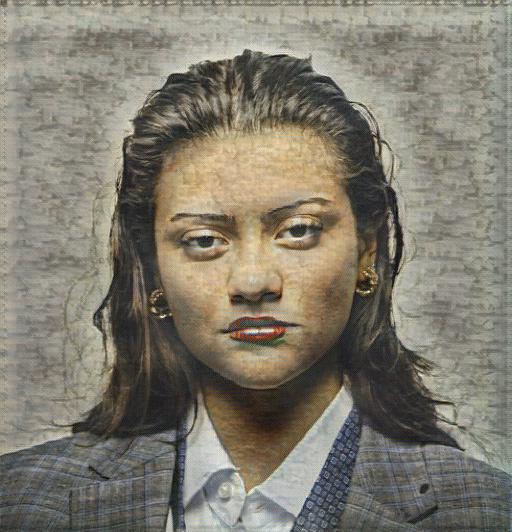 |
| Source photo | The Red Armchair -- Pablo Picasso | ArtFID: 243.92 -- 5 stars |
LPIPS: 0.3415 (content preservation) | FID: 180.82 (style fidelity)
Notice how the Cubist transformation fragments the face into overlapping geometric planes while maintaining enough structural coherence to keep the subject recognizable. Cheekbones become angular facets. The nose creates a central geometric axis. Eye sockets fragment into prismatic forms. The color palette compresses toward Cubism's characteristic muted tones -- ochres, grays, and earth colors replacing the photograph's original hue range.
The background undergoes equally dramatic transformation, breaking into abstract planes that refuse to sit behind the subject in conventional spatial recession. This collapse of foreground and background into a single picture plane is one of Cubism's most distinctive effects.
Photography Tips for Best Cubism Portrait Results
1. Use Clear, Well-Lit Faces. The algorithm needs visible facial structure to fragment effectively. Avoid heavily shadowed or backlit portraits where features are obscured.
2. Try Three-Quarter Views. Cubism merges multiple viewpoints -- a three-quarter view already suggests the tension between profile and frontal, giving the algorithm natural material to work with.
3. Simple Backgrounds. Plain or softly blurred backgrounds let the Cubist fragmentation focus on the face. Busy backgrounds produce cluttered results where the geometric planes compete for attention.
4. Include Shoulders and Upper Body. Cubist portraits typically include the torso, not just the face. A wider crop gives the algorithm more compositional material and produces results closer to authentic Cubist portrait compositions.
How to Apply Cubism to Portraits (3 Steps)
Step 1: Upload Your Portrait
Go to ArtRobot and upload any portrait photograph -- headshots, selfies, group portraits, pet portraits. No account required. Supported formats: JPG, PNG, WebP. Resolution: 1024px+ recommended.
Step 2: Select Cubism Style
Choose from three Cubist options: - Cubism (Style) -- Balanced fragmentation. ArtFID 243.92 on portraits. - Georges Braque -- Lyrical, decorative. Best portrait score at 222.74. - Pablo Picasso -- Aggressive, dramatic. Most visually intense at 250.91.
Step 3: Download Your Cubist Portrait
Your portraits cubism photo effect generates in seconds. Download at standard (1024px) free, or upgrade to HD (2048px) or 4K (4096px) for print-quality results.
3 free transfers, no signup required. Premium unlocks HD/4K, batch processing, and the full 121+ style library.
Try Portraits Cubism Style Transfer Free on ArtRobot ->
FAQ
How does Cubism style transfer work on portrait photos?
ArtRobot uses neural style transfer to extract the gram matrix from museum-quality Cubist paintings -- Picasso's The Red Armchair, Daniel-Henry Kahnweiler, and other Art Institute of Chicago works. This mathematical style representation captures Cubism's angular fragmentation, geometric shapes, and multi-viewpoint composition. The algorithm applies these patterns to your portrait while preserving facial identity. Portraits are particularly compatible because human faces contain strong geometric cues (cheekbones, jawline, eye sockets) that the algorithm fragments into convincing Cubist planes.
What ArtFID score does Cubism get on portraits?
Cubism scores 243.92 ArtFID on portraits (5/5 stars), with LPIPS of 0.3415 (content preservation) and FID of 180.82 (style authenticity). For comparison, Braque scores 222.74 and Picasso 250.91 -- all three achieve 5-star quality on portraits.
Which Cubist artist is best for portrait style transfer?
Georges Braque (222.74) achieves the best ArtFID on portraits, followed by generic Cubism (243.92) and Picasso (250.91). Braque produces more lyrical, readable results. Picasso delivers more aggressive, dramatic fragmentation. Choose based on how much distortion you want.
Can I try Cubism portrait style transfer for free?
Yes. ArtRobot offers 3 free transfers at standard resolution (1024px) with no signup, no watermark, and no account required. Upload your portrait, select Cubism, and download in seconds. Premium plans unlock HD (2048px) and 4K (4096px), batch processing, and the complete 121+ style library.
Related Portrait Styles
- Cubism Style Transfer -- Complete guide to Cubism across all 15 content types, with full ArtFID rankings.
- Pablo Picasso Style Transfer -- The most aggressive Cubist portrait effects. Dramatic distortion and bold fragmentation.
- Georges Braque Style Transfer -- Lyrical Cubism with the best portrait score (222.74). Readable yet artistic.
- Portraits Style Transfer Guide -- Every art style tested on portraits, ranked by ArtFID.
- Expressionism Portrait Effect -- Emotional distortion as an alternative to geometric fragmentation.
Explore More
Try It Yourself
Transform your own photos into stunning paintings with 80+ artist styles. Free to start.