
AI Artist & Tech Enthusiast
Pointillism Photo Effect — AI Style Transfer Guide (2026)

Pointillism is painting reduced to its atomic unit: the dot. In 1886, Georges Seurat exhibited A Sunday Afternoon on the Island of La Grande Jatte -- a monumental canvas composed entirely of tiny dots of pure, unmixed color, placed side by side so that the viewer's eye would blend them at a distance. It was a radical proposition: that color mixing should happen in the viewer's retina, not on the painter's palette. This "optical mixing" -- grounded in the color theories of Michel Eugene Chevreul and Ogden Rood -- gave Pointillism a scientific rigor that no other Post-Impressionist movement could claim.
Today, neural style transfer lets you apply Pointillism's distinctive dot-based aesthetic to any photograph. Upload your image to ArtRobot, and the algorithm will transform it with the dense, shimmering dot patterns and vibrant optical color that Seurat and Paul Signac pioneered. Our ArtFID testing shows that Pointillism is a solid, versatile style that earns 4 stars across most categories -- portraits (311.86), landscapes (316.12), architecture (319.51), and flowers (331.26). It does not dominate any single category the way Romanticism dominates animals or Classicism dominates architecture, but it delivers consistently good results across a broad range of subjects.
 A landscape photograph transformed into Pointillism style using ArtRobot AI -- dense dot patterns, vibrant optical color mixing, and shimmering luminosity
This guide covers Pointillism's history, its key artists, ArtFID-tested results across photo categories, real before-and-after examples, and honest guidance on when Pointillism works well -- and where its limitations show.
Quick Links -- Jump to: What is Pointillism? | Key Artists | ArtFID Scores | Before & After | When to Use | When NOT to Use | FAQ | Related Styles
What is Pointillism?
Pointillism -- sometimes called Divisionism or Neo-Impressionism -- is a painting technique in which small, distinct dots of color are applied in patterns to form an image. Developed by Georges Seurat and Paul Signac in the 1880s, the technique was rooted in contemporary color science. Where the Impressionists mixed colors intuitively on the palette, the Pointillists applied pure pigments in tiny dots and relied on the viewer's eye to blend them optically at viewing distance.
The key characteristics that distinguish Pointillism from neighboring movements:
- Tiny dots of pure color -- No mixing on the palette. Each dot is a single, pure hue applied directly to the canvas. Adjacent dots of complementary colors (blue next to orange, red next to green) create vibrant optical mixtures that are more luminous than physically mixed pigments.
- Optical mixing -- The viewer's retina blends adjacent dots into perceived colors at a distance. This produces a shimmering, light-filled quality that premixed pigments cannot achieve. Step close to a Pointillist painting and you see a mosaic of colored dots; step back and the image resolves into a luminous scene.
- Scientific color theory -- Pointillism was explicitly grounded in the color theories of Chevreul (The Law of Simultaneous Contrast of Colors, 1839) and Rood (Modern Chromatics, 1879). Seurat studied these texts systematically, applying their principles to painting with almost laboratory precision.
- Neo-Impressionist rigor -- Where Impressionism was spontaneous and intuitive, Pointillism was methodical and planned. Seurat spent two years on La Grande Jatte, building the composition through careful preparatory drawings and color studies. The spontaneity of the Impressionist sketch was replaced by the precision of the scientist's experiment.
- Luminous, shimmering surfaces -- The optical mixing of pure color dots produces surfaces that seem to vibrate with light. This shimmering quality is Pointillism's signature visual effect -- and the quality that neural style transfer captures most effectively.
Pointillism emerged directly from Impressionism but moved in the opposite direction. Where Monet pursued sensation and spontaneity, Seurat pursued system and science. Both were interested in light and color, but their methods were antithetical. This tension between intuition and system places Pointillism at the intersection of Impressionism and early modernism -- a bridge between 19th-century naturalism and 20th-century abstraction.
Key Pointillism Artists
Georges Seurat (1859--1891)
Seurat was Pointillism's inventor and its greatest practitioner. In his tragically short career (he died at 31), he produced a small body of monumental paintings that changed the course of Western art. A Sunday Afternoon on the Island of La Grande Jatte (1884--1886) -- nearly 7 by 10 feet, composed of millions of individual dots -- remains the defining work of the movement. Seurat's other major canvases -- Bathers at Asnieres, The Circus, Models -- demonstrate the technique's range across outdoor scenes, interior compositions, and figure painting.
For style transfer, Seurat provides Pointillism's purest gram matrix -- the most rigorously dot-based, the most scientifically organized, and the most luminous. His training influence produces results with dense, regular dot patterns and the characteristic shimmering optical effect.
Paul Signac (1863--1935)
Signac was Pointillism's theorist, evangelist, and long-term practitioner. After Seurat's early death, Signac carried the movement forward for decades, writing its theoretical manifesto (D'Eugene Delacroix au Neo-Impressionnisme, 1899) and evolving the technique toward larger, more mosaic-like color blocks. His harbor scenes -- The Port of Saint-Tropez, The Papal Palace, Avignon -- demonstrate Pointillism applied to bold, sunlit Mediterranean subjects.
Signac's style transfer influence introduces slightly larger color blocks and warmer, more vivid palettes than Seurat's precise dots. His contribution produces results with a more decorative, mosaic-like quality.
Camille Pissarro (1830--1903, late period)
Pissarro -- one of the original Impressionists and the movement's elder statesman -- adopted Pointillist technique in the mid-1880s under Seurat and Signac's influence. His Neo-Impressionist period (roughly 1885--1890) produced luminous landscapes and rural scenes that blended Impressionist subject matter with Pointillist method. Pissarro eventually returned to a freer brushwork, finding Pointillism's discipline too constraining -- a honest assessment that reflects a real limitation of the technique.
Pissarro's Pointillist work adds an Impressionist warmth and naturalness to the dot technique, producing style transfer results that feel more organic and less mechanical than pure Seurat.
Style Transfer Quality by Photo Type (ArtFID Tested)
We tested ArtRobot's Pointillism style transfer across photo categories using ArtFID (Art Frechet Inception Distance):
- LPIPS: content preservation. Lower = better.
- FID: style fidelity to authentic Pointillist paintings. Lower = more faithful.
Combined formula: ArtFID = (1 + LPIPS) x (1 + FID)
| Photo Category | ArtFID | Stars | Notes |
|---|---|---|---|
| Portraits | 311.86 | 4 | Best category -- formal figure composition |
| Landscapes | 316.12 | 4 | Solid -- outdoor scenes are core Pointillist subjects |
| Architecture | 319.51 | 4 | Good -- geometric structures suit dot patterns |
| Flowers | 331.26 | 4 | Good -- colorful subjects benefit from optical mixing |
| Animals | 381.95 | 3 | Moderate -- organic forms challenge rigid dot patterns |
Key takeaway: Pointillism is a consistently good generalist, not a category specialist. The spread from best (portraits at 311.86) to second-weakest (flowers at 331.26) is less than 20 points -- remarkably even performance. This consistency means Pointillism is a safe, reliable choice across most photo types, but it will not produce the jaw-dropping, category-best results that more specialized styles achieve.
Portraits lead at 311.86 because Seurat's major works prominently feature human figures. La Grande Jatte, Models, and The Circus all center on carefully composed human subjects, providing strong training statistics for figure-based compositions. The dot technique handles skin tones well -- optical mixing of warm and cool dots produces luminous, lifelike flesh tones.
Landscapes at 316.12 reflect Pointillism's strong outdoor painting tradition. Seurat, Signac, and Pissarro all painted extensively outdoors, and the dot technique excels at rendering sky gradients, water surfaces, and foliage. The shimmering optical effect is particularly beautiful on water scenes, where it mimics the way sunlight scatters across rippled surfaces.
Architecture at 319.51 earns 4 stars because geometric building forms provide the regular structure that Pointillist dot patterns organize well. Signac's architectural subjects -- harbor buildings, the Papal Palace -- demonstrate this historical alignment.
Flowers at 331.26 benefit from Pointillism's color vibrancy. The optical mixing of pure color dots produces more vivid, luminous color than premixed pigments -- an advantage for already-colorful flower subjects. However, the technique's rigid dot structure can reduce the organic softness that flower subjects demand.
Animals at 381.95 earn 3 stars -- the weakest category. Animal subjects require soft, organic transitions (fur, feathers, curves) that Pointillism's rigid dot grid handles less naturally. For animal photography, Romanticism (166.26) or Impressionism produce substantially better results.
Before & After Examples
Every row shows the original photograph alongside the AI-generated Pointillist result.
Landscapes -- 4 stars (ArtFID 316.12)
Landscapes are core Pointillist territory. The transformation captures the shimmering luminosity that Seurat and Signac achieved in their outdoor scenes.
| Original Photo | AI Result |
|---|---|
 |
|
| Source photo | ArtFID: 316.12 -- 4 stars |
The landscape transformation reveals Pointillism's signature effect: the image appears to shimmer with light. Sky gradients dissolve into thousands of colored dots that blend optically at viewing distance. Foliage becomes a vibrant mosaic of green, yellow, and blue dots. The overall effect is more luminous than the original photograph -- optical mixing produces brighter, more light-filled color than physical pigment mixing.
Portraits -- 4 stars (ArtFID 311.86)
Portraits are Pointillism's strongest category, reflecting Seurat's extensive figure painting in his major compositions.
| Original Photo | AI Result |
|---|---|
 |
 |
| Source photo | ArtFID: 311.86 -- 4 stars |
The portrait transformation demonstrates Pointillism's luminous handling of skin tones. Warm and cool dots interweave to produce flesh that glows with optical vibrancy. Facial features remain recognizable while the entire surface vibrates with the characteristic Pointillist shimmer. The effect is decorative, luminous, and distinctly different from both photographic realism and the softer treatments of Impressionist or Romantic styles.
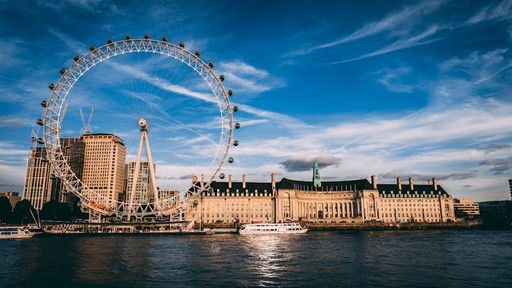
Architecture -- 4 stars (ArtFID 319.51)
Architecture's geometric regularity provides structure that Pointillism's dot patterns organize effectively.
| Original Photo | AI Result |
|---|---|
 |
 |
| Source photo | ArtFID: 319.51 -- 4 stars |
The architectural transformation shows how Pointillism handles geometric subjects. Building lines and edges remain clear despite being composed entirely of dots. Surfaces gain a mosaic-like quality that recalls Signac's harbor architecture paintings. The dot pattern adds visual texture to flat surfaces -- stone walls, rendered facades, glass -- creating visual interest where the original photograph shows uniform material.
When to Use Pointillism
Pointillism is the right choice for specific photographic scenarios:
1. Colorful Subjects. Pointillism's optical mixing produces its most dramatic effect on subjects with diverse, vivid color. Flower markets, autumn foliage, stained glass, colorful architecture, and vibrant street scenes all benefit from the technique's ability to amplify color luminosity beyond what physically mixed pigments can achieve.
2. Sunlit Outdoor Scenes. The Neo-Impressionists painted almost exclusively in bright daylight, and the dot technique was designed to capture the effect of direct sunlight on color. Bright, well-lit outdoor photographs produce the most authentic Pointillist results.
3. Decorative Wall Art. Pointillism's dense, shimmering surface quality makes it one of the most decorative art styles available. The results look stunning at large print sizes, where the dot pattern becomes visible and adds a tactile quality that flat digital prints lack. Think of it as built-in visual texture.
4. Art History Education and Appreciation. Pointillism is one of the most visually distinctive and intellectually interesting art movements. Transforming familiar photographs into Pointillist style is an engaging way to understand how optical mixing works -- and to appreciate the extraordinary patience of Seurat, who applied millions of individual dots by hand.
5. Formal Compositions. Pointillism's methodical, organized aesthetic suits subjects with clear compositional structure -- centered portraits, symmetrical architecture, balanced landscapes. The dot grid reinforces compositional order rather than disrupting it.
When NOT to Use Pointillism
Pointillism has genuine limitations. Choose a different style for these subjects:
1. Animal Photography. The 381.95 ArtFID score is Pointillism's weakest category. The rigid dot pattern conflicts with the organic softness of fur, feathers, and animal curves. For animal photos, use Romanticism (166.26 ArtFID on animals -- dramatically better).
2. Low-Light or Atmospheric Scenes. Pointillism was designed for bright, sunlit conditions. Dark, moody, or atmospheric photographs lose their emotional quality when converted to vibrant, shimmering dots. For atmospheric subjects, use Romanticism or Symbolism.
3. Subjects Requiring Soft Edges. Pointillism's dot-based structure produces inherently textured surfaces. If you want soft, flowing, watercolor-like results, the dot pattern will fight against the desired effect. Use Impressionism or Romanticism for soft-edge treatments.
4. Small Print Sizes. At small print sizes (phone screens, thumbnails, social media previews), the dot pattern compresses into visual noise rather than resolving into a coherent image. Pointillism's optical mixing requires viewing distance to work -- the image is designed to be seen from several feet away. For small-format use, choose a style with broader brushstrokes.
5. Candid or Informal Subjects. Pointillism's methodical, structured aesthetic fights against casual, spontaneous subjects. Street photography, candid portraits, and informal snapshots gain more from Impressionism's loose spontaneity than from Pointillism's scientific rigor.
FAQ
What is Pointillism art style?
Pointillism is a painting technique developed by Georges Seurat and Paul Signac in the 1880s. It involves applying tiny dots of pure, unmixed color to the canvas in dense patterns. At viewing distance, the viewer's eye optically blends adjacent dots into perceived colors -- a process called optical mixing. This produces colors that are more luminous and vibrant than physically mixed pigments. Pointillism is also known as Neo-Impressionism or Divisionism.
What is the difference between Pointillism and Impressionism?
Impressionism and Pointillism both focus on light and color, but their methods are opposite. Impressionism is intuitive and spontaneous -- Monet painted rapidly, capturing fleeting impressions of light with loose, varied brushstrokes. Pointillism is systematic and scientific -- Seurat applied individual dots of pure color according to color theory principles, spending years on a single painting. Impressionism feels organic and flowing; Pointillism feels structured and shimmering. In style transfer, Impressionism produces softer, more fluid results, while Pointillism produces denser, more textured results with visible dot patterns.
Which photos look best with Pointillism style transfer?
Portraits (311.86 ArtFID, 4 stars) are Pointillism's best category, followed closely by landscapes (316.12, 4 stars), architecture (319.51, 4 stars), and flowers (331.26, 4 stars). The scores are notably consistent -- Pointillism is a reliable generalist rather than a category specialist. Avoid animals (381.95, 3 stars), where the dot pattern conflicts with organic fur and feather textures.
Who invented Pointillism?
Georges Seurat (1859--1891) invented Pointillism in the mid-1880s, developing the technique through his study of color theory texts by Chevreul and Rood. His painting A Sunday Afternoon on the Island of La Grande Jatte (1884--1886) is the movement's defining work. Paul Signac became the technique's leading theorist and practitioner after Seurat's early death.
Can I use Pointillism style transfer for commercial projects?
Yes. Pointillism is a historical art technique and is not copyrightable. All style references used by ArtRobot are sourced from museum collections under open access / CC0 license. Your stylized results can be used for personal and commercial projects.
Why are Pointillism's scores moderate compared to other styles?
Pointillism's ArtFID scores (311--382 range) are higher than top-performing styles like Romanticism (166 on animals) or Classicism (205 on architecture). This reflects a genuine quality difference: Pointillism's rigid dot structure limits how faithfully the algorithm can reproduce the technique's optical mixing effect. Traditional Pointillism requires millions of precisely placed dots -- a level of micro-detail that neural style transfer approximates but cannot fully replicate. The results are good (4 stars across most categories) but not exceptional. We believe in transparent quality reporting.
Ready to Create Your Own Pointillist Composition?
Pointillism transforms photographs into shimmering, light-filled compositions built from thousands of colored dots. It is one of art history's most visually distinctive techniques -- and one of the most satisfying to see applied to your own images.
Start Your Free Pointillism Style Transfer on ArtRobot ->
Related Styles
- Impressionism Style Transfer -- Pointillism's parent movement. Softer, more spontaneous, with flowing brushwork instead of structured dots.
- Post-Impressionism Style Transfer -- The broader movement that includes Pointillism alongside Cezanne, Van Gogh, and Gauguin.
- Cubism Style Transfer -- Pointillism's geometric successor. Where Pointillism decomposed color into dots, Cubism decomposed form into geometric planes.
Try It Yourself
Transform your own photos into stunning paintings with 80+ artist styles. Free to start.