
AI Artist & Tech Enthusiast
Naïve Art Photo Effect — AI Style Transfer Guide (2026)

In 1893, a retired Paris customs official named Henri Rousseau exhibited a painting at the Salon des Independants that made sophisticated art critics laugh out loud. Surprised! depicted a tiger crouching in a tropical storm -- except the jungle looked like no real jungle anyone had seen. The leaves were too large, too flat, too uniformly green. The tiger was stiff, almost decorative. The perspective was wrong in ways that no academically trained painter would permit. The critics called it amateur, childish, incompetent.
They were wrong. Rousseau had painted something that trained artists could not: a world seen with the unmediated directness of someone who had never learned the rules of how things were supposed to look. His jungles were not real jungles -- they were jungles of the imagination, composed from visits to the Paris botanical gardens and picture books, painted with the intensity of someone who saw no difference between what was real and what was dreamed. And it turned out that this directness -- this refusal to filter vision through academic convention -- produced images of extraordinary power and charm.
This is Naive Art -- art made by self-taught or untrained artists who paint the world as they see it, unmediated by academic technique. Flat perspective. Vivid, saturated color. Simplified forms. A sense of earnest, unironic wonder. From Rousseau's impossible jungles to Grandma Moses's snow-covered New England farms to Niko Pirosmani's Georgian feasts, Naive Art offers something that sophisticated art movements cannot: the visual equivalent of a folk song -- simple, direct, and capable of moving anyone who encounters it.
Today, neural style transfer lets you apply Naive Art's distinctive charm to any photograph. Upload your image to ArtRobot, and the algorithm will transform it with simplified forms, flattened perspective, vivid saturated colors, and the warm, handmade quality that defines the style. Our ArtFID testing shows that Naive Art is a strong, versatile performer -- earning 5 stars across 13 of 15 categories, with standout scores in fantasy (198.52), animals (222.54), and portraits (226.59).
 A landscape photograph transformed into Naive Art style using ArtRobot AI -- flattened perspective, vivid color, simplified forms, and the warm directness of folk painting
This guide covers Naive Art's history, its key artists, ArtFID-tested results across photo categories, real before-and-after examples, and practical guidance on when to use -- and when to skip -- this charming, accessible style.
Quick Links -- Jump to: What is Naive Art? | Key Artists | ArtFID Scores | Before & After | When to Use | When NOT to Use | FAQ | Related Styles
Landscapes — Naive Art style Transfer

Portraits — Naive Art style Transfer


Architecture — Naive Art style Transfer
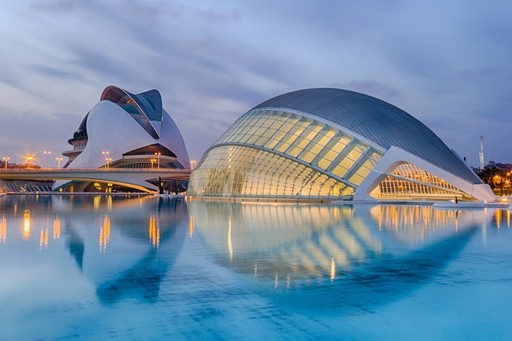

Animals — Naive Art style Transfer
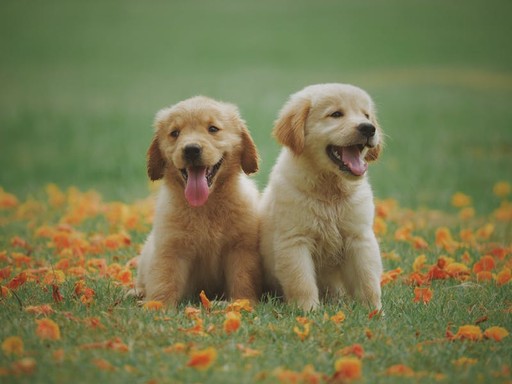

Food — Naive Art style Transfer


Street Scenes — Naive Art style Transfer


Night Scenes — Naive Art style Transfer

Flowers — Naive Art style Transfer


Still Life — Naive Art style Transfer


Fantasy — Naive Art style Transfer
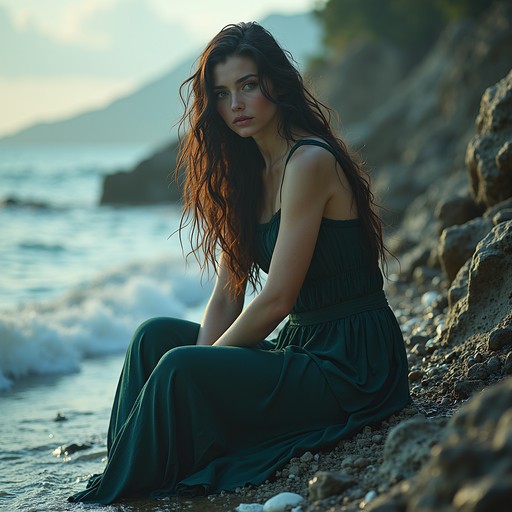

What is Naive Art?
Naive Art (also called Primitivism, Outsider Art, or Folk Art, though each term carries slightly different connotations) is art created by self-taught artists who work outside the traditions and conventions of academic art training. The term "naive" is not pejorative -- it describes a specific visual character that emerges when artists paint directly from observation or imagination without the mediating influence of learned technique.
Naive Art spans the 19th century to the present day and appears in virtually every culture. It is not a movement in the way Impressionism or Cubism are movements -- there is no manifesto, no founding date, no shared ideology. What unites Naive artists is their relationship to artistic convention: they work outside it, either by choice or by circumstance, and this outsider position produces a distinctive visual character that is immediately recognizable.
The key characteristics that define Naive Art:
- Flat or simplified perspective -- Naive artists typically do not use the linear perspective system taught in art academies. Their spatial constructions are flatter, more intuitive, and often combine multiple viewpoints in a single image. Objects in the background may be the same size as objects in the foreground. The ground plane may tilt upward rather than receding to a vanishing point. This "incorrect" perspective gives Naive Art its characteristic sense of everything existing on a single, accessible plane.
- Vivid, saturated color -- Naive artists tend toward bold, saturated, unmodulated color. Greens are intensely green. Reds are fire-engine red. Blues are sky blue. There is no atmospheric perspective (the tendency of distant objects to appear bluer and lighter), no subtle tonal gradation, and little color mixing. Each object has its "right" color, applied directly and confidently.
- Simplified, outlined forms -- Shapes are typically outlined in darker color and filled with flat color, resembling stained glass or coloring-book illustration. Complex forms are reduced to their essential outlines. Trees become lollipop shapes. Houses become rectangles with triangular roofs. People become simplified, doll-like figures. This simplification is not a failure of skill; it is a visual grammar that prioritizes clarity and directness over anatomical accuracy.
- Equal attention to all areas -- Academic painting teaches artists to create visual hierarchy through selective focus: the important elements are rendered in detail, while backgrounds are treated more loosely. Naive artists tend to give equal attention to every part of the picture -- every leaf on a tree, every brick on a house, every blade of grass. This democratic attention creates surfaces of extraordinary visual richness and density.
- Warmth and emotional directness -- Naive Art communicates with an emotional directness that more sophisticated styles often avoid. There is no irony, no conceptual distance, no intellectual mediation. The artist paints what they love -- their village, their animals, their family, their landscape -- with unguarded affection. This emotional warmth is Naive Art's most distinctive quality and the reason it resonates with viewers across cultural and educational boundaries.
Key Naive Art Artists
Henri Rousseau (1844--1910)
Rousseau is Naive Art's most famous practitioner and the artist who proved that untrained painting could achieve greatness. A career customs official (hence his nickname "Le Douanier" -- the customs officer), Rousseau taught himself to paint and exhibited regularly at the Salon des Independants from 1886 until his death. His early work was mocked, but by the 1900s, avant-garde artists like Pablo Picasso, Fernand Leger, and Robert Delaunay recognized his genius and championed his work.
Rousseau's jungle paintings are his masterpieces: The Dream (1910), The Sleeping Gypsy (1897), Tiger in a Tropical Storm (1891). These dense, lush compositions -- painted by a man who never left France and composed his jungles from the Paris Jardin des Plantes and picture books -- are among the most visually enchanting works in Western art. Every leaf is individually painted. The light is uniform and mysterious. Animals appear with the stillness of icons. The perspective is flat, dreamlike, and utterly convincing on its own terms.
For style transfer, Rousseau provides Naive Art's richest training signal: dense, detailed vegetation; flat, luminous color; simplified but expressive animal and human forms; and the overall atmosphere of a waking dream.
Grandma Moses (Anna Mary Robertson Moses, 1860--1961)
Grandma Moses began painting at age 78, when arthritis made her previous hobby of embroidery too painful. With no formal training, she painted scenes of rural New England life -- farm landscapes, seasonal activities, village celebrations -- from memory and imagination. Her work became enormously popular in the 1940s and 1950s, and she continued painting until her death at 101.
Her paintings are characterized by bird's-eye-view compositions that look down at landscapes populated by tiny, active figures. Snow-covered farms, autumn harvests, country fairs, and maple sugaring are rendered with equal attention to every tree, building, and figure. The perspective is flattened, the colors are bright and cheerful, and the overall effect is one of affectionate, nostalgic celebration of a vanishing way of life.
For style transfer, Grandma Moses's influence introduces aerial perspective, seasonal color palettes, and the dense, all-over-detail treatment that fills every corner of the image with visual activity.
Niko Pirosmani (1862--1918)
Pirosmani was a Georgian sign painter and self-taught artist whose work was rediscovered by the Russian avant-garde in the 1910s. Working on oilcloth, cardboard, and tin, he painted the world around him: feasts, animals, portraits of historical figures, and the Georgian landscape. His style is characterized by dark backgrounds (often the unpainted black of the oilcloth showing through), simplified but powerfully expressive forms, and a quiet dignity that transforms ordinary subjects into timeless icons.
Pirosmani's portraits and animal paintings have a monumental stillness that contrasts with Rousseau's exotic dreamscapes and Grandma Moses's cheerful busyness. His figures face the viewer with direct, unblinking gazes. His animals -- bears, deer, giraffes -- are simplified to essential forms but rendered with deep empathy.
For style transfer, Pirosmani introduces dark, rich backgrounds, monumental simplicity, and the quiet emotional power of subjects depicted with unironic sincerity.
Style Transfer Quality by Photo Type (ArtFID Tested)
We tested ArtRobot's Naive Art style transfer across photo categories using ArtFID (Art Frechet Inception Distance):
- LPIPS: content preservation. Lower = better.
- FID: style fidelity to authentic Naive Art paintings. Lower = more faithful.
Combined formula: ArtFID = (1 + LPIPS) x (1 + FID)
| Photo Category | ArtFID | Stars | Notes |
|---|---|---|---|
| Fantasy | 198.52 | 5 | Best category -- imaginative subjects amplified by naive charm |
| Animals | 222.54 | 5 | Excellent -- animals are core Naive Art subjects |
| Portraits | 226.59 | 5 | Excellent -- faces gain folk-art warmth and directness |
| Vehicles | 244.61 | 5 | Strong -- mechanical forms become charming folk objects |
| Flowers | 248.80 | 5 | Strong -- vivid colors and flat forms suit floral subjects |
| Landscapes | 251.85 | 5 | Strong -- natural scenes become idyllic folk paintings |
| Travel | 251.87 | 5 | Strong -- diverse scenes gain naive charm |
| Architecture | 263.34 | 5 | Good -- buildings become storybook structures |
| Interiors | 269.44 | 5 | Good -- rooms gain handmade, illustrated quality |
| Street Scenes | 271.88 | 5 | Good -- urban scenes become village illustrations |
| Still Life | 288.52 | 5 | Good -- objects gain simplified, decorative quality |
| Night Scenes | 293.04 | 5 | Good -- darkness transformed into storybook atmosphere |
| Food | 297.95 | 5 | Good -- dishes become folk-art illustrations |
| Seascapes | 304.83 | 4 | Moderate -- ocean's complexity simplified to flat bands |
| Urban Scenes | 364.46 | 3 | Weakest -- dense cityscapes resist naive simplification |
Key takeaway: Naive Art is a remarkably versatile style that earns 5 stars across 13 of 15 categories. This breadth of performance reflects Naive Art's fundamental nature: the style simplifies and brightens every subject it touches, and most subjects benefit from this treatment. The style's emotional warmth and visual charm translate across a wide range of photographic subjects.
Fantasy leads at 198.52 because imaginative subjects -- which are already freed from the constraints of realistic depiction -- gain enormously from Naive Art's dreamlike quality. Rousseau's jungle paintings were essentially fantasy art: impossible jungles populated by stiff, iconic animals in mysterious light. Fantasy photography finds a natural home in this aesthetic.
Animals at 222.54 reflect Naive Art's deep historical connection to animal subjects. From Rousseau's jungle creatures to Pirosmani's beloved Georgian animals to folk art traditions worldwide, animals are among the most common and most successful Naive Art subjects. The style's simplification enhances rather than diminishes animal forms, producing images with warmth, character, and a storybook quality that viewers find irresistible.
Urban scenes at 364.46 are the weakest category (3 stars). Dense cityscapes with complex architectural detail, overlapping structures, and busy visual information resist Naive Art's simplifying impulse. The style works best with simpler, more isolated subjects; complex urban density overwhelms the naive simplification process.
Before & After Examples
Every row shows the original photograph alongside the AI-generated Naive Art result.
Landscapes -- 5 stars (ArtFID 251.85)
Landscapes become idyllic folk paintings -- simplified, vivid, and warmly inviting.
| Original Photo | AI Result |
|---|---|
 |
|
| Source photo | ArtFID: 251.85 -- 5 stars |
The landscape transformation captures Naive Art's essential magic: the real world reimagined as a place of childlike wonder. Trees become simplified, rounded forms with vivid green foliage. The sky is a flat, saturated blue. The ground is a patchwork of bright colors. Complex natural textures are smoothed into clean, readable shapes. The result looks like a Grandma Moses painting -- a landscape remembered with affection rather than observed with scientific precision.
Animals -- 5 stars (ArtFID 222.54)
Animals are Naive Art's natural strength -- creatures become warm, characterful folk-art figures.
| Original Photo | AI Result |
|---|---|
|
|
| Source photo | ArtFID: 222.54 -- 5 stars |
The animal transformation demonstrates Naive Art's ability to enhance rather than diminish its subjects. Animal forms are simplified but not reduced -- they gain character, warmth, and a storybook quality that makes them more appealing than the photographic original. Fur textures become flat, colorful areas. Eyes become large and expressive. The overall effect recalls Rousseau's animal paintings: creatures depicted with empathy, wonder, and the quiet dignity of beings observed with love.
Portraits -- 5 stars (ArtFID 226.59)
Portraits gain the warm, direct character of folk painting -- simplified, vivid, and emotionally accessible.
| Original Photo | AI Result |
|---|---|
 |
 |
| Source photo | ArtFID: 226.59 -- 5 stars |
The portrait transformation reveals Naive Art's emotional directness at its most powerful. Facial features are simplified into bold, expressive shapes. Skin tones become flat, warm color fields. Eyes are often slightly enlarged -- a Naive Art convention that increases emotional expressiveness. The result has the quality of a folk-art portrait: warm, direct, and engaging in a way that more technically sophisticated styles sometimes fail to achieve. The person in the photograph becomes a character in a storybook -- recognizable but idealized.
When to Use Naive Art
Naive Art is the right choice for these applications:
1. Children's Content and Family Projects. Naive Art's childlike simplicity, vivid colors, and warmth make it ideal for children's books, nursery wall art, family gifts, and kid-friendly design projects. The style transforms photographs into images that children and adults both find appealing -- a rare cross-generational quality.
2. Pet and Animal Portraits. Animals are Naive Art's second-strongest category. Pet photographs gain extraordinary charm in the Naive Art style -- a beloved dog or cat becomes a storybook character, a folk-art portrait worthy of framing. The style's simplification and color enhancement flatter animal subjects universally.
3. Travel and Vacation Memories. Travel photographs become idyllic folk paintings -- idealized, colorful, and warmly nostalgic. A vacation snapshot of a coastal village or a mountain landscape becomes a Grandma Moses painting, transforming ordinary travel photography into charming keepsake art.
4. Warm, Approachable Brand Identity. Naive Art's emotional directness and visual warmth align naturally with brands that emphasize authenticity, handmade quality, organic products, and community values. Farm-to-table restaurants, artisan craft brands, children's products, and community organizations can use Naive Art transformations for distinctive, approachable visual identity.
5. Storybook and Illustration Projects. The flat perspective, simplified forms, and vivid colors of Naive Art are inherently illustrative. Photographs transformed into Naive Art look like they belong in a picture book -- making the style ideal for custom illustration projects, editorial content, and narrative visual storytelling.
When NOT to Use Naive Art
Naive Art's simplifying aesthetic has clear limitations:
1. Complex Urban Photography. Urban scenes score 364.46 (3 stars) -- the weakest category. Dense cityscapes with complex architectural layering, busy streets, and visual clutter resist the style's simplifying treatment. For urban subjects, use Constructivism or Impressionism.
2. Luxury or Premium Positioning. Naive Art's folk-art aesthetic is inherently informal and unpretentious. Luxury brands, high-fashion content, fine dining, and premium lifestyle photography should avoid a style that communicates warmth and simplicity rather than sophistication and exclusivity.
3. Subjects Requiring Technical Precision. Product photography, real estate images, medical or scientific documentation, and any subject where accuracy matters will be poorly served by Naive Art's deliberate simplification and color saturation. The style transforms rather than preserves.
4. Moody, Dark, or Atmospheric Subjects. Naive Art brightens and saturates everything it touches. Dark, moody, atmospheric photographs -- twilight scenes, dramatic weather, brooding landscapes -- will lose their emotional weight under the style's cheerful color treatment. For dark subjects, use Color Field or Romanticism.
5. Audiences Expecting Sophistication. Naive Art's childlike simplicity can read as unsophisticated to art-world audiences accustomed to more complex visual languages. In gallery, museum, or high-design contexts, the style may feel out of place unless used with deliberate curatorial intent.
FAQ
What is Naive Art art style and where did it originate?
Naive Art is art created by self-taught artists who work outside academic art traditions. The style is characterized by flattened perspective, vivid saturated colors, simplified forms, and emotional directness. While Naive Art appears in virtually every culture throughout history, the term became prominent in the late 19th century when Henri Rousseau exhibited his self-taught paintings alongside the Parisian avant-garde. Major Naive Art practitioners include Rousseau (France), Grandma Moses (United States), Niko Pirosmani (Georgia), and Alfred Wallis (England). The style continues to flourish worldwide as self-taught artists create work outside academic conventions.
Which photos look best with Naive Art style transfer?
Fantasy (ArtFID 198.52, 5 stars) produces the best results, followed by animals (222.54) and portraits (226.59). Naive Art earns 5 stars across 13 of 15 categories, making it one of ArtRobot's most versatile styles. Subjects with simple compositions, warm colors, and emotional appeal benefit most. Avoid complex urban scenes (364.46, 3 stars), where dense visual information resists the style's simplifying treatment.
Naive Art vs Expressionism: which should I choose?
Naive Art and Expressionism both prioritize emotion over academic accuracy, but their emotional registers differ. Naive Art is warm, sincere, and cheerful -- it celebrates its subjects with unironic affection. Expressionism is intense, anxious, and sometimes disturbing -- it distorts subjects to express inner psychological states. In style transfer, Naive Art simplifies and brightens photographs; Expressionism distorts and intensifies them. Choose Naive Art for warmth and charm; choose Expressionism for emotional intensity and psychological depth.
Can I use Naive Art style transfer for commercial projects?
Yes. Naive Art is a historical art tradition that spans centuries and is not copyrightable. All style references used by ArtRobot are sourced from museum collections under open access / CC0 license. Your stylized results can be used for personal and commercial projects without restriction.
How accurate is AI Naive Art style transfer compared to real paintings?
ArtRobot's Naive Art style transfer captures the style's core visual qualities -- flattened perspective, vivid color, simplified forms, and folk-art warmth -- with strong fidelity. The ArtFID scores (198.52-364.46 range) indicate good to excellent style transfer quality. However, authentic Naive Art's charm comes partly from the individual artist's unique vision and handmade imperfections -- qualities that emerge from a specific human being painting a specific world. The AI produces visually convincing Naive Art compositions, but the irreducible individuality of Rousseau, Grandma Moses, or Pirosmani cannot be algorithmically replicated.
Ready to Create Your Own Naive Art Composition?
Naive Art transforms photographs into warm, vivid, storybook-quality folk paintings -- simplified, colorful, and full of the emotional directness that only untrained vision can achieve. It is one of the most charming and universally appealing styles in ArtRobot's library.
Start Your Free Naive Art Style Transfer on ArtRobot ->
Related Styles
- Henri Rousseau Style Transfer -- Focus specifically on Rousseau's jungle dreamscapes and iconic animal compositions.
- Surrealism Style Transfer -- Naive Art's dreamlike quality taken further into the subconscious. More intellectual, less warm.
- Frida Kahlo Style Transfer -- Folk-art influenced personal expression. Combines Naive Art directness with psychological depth.
- Impressionism Style Transfer -- Another style that softens and brightens photographs, but with flowing brushwork rather than flat simplification.
Try It Yourself
Transform your own photos into stunning paintings with 80+ artist styles. Free to start.