
AI Artist & Tech Enthusiast
Mannerism Photo Effect — AI Style Transfer Guide (2026)
Mannerism was the rebellious aftershock of the High Renaissance -- a movement that took the perfection of Leonardo and Raphael and deliberately distorted it into something stranger, more emotional, and unmistakably theatrical. Flourishing in Italy from the 1520s through 1600, Mannerist artists like El Greco, Tintoretto, and Veronese replaced classical harmony with elongated forms, unusual compositions, vivid color, and emotional tension. With AI neural style transfer, you can now infuse your photographs with this restless, elegant energy.
 El Greco, "The Assumption of the Virgin" -- Art Institute of Chicago, CC0 / Public Domain
We tested ArtRobot's Mannerism style transfer across 15 photo categories, each scored by ArtFID quality benchmark. Below: the movement's history, which photos work best, and how to try it free.
What Is Mannerism?
Mannerism emerged in the 1520s as the post-Renaissance generation grappled with an impossible question: where do you go after perfection? The Mannerists answered by subverting everything -- stretching figures to impossible lengths, twisting bodies into serpentine poses, and deploying sharp, acidic color palettes.
"The notion of Mannerism as an historical style, following that of the High Renaissance, is much more recent and there are various and contradictory definitions and interpretations of it. It has been construed as either a reaction against or an extension of the ideals of the High Renaissance, as an expression of the spiritual crises of the time or as a sophisticated art created solely for art's sake, a 'stylish style' exemplifying the aesthetic theories of the sixteenth century." -- History of Art, p. 383
The movement was born in Florence and Rome, where Pontormo, Rosso Fiorentino, and Giulio Romano pioneered deliberate artifice. The Sack of Rome in 1527 scattered these painters across Europe. In Spain, El Greco pushed the style to its most extreme expression; in Venice, Tintoretto and Veronese fused Mannerist tension with rich Venetian color.
"What could perhaps be called the first Mannerist style found its clearest expression around 1525 in the works of Pontormo, Il Rosso, and Michelangelo in Florence and in the works of Peruzzi and Giulio Romano in Rome." -- Art Through the Ages, p. 406
Mannerism Characteristics & Techniques
-
Elongated Forms & Figura Serpentinata -- Impossibly stretched figures twist in sinuous S-curves. In style transfer, vertical elements lengthen, architecture stretches skyward, and portraits gain otherworldly elegance.
-
Unusual Compositions -- Where Renaissance painters used stable pyramidal arrangements, Mannerists pushed figures to edges and left unsettling voids. The AI redistributes visual weight in unexpected, dynamically unstable ways.
-
Vivid, Anti-Naturalistic Color -- Sharp acid hues: electric pinks, sulfurous yellows, icy blues. Style transfer remaps your photo's palette toward these heightened, emotionally charged ranges.
-
Emotional Tension & Theatricality -- Heightened contrast, dramatic lighting, and psychological intensity elevate mundane photographs into something genuinely compelling.
Style Transfer Quality by Photo Type (ArtFID Tested)
ArtFID combines LPIPS (content preservation) and FID (style fidelity): ArtFID = (1 + LPIPS) x (1 + FID). Lower = better.
| Photo Type | ArtFID | LPIPS | FID | Stars | Recommendation |
|---|---|---|---|---|---|
| Fantasy | 235.85 | 0.3184 | 177.88 | 5 | Best match -- surreal content thrives on Mannerist distortion |
| Animals | 266.32 | 0.3939 | 190.06 | 5 | Excellent -- organic forms absorb elongation naturally |
| Still Life | 277.31 | 0.3977 | 197.41 | 5 | Excellent -- dramatic chiaroscuro elevates objects |
| Architecture | 278.43 | 0.5061 | 183.87 | 5 | Excellent -- vertical structures amplify elongation |
| Portraits | 287.77 | 0.3385 | 214.00 | 5 | Excellent -- Mannerism was born in portraiture |
| Landscapes | 288.69 | 0.4882 | 192.98 | 5 | Strong -- terrain gains theatrical atmosphere |
| Travel | 294.61 | 0.3579 | 215.96 | 5 | Strong -- architectural elements within scenes shine |
| Flowers | 298.56 | 0.4067 | 211.24 | 5 | Strong -- vivid palette elevates botanicals |
| Street Scenes | 303.19 | 0.3295 | 227.04 | 4 | Good -- urban geometry benefits from spatial ambiguity |
| Vehicles | 320.27 | 0.3659 | 233.48 | 4 | Good -- mechanical forms gain unexpected elegance |
| Food | 335.02 | 0.3943 | 239.28 | 4 | Moderate -- works best with dramatic lighting |
| Night Scenes | 340.39 | 0.5028 | 225.50 | 4 | Moderate -- chiaroscuro pairs naturally with darkness |
| Interiors | 343.04 | 0.3557 | 252.03 | 4 | Moderate -- enclosed spaces gain Mannerist tension |
| Seascapes | 345.05 | 0.5433 | 222.57 | 4 | Moderate -- horizontals resist vertical elongation |
| Urban Scenes | 395.22 | 0.3664 | 288.24 | 3 | Challenging -- wide cityscapes dilute intensity |
| Average | 307.31 | 0.4110 | 218.10 | 4.4 |
Key findings: Fantasy achieves the best ArtFID at 235.85. Architecture (278.43) and portraits (287.77) also excel -- both historically core Mannerist subjects. Urban scenes (395.22) score weakest; wide, diffuse compositions resist the style's intimate intensity.
Key Mannerism Artists
| Artist | Years | Signature Style | Try It |
|---|---|---|---|
| El Greco | 1541--1614 | Extreme elongation, phosphorescent color, spiritual intensity | El Greco Style Transfer |
| Tintoretto | 1518--1594 | Dramatic chiaroscuro, dynamic diagonals, theatrical staging | Tintoretto Style Transfer |
| Veronese | 1528--1588 | Opulent color, monumental compositions, decorative grandeur | Veronese Style Transfer |
 El Greco, "Saint Martin and the Beggar" -- Art Institute of Chicago, CC0 / Public Domain
How to Apply Mannerism Style (3 Steps)
Step 1: Choose Your Photo
Upload any photograph to ArtRobot. Best results: fantasy, animals, architecture, and portraits (all ArtFID under 290).
Step 2: Select Mannerism Style
Browse the Mannerism collection -- El Greco's spiritual intensity, Tintoretto's chiaroscuro, or Veronese's decorative opulence. ArtRobot uses the ArtFlow algorithm (CVPR 2021), an invertible neural network that preserves content while transferring Mannerism's elongation, vivid color, and emotional tension.
Step 3: Download Your Art
ArtRobot generates your result in seconds. Download from social media size to print-ready 4K.
Try Mannerism Style Transfer Free ->
Before & After Examples
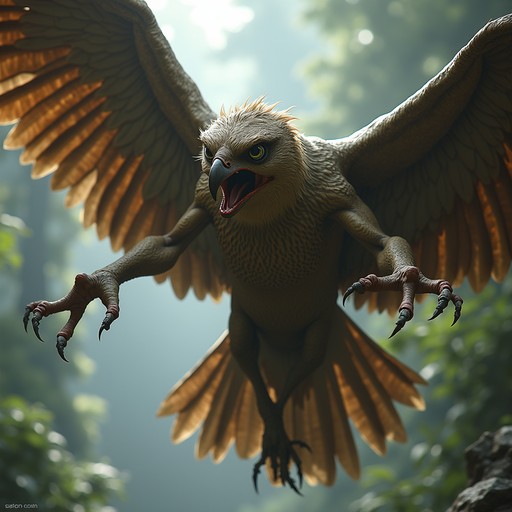
Fantasy -- ArtFID 235.85 (Best Match)
Surreal, unbound fantasy imagery gives the AI full license to apply Mannerist elongation and vivid, anti-naturalistic color.
| Original Photo | Mannerism AI Result |
|---|---|
 |
 |
| Source photograph | ArtFID: 235.85 -- LPIPS: 0.3184 / FID: 177.88 |
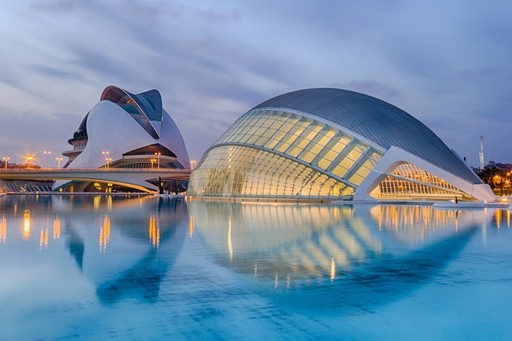
Architecture -- ArtFID 278.43
Mannerism's vertical elongation amplifies towers, columns, and facades. Rigid geometry becomes pleasantly unstable -- recalling Giulio Romano's deliberately unsettling Palazzo del Te.
| Original Photo | Mannerism AI Result |
|---|---|
 |
 |
| Source photograph | ArtFID: 278.43 -- LPIPS: 0.5061 / FID: 183.87 |
Portraits -- ArtFID 287.77
Mannerism was fundamentally a portraiture movement. The AI stretches proportions and shifts skin tones toward the phosphorescent pallor of El Greco's saints and Bronzino's aristocrats.
| Original Photo | Mannerism AI Result |
|---|---|
 |
 |
| Source photograph | ArtFID: 287.77 -- LPIPS: 0.3385 / FID: 214.00 |
Landscapes -- ArtFID 288.69
The style's anti-naturalistic palette transforms ordinary terrain into the backdrop of a 16th-century religious painting -- brooding skies, saturated greens, and cosmic drama.
| Original Photo | Mannerism AI Result |
|---|---|
 |
 |
| Source photograph | ArtFID: 288.69 -- LPIPS: 0.4882 / FID: 192.98 |
FAQ
What is Mannerism art style and where did it originate?
Mannerism originated in Italy during the 1520s as a reaction to the High Renaissance. Defining traits: elongated forms, unusual compositions, vivid anti-naturalistic color, and emotional tension. Major practitioners include El Greco, Tintoretto, Veronese, Pontormo, and Bronzino. It lasted until roughly 1600, giving way to the Baroque.
Which photos look best with Mannerism style transfer?
Fantasy (ArtFID 235.85), animals (266.32), and still life (277.31) produce the strongest results. Architecture (278.43) and portraits (287.77) also excel. Urban scenes (395.22) are the weakest match. Choose photos with strong vertical elements and focused compositions.
Can I use Mannerism style transfer for commercial projects?
Personal use is always free on ArtRobot. Commercial use requires a premium plan. All style references come from the Art Institute of Chicago under CC0 / Public Domain licenses. ArtRobot provides 3 free style transfers with no signup.
Mannerism vs High Renaissance: which should I choose?
The High Renaissance pursued ideal beauty and naturalistic harmony -- serene, classical results. Mannerism deliberately distorts those ideals with elongation, unusual color, and tension. Choose High Renaissance for calm elegance; choose Mannerism when you want drama and a touch of the uncanny.
How accurate is AI Mannerism style transfer compared to real paintings?
Our model achieves an average ArtFID of 307.31 across 15 categories, with the best score (fantasy, FID 177.88) closely resembling genuine Mannerist paintings. The AI captures elongated proportions, vivid color, and dramatic chiaroscuro, though it cannot fully replicate the physical layered glazes of a real El Greco canvas.
Related Styles
- El Greco Style Transfer -- The most extreme Mannerist; spiritual intensity and phosphorescent color
- Tintoretto Style Transfer -- Venetian Mannerism; dramatic chiaroscuro and dynamic composition
- Veronese Style Transfer -- Opulent Mannerism; rich color and decorative grandeur
- High Renaissance Style Transfer -- The predecessor Mannerism reacted against
- Baroque Style Transfer -- The successor that absorbed Mannerism's drama
Try It Yourself
Mannerism transforms ordinary photographs into something restlessly elegant -- stretching reality just enough to make it fascinating. Whether you start with a portrait, an architectural shot, or a fantasy scene, the results carry 500 years of artistic rebellion.
Try It Yourself
Transform your own photos into stunning paintings with 80+ artist styles. Free to start.