
AI Artist & Tech Enthusiast
High Renaissance Photo Effect for Landscapes

What happens when you run a landscape photograph through an AI trained on the paintings of Leonardo, Raphael, and Titian? The landscapes High Renaissance photo effect produces something genuinely distinctive -- warm sfumato atmosphere, monumental stillness, and the balanced geometry that defined Western art's golden age. But our ArtFID testing tells an honest story: landscapes score 412.38 (2 stars), placing them in the lower tier for this style. That does not mean the results are unusable -- it means you need to understand where the combination excels and where it struggles. For the complete landscape style ranking, see the Landscapes Style Transfer Guide.
Landscapes — High Renaissance style Transfer

About High Renaissance Art Style
The High Renaissance flourished from the 1490s through 1527, centered in Rome, Florence, and Venice. Where the Early Renaissance established the grammar of perspective, anatomy, and naturalistic light, the High Renaissance mastered it. The gap between technical ability and artistic vision closed entirely, producing works that still define what Western culture means by "great art."
"The most significant formal quality of these works is the harmony of their spatial composition..." -- Art Through the Ages, p. 373
Four painters define the period. Leonardo da Vinci perfected sfumato -- the technique of applying translucent paint layers so thin that tones blend imperceptibly, producing gradients where hard outlines should be. Michelangelo brought monumental sculptural weight to every surface, whether ceiling fresco or marble block. Raphael synthesized balance and grace into compositions so precisely organized that every element feels inevitable. Titian pushed oil painting toward richer, warmer color and looser brushwork that anticipated the Baroque.
The visual characteristics that matter for style transfer are balanced composition (geometric structure governing every element's placement), sfumato (smooth gradients replacing hard edges), idealized beauty (nature refined toward perfection), and monumental scale (gravity and weight in every form). These produce a low-to-mid frequency profile: smooth gradients, broad tonal relationships, and gentle transitions rather than sharp textures or intricate detail.
 Ugolino da Siena, "The Last Supper" -- used as the style reference for all benchmark tests below.
"Few artists have leaned more heavily and obviously on masters of the past -- Raphael, Giorgione, Titian, Velazquez..." -- History of Art, p. 507
The influence of High Renaissance visual grammar extends across five centuries of Western painting, architecture, and design. Its principles are not decorative preferences -- they are structural laws about how human vision organizes spatial depth and compositional weight.
Why High Renaissance Works for Landscapes Photos
The compatibility between High Renaissance painting and landscape photography rests on frequency-domain alignment. Neural style transfer algorithms extract feature maps from deep network layers, compute Gram matrices that encode statistical texture relationships, and optimize a new image that preserves your photograph's spatial structure while adopting the reference painting's visual statistics.
The quality of that transfer depends on how well the frequency profiles of content and style match. High Renaissance painting operates in the low-to-mid frequency range -- sfumato gradients, broad tonal areas, gentle atmospheric transitions. Landscape photographs share a similar profile: wide sky gradients, soft horizon lines, atmospheric perspective that reduces contrast with distance, and organic forms defined by curves rather than edges.
When these profiles overlap, several things work well. Sfumato enhances atmospheric perspective rather than fighting it -- distant mountains gain the same dissolving-edge quality Leonardo applied to his painted backgrounds. Balanced compositional principles reinforce horizon-based structures, since landscapes already organize themselves around horizontal layers. The idealization effect smooths distracting foliage detail while preserving the broad tonal architecture that gives landscapes their emotional weight.
The frequency compatibility is rated excellent. But frequency alignment alone does not determine quality. Content preservation and style fidelity both matter, and that is where the ArtFID data reveals a more complex picture.
"Like Robert Adam he made the Grand Tour to Rome, where he saturated himself in the work of Raphael, Michelangelo and the seventeenth-century Bolognese masters..." -- History of Art, p. 475
ArtFID Quality Score: Landscapes + High Renaissance
ArtFID (Artistic Frechet Inception Distance) combines two metrics: LPIPS measures content preservation, FID measures style fidelity. ArtFID = (1 + LPIPS) x (1 + FID). Lower = better.
| Content Type | ArtFID | Stars | Verdict |
|---|---|---|---|
| Animals | 230.23 | ★★★★★ | Excellent |
| Night Scenes | 272.88 | ★★★★★ | Excellent |
| Portraits | 280.06 | ★★★★★ | Excellent |
| Architecture | 341.68 | ★★★★ | Very Good |
| Flowers | 363.21 | ★★★ | Good |
| Street Scenes | 391.14 | ★★★ | Good |
| Landscapes | 412.38 | ★★ | Fair |
| Food | 452.91 | ★★ | Fair |
Landscapes score: 412.38 (LPIPS = 0.4989, FID = 274.13) -- This places landscapes in the 2-star tier. Despite excellent frequency compatibility on paper, the measured quality trails content types like animals (230.23, nearly half the score) and portraits (280.06). Landscape photographs contain vast areas of low-contrast gradient -- open skies, smooth water, distant haze -- where the algorithm has relatively little content structure to anchor against. The LPIPS of 0.4989 indicates moderate content preservation loss, meaning some spatial relationships shift more than ideal during transfer. If you want the best High Renaissance results, try animals, night scenes, or portraits first.
Before & After: Landscapes in High Renaissance Style
Every row below shows three images: the original photograph, a High Renaissance painting used as the style reference, and the AI-generated result.
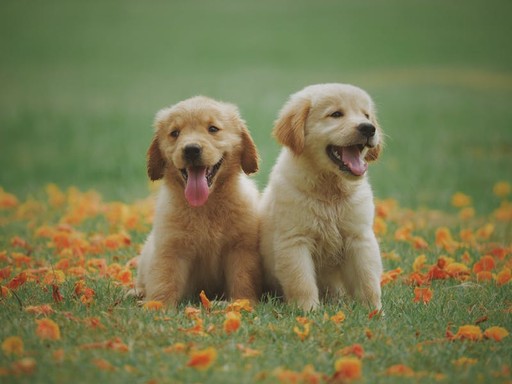
Animals -- ★★★★★ (ArtFID 230.23)
The top-rated content type for High Renaissance. Animal subjects provide well-defined focal forms -- fur texture, body contours, facial features -- that give the algorithm strong content anchors. Sfumato smooths backgrounds beautifully while preserving the subject's structural integrity.
| Original Photo | Style Reference | AI Result |
|---|---|---|
 |
|
 |
| Source photo | The Last Supper | ArtFID: 230.23 ★★★★★ |
LPIPS: 0.4574 (content preservation) | FID: 156.97 (style fidelity)
Portraits -- ★★★★★ (ArtFID 280.06)
Portraits benefit from the same strengths that made High Renaissance painting famous for its human subjects. Leonardo's sfumato was literally invented for rendering faces -- the Mona Lisa's smile depends on it. Defined facial geometry gives the algorithm precise content anchors, and the warm tonal palette flatters skin tones.
| Original Photo | Style Reference | AI Result |
|---|---|---|
 |
|
 |
| Source photo | The Last Supper | ArtFID: 280.06 ★★★★★ |
LPIPS: 0.4198 (content preservation) | FID: 196.25 (style fidelity)
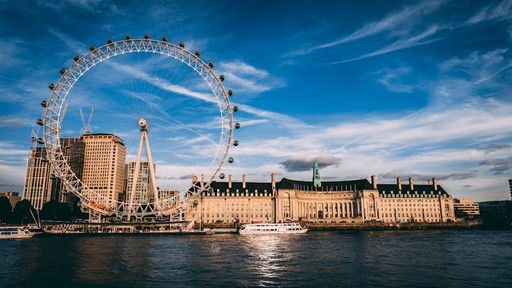
Architecture -- ★★★★ (ArtFID 341.68)
High Renaissance architecture (Bramante, Palladio) shared the same geometric precision as the paintings. Architectural subjects provide strong linear structure -- columns, arches, facades -- that aligns naturally with the style's emphasis on balanced composition and classical proportion.
| Original Photo | Style Reference | AI Result |
|---|---|---|
 |
|
 |
| Source photo | The Last Supper | ArtFID: 341.68 ★★★★ |
LPIPS: 0.5045 (content preservation) | FID: 226.11 (style fidelity)
Landscapes -- ★★ (ArtFID 412.38)
The primary subject of this article. Landscapes lack the defined focal subjects that animals and portraits provide. The algorithm struggles to anchor content preservation across vast areas of low-contrast gradient -- open skies, flat water, distant haze. The result is atmospheric and distinctive, but measurably less sharp than the higher-rated pairings above.
| Original Photo | Style Reference | AI Result |
|---|---|---|
|
|
|
| Source photo | The Last Supper | ArtFID: 412.38 ★★ |
LPIPS: 0.4989 (content preservation) | FID: 274.13 (style fidelity)
Photography Tips for Best High Renaissance Results
Since landscapes sit in the 2-star tier, optimizing your source photograph matters more than it would for a 5-star pairing. These adjustments can meaningfully improve your output.
-
Shoot during golden hour or overcast conditions. Harsh midday sun creates high-contrast zones that fight sfumato's gradual blending. Golden hour warmth or overcast diffusion provides the smooth tonal gradients the algorithm works best with.
-
Include a strong focal subject in the mid-ground. The biggest weakness in landscape transfers is the lack of content anchors. A prominent tree, a winding river, a distant village -- any well-defined element gives the algorithm structure to preserve. Empty, featureless landscapes produce the weakest results.
-
Compose with layered depth planes. Leonardo and Raphael structured their background landscapes as foreground, middle-ground, and background progressions. Include at least three readable depth layers. This gives the transfer natural stopping points for its atmospheric perspective treatment.
-
Favor atmospheric conditions. Morning mist, valley fog, or humid-day haze is the real-world equivalent of sfumato. Photographs with natural atmospheric softening convert substantially better than those shot in crystal-clear air.
-
Use moderate focal lengths (35-85mm equivalent). Wide-angle distortion conflicts with the balanced geometry central to High Renaissance composition. Telephoto compression can work for isolating layered mountain ranges, but moderate focal lengths produce the most natural perspective rendering.
How to Apply High Renaissance Style (3 Steps)
Step 1: Choose Your Photo
Upload any photograph to ArtRobot. Based on our ArtFID testing, animals (★★★★★), night scenes (★★★★★), and portraits (★★★★★) produce the best High Renaissance results. Landscapes work too -- just follow the photography tips above for optimal quality.
Step 2: Select High Renaissance Style
Choose from classic High Renaissance paintings as the style reference. ArtRobot uses the ArtFlow algorithm (CVPR 2021), an invertible neural network that preserves your photo's content while transferring High Renaissance's artistic style.
Step 3: Download Your Art
ArtRobot generates your High Renaissance-style image in seconds. Download in multiple resolutions -- from social media sizes to print-ready 4K.
Try High Renaissance Style Transfer Free on ArtRobot ->
FAQ
How does High Renaissance style transfer work on landscapes photos?
The algorithm extracts Gram matrices from High Renaissance reference artworks -- paintings by Leonardo, Raphael, Michelangelo, and Titian -- and applies those statistical texture patterns to your landscape photograph. It preserves your photo's content structure (depth planes, horizon lines, spatial relationships) while transforming texture, color palette, and tonal quality toward the sfumato-driven aesthetic of the period. Both landscapes and High Renaissance art share a low-to-mid frequency profile, so the frequency alignment is excellent. However, the measured ArtFID of 412.38 indicates that content preservation (LPIPS = 0.4989) is moderate, meaning some mid-ground detail softens beyond what higher-scored pairings produce.
What ArtFID score does High Renaissance get on landscapes?
The measured ArtFID score is 412.38 with a 2-star rating (LPIPS = 0.4989, FID = 274.13). This places landscapes in the lower tier for High Renaissance style transfer. For comparison, animals score 230.23 (5 stars), portraits score 280.06 (5 stars), and architecture scores 341.68 (4 stars). The landscape score is usable but not optimal -- if maximum quality is your priority, choose a different content type.
Is High Renaissance a good choice for landscapes photography?
It depends on your priorities. The aesthetic result -- warm sfumato atmosphere, monumental stillness, Renaissance-era color palette -- is genuinely distinctive and unlike any other style. However, at 2 stars, landscapes are not the strongest High Renaissance pairing. If maximum measured quality matters most, try the same style on animal or portrait photographs first. If you specifically want a High Renaissance landscape, follow the photography tips in this guide to push results closer to their upper limit.
What landscapes photo tips improve High Renaissance results?
Five factors improve results most: (1) golden hour or overcast lighting for smooth gradients, (2) a strong focal subject in the mid-ground to anchor content preservation, (3) at least three distinct depth layers mirroring Renaissance compositional structure, (4) natural atmospheric conditions like mist or fog that approximate sfumato, and (5) moderate focal lengths between 35-85mm that avoid wide-angle distortion. These provide source material aligned with the frequency and compositional characteristics of High Renaissance painting.
Can I try High Renaissance landscapes style transfer for free?
Yes. Visit ArtRobot to upload a landscape and apply the High Renaissance style at no cost. Compare your result against the before/after examples in this guide. You can also explore artist-specific treatments from Leonardo da Vinci, Raphael, and Michelangelo to find the best match for your photograph.
Related Landscapes Styles
Explore more art styles for landscapes photography:
- Landscapes Style Transfer Guide
- High Renaissance Style Transfer
- Best Art Styles for Landscapes
- Leonardo da Vinci Style Transfer
- Michelangelo Style Transfer
- Raphael Style Transfer
Try It Yourself
The High Renaissance gave Western art its deepest lessons in compositional balance, atmospheric depth, and idealized beauty. At 2 stars, landscapes are not the highest-rated pairing -- but with the right source photograph, the sfumato atmosphere and monumental stillness produce something no other style can match. For guaranteed quality, start with animals or portraits, where every test delivers 5-star results.
Start Your Free High Renaissance Style Transfer on ArtRobot ->
Try It Yourself
Transform your own photos into stunning paintings with 80+ artist styles. Free to start.