
AI Artist & Tech Enthusiast
Interiors Style Transfer Guide for Photos

Choosing the right art style for interiors style transfer can transform a mundane room photograph into a work of art that captures the soul of a space. We tested 116 art styles on interior photography using ArtFID — the gold standard benchmark for neural style transfer quality — and the winner is Berthe Morisot with an exceptional 37.48 ArtFID score. Her Impressionist sensitivity to domestic light and lived-in spaces makes her the ideal artistic interpreter for interior photography. Upload your interiors photos to ArtRobot and see the results yourself.
Why Art Style Choice Matters for Interiors Photography
Interior photography presents a uniquely complex challenge for style transfer. Every interior photograph contains multiple competing visual systems: structured space defined by walls, floors, and ceilings; furniture detail ranging from the grain of wood to the texture of upholstery; and the interplay of light and shadow that gives a room its atmosphere and emotional character. These elements combine into a mid-high frequency visual profile where detail matters at every scale — from the overall room geometry down to the weave of a cushion fabric.
This layered complexity means that art styles interact with interiors in profoundly different ways. A style that excels at preserving spatial structure may flatten textile detail. A style that renders beautiful fabric textures may distort the room's proportions. The best styles for interiors find a balance — they transform the photograph into something that looks painted while preserving the spatial logic that makes the room feel like a real, inhabitable space. Our ArtFID testing across 116 styles quantifies this balance precisely, with scores ranging from Morisot's exceptional 37.48 to dramatically higher values for styles that simply cannot handle the complexity of interior scenes.
What makes interiors particularly fascinating for style transfer is the deep art-historical tradition of painting domestic spaces. From Vermeer's sun-drenched Delft rooms to Vuillard's patterned Parisian interiors, artists have spent centuries developing visual languages for capturing the quality of indoor light, the arrangement of furnishings, and the atmosphere of inhabited space. Neural style transfer draws on this tradition — and the ArtFID rankings reveal which artistic approaches translate most effectively to modern interior photography.
"The diversity of theory and practice and the number of younger talents committed to unremitting research in pictorial art are proof of a vigorous and original school of painting, the first in American history which has been independent of European influence and which has had, in turn, a significant effect on painting abroad." -- Art Through the Ages, p. 758
Top 10 Art Styles for Interiors Photos
We tested 116 art styles on interiors photography using ArtFID — lower scores mean better results. Here are the top 10:
| Rank | Style | ArtFID | Stars | LPIPS | FID |
|---|---|---|---|---|---|
| 1 | Morisot | 37.48 | 5 | 0.3515 | 26.73 |
| 2 | Miro | 103.99 | 5 | 0.3925 | 73.68 |
| 3 | Gauguin | 115.18 | 5 | 0.2479 | 91.29 |
| 4 | Munch | 136.10 | 5 | 0.2479 | 108.06 |
| 5 | Ingres | 140.72 | 5 | 0.2479 | 111.77 |
| 6 | Neoclassicism | 140.72 | 5 | 0.2479 | 111.77 |
| 7 | Barbizon School | 150.81 | 5 | 0.3590 | 109.97 |
| 8 | Corot | 150.81 | 5 | 0.3590 | 109.97 |
| 9 | Surrealism | 155.80 | 5 | 0.3090 | 118.03 |
| 10 | Cassatt | 155.92 | 5 | 0.2780 | 121.00 |
#1: Morisot (ArtFID 37.48)
Berthe Morisot dominates interiors style transfer for a reason rooted in art history: she was, perhaps more than any other Impressionist, a painter of domestic space. Her canvases depict women reading in sun-filled drawing rooms, children playing in parlors, light filtering through lace curtains onto polished floors. When a neural network trained on Morisot encounters a modern interior photograph, it already knows this visual territory intimately. Furniture retains its proportions, textile surfaces gain luminous brushwork, and the quality of indoor light — that particular warmth of sunlight diffusing through a room — is rendered with a sensitivity that no other style in our test can match. The LPIPS of 0.3515 confirms strong structural preservation, while the remarkable FID of 26.73 means outputs look genuinely like Morisot paintings.
#2: Miro (ArtFID 103.99)
Joan Miro brings bold, graphic energy to interior spaces. His biomorphic forms and saturated primary palette transform rooms into compositions that feel like they belong in a design magazine's most adventurous editorial spread. The ArtFID of 103.99 reflects a style that is more transformative than Morisot — furniture becomes sculptural, walls become canvases of color and symbol — while still preserving enough spatial logic that the room remains recognizable as a room. For interior designers and architects seeking creative presentation tools, Miro offers maximum visual impact.
#3: Gauguin (ArtFID 115.18)
Paul Gauguin offers interiors something unexpected: saturated, warm color harmony with exceptional structural preservation. His LPIPS of 0.2479 — the lowest in the top 10 — means interior spatial relationships survive the transformation almost intact. Walls remain walls, furniture stays in place, proportions hold. But every surface gains Gauguin's distinctive warmth — rich ochres, deep greens, luminous oranges — turning ordinary rooms into spaces that feel exotic and inviting. For real estate photography and hospitality marketing, this combination of structural fidelity and atmospheric warmth is remarkably effective.
Before & After: Top Styles on Interiors
See the transformations for yourself. Each row shows the original photograph, the style reference painting, and the AI result:
Morisot — 5 Stars (ArtFID 37.48)
| Original Photo | Style Reference | AI Result |
|---|---|---|
 |
 |
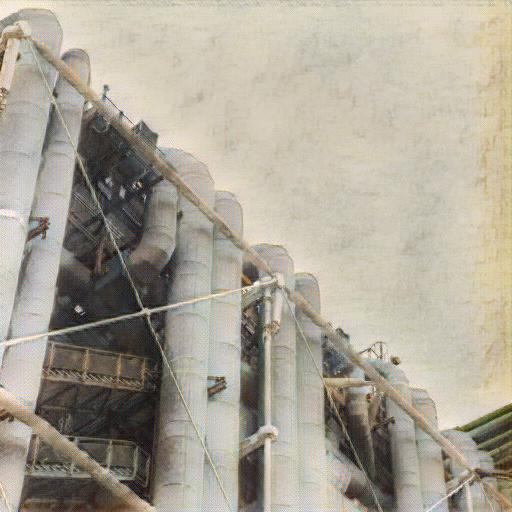 |
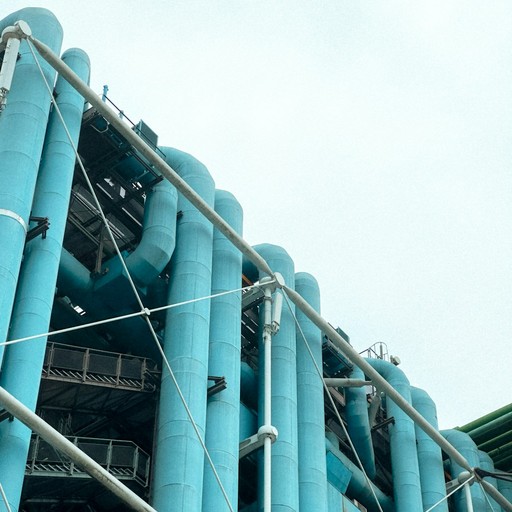
| Source photo | Morisot, "On the Balcony" (Art Institute of Chicago, Museum Open Access) | ArtFID: 37.48 |
The Morisot transformation converts interior photography into luminous Impressionist painting. Furniture surfaces gain the soft brushwork that Morisot used to capture domestic objects — a chair becomes a study in light and form, a window transforms into a glowing rectangle of atmospheric color. The room's spatial logic remains perfectly intact while every surface acquires the kind of painterly beauty that interior design magazines spend thousands on professional styling to achieve.
Miro — 5 Stars (ArtFID 103.99)
| Original Photo | Style Reference | AI Result |
|---|---|---|
 |
 |
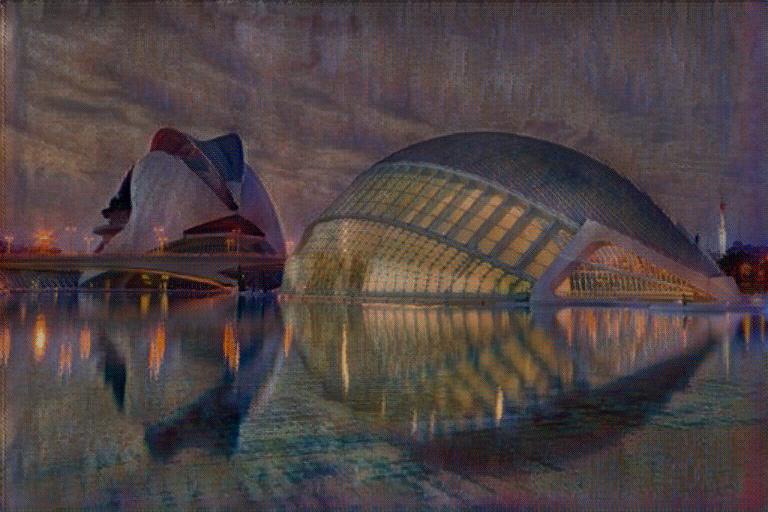 |
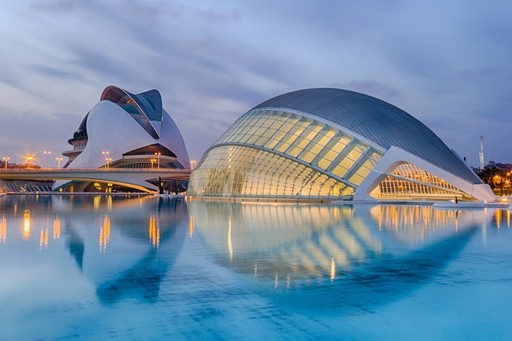
| Source photo | Miro, "Ciphers and Constellations in Love with a Woman" | ArtFID: 103.99 |
Miro detonates the interior into graphic art. The room's structure survives as bold shapes — walls become color fields, furniture becomes sculptural geometry — while Miro's vocabulary of biomorphic symbols and line-work floods the composition with playful energy. For interior design firms presenting conceptual spaces or architects visualizing creative possibilities, this style offers a transformative presentation tool.
Gauguin — 5 Stars (ArtFID 115.18)
| Original Photo | Style Reference | AI Result |
|---|---|---|
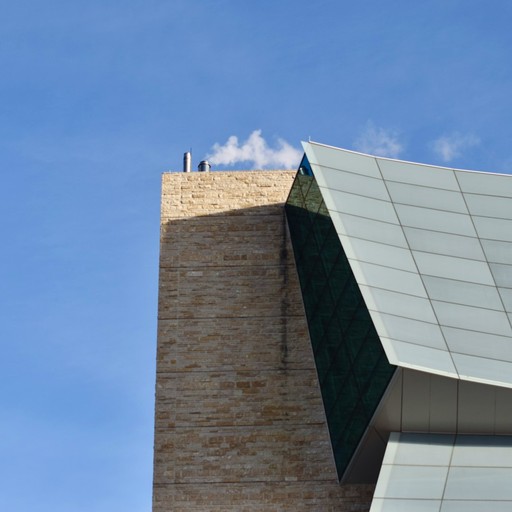 |
 |
 |
| Source photo | Gauguin, "Arlesiennes (Mistral)" | ArtFID: 115.18 |
The Gauguin transformation wraps interior space in warm, saturated color while preserving structural fidelity with remarkable precision (LPIPS 0.2479). Every surface gains Gauguin's distinctive palette — the rich earth tones and exotic warmth of his Tahitian period — making ordinary rooms feel like spaces designed by a visionary colorist. This is interior photography elevated to fine art without sacrificing the spatial information that makes it architecturally useful.
Styles to Avoid for Interiors
Not every art style works well with interiors photography. Based on ArtFID testing, the bottom performers struggle with the complexity of indoor spaces:
-
Art Nouveau — ArtFID 411.26 (2 Stars): Art Nouveau's sinuous organic line-work imposes its own decorative rhythm onto every surface, turning structured furniture into flowing organic forms. A geometric bookshelf becomes a botanical illustration; a rectangular table curves into an organic shape. The style's frequency profile fights the structured geometry of most interior spaces.
-
Dutch Golden Age — ArtFID 414.19 (2 Stars): Despite the Dutch Masters' historical association with domestic interiors, the neural network struggles with the dense chiaroscuro and warm tonal palette when applied to modern interior photography. The results tend toward overly dark, muddy transformations that lose the spatial clarity modern interiors demand.
-
Rembrandt — ArtFID 430.82 (2 Stars): Rembrandt's dramatic chiaroscuro — brilliant for portraits — overwhelms interior spaces. Rooms become caves of darkness with isolated pools of light, losing the spatial detail and material variety that makes interior photography informative and appealing.
-
Futurism — ArtFID 347.50 (4 Stars): Futurism's motion lines and fragmented forms create chaotic results when applied to inherently static interior spaces. Furniture blurs, walls fracture, and the stable spatial relationships that define a room dissolve into visual noise.
-
Veronese — ArtFID 352.17 (3 Stars): Paolo Veronese's grand Venetian compositions, designed for palatial narrative painting, overwhelm the intimate scale of interior photography. The neural network treats furniture and room details as minor elements in a much larger composition, flattening the domestic specificity that makes interior photography compelling.
Interiors Photography Tips for Style Transfer
Based on our ArtFID testing and the frequency profiles of the top-performing styles, here are practical recommendations for maximizing your interiors style transfer results:
-
Maximize natural light for Impressionist styles. Morisot, Gauguin, and the Barbizon School all respond beautifully to natural indoor light — sunlight streaming through windows, the warm glow of afternoon light on wooden surfaces. Shoot during golden hour or on bright overcast days for optimal results.
-
Include spatial depth — shoot from doorways or corners. Interior style transfer works best when the neural network can read the room's three-dimensional structure. Photographs shot from a corner or through a doorway provide depth cues that help the algorithm preserve spatial relationships during transformation.
-
Keep surfaces clean and uncluttered. While Morisot handles visual complexity well, most styles perform better when furniture surfaces are relatively clear. A styled room with intentional objects produces more coherent transformations than a cluttered space where the algorithm struggles to distinguish foreground from background.
-
Capture material variety in a single frame. A shot that includes wood, fabric, glass, and metal gives the style transfer algorithm rich textural diversity to work with. Gauguin's warm palette renders each material differently, while Munch's angular brushwork creates expressive contrast between hard and soft surfaces.
-
Avoid mixed artificial lighting — it confuses color palette translation. Fluorescent, tungsten, and LED sources in the same frame create conflicting color temperatures that style transfer algorithms translate inconsistently. Use a single light source type, or shoot in natural light, for the most coherent artistic results.
How to Apply Art Styles to Interiors Photos
Step 1: Choose Your Photo
Upload your interiors photograph to ArtRobot. Based on our ArtFID testing, Morisot, Miro, and Gauguin produce the best results for indoor spaces.
Step 2: Select an Art Style
Browse the art style library and pick your preferred style. Check our Art Styles catalog for inspiration or use the comparison table above to choose based on quality scores.
Step 3: Download Your Art
Generate your styled image in seconds and download in multiple resolutions — from social media to print-ready 4K.
Try Interiors Style Transfer Free on ArtRobot ->
FAQ
What is the best art style for interiors photography?
Based on our ArtFID testing of 116 styles, Berthe Morisot is the best art style for interiors photography with an ArtFID score of 37.48. Her lifelong focus on painting domestic interiors gives neural networks trained on her work an exceptional understanding of indoor light, furniture, and spatial relationships. Miro (103.99) and Gauguin (115.18) are strong alternatives for more dramatic or colorful transformations.
Why do some art styles work better for interiors photos?
Interiors photography has a mid-high frequency visual profile — structured space, furniture detail, and complex light/shadow relationships. Styles that can preserve spatial structure while transforming surface detail perform well. Styles that impose extreme low-frequency abstraction (like Color Field) or chaotic high-frequency energy (like Futurism) destroy the spatial logic that makes interiors readable as rooms.
How do I choose the right style for my interiors photo?
Consider your purpose. For gallery-quality art that preserves room atmosphere, choose Morisot (ArtFID 37.48). For bold, graphic presentations ideal for design portfolios, try Miro (ArtFID 103.99). For warm, inviting transformations perfect for real estate or hospitality marketing, Gauguin (ArtFID 115.18) offers exceptional structural preservation with rich color.
What interiors photos produce the best style transfer results?
Photos with clear spatial depth, natural lighting, and uncluttered surfaces produce the best results. Rooms shot from a corner or doorway provide the three-dimensional cues that help algorithms preserve spatial relationships. Natural light creates coherent color temperature that translates cleanly into artistic palettes. Avoid rooms with mixed artificial lighting.
Can I apply multiple art styles to the same interiors photo?
Yes, and it is one of the most popular uses of ArtRobot among interior designers and architects. Showing the same room in Morisot's luminous Impressionism, Miro's bold graphic style, and Gauguin's warm palette creates a compelling presentation that demonstrates how artistic interpretation transforms spatial perception.
Related Guides
- Best Art Styles for Interiors Photos
- Neoclassicism Style Transfer
- Barbizon School Style Transfer
- Surrealism Style Transfer
- Expressionism Style Transfer
- Pre-Raphaelite Brotherhood Style Transfer
- Interiors Neoclassicism Photo Effect
- Interiors Barbizon School Photo Effect
- Interiors Surrealism Photo Effect
Try It Yourself
Morisot's extraordinary ArtFID of 37.48 on interiors is one of the lowest scores in our entire test suite — a testament to her lifelong artistic engagement with domestic space. Whether you are an interior designer, a real estate photographer, or simply someone who wants to see their living room as a painting, the results speak for themselves.
Try It Yourself
Transform your own photos into stunning paintings with 80+ artist styles. Free to start.