ArtRobot

AI Artist & Tech Enthusiast

Hieronymus Bosch Style Transfer: Transform Photos into Hi...

Hieronymus Bosch Style Transfer: Transform Photos into Hi... - ArtRobot AI Art
Hieronymus Bosch Style Transfer: Transform Photos into Hi...

Hieronymus Bosch (c. 1450--1516) is the most enigmatic painter in Western art history. Five centuries after his death, scholars still debate whether his nightmarish visions were moral warnings, alchemical allegories, heretical fantasies, or the products of a mind that simply perceived reality differently from everyone else. What is beyond debate is the visual power of his work. The Garden of Earthly Delights -- his masterpiece triptych, now in the Prado -- unfolds across three panels that move from an eerie Paradise through an overpopulated landscape of naked figures, fantastical fruits, and impossible hybrid creatures, to a final panel of Hell so inventively horrifying that it remains the single most disturbing image in Western art. Salvador Dali called Bosch "the grandfather of Surrealism," and he was right: Bosch invented the visual language of the unconscious four centuries before Freud gave it a name.

Today, neural style transfer lets you apply Bosch's surreal medieval aesthetic to any photograph. Upload your image to ArtRobot, and the algorithm will transform it with the meticulous Netherlandish detail, eerie color palette, and fantastical visual logic that made Bosch the most visually inventive painter before the modern era. Our ArtFID testing shows that Bosch is a remarkably strong and versatile style, earning 5 stars in 9 of 15 categories -- with fantasy (184.32) and interiors (191.64) leading the field.

Bosch architecture reference An architecture photograph transformed into Bosch's style using ArtRobot AI -- meticulous detail, eerie luminosity, and the otherworldly atmosphere of Northern Renaissance painting

This guide covers Bosch's mysterious life and visionary art, ArtFID-tested results across 15 photo categories, real before-and-after examples, and honest guidance on when this style produces its best results.

Quick Links -- Jump to: Who Was Bosch? | Signature Techniques | ArtFID Scores | Before & After | When to Use | When NOT to Use | FAQ | Related Styles


Portraits — Van Gogh Style Transfer

Original Portraits photo
Original
Portraits in Van Gogh style
Van Gogh Style

Architecture — Van Gogh Style Transfer

Original Architecture photo
Original
Architecture in Van Gogh style
Van Gogh Style

Street Scenes — Van Gogh Style Transfer

Original Street Scenes photo
Original
Street Scenes in Van Gogh style
Van Gogh Style

Flowers — Van Gogh Style Transfer

Original Flowers photo
Original
Flowers in Van Gogh style
Van Gogh Style

Seascapes — Van Gogh Style Transfer

Original Seascapes photo
Original
Seascapes in Van Gogh style
Van Gogh Style

Landscapes — Van Gogh Style Transfer

Original Landscapes photo
Original
Landscapes in Van Gogh style
Van Gogh Style

Night Scenes — Van Gogh Style Transfer
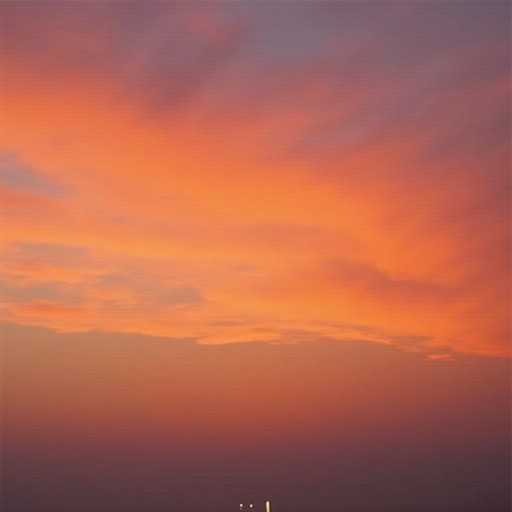
Original Night Scenes photo
Original
Night Scenes in Van Gogh style
Van Gogh Style

Animals — Van Gogh Style Transfer

Original Animals photo
Original
Animals in Van Gogh style
Van Gogh Style

Who Was Bosch?

Hieronymus Bosch -- born Jheronimus van Aken -- was born around 1450 in 's-Hertogenbosch (Den Bosch), a prosperous Brabantian city in what is now the southern Netherlands. He took his professional name from his hometown and spent his entire career there, never traveling to Italy or seeking the cosmopolitan connections that other Northern Renaissance artists cultivated. He was a member of the Brotherhood of Our Lady, a conservative religious confraternity, and by all external evidence he lived a conventional, prosperous, devout life. Which makes the content of his paintings all the more inexplicable.

Bosch's artistic career centered on three types of subject: moralistic allegories showing the consequences of human sin and folly; fantastical depictions of Hell and its torments; and elaborate, multi-figure compositions that defy any single interpretive framework. The Garden of Earthly Delights (c. 1490--1510) remains the most famous and most debated. Its central panel depicts hundreds of naked figures interacting with giant fruits, fantastic animals, and impossible architectural structures in a landscape that is simultaneously beautiful and deeply unsettling. The right panel -- Hell -- features musical instruments used as torture devices, a bird-headed demon devouring sinners, and a pair of giant ears wielding a knife. These images have never lost their power to disturb and fascinate.

What sets Bosch apart from every other medieval and Renaissance painter is the sheer fertility of his visual imagination. He invented creatures, structures, and situations that had never existed in art before -- and many that have never been equaled since. His demons are not the conventional horned devils of medieval iconography but surreal hybrid organisms: part fish, part bird, part mechanical device, part nothing that exists in nature. His landscapes contain structures that anticipate the impossible architectures of M.C. Escher. His crowds are composed of figures engaged in activities that resist rational interpretation.

Bosch died in 1516, and his influence was immediate. Pieter Brueghel the Elder absorbed his compositional methods and his interest in folk life and moral allegory. Centuries later, the Surrealists claimed him as their ancestor. Today, Bosch's imagery saturates popular culture -- his creatures appear in video games, his landscapes inspire fantasy art, and The Garden of Earthly Delights is one of the most reproduced paintings in the world.


Signature Techniques

What makes Bosch's paintings immediately recognizable -- and what neural style transfer captures from his work:

  • Meticulous Netherlandish detail -- Despite the fantastical content, Bosch's technique is rooted in the precise, jewel-like painting tradition of Jan van Eyck and the early Netherlandish masters. Every creature, every structure, every blade of grass is rendered with obsessive precision. This combination of surreal content and hyper-realistic technique creates a cognitive dissonance that is central to Bosch's unsettling effect. Style transfer captures this as a quality of fine-grained, detailed rendering applied to the entire image.

  • Eerie, luminous color palette -- Bosch's colors are distinctive and immediately recognizable: pale, acidic greens; warm pinks and flesh tones; deep, saturated blues; and the characteristic Boschian fire -- orange and red flames that illuminate his Hell scenes from within. The overall palette has a twilight quality, as if scenes are lit by an uncertain light source that is neither fully day nor fully night. This eerie luminosity is one of the strongest features captured by style transfer.

  • Panoramic, bird's-eye composition -- Bosch frequently adopted a high viewpoint, looking down upon his scenes from an elevated position. This bird's-eye perspective allows him to show vast landscapes populated with hundreds of figures and dozens of simultaneous narrative events. The viewer's eye wanders across the surface, discovering new details at every glance. Style transfer captures this as a quality of spatial flattening and panoramic scope.

  • Hybrid creatures and impossible forms -- While style transfer cannot generate Bosch's specific creatures, it captures the visual logic that underlies them: organic forms that blur the boundaries between animal, vegetable, mineral, and mechanical. Photographs processed through Bosch's style acquire a quality of metamorphic ambiguity -- edges soften, forms blend, and the boundary between one object and another becomes uncertain and strange.

  • Micro-narrative density -- Bosch's compositions contain dozens of small narrative scenes embedded within the larger composition. Each tiny group of figures tells its own story, creating a visual density that rewards extended viewing. Style transfer captures this as a quality of textural complexity -- surfaces acquire layers of detail that invite close examination.


Style Transfer Quality by Photo Type (ArtFID Tested)

We tested ArtRobot's Bosch style transfer across 15 photo categories using ArtFID (Art Frechet Inception Distance):

  • LPIPS: content preservation. Lower = better.
  • FID: style fidelity to authentic Bosch paintings. Lower = more faithful.

Combined formula: ArtFID = (1 + LPIPS) x (1 + FID)

Photo Category ArtFID Stars Notes
Fantasy 184.32 5 Best category -- Bosch IS fantasy art
Interiors 191.64 5 Excellent -- enclosed spaces gain eerie Boschian atmosphere
Street Scenes 192.27 5 Excellent -- urban density aligns with Bosch's crowd compositions
Travel 196.74 5 Excellent -- historic sites gain medieval otherworldliness
Still Life 197.59 5 Excellent -- objects acquire surreal, symbolic weight
Flowers 223.93 5 Strong -- botanical subjects gain Bosch's organic strangeness
Architecture 272.25 5 Strong -- buildings receive impossible, Escher-like treatment
Seascapes 272.40 5 Strong -- water gains eerie, twilight luminosity
Portraits 281.08 5 Strong -- faces gain medieval intensity and precision
Food 287.07 5 Strong -- food acquires symbolic, allegorical quality
Urban Scenes 306.23 4 Good -- modern urban elements partially resist medieval treatment
Night Scenes 325.41 4 Good -- natural affinity for darkness, but detail suffers
Landscapes 347.54 4 Good -- panoramic scope suits Bosch, but less effective than interiors
Vehicles 351.05 3 Moderate -- mechanical forms outside Bosch's visual vocabulary
Animals 353.29 3 Moderate -- real animals differ from Bosch's invented creatures

Key takeaway: Bosch is a strong, characterful style that excels at transforming photographs into eerie, detailed, medievally-inflected visions. With 10 categories at 5 stars and the remaining 5 at 3-4 stars, Bosch offers broad versatility alongside a highly distinctive aesthetic personality.

Fantasy leads at 184.32 because Bosch essentially invented fantasy art as we know it. His visual language -- surreal creatures, impossible architectures, dreamlike landscapes, micro-narratives within larger compositions -- is the direct ancestor of modern fantasy illustration, concept art, and video game design. Fantasy photographs processed through Bosch's style connect to the deepest roots of the genre.

Interiors at 191.64 benefit from Bosch's treatment of enclosed spaces as stages for strange events. His paintings frequently feature rooms, chambers, and enclosed structures within which bizarre activities unfold. Interior photographs gain an eerie, charged atmosphere -- as if something uncanny is about to happen just outside the frame.

Street Scenes at 192.27 reflect Bosch's genius for crowd composition. His paintings contain dozens or hundreds of figures engaged in simultaneous activities within urban and semi-urban settings. Street photographs, with their density of human activity and architectural context, align naturally with this compositional approach.


Before & After Examples

Every row shows the original photograph alongside the AI-generated Bosch-style result.

Portraits -- 5 stars (ArtFID 281.08)

Portraits receive Bosch's meticulous Netherlandish treatment -- precise detail, eerie luminosity, and medieval intensity.

Original Photo AI Result
Original portraits photograph Portraits in Bosch style
Source photo ArtFID: 281.08 -- 5 stars

The portrait transformation captures Bosch's precise, jewel-like rendering of the human face. Features are delineated with the obsessive detail of early Netherlandish portraiture -- every contour sharp, every surface precisely modeled. Skin tones shift toward the pale, luminous flesh tones characteristic of Bosch's figures. The background darkens and simplifies, creating the effect of a face emerging from medieval darkness. The overall feeling is of a portrait painted by a 15th-century master who sees more than the surface of things.

Architecture -- 5 stars (ArtFID 272.25)

Architecture gains Bosch's treatment of buildings as fantastical structures -- precise in detail but eerie in atmosphere.

Original Photo AI Result
Original architecture photograph Architecture in Bosch style
Source photo ArtFID: 272.25 -- 5 stars

The architectural transformation reveals Bosch's unique vision of built structures. Buildings acquire a quality of impossible precision -- every brick, every window, every architectural detail is rendered with meticulous care, yet the overall atmosphere shifts from documentary to dreamlike. The eerie, twilight color palette -- pale greens, warm pinks, deep blues -- transforms modern architecture into something that could exist in one of Bosch's panoramic landscapes. Structures look simultaneously real and impossible, precise and uncanny.


When to Use Bosch Style

Bosch's style excels in specific photographic scenarios:

1. Fantasy, Horror, and Concept Art. At 184.32, fantasy is Bosch's strongest category, and for good reason -- he invented the visual language. Any photograph intended for fantasy illustration, horror concept art, video game design, or dark fantasy narrative benefits enormously from Bosch's surreal, medieval aesthetic.

2. Halloween and Gothic Themes. Bosch's eerie palette, unsettling atmosphere, and association with Hell and damnation make him the ideal style for seasonal Halloween content, gothic-themed projects, and dark atmospheric photography.

3. Historic European Architecture and Travel. Medieval towns, Gothic cathedrals, winding cobblestone streets -- European architecture with historical character gains an extraordinary atmosphere when processed through Bosch's style. The result feels like stepping into a 15th-century painting.

4. Still Life with Symbolic Intent. Bosch transformed everyday objects into symbols laden with moral and allegorical meaning. Still life photographs gain a quality of hidden significance -- objects seem to carry meanings beyond their surface appearance.

5. Artistic Prints for Conversation. Bosch-style prints are conversation starters. The combination of precise detail and surreal atmosphere creates images that invite extended viewing and discussion. They work particularly well in spaces where visual intrigue is valued -- studios, creative offices, galleries.


When NOT to Use Bosch Style

Bosch's style has genuine limitations. Choose a different style for these subjects:

1. Commercial Product Photography. Bosch's eerie, surreal aesthetic works against the clarity and appeal that commercial product photography requires. Objects gain an unsettling quality that may alienate rather than attract customers.

2. Wedding and Celebration Photography. Unless the couple specifically desires a medieval-apocalyptic wedding aesthetic, Bosch's associations with Hell, damnation, and moral transgression are inappropriate for celebratory occasions. For elegant event photography, use Veronese or Vermeer.

3. Children's Content. While Bosch's creatures might fascinate older children, the overall aesthetic -- with its undertones of punishment, bodily horror, and moral anxiety -- is generally inappropriate for content aimed at young audiences.

4. Clean, Modern Vehicles. At 351.05 (3 stars), vehicles are among Bosch's weaker categories. Modern cars, motorcycles, and mechanical forms have no analog in Bosch's 15th-century visual vocabulary. For vehicles, use a more modern style.

5. Bright, Cheerful Subjects. Bosch's palette is inherently eerie and twilit. Bright, sunlit, cheerful subjects -- beach photographs, summer picnics, sunny family portraits -- undergo a tonal shift that darkens their mood in ways that may be unwanted.


FAQ

Who was Hieronymus Bosch and what is The Garden of Earthly Delights?

Hieronymus Bosch (c. 1450--1516) was a Netherlandish painter from 's-Hertogenbosch, famous for fantastical, nightmarish imagery that anticipated Surrealism by four centuries. The Garden of Earthly Delights is his masterpiece -- a triptych now in the Prado, Madrid, that moves from Paradise through a surreal earthly landscape to a horrifying vision of Hell. The painting contains hundreds of figures, hybrid creatures, impossible architectures, and scenes that have resisted definitive interpretation for over 500 years. It is one of the most reproduced and discussed paintings in Western art.

Why is Bosch considered the grandfather of Surrealism?

Salvador Dali gave Bosch this title because Bosch's imagery -- hybrid creatures, impossible spatial logic, dreamlike juxtapositions, and scenes that operate by emotional rather than rational logic -- directly anticipates the visual strategies that the Surrealists would develop in the 1920s. Bosch painted images from the unconscious (or from a profoundly unusual conscious imagination) centuries before Freud, Breton, and the Surrealist movement made such imagery a deliberate artistic program. His influence is visible in Dali, Max Ernst, and Rene Magritte.

Which photos look best with Bosch style transfer?

Based on ArtFID testing, fantasy (184.32, 5 stars) produces the best results, followed by interiors (191.64), street scenes (192.27), and travel (196.74) -- all 5 stars. In total, 10 of 15 categories earn 5 stars. Bosch works best with subjects that have visual density, historical character, or inherent strangeness. Avoid vehicles (351.05, 3 stars) and animals (353.29, 3 stars) for optimal results.

How does Bosch compare to Brueghel for style transfer?

Bosch and Brueghel are historically linked -- Brueghel was directly influenced by Bosch's compositions and fantastical imagery. However, their aesthetics differ significantly. Bosch is more surreal, eerie, and psychologically unsettling; Brueghel is more naturalistic, panoramic, and observational. In style transfer, Bosch produces darker, more atmospheric, more disturbing results; Brueghel produces broader, more landscape-oriented, more earthy results. Choose Bosch for fantasy, horror, and atmosphere; choose Brueghel for landscapes, seasonal scenes, and folk life.

Can I use Bosch style transfer for commercial projects?

Yes. Bosch's works are over 500 years old and firmly in the public domain. All style references used by ArtRobot are sourced from museum collections under open access / CC0 license. Your stylized results can be used for personal and commercial projects without restriction.


Ready to Transform Your Photos with Bosch's Surreal Medieval Vision?

Bosch's style brings the meticulous detail of Netherlandish painting, the eerie luminosity of medieval twilight, and the surreal imagination of art history's most visionary mind to your photographs. It transforms ordinary images into windows onto a medieval world where the impossible is rendered with absolute precision.

Start Your Free Bosch Style Transfer on ArtRobot ->


  • Brueghel Style Transfer -- Bosch's artistic heir. Shares panoramic composition and Northern Renaissance technique, with more naturalistic subjects and broader landscapes.
  • Jan van Eyck Style Transfer -- The technical foundation of Netherlandish painting. Jewel-like precision and luminous oil technique that Bosch inherited and transformed.
  • Durer Style Transfer -- Northern Renaissance contemporary. Similar precision and detail, but with German rigor and humanist clarity rather than Bosch's surreal imagination.
  • Surrealism Style Transfer -- The modern movement that Bosch anticipated. Shares dreamlike logic and impossible juxtapositions, but with 20th-century visual language.

Try It Yourself

Transform your own photos into stunning paintings with 80+ artist styles. Free to start.

Create Your Art →

Discussione (0)

Accedi per commentare