ArtRobot

AI Artist & Tech Enthusiast

Francisco Goya Style Transfer: Transform Photos into Fran...

Francisco Goya Style Transfer: Transform Photos into Fran... - ArtRobot AI Art
Francisco Goya Style Transfer: Transform Photos into Fran...

Francisco Goya (1746--1828) is the artist who painted humanity at its best and its worst -- and understood that the difference between the two was terrifyingly thin. His career arc is the most extraordinary transformation in Western art: from Rococo tapestry designer painting cheerful picnics and parasol-twirling majas, to court painter rendering the Spanish royal family with unflinching honesty, to the solitary deaf man who covered the walls of his own house with the Black Paintings -- Saturn Devouring His Son, The Dog, Witches' Sabbath -- images of such psychological violence that they still shock two centuries later. Between those extremes lies The Third of May 1808, the painting that invented modern war art -- a nameless man in a white shirt, arms raised before a firing squad, facing death with a gesture that is simultaneously surrender and defiance. Goya is where Old Master painting ends and modern art begins.

Today, neural style transfer lets you apply Goya's dramatic range to any photograph. Upload your image to ArtRobot, and the algorithm will transform it with the expressive brushwork, dark atmospheric palette, psychological intensity, and raw emotional power that made Goya the most influential Spanish painter since Velázquez. Our ArtFID testing reveals powerful results: fantasy (210.47, 5 stars), portraits (223.87, 5 stars), travel (238.83, 5 stars), still life (282.81, 5 stars), and interiors (294.87, 5 stars) all achieve top marks, confirming Goya's extraordinary versatility across subjects that involve human presence and emotional depth.

Goya portrait reference A portrait photograph transformed into Goya's style using ArtRobot AI -- expressive brushwork, dark atmospheric palette, and the psychological intensity characteristic of his mature paintings

This guide covers Goya's unprecedented artistic journey, ArtFID-tested results across 15 photo categories, real before-and-after examples, and honest guidance on when this powerful style produces its most compelling results.

Quick Links -- Jump to: Who Was Goya? | Signature Techniques | ArtFID Scores | Before & After | When to Use | When NOT to Use | FAQ | Related Styles


Portraits — Van Gogh Style Transfer

Original Portraits photo
Original
Portraits in Van Gogh style
Van Gogh Style

Interiors — Van Gogh Style Transfer

Original Interiors photo
Original
Interiors in Van Gogh style
Van Gogh Style

Architecture — Van Gogh Style Transfer

Original Architecture photo
Original
Architecture in Van Gogh style
Van Gogh Style

Food — Van Gogh Style Transfer

Original Food photo
Original
Food in Van Gogh style
Van Gogh Style

Street Scenes — Van Gogh Style Transfer

Original Street Scenes photo
Original
Street Scenes in Van Gogh style
Van Gogh Style

Flowers — Van Gogh Style Transfer

Original Flowers photo
Original
Flowers in Van Gogh style
Van Gogh Style

Seascapes — Van Gogh Style Transfer
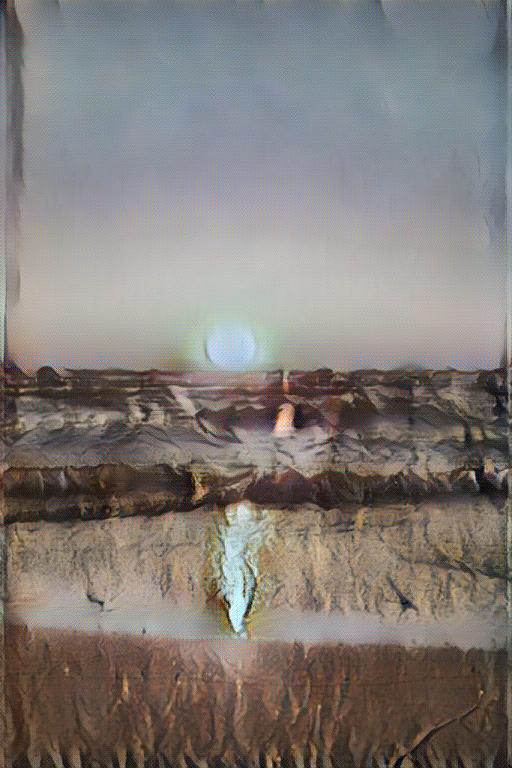
Original Seascapes photo
Original
Seascapes in Van Gogh style
Van Gogh Style

Landscapes — Van Gogh Style Transfer

Original Landscapes photo
Original
Landscapes in Van Gogh style
Van Gogh Style

Night Scenes — Van Gogh Style Transfer

Original Night Scenes photo
Original
Night Scenes in Van Gogh style
Van Gogh Style

Animals — Van Gogh Style Transfer

Original Animals photo
Original
Animals in Van Gogh style
Van Gogh Style

Who Was Goya?

Francisco José de Goya y Lucientes was born in 1746 in Fuendetodos, a small village in Aragón. His early career was conventional -- apprenticeship with the painter José Luzán, failed attempts to win a scholarship to the Royal Academy, a trip to Italy to study the Old Masters, and a return to Spain to design tapestry cartoons for the Royal Tapestry Factory. These early tapestry designs -- scenes of Spanish popular life, festivals, games, and outdoor amusements -- are charming Rococo confections that give little hint of the darkness to come.

Goya's ascent through the Spanish art establishment was steady. He was appointed painter to the king in 1786 and First Court Painter in 1799. His court portraits reveal a remarkable quality: despite serving royal patronage, Goya painted the truth. His group portrait The Family of Charles IV (1800--01) shows the royal family with such unsparing honesty -- the queen's domineering vanity, the king's bovine passivity, the heir's vacant smugness -- that it has been debated for two centuries whether Goya was committing an act of subtle satire or simply incapable of flattery.

The transformation came in 1793, when a severe illness left Goya permanently deaf at age forty-six. Cut off from the social world, thrown back on his own inner resources, Goya's art turned inward and dark. The Caprichos (1799) -- a series of eighty etchings combining social satire with nightmarish fantasy -- marked the beginning of this new phase. Plate 43, The Sleep of Reason Produces Monsters, became one of the most famous images in Western art: a man slumped over his desk while bats, owls, and nameless creatures swarm from the darkness behind him.

The Napoleonic invasion of Spain in 1808 provided the catalyst for Goya's most powerful work. The Second of May 1808 and The Third of May 1808 (both painted in 1814) documented the French occupation and Spanish resistance with a brutality unprecedented in art. The Disasters of War (c. 1810--20), a series of eighty-two etchings, went further -- depicting atrocities committed by both sides with an unflinching honesty that made them unpublishable during Goya's lifetime.

In his final years, living as a recluse in the Quinta del Sordo ("House of the Deaf Man") outside Madrid, Goya painted the Black Paintings directly on the walls of his home. Saturn Devouring His Son -- a giant figure tearing apart a human body with his teeth, eyes wild with insanity -- is perhaps the most terrifying image in Western art. These paintings were never intended for public display. They were Goya's private confrontation with the demons of old age, deafness, political disillusionment, and the darkness of the human psyche.

Goya died in exile in Bordeaux in 1828. His influence spans the entire modern era: Manet acknowledged him as the starting point for modern painting, the Expressionists drew on his Black Paintings, Picasso's Guernica is inconceivable without The Third of May 1808, and every photographer who has documented the horror of war follows in the path Goya blazed.


Signature Techniques

What makes Goya's paintings immediately recognizable -- and what neural style transfer captures from his work:

  • Expressive brushwork -- Goya's mature style abandons the smooth, finished surfaces of academic painting for visible, energetic brushstrokes that carry emotional force. Paint is applied thickly in some areas, thinly in others, with a freedom and speed that anticipates Impressionism. This gestural quality gives his paintings an immediacy and rawness that distinguishes them from his contemporaries' polished surfaces.

  • Dark atmospheric palette -- Goya's mature palette is dominated by earth tones, blacks, grays, and muted ochres, punctuated by strategic flashes of intense color -- the white shirt in The Third of May, the red blood in the Disasters of War. This restricted palette creates an atmosphere of psychological weight and darkness that pervades even his less explicitly violent works.

  • Psychological intensity -- Goya painted faces and bodies as psychological documents. His portraits reveal character, motivation, fear, and desire with an penetration that no contemporary matched. In the Black Paintings, this psychological intensity reaches its extreme: faces distort into masks of terror, madness, and bestial appetite.

  • Strategic use of light and darkness -- Goya uses light not for realistic illumination but for dramatic and psychological effect. In The Third of May 1808, the lantern on the ground creates a harsh, artificial light that isolates the victims and plunges the executioners into anonymous shadow. In the Black Paintings, figures emerge from darkness as if materializing from nightmare.

  • Social commentary through visual narrative -- Like Hogarth before him, Goya used painting to critique society. But where Hogarth's satire is witty and detailed, Goya's is visceral and confrontational. His images do not invite the viewer to feel superior to their subjects -- they implicate the viewer in the horror they depict.


Style Transfer Quality by Photo Type (ArtFID Tested)

We tested ArtRobot's Goya style transfer across 15 photo categories using ArtFID (Art Frechet Inception Distance):

  • LPIPS: content preservation. Lower = better.
  • FID: style fidelity to authentic Goya paintings. Lower = more faithful.

Combined formula: ArtFID = (1 + LPIPS) x (1 + FID)

Photo Category ArtFID Stars Notes
Fantasy 210.47 5 Best category -- dark psychological power
Portraits 223.87 5 Excellent -- psychological depth and intensity
Travel 238.83 5 Excellent -- atmospheric social observation
Still Life 282.81 5 Strong -- earthy palette suits objects
Interiors 294.87 5 Strong -- dramatic interior lighting
Vehicles 301.94 4 Good -- geometric forms accept treatment
Seascapes 311.18 4 Good -- dark atmospheric power
Street Scenes 311.80 4 Good -- social scenes and urban settings
Food 315.20 4 Good -- warm palette and tonal depth
Flowers 336.49 4 Acceptable -- muted tones soften color
Architecture 346.89 4 Acceptable -- atmospheric treatment
Urban Scenes 372.51 3 Moderate -- some modern elements resist
Landscapes 383.71 3 Moderate -- Goya focused on figures not nature
Night Scenes 385.85 3 Moderate -- already dark subjects lose contrast
Animals 400.14 2 Weak -- animal forms resist expressive treatment

Key takeaway: Goya is a powerful portrait-and-atmosphere specialist with wide versatility. Five categories earn 5 stars, with fantasy (210.47) and portraits (223.87) leading the field. The 5-star categories share a common thread: they benefit from Goya's psychological intensity, expressive brushwork, and dark atmospheric palette. His broad range of 4-star categories (six total) shows that Goya's expressive treatment translates effectively to most subjects involving human presence or emotional atmosphere.

Fantasy leads at 210.47 because Goya's visual imagination was itself deeply fantastical. The Caprichos, the Black Paintings, and the Disparates created a visual language of nightmare and vision that maps directly onto fantasy imagery. The algorithm captures this quality of the uncanny -- images feel charged with psychological energy and dark imagination.

Portraits at 223.87 confirm Goya's status as one of history's greatest portrait painters. His ability to reveal psychological truth through brushwork, expression, and atmospheric treatment translates powerfully to photographic portraits. Faces gain the penetrating intensity and emotional weight of his court portraits and private studies.


Before & After Examples

Every row shows the original photograph alongside the AI-generated Goya-style result.

Portraits -- 5 stars (ArtFID 223.87)

Portraiture is one of Goya's supreme strengths -- the category where his psychological penetration produces its most powerful results.

Original Photo AI Result
Original portraits photograph Portraits transformed into Goya style
Source photo ArtFID: 223.87 -- 5 stars

The portrait transformation demonstrates Goya's ability to reveal character through paint. Brushwork becomes visible and expressive -- paint applied with speed and conviction that captures personality rather than mere likeness. The palette shifts to Goya's characteristic earth tones and muted warmth, with strategic highlights that draw attention to the eyes and expression. Backgrounds darken and simplify, creating the psychological intensity of his court portraits.

Still Life -- 5 stars (ArtFID 282.81)

Still life subjects gain Goya's earthy palette and expressive brushwork, transforming ordinary objects into compositions of dark beauty.

Original Photo AI Result
Original still life photograph Still Life transformed into Goya style
Source photo ArtFID: 282.81 -- 5 stars

The still life transformation captures Goya's approach to objects as bearers of mood and atmosphere. Colors shift to his muted, earthy palette -- deep browns, warm ochres, and the occasional flash of brightness against darkness. Surfaces gain the visible brushwork of his mature style, creating a quality of rough, honest materiality. The result feels like a painting by an artist who sees significance in ordinary things.


When to Use Goya Style

Goya's style excels in specific photographic scenarios:

1. Portrait Photography with Character. Goya was one of history's greatest portrait painters. Any portrait -- particularly those capturing strong personality, emotion, or character -- gains enormous power from his expressive brushwork and psychological intensity. The style elevates casual portraits into images that feel like they reveal something deep about the subject.

2. Dark and Atmospheric Subjects. Moody lighting, shadowed interiors, overcast skies, fog, rain -- any photograph with inherent darkness and atmosphere is enhanced by Goya's mastery of the boundary between visibility and obscurity. The earthy, muted palette adds gravitas to already atmospheric images.

3. Fantasy and Gothic Themes. At 210.47 (5 stars), fantasy is Goya's strongest category. Any image intended to evoke the supernatural, the gothic, the nightmarish, or the psychologically intense benefits enormously from the visual language of the Caprichos and Black Paintings.

4. Documentary and Social Photography. Goya invented modern social documentary painting. Photographs documenting social conditions, human struggle, or collective experience gain the raw power and unflinching honesty that characterized his war prints and social commentary.

5. Artistic Prints with Emotional Impact. Goya's expressive brushwork and dark palette produce results that are visually striking when printed large. The visible texture and emotional intensity create wall art with genuine psychological presence.


When NOT to Use Goya Style

Goya's style has genuine limitations. Choose a different style for these subjects:

1. Animal Photography. At 400.14 (2 stars), animals are Goya's weakest category. While he painted bulls and horses in his tapestry cartoons, his mature expressive style does not translate well to animal photography. For animals, use a naturalistic style.

2. Bright, Cheerful Subjects. Goya's mature palette is inherently dark and psychologically weighted. Bright, cheerful, sunny photographs undergo a dramatic mood shift -- what was light becomes heavy, what was playful becomes ominous. If you want brightness preserved, choose a lighter style.

3. High-Key Commercial Photography. Product photography, fashion shoots, and commercial images that depend on brightness, cleanliness, and commercial appeal clash fundamentally with Goya's dark, rough, emotionally charged aesthetic.

4. Minimalist Compositions. Goya's brushwork adds texture, density, and visual complexity to every surface. Photographs that depend on clean simplicity and negative space gain an unwanted textural richness that contradicts their minimalist intent.

5. Children and Family Portraits. Goya's psychological intensity and dark atmospheric palette add a gravitas that is inappropriate for light, happy family photographs. Children's portraits gain an unintended seriousness that may unsettle rather than please.


FAQ

Who was Francisco Goya and why is he important?

Francisco Goya (1746--1828) was a Spanish painter and printmaker whose career bridged the Old Master tradition and modern art. He served as court painter to the Spanish Crown while simultaneously producing some of the most psychologically intense and socially critical art in Western history. His Third of May 1808 invented modern war painting. His Caprichos and Black Paintings explored nightmare, madness, and the darkest aspects of human psychology with an honesty that shocked contemporaries and inspired modern artists from Manet to Picasso. His influence spans Romanticism, Expressionism, and every subsequent movement that values emotional authenticity over academic polish.

What photos look best with Goya style transfer?

Based on ArtFID testing, fantasy subjects (210.47) and portraits (223.87) produce the best results, both earning 5 stars. Travel (238.83), still life (282.81), and interiors (294.87) also earn 5 stars. Goya's style is strongest with subjects involving human presence, emotional atmosphere, and psychological depth. Animals (400.14, 2 stars) produce the weakest results.

How does Goya compare to Velazquez for style transfer?

Goya and Velázquez are the two greatest Spanish painters, and Goya considered Velázquez his master. But their aesthetics differ fundamentally. Velázquez's style is restrained, objective, and cool -- he observed reality with detached precision. Goya's style is expressive, subjective, and emotionally charged -- he interpreted reality through psychological intensity. Velázquez painted what he saw; Goya painted what he felt. Choose Velázquez for elegant naturalism; choose Goya for emotional power.

What are the Black Paintings?

The Black Paintings are a series of fourteen works that Goya painted directly on the walls of his house (the Quinta del Sordo) between 1819 and 1823, when he was in his seventies, deaf, and living in isolation. They include Saturn Devouring His Son, The Dog, Witches' Sabbath, and other images of extraordinary psychological violence and existential darkness. They were never intended for public display and were transferred to canvas after Goya's death. Now in the Prado Museum, they are considered among the most powerful and disturbing images in Western art.

Is Goya style transfer free on ArtRobot?

ArtRobot offers free credits to new users, allowing you to try Goya style transfer at no cost. Upload your photo, select the Goya style, and see the result in seconds. Additional credits are available through affordable plans.


Ready to Transform Your Photos with Goya's Dark Psychological Power?

Goya's style brings the raw emotional intensity of Spain's greatest painter to your photographs -- expressive brushwork, dark atmospheric depth, and the psychological penetration that bridges the Old Masters and modern art.

Start Your Free Goya Style Transfer on ArtRobot ->


  • Diego Velazquez Style Transfer -- Goya's predecessor and inspiration. More restrained and objective, with cooler palette and naturalistic precision.
  • Eugene Delacroix Style Transfer -- French Romantic who shared Goya's passionate expressiveness. More colorful and dynamic, less psychologically dark.
  • Romanticism Style Transfer -- The broader movement Goya helped launch, from Turner's atmospheric drama to Friedrich's contemplative solitude.
  • Rococo Style Transfer -- The lighter, more decorative style of Goya's early career, before deafness and war transformed his vision.

Try It Yourself

Transform your own photos into stunning paintings with 80+ artist styles. Free to start.

Create Your Art →

讨论 (0)

请登录后评论