
AI Artist & Tech Enthusiast
Gothic Art Photo Effect — AI Style Transfer Guide (2026)

Gothic Art is the visual language of medieval Europe's grandest ambition -- cathedrals that scraped the sky, manuscripts illuminated in gold leaf, and panel paintings where saints floated against luminous golden backgrounds. Spanning from the 12th to the 15th century and originating in France, Gothic art developed pointed arches, gold backgrounds, elongated figures, and intricate decorative detail into a visual vocabulary of spiritual transcendence. With AI-powered neural style transfer, you can now apply that same otherworldly elegance to your own photographs -- transforming modern images into compositions that glow with medieval splendor.
After Giotto, "Ascension of Christ" -- Art Institute of Chicago, CC0 / Public Domain
We tested ArtRobot's Gothic Art style transfer across 15 different photo categories, each scored by our ArtFID quality benchmark. This guide covers the movement's history, its defining visual traits, which photos produce the best results, and how to create your own Gothic art for free.
Quick Links -- Jump to: What Is Gothic Art? | Characteristics | ArtFID Scores | Key Artists | How to Apply | Before & After | FAQ
What Is Gothic Art?
Gothic art emerged in the Ile-de-France region around the mid-12th century and dominated European visual culture for over three hundred years. It began in architecture -- the pointed arch, ribbed vault, and flying buttress allowed builders to erect structures of unprecedented height and fill their walls with vast expanses of stained glass. But the style's influence extended equally into painting, manuscript illumination, and sculpture, creating one of the most unified aesthetic systems in Western art history.
"Gothic art was the art of western Europe for more than three centuries. Distinctive in its use of an armature of stone arches to erect vast buildings whose walls were largely of colored glass, it was the culmination of Christianity's search for a style perfectly expressive of its faith and aspirations." -- Art Through the Ages, p. 313
The period saw remarkable evolution. Early Gothic painting used flat, gold backgrounds and hieratic, frontal figures -- a direct continuation of Byzantine tradition. But by the late 14th century, the International Gothic style had emerged, blending Northern European attention to naturalistic detail with Italian spatial awareness. Pol de Limbourg's miniatures for the Tres Riches Heures achieved an unprecedented fusion of decorative elegance and observed reality.
"The so-called 'International Gothic Style', fully developed by about 1400, was the product of this confluence of two traditions. It is distinctly courtly, the creation of artists working for the interrelated but jealously competitive ruling families of Europe. Elegance of line, delicacy of colour and a jewel-like sharpness of definition were prized above all." -- History of Art, p. 318
This combination of spiritual intensity, decorative richness, and emerging naturalism gives Gothic art a distinctive visual character that translates powerfully to neural style transfer. The AI captures the gold-toned color palette, elongated proportions, and intricate surface detail that define the Gothic aesthetic.
"Yet there is a vast difference between Greek art and Gothic art, between the art of the temple and that of the cathedral. The Greek artists of the fifth century were mainly interested in how to build up the image of a beautiful body. To the Gothic artist all these methods and tricks were only a means to an end, which was to tell his sacred story more movingly and more convincingly." -- The Story of Art, p. 148
Gothic Art Characteristics & Techniques
Understanding the core visual traits of Gothic art helps predict how your photos will transform and which subjects yield the strongest results.
The Four Pillars of Gothic Style
-
Gold Backgrounds & Luminous Color -- Gothic panel paintings characteristically set figures against burnished gold backgrounds, creating a sense of heavenly, timeless space. The color palette favors deep blues (ultramarine), rich reds (vermilion), emerald greens, and ivory whites -- all intensified by gold leaf accents. In style transfer, this means the AI shifts your photo's background toward warm, golden tones and intensifies color toward these jewel-like hues.
-
Elongated, Elegant Figures -- Gothic figures are deliberately stretched and attenuated, their proportions serving spiritual rather than anatomical truth. Bodies sway in graceful S-curves; hands gesture with delicate precision. The AI replicates this by subtly elongating vertical proportions and smoothing contours into flowing, elegant lines.
-
Intricate Decorative Detail -- From the tracery of cathedral windows to the borders of illuminated manuscripts, Gothic art is obsessed with ornamental complexity. Surfaces are dense with pattern: foliate scrolls, geometric lattices, heraldic devices. The neural network captures this by adding detailed texture and patterning to flat surfaces in your photographs.
-
Flat Spatial Composition -- Gothic painting operates on a different spatial logic than Renaissance perspective. Figures are arranged in layered, hierarchical compositions where size indicates spiritual importance rather than physical distance. The AI applies this by flattening depth cues and organizing elements into more planar, decorative arrangements.
Visual Trait Comparison
| Trait | Gothic Art Approach | Effect on Your Photos |
|---|---|---|
| Color palette | Gold, ultramarine, vermilion, emerald, ivory | Colors shifted toward rich, warm, jewel-toned range |
| Brushwork | Precise, miniaturist, tempera technique | Surface gains fine, detailed texture; edges sharpen |
| Form & proportion | Elongated, attenuated, S-curve poses | Vertical proportions subtly stretched; contours smoothed |
| Composition | Flat, hierarchical, decorative framing | Depth flattened; elements arranged in layered planes |
| Light & shadow | Even, diffused, emanating from gold ground | Shadows softened; warm golden luminosity overall |
Style Transfer Quality by Photo Type (ArtFID Tested)
We ran ArtRobot's Gothic Art style transfer on 15 photo categories and measured quality using ArtFID (Art Frechet Inception Distance) -- the industry-standard metric for style transfer evaluation.
ArtFID combines two components: - LPIPS (Learned Perceptual Image Patch Similarity) -- Does the output preserve your original content? Lower = better content retention. - FID (Frechet Inception Distance) -- Does the output match the statistical distribution of real Gothic artworks? Lower = more authentic style.
Combined formula: ArtFID = (1 + LPIPS) x (1 + FID)
Full Scores Table
| Photo Type | ArtFID | LPIPS | FID | Stars | Recommendation |
|---|---|---|---|---|---|
| Animals | 269.60 | 0.4231 | 188.44 | 5 | Best match -- medieval bestiary territory |
| Fantasy | 308.38 | 0.3437 | 228.50 | 4 | Strong -- mythical content suits Gothic imagery |
| Street Scenes | 319.62 | 0.3924 | 228.54 | 4 | Good -- urban scenes gain medieval atmosphere |
| Portraits | 322.87 | 0.3866 | 231.85 | 4 | Good -- faces gain icon-like quality |
| Night Scenes | 327.61 | 0.5037 | 216.87 | 4 | Good -- candlelit atmosphere enhanced |
| Architecture | 329.52 | 0.4843 | 221.01 | 4 | Good -- natural Gothic territory |
| Landscapes | 335.72 | 0.4908 | 224.19 | 4 | Good -- gain manuscript illustration quality |
| Travel | 344.24 | 0.3638 | 251.41 | 4 | Good -- exotic scenes gain medieval wonder |
| Still Life | 345.61 | 0.4441 | 238.33 | 4 | Good -- objects gain devotional quality |
| Flowers | 354.10 | 0.4610 | 241.37 | 3 | Moderate -- floral motifs suit manuscript style |
| Vehicles | 375.30 | 0.3803 | 270.89 | 3 | Moderate -- anachronistic but visually interesting |
| Interiors | 381.27 | 0.4016 | 271.03 | 3 | Moderate -- enclosed spaces gain chapel atmosphere |
| Urban Scenes | 386.87 | 0.4388 | 267.88 | 3 | Moderate -- wide cityscapes lose detail |
| Food | 389.11 | 0.4082 | 275.31 | 3 | Moderate -- works with formal, feast-like arrangements |
| Seascapes | 411.49 | 0.5012 | 273.10 | 2 | Challenging -- open water resists Gothic detail |
| Average | 346.75 | 0.4349 | 242.18 | 3.6 |
Key findings: Animals achieve the lowest (best) ArtFID at 269.60, connecting to the rich medieval tradition of bestiaries -- illuminated manuscripts cataloging real and mythical creatures. Fantasy content (308.38) follows naturally, its mythical subjects aligning with Gothic imagery of dragons, angels, and supernatural visions. Portraits (322.87) show strong content preservation (LPIPS 0.3866), gaining the icon-like, devotional quality of Gothic panel portraits. Seascapes (411.49) score weakest -- the expansive, featureless nature of ocean surfaces resists the intricate detail that Gothic art demands.
Key Gothic Art Artists
Gothic art spanned centuries and thousands of anonymous craftsmen, but several key figures defined its evolution toward the Renaissance:
| Artist | Years | Signature Style | Best Subjects | Try It |
|---|---|---|---|---|
| Giotto di Bondone | 1266--1336 | Revolutionary spatial depth, emotional naturalism, solid figural weight | Portraits, landscapes, architecture | Giotto Style Transfer |
| Duccio di Buoninsegna | c. 1255--1319 | Byzantine-Gothic fusion, luminous gold, delicate line | Portraits, night scenes | -- |
| Simone Martini | c. 1284--1344 | Sienese elegance, flowing line, International Gothic precursor | Portraits, flowers, fantasy | -- |
| Pol de Limbourg | fl. 1400--1416 | Naturalistic miniatures, jewel-like color, landscape innovation | Landscapes, travel, animals | -- |
Giotto stands as the pivotal figure -- his Arena Chapel frescoes broke with flat Byzantine tradition to create figures with genuine weight, emotion, and spatial presence. His work represents the transition point between Gothic and Renaissance, making his style particularly versatile for style transfer across diverse photo subjects.
"Gothic artists did not know that they were Gothic, or even medieval, but the Renaissance artist was well aware that he was different. No previous movement in Western art had been so self-conscious." -- History of Art, p. 321
How to Apply Gothic Art Style (3 Steps)
Step 1: Choose Your Photo
Upload any photograph to ArtRobot. Based on our ArtFID testing, the strongest results come from: - Animals and fantasy scenes -- ArtFID under 310, connecting to the bestiary and mythological traditions - Portraits with clear faces -- LPIPS 0.3866 means strong identity preservation with an icon-like glow - Architecture with vertical emphasis -- Gothic style naturally enhances pointed arches, spires, and vertical forms - Warm-lit or candlelit scenes -- Gothic art's golden palette works best with warm light sources; cold, clinical lighting produces weaker results
Step 2: Select Gothic Art Style
Browse the Gothic Art collection in ArtRobot's style library. You can choose the general Gothic style or select Giotto for more naturalistic, spatially aware results. The AI uses neural style transfer to apply Gothic gold-ground luminosity, elongated proportions, and decorative detail while preserving your photograph's core structure.
Step 3: Download Your Gothic Masterpiece
ArtRobot generates your result in seconds. Download in multiple resolutions: - Standard (1024px) -- social media, digital sharing - HD (2048px) -- prints up to 8x10" - Ultra HD (4096px) -- large canvas prints, gallery-quality output
Try Gothic Art Style Transfer Free ->
Before & After Examples
We tested ArtRobot's Gothic Art style transfer on photographs across multiple categories using masterworks from the Art Institute of Chicago as style references. Below are representative transformations with their ArtFID quality scores.
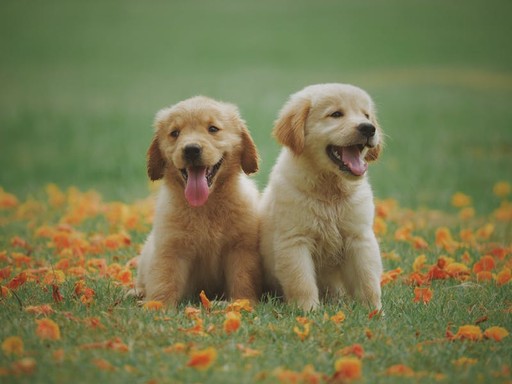
Animals -- ArtFID 269.60 (Best Match)
Animals achieve the strongest Gothic Art transfer in our testing, connecting to the rich medieval tradition of bestiaries. The AI applies gold-toned color shifts, intricate decorative detail, and the flat, pattern-like composition characteristic of illuminated manuscript illustrations.
| Original Photo | Gothic Art AI Result |
|---|---|
 |
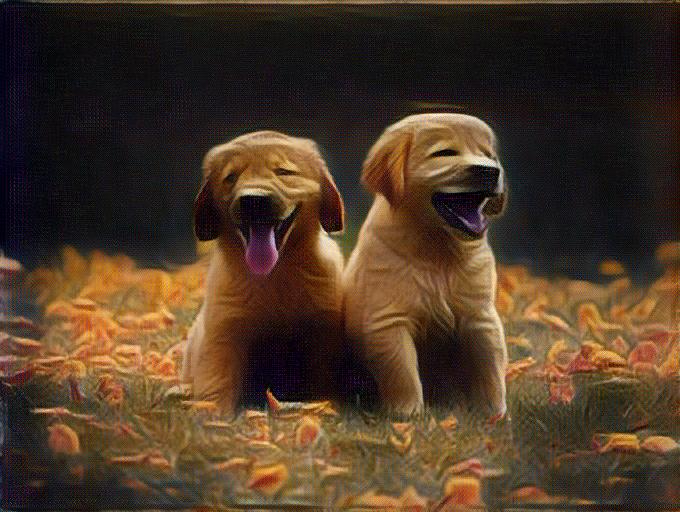 |
| Source photograph | ArtFID: 269.60 -- LPIPS: 0.4231 / FID: 188.44 |
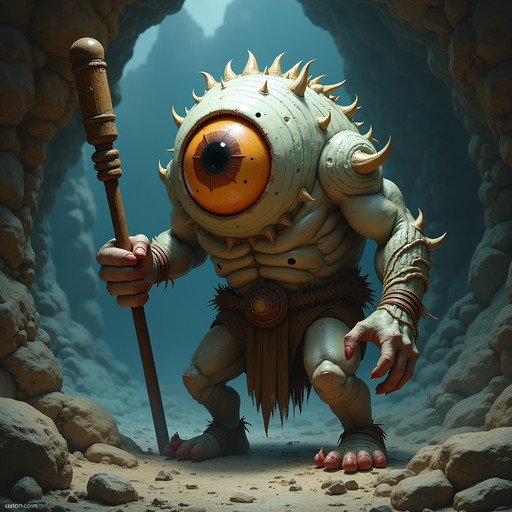
Fantasy -- ArtFID 308.38
Fantasy content aligns naturally with Gothic art's supernatural imagery -- angels, demons, visions, and sacred narratives. The AI transforms modern fantasy photographs into compositions that recall illuminated manuscript pages, complete with golden luminosity and intricate patterning.
| Original Photo | Gothic Art AI Result |
|---|---|
 |
 |
| Source photograph | ArtFID: 308.38 -- LPIPS: 0.3437 / FID: 228.50 |
Portraits -- ArtFID 322.87
Gothic portraiture transformed faces into devotional icons -- serene, idealized, glowing against gold backgrounds. The AI applies the same treatment: skin tones warm toward ivory and gold, features gain delicate precision, and the overall effect suggests a panel painting from a medieval altarpiece.
| Original Photo | Gothic Art AI Result |
|---|---|
 |
 |
| Source photograph | ArtFID: 322.87 -- LPIPS: 0.3866 / FID: 231.85 |
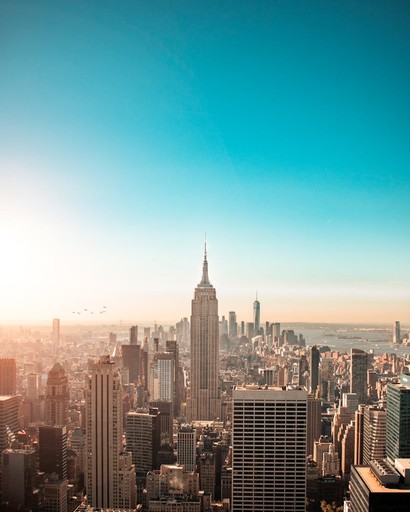
Architecture -- ArtFID 329.52
Architecture is Gothic art's crowning achievement. From Chartres to Notre-Dame, the Gothic style was born in stone before it reached canvas. The AI applies pointed-arch geometry, decorative tracery, and warm golden-stone coloring that transforms modern buildings into structures that feel plucked from a medieval cityscape.
| Original Photo | Gothic Art AI Result |
|---|---|
 |
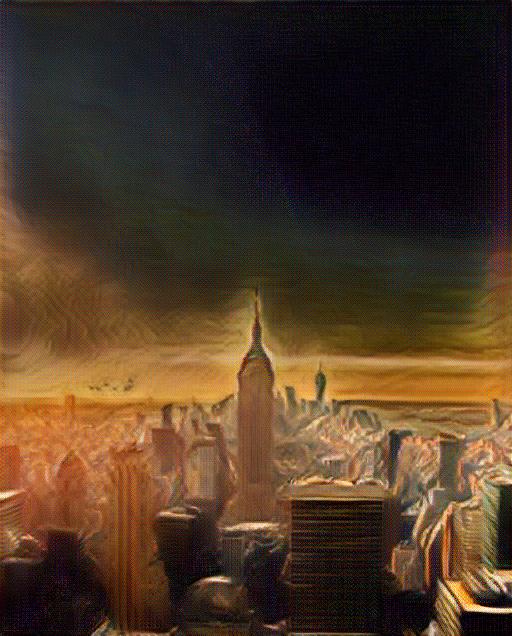 |
| Source photograph | ArtFID: 329.52 -- LPIPS: 0.4843 / FID: 221.01 |
Landscapes -- ArtFID 335.72
Gothic landscape painting evolved dramatically over three centuries -- from the flat gold backgrounds of early panels to the remarkably naturalistic settings of the Limbourg brothers' illuminated books. The AI captures this range, applying manuscript-style decorative detail and warm, luminous color to photographic landscapes.
| Original Photo | Gothic Art AI Result |
|---|---|
 |
 |
| Source photograph | ArtFID: 335.72 -- LPIPS: 0.4908 / FID: 224.19 |
Frequently Asked Questions
What is Gothic Art art style and where did it originate?
Gothic Art originated in the Ile-de-France region of France in the mid-12th century and dominated European visual culture until the 15th century. It encompasses architecture, painting, sculpture, and manuscript illumination, characterized by pointed arches, gold backgrounds, elongated figures, and intricate decorative detail. The style evolved from the architectural innovations of cathedrals like Chartres and Notre-Dame, where ribbed vaults and flying buttresses allowed for vast stained-glass windows. Key figures include Giotto di Bondone, who bridged Gothic and Renaissance traditions.
Which photos look best with Gothic Art style transfer?
Based on our ArtFID testing, animals (ArtFID 269.60), fantasy scenes (308.38), and portraits (322.87) produce the strongest results. Architecture (329.52) and landscapes (335.72) also perform well. Seascapes (411.49) and food (389.11) are the weakest matches. For best results, choose photos with warm lighting, clear subjects, and vertical composition. Animals work especially well due to the medieval bestiary tradition.
Can I use Gothic Art style transfer for commercial projects?
Personal use is always free on ArtRobot. For commercial use -- prints for sale, merchandise, marketing materials, client work -- a premium plan is required. All style reference artworks used by ArtRobot's Gothic Art models come from public domain museum collections (Art Institute of Chicago) under CC0 or open access licenses. Gothic artworks are centuries old and firmly in the public domain. ArtRobot provides 3 free style transfers with no signup required.
Gothic Art vs Early Renaissance: which should I choose?
Both share medieval roots, but their visual philosophies diverge. Gothic Art (12th-15th century) prioritizes spiritual transcendence over physical reality -- gold backgrounds, elongated proportions, hieratic composition, and intricate decorative detail create an otherworldly atmosphere. Early Renaissance (15th century) introduces linear perspective, anatomical accuracy, and naturalistic light -- grounding sacred subjects in observable reality. Choose Gothic Art when you want your photos to gain a timeless, devotional, jewel-like quality. Choose Early Renaissance when you want naturalistic depth with classical elegance. Gothic elevates; Renaissance grounds.
How accurate is AI Gothic Art style transfer compared to real paintings?
Our Gothic Art model achieves an average ArtFID of 346.75 across 15 photo categories, with a style fidelity (FID) of 242.18. The best-performing category (animals, FID 188.44) produces results that convincingly capture Gothic art's gold-toned luminosity and decorative detail. The AI excels at reproducing the style's characteristic color palette and flat spatial composition, though it cannot fully replicate the physical gold leaf, egg tempera texture, or microscopic detail of genuine illuminated manuscripts.
Related Styles
Gothic Art connects to a broader continuum of medieval and early modern European art. Explore these related styles:
- Giotto di Bondone Style Transfer -- The revolutionary figure who bridged Gothic hieratic tradition and Renaissance naturalism
- Early Renaissance Style Transfer -- The successor movement; Masaccio, Botticelli, and the invention of perspective
Try Gothic Art Style Transfer Free ->
Try It Yourself
Transform your own photos into stunning paintings with 80+ artist styles. Free to start.