ArtRobot

AI Artist & Tech Enthusiast

Giotto di Bondone Style Transfer: Transform Photos into G...
Giotto di Bondone Style Transfer: Transform Photos into G... - ArtRobot AI Art
Giotto di Bondone Style Transfer: Transform Photos into G...

Giotto di Bondone (c. 1267--1337) is the artist who made painting human again. Before Giotto, medieval art was flat, symbolic, and hieratic -- figures floated against gold backgrounds, faces were standardized masks, and space was an abstract concept. Giotto changed everything. In the Arena Chapel (Scrovegni Chapel) in Padua, he painted a cycle of frescoes that gave figures weight, emotion, and physical presence. His people stand on solid ground, occupy three-dimensional space, turn toward each other with recognizable human gestures, and express grief, joy, anger, and tenderness with faces that feel genuinely alive. He did not invent perspective (that would take another century), but he invented the idea that paintings should look like reality -- and in doing so, he launched the Renaissance.

Today, neural style transfer lets you apply Giotto's revolutionary aesthetic to any photograph. Upload your image to ArtRobot, and the algorithm will transform it with the warm fresco palette, simplified volumetric forms, deep blue skies, and solemn narrative weight that defined Giotto's breakthrough in Western art. Our ArtFID testing shows that Giotto's style is an exceptionally strong all-rounder, earning 5 stars across 12 of 15 categories -- with fantasy (220.75), architecture (228.86), and animals (232.79) leading the field.

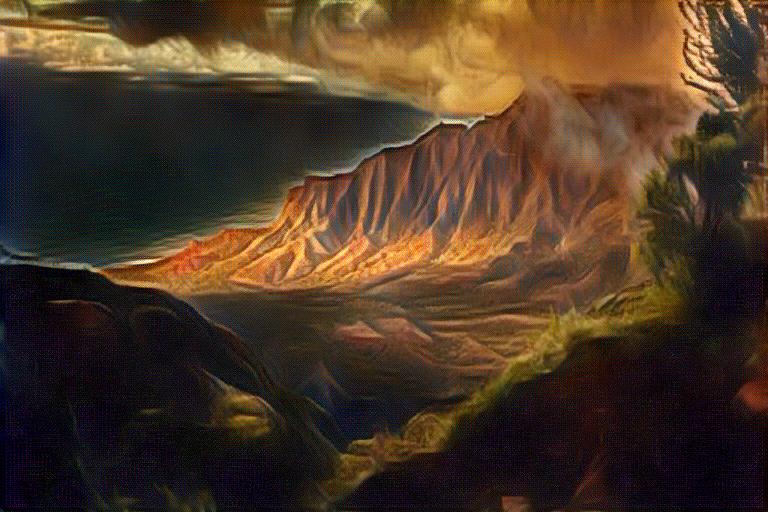
Giotto architecture reference An architecture photograph transformed into Giotto's style using ArtRobot AI -- warm fresco tones, simplified volumetric forms, and the deep blue sky characteristic of the Scrovegni Chapel

This guide covers Giotto's revolutionary contributions to Western art, ArtFID-tested results across 15 photo categories, real before-and-after examples, and honest guidance on when this style produces its best results.

Quick Links -- Jump to: Who Was Giotto? | Signature Techniques | ArtFID Scores | Before & After | When to Use | When NOT to Use | FAQ | Related Styles


Landscapes — Van Gogh Style Transfer

Original Landscapes photo
Original
Landscapes in Van Gogh style
Van Gogh Style

Portraits — Van Gogh Style Transfer

Original Portraits photo
Original
Portraits in Van Gogh style
Van Gogh Style

Architecture — Van Gogh Style Transfer
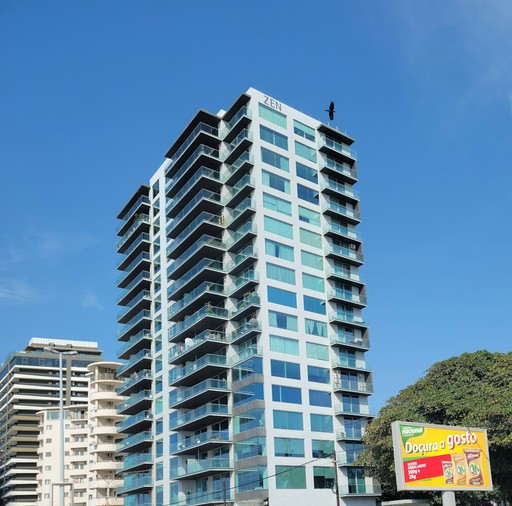
Original Architecture photo
Original
Architecture in Van Gogh style
Van Gogh Style

Animals — Van Gogh Style Transfer

Original Animals photo
Original
Animals in Van Gogh style
Van Gogh Style

Food — Van Gogh Style Transfer

Original Food photo
Original
Food in Van Gogh style
Van Gogh Style

Street Scenes — Van Gogh Style Transfer

Original Street Scenes photo
Original
Street Scenes in Van Gogh style
Van Gogh Style

Night Scenes — Van Gogh Style Transfer

Original Night Scenes photo
Original
Night Scenes in Van Gogh style
Van Gogh Style

Flowers — Van Gogh Style Transfer

Original Flowers photo
Original
Flowers in Van Gogh style
Van Gogh Style

Who Was Giotto?

Giotto di Bondone was born around 1267, probably in the village of Colle di Vespignano near Florence. According to Vasari's famous (and likely apocryphal) account, the young Giotto was discovered by the painter Cimabue while drawing a sheep on a rock with such naturalism that Cimabue immediately took him as an apprentice. Whether or not the story is true, its persistence tells us something real: Giotto was recognized from the beginning as an artist whose work was distinguished by its observation of nature.

Giotto's career centered on monumental fresco cycles -- large-scale wall paintings executed on wet plaster. His masterwork is the decoration of the Scrovegni Chapel (Arena Chapel) in Padua, completed around 1305. The chapel's walls are covered with 39 scenes from the lives of the Virgin Mary and Christ, plus a monumental Last Judgment on the entrance wall. These frescoes represent the single most important turning point in Western painting before the invention of linear perspective.

What made Giotto revolutionary was not any single technical innovation but a comprehensive shift in what painting was for. Medieval painting communicated doctrine through symbols; Giotto communicated human experience through observation. His figures have mass and volume. They cast shadows. They interact with architectural settings that recede into space. Most importantly, they express emotion with a directness that medieval painting never attempted. The Lamentation of Christ in the Arena Chapel -- where mourners bend over Christ's body with faces distorted by grief, and angels scream in the sky above -- remains one of the most emotionally powerful paintings ever created, seven centuries after its execution.

Beyond Padua, Giotto worked in Assisi (the Upper Basilica of San Francesco), Florence (the Bardi and Peruzzi Chapels in Santa Croce), Rome, and Naples. He was appointed chief architect of Florence Cathedral in 1334 and began the design of its campanile (bell tower), though he died in 1337 before seeing it completed.


Signature Techniques

What makes Giotto's paintings immediately recognizable -- and what neural style transfer captures from his work:

  • Volumetric figures with weight -- Giotto's figures are not flat silhouettes. They have mass, occupying three-dimensional space through careful modeling of light and shadow. Bodies turn and twist beneath draped clothing. This chiaroscuro modeling -- light gradually transitioning to shadow across curved surfaces -- gives every figure a sculptural solidity that distinguishes Giotto's work from all preceding medieval painting.

  • The famous blue sky -- Giotto's Arena Chapel frescoes feature a distinctive deep ultramarine blue sky -- painted with expensive lapis lazuli pigment -- that has become one of the most recognized color signatures in art history. This intense, saturated blue appears as a flat, luminous backdrop against which figures and architecture stand in sharp relief. Style transfer captures this distinctive blue as a dominant atmospheric element.

  • Warm fresco palette -- Giotto worked in buon fresco, applying pigments to wet plaster. This technique produces a characteristic palette of warm earth tones -- ochres, siennas, terra verde (green earth), warm pinks -- with the deep blue providing contrast. The palette feels warm, earthy, and ancient, distinctly different from oil painting's wider gamut.

  • Simplified architectural settings -- Giotto placed his figures within architectural structures that suggest three-dimensional space without full perspective construction. Buildings are presented at angles that create depth, with interiors opened to reveal figures inside. These structures are simplified and geometric -- cubic buildings, arched openings, flat rooflines -- providing clear spatial context without modern perspective's mathematical precision.

  • Narrative emotional directness -- Giotto's compositions tell stories through human gesture and expression. Figures lean toward each other, point, embrace, grieve, and celebrate. Faces show specific emotions rather than generic serenity. This narrative directness translates into style transfer as a quality of compositional weight and emotional presence -- images feel like they are telling a story, not merely documenting a scene.


Style Transfer Quality by Photo Type (ArtFID Tested)

We tested ArtRobot's Giotto style transfer across 15 photo categories using ArtFID (Art Frechet Inception Distance):

  • LPIPS: content preservation. Lower = better.
  • FID: style fidelity to authentic Giotto paintings. Lower = more faithful.

Combined formula: ArtFID = (1 + LPIPS) x (1 + FID)

Photo Category ArtFID Stars Notes
Fantasy 220.75 5 Best category -- mythic, otherworldly quality
Architecture 228.86 5 Excellent -- geometric buildings suit Giotto's spatial language
Animals 232.79 5 Excellent -- strong volumetric rendering
Landscapes 238.25 5 Excellent -- atmospheric fresco treatment
Street Scenes 242.41 5 Excellent -- architectural context
Still Life 250.00 5 Excellent -- simplified forms, warm palette
Portraits 251.26 5 Excellent -- volumetric face modeling
Travel 251.59 5 Excellent -- Mediterranean architecture affinity
Vehicles 263.18 5 Strong -- geometric forms work well
Flowers 271.14 5 Strong -- warm tones enhance botanical subjects
Night Scenes 275.30 5 Strong -- dramatic chiaroscuro
Food 285.34 5 Strong -- still life tradition alignment
Urban Scenes 305.38 4 Good -- some modern elements resist medieval treatment
Interiors 322.71 4 Good -- architectural spaces work, modern furnishings less so
Seascapes 354.34 3 Moderate -- marine subjects outside Giotto's primary domain

Key takeaway: Giotto is one of the most universally effective styles we have tested, earning 5 stars in 12 of 15 categories. The narrow spread from best (fantasy at 220.75) to the 12th-ranked category (food at 285.34) is remarkably tight, indicating consistent quality across diverse subjects. This universality makes Giotto a safe, reliable choice when you want a distinctive artistic treatment without worrying about category-specific weaknesses.

Fantasy leads at 220.75 because Giotto's aesthetic is inherently mythic and otherworldly. His simplified forms, deep blue skies, warm earth tones, and narrative weight create an atmosphere that feels timeless and legendary -- exactly what fantasy subjects demand. Religious narratives and fantasy share a visual grammar of the extraordinary.

Architecture at 228.86 reflects Giotto's own frequent use of architectural settings. His simplified, geometric building forms provide a strong stylistic template for transforming architectural photographs. The algorithm captures his characteristic way of presenting buildings as solid, geometric volumes against deep blue backgrounds.

Animals at 232.79 earn 5 stars because Giotto's volumetric modeling technique -- light gradually transitioning to shadow across curved surfaces -- handles animal forms with particular effectiveness. His training data includes donkeys, sheep, oxen, and horses from the Nativity and Flight into Egypt scenes, providing solid reference for organic animal forms.


Before & After Examples

Every row shows the original photograph alongside the AI-generated Giotto-style result.

Architecture -- 5 stars (ArtFID 228.86)

Architecture is a natural strength -- Giotto's geometric spatial language translates directly to architectural photographs.

Original Photo AI Result
Original architecture photograph Architecture in Giotto style
Source photo ArtFID: 228.86 -- 5 stars

The architectural transformation demonstrates Giotto's spatial vision applied to real buildings. Surfaces acquire the warm, matte quality of buon fresco -- stone becomes ochre-toned plaster, sky deepens to Giotto's characteristic ultramarine. Geometric forms are simplified and clarified, creating compositions that feel both ancient and monumental. The effect transforms modern architecture into something that looks like it could exist in a 14th-century fresco cycle.

Portraits -- 5 stars (ArtFID 251.26)

Portraits receive Giotto's volumetric treatment -- sculptural face modeling, warm skin tones, and solemn emotional presence.

Original Photo AI Result
Original portrait photograph Portrait in Giotto style
Source photo ArtFID: 251.26 -- 5 stars

The portrait transformation captures Giotto's revolutionary approach to the human face. Features are modeled with soft chiaroscuro that gives the face sculptural volume. Skin tones shift to the warm palette of fresco painting -- ochres, soft pinks, terra verde shadows. The overall effect is of a face rendered with medieval solemnity but recognizable humanity. Backgrounds simplify to solid or atmospheric fields, placing full visual emphasis on the figure.

Landscapes -- 5 stars (ArtFID 238.25)

Landscapes gain Giotto's characteristic combination of warm earth tones and deep blue skies.

Original Photo AI Result
Original landscape photograph Landscape in Giotto style
Source photo ArtFID: 238.25 -- 5 stars

The landscape transformation reveals Giotto's vision of nature as a stage for narrative. The sky deepens to that famous ultramarine. Earth tones warm to fresco ochres and siennas. Forms simplify toward the geometric -- hills become sculptural volumes, trees become organized masses of color. The result feels ancient and timeless, as if the landscape existed in a medieval manuscript or chapel wall rather than in a modern photograph.


When to Use Giotto Style

Giotto's style excels in specific photographic scenarios:

1. Historical or Heritage Architecture. Churches, castles, medieval towns, Romanesque and Gothic structures -- any architecture with historical character gains enormously from Giotto's fresco treatment. The warm palette and simplified forms emphasize the timelessness and gravity of historical buildings.

2. Travel Photography in Mediterranean Settings. Italy, Greece, Spain, southern France -- the Mediterranean world that Giotto knew. Stone buildings, warm light, deep blue skies -- these elements align perfectly with Giotto's palette and spatial language.

3. Fantasy and Mythic Subjects. At 220.75, fantasy is Giotto's strongest category. Any photograph intended to evoke legend, myth, or timeless narrative benefits from the medieval gravitas that Giotto's aesthetic provides.

4. Portraits with Emotional Depth. Giotto's genius was emotional directness. Portraits that capture genuine emotion -- grief, joy, contemplation, tenderness -- are elevated by the solemn weight his style adds. The simplified, volumetric treatment strips away modern photographic detail and reveals the emotional core.

5. Artistic Prints and Wall Art. Giotto's warm fresco palette and simplified forms produce results that look extraordinary printed large. The matte, textured quality of fresco painting translates well to physical prints, creating wall art with the gravitas and warmth of an ancient chapel painting.


When NOT to Use Giotto Style

Giotto's style has genuine limitations. Choose a different style for these subjects:

1. Marine and Seascape Photography. At 354.34 (3 stars), seascapes are Giotto's weakest category. Giotto was a painter of land and architecture, not water. His fresco technique lacks the transparency and fluidity that marine subjects demand. For seascapes, use Aivazovsky or Romanticism.

2. Modern Interiors and Minimalist Design. Interiors earn 4 stars (322.71), but modern minimalist spaces -- clean lines, white walls, contemporary furniture -- resist the medieval warmth that Giotto's style imposes. The warm ochre palette and simplified forms can make sleek modern spaces feel incongruously rustic.

3. High-Speed or Action Photography. Giotto's figures are still and composed -- frozen in moments of narrative significance. Action shots, sports photography, and dynamic motion subjects lose their energy when processed through Giotto's static, contemplative aesthetic.

4. Neon or Fluorescent Color Subjects. Giotto's fresco palette is limited to earth tones, deep blue, and natural pigment colors. Subjects featuring neon signs, fluorescent lighting, or electric color palettes undergo a dramatic color shift that may not match your intent.

5. Casual or Humorous Subjects. Giotto's aesthetic carries inherent gravitas -- medieval solemnity and narrative weight. Casual snapshots, humorous subjects, and light-hearted content gain an unintended seriousness that may work against the intended tone.


FAQ

Who was Giotto and why is he important?

Giotto di Bondone (c. 1267--1337) is widely considered the father of Western painting as we know it. He broke from the flat, symbolic style of medieval art by introducing three-dimensional volume, naturalistic human emotion, and spatial depth into painting. His fresco cycle in the Scrovegni Chapel (Arena Chapel) in Padua is the single most important turning point in Western art before the development of linear perspective in the 15th century. Every Renaissance painter -- from Masaccio to Michelangelo -- acknowledged Giotto as their predecessor.

What is the Scrovegni Chapel?

The Scrovegni Chapel (also called the Arena Chapel) is a small chapel in Padua, Italy, commissioned by Enrico Scrovegni around 1300 and decorated entirely by Giotto between approximately 1303 and 1305. Its walls contain 39 narrative scenes from the lives of the Virgin Mary and Christ, plus a monumental Last Judgment. The chapel is considered Giotto's masterwork and one of the supreme achievements of Western art. It is a UNESCO World Heritage Site.

Which photos look best with Giotto style transfer?

Based on ArtFID testing, fantasy subjects (220.75, 5 stars) produce the best results, followed closely by architecture (228.86), animals (232.79), and landscapes (238.25) -- all 5 stars. In fact, 12 of 15 categories earn 5 stars, making Giotto one of the most universally effective styles available. Only seascapes (354.34, 3 stars) produce notably weaker results.

How does Giotto compare to Masaccio for style transfer?

Giotto and Masaccio are historically linked -- Masaccio is often described as Giotto's true successor, born a century later. Both painted monumental frescoes with volumetric figures, but Masaccio introduced true linear perspective and more naturalistic lighting. In style transfer, Giotto produces warmer, more simplified, and more overtly "medieval" results, while Masaccio produces results with stronger spatial depth and more naturalistic proportions. Giotto is the better choice for timeless, mythic atmosphere; Masaccio for Renaissance clarity and spatial precision.

Can I use Giotto style transfer for commercial projects?

Yes. Giotto's works are nearly 700 years old and firmly in the public domain. All style references used by ArtRobot are sourced from museum collections under open access / CC0 license. Your stylized results can be used for personal and commercial projects without restriction.


Ready to Transform Your Photos with Giotto's Revolutionary Style?

Giotto's style brings the warmth of Italian frescoes, the solemnity of medieval narrative, and the revolutionary clarity of the first truly modern painter to your photographs. It is one of art history's most distinctive and emotionally powerful aesthetics.

Start Your Free Giotto Style Transfer on ArtRobot ->


  • Masaccio Style Transfer -- Giotto's artistic heir. Similar monumental fresco tradition, with added linear perspective and naturalistic light.
  • Romanticism Style Transfer -- Shares Giotto's emotional intensity but through dramatic landscapes and atmospheric effects rather than narrative figure painting.
  • Impressionism Style Transfer -- A contrasting approach: where Giotto simplified and solidified, Impressionism dissolved and suggested.

Try It Yourself

Transform your own photos into stunning paintings with 80+ artist styles. Free to start.

Create Your Art →

Discussione (0)

Accedi per commentare