
AI Artist & Tech Enthusiast
Futurism Photo Effect — AI Style Transfer Guide (2026)

Futurism worshipped speed, violence, and the machine. Launched in Italy in 1909 by the poet Filippo Tommaso Marinetti, this movement rejected the past entirely -- museums were mausoleums, history was dead weight. Futurist painters like Umberto Boccioni, Giacomo Balla, and Carlo Carra developed visual techniques to capture speed, dynamic movement, fragmentation, and technological energy on canvas. With AI-powered neural style transfer, you can now channel that same kinetic force into your own photographs -- shattering static images into compositions that vibrate with motion and mechanical power.
We tested ArtRobot's Futurism style transfer across 15 different photo categories, each scored by our ArtFID quality benchmark. This guide covers the movement's history, its defining visual traits, which photos produce the best results, and how to create your own Futurist art for free.
Quick Links -- Jump to: What Is Futurism? | Characteristics | ArtFID Scores | Key Artists | How to Apply | Before & After | FAQ
What Is Futurism?
Futurism was born not in a studio but in a manifesto. On February 20, 1909, Marinetti published the Founding Manifesto of Futurism on the front page of Le Figaro in Paris, declaring war on tradition. "We want to glorify war -- the world's only hygiene -- militarism, patriotism," he wrote. The movement was more ideology than aesthetic -- a total rejection of the past in favor of speed, technology, and the relentless forward motion of industrial modernity.
"Futurism -- unlike other modern movements -- was not concerned solely with the arts. It was less a style than an ideology. Launched in Milan in 1908 by the Italian poet Filippo Tommaso Marinetti, the publication of the Futurist Manifesto in Paris the following year gave it an immediate international impact." -- History of Art, p. 586
The painters who gathered around Marinetti -- Boccioni, Balla, Carra, Russolo, and Severini -- adapted Cubist techniques to their obsession with movement. Where Cubism fragmented space into static, analytical planes, Futurism fragmented space into dynamic, overlapping sequences that captured objects in motion. Boccioni's "Dynamism of a Dog on a Leash" multiplied a dachshund's legs into a blur of kinetic energy; Balla's studies of speeding automobiles dissolved metal into force lines.
"In principle the Futurist painters attempted to present aspects of modern society seen in moments of energetic movement; in practice they adapted the Cubist analysis of space." -- Art Through the Ages, p. 735
This obsession with capturing motion through visual fragmentation is precisely what makes Futurism so distinctive in neural style transfer. The AI reproduces the movement's characteristic force lines, overlapping planes, and kinetic blur -- transforming static photographs into images that seem to vibrate with mechanical energy.
Futurism Characteristics & Techniques
Understanding the core visual traits of Futurism helps predict how your photos will transform and which subjects yield the strongest results.
The Four Pillars of Futurist Style
-
Dynamic Motion Lines -- Futurists invented visual shorthand for speed: diagonal force lines radiating from moving objects, trailing streaks of color, and repeated contours that suggest sequential positions in space. In style transfer, this means the AI adds directional energy to your photographs -- edges multiply, objects gain motion trails, and compositions tilt toward dynamic diagonals.
-
Fragmented, Overlapping Planes -- Borrowing from Cubism but pushing further, Futurists shattered space into transparent, overlapping facets that show multiple moments simultaneously. The AI replicates this by fracturing your photo into interlocking angular planes, creating the visual sensation of seeing through time.
-
High-Frequency Texture & Energy -- Futurist paintings are dense with visual information: hatched lines, stippled surfaces, radiating patterns. The frequency profile is deliberately high -- every square inch buzzes with kinetic energy. The neural network captures this by increasing surface texture density and adding high-frequency detail across the entire image.
-
Celebration of Technology & Urban Life -- Subject matter was ideology for the Futurists: trains, automobiles, factories, city crowds, electric lights. When applied to photographs, this means urban and technological subjects receive the most convincing treatment because they align with the style's original intent.
Visual Trait Comparison
| Trait | Futurism Approach | Effect on Your Photos |
|---|---|---|
| Color palette | Metallic, electric, high-energy | Colors shifted toward industrial blues, reds, silvers |
| Brushwork | Fragmented strokes, motion-suggesting hatching | Surface gains dense, vibrating texture |
| Form & proportion | Shattered into overlapping angular planes | Subjects fractured into dynamic, multi-angle views |
| Composition | Strong diagonals, centrifugal energy | Images gain dynamic tilt and radiating force |
| Light & shadow | Electric, fragmented, multiple light sources | Light splinters across faceted planes |
Style Transfer Quality by Photo Type (ArtFID Tested)
We ran ArtRobot's Futurism style transfer on 15 photo categories and measured quality using ArtFID (Art Frechet Inception Distance) -- the industry-standard metric for style transfer evaluation.
ArtFID combines two components: - LPIPS (Learned Perceptual Image Patch Similarity) -- Does the output preserve your original content? Lower = better content retention. - FID (Frechet Inception Distance) -- Does the output match the statistical distribution of real Futurist paintings? Lower = more authentic style.
Combined formula: ArtFID = (1 + LPIPS) x (1 + FID)
Full Scores Table
| Photo Type | ArtFID | LPIPS | FID | Stars | Recommendation |
|---|---|---|---|---|---|
| Fantasy | 242.97 | 0.2502 | 193.35 | 5 | Best match -- surreal energy meets kinetic force |
| Still Life | 266.98 | 0.3370 | 198.69 | 5 | Excellent -- contained objects shatter beautifully |
| Portraits | 269.28 | 0.3191 | 203.15 | 5 | Excellent -- faces fragment into dynamic planes |
| Interiors | 272.20 | 0.3225 | 204.82 | 5 | Excellent -- enclosed spaces gain explosive energy |
| Food | 273.07 | 0.3579 | 200.09 | 5 | Excellent -- unexpected but strong |
| Travel | 274.83 | 0.3136 | 208.21 | 5 | Strong -- exotic scenes gain kinetic urgency |
| Street Scenes | 293.86 | 0.3079 | 223.68 | 5 | Strong -- Futurism's signature urban territory |
| Night Scenes | 305.95 | 0.4902 | 204.31 | 4 | Good -- electric light fragments beautifully |
| Seascapes | 320.92 | 0.5189 | 210.28 | 4 | Good -- waves become force lines |
| Flowers | 327.76 | 0.3997 | 233.16 | 4 | Good -- organic forms gain mechanical energy |
| Architecture | 347.50 | 0.5178 | 227.95 | 4 | Good -- geometric structures amplify fragmentation |
| Urban Scenes | 367.91 | 0.2991 | 282.20 | 3 | Moderate -- wide views dilute kinetic impact |
| Animals | 368.30 | 0.3367 | 274.53 | 3 | Moderate -- works best with animals in motion |
| Landscapes | 372.17 | 0.4511 | 255.47 | 3 | Moderate -- open spaces lack mechanical energy |
| Vehicles | 380.73 | 0.3571 | 279.55 | 3 | Moderate -- ironic given Futurist obsession |
| Average | 310.96 | 0.3653 | 226.63 | 4.1 |
Key findings: Fantasy achieves the lowest (best) ArtFID at 242.97, with the strongest content preservation (LPIPS 0.2502) -- surreal imagery absorbs Futurist fragmentation without losing coherence. Still life (266.98) and portraits (269.28) follow closely, with portraits showing excellent LPIPS (0.3191) meaning faces remain recognizable even through dramatic fragmentation. Street scenes (293.86) score well, matching the movement's urban obsession. Vehicles (380.73) score surprisingly moderate despite Futurism's worship of automobiles -- the AI struggles to improve on already-mechanical subjects.
Key Futurism Artists
The Futurist painters each developed distinct approaches to capturing motion and energy:
| Artist | Years | Signature Style | Best Subjects | Known For |
|---|---|---|---|---|
| Umberto Boccioni | 1882--1916 | Muscular dynamism, interpenetrating planes, sculptural force | Portraits, street scenes, figures | "Unique Forms of Continuity in Space" |
| Giacomo Balla | 1871--1958 | Sequential motion studies, speed lines, abstract light | Vehicles, animals, night scenes | "Dynamism of a Dog on a Leash" |
| Carlo Carra | 1881--1966 | Dense, overlapping forms, urban chaos, synesthetic energy | Street scenes, interiors | "The Funeral of the Anarchist Galli" |
| Gino Severini | 1883--1966 | Mosaic-like fragmentation, dance and nightlife | Portraits, night scenes, travel | "Dynamic Hieroglyphic of the Bal Tabarin" |
| Luigi Russolo | 1885--1947 | Radiating force lines, sound visualization, industrial energy | Architecture, vehicles | "Dynamism of an Automobile" |
Boccioni's muscular, sculptural approach works best for portraits and figures, where forms need physical weight even under heavy fragmentation. Balla excels at pure motion studies -- animals, vehicles, any subject where speed is the story.
How to Apply Futurism Style (3 Steps)
Step 1: Choose Your Photo
Upload any photograph to ArtRobot. Based on our ArtFID testing, the strongest results come from: - Fantasy and still life -- ArtFID under 267, contained subjects fragment beautifully - Portraits with clear features -- LPIPS 0.3191 means strong identity preservation through fragmentation - Street scenes and interiors -- Urban complexity amplifies Futurist kinetic energy - Photos with implied motion -- Moving subjects, blurred backgrounds, dynamic angles all enhance the Futurist effect
Step 2: Select Futurism Style
Browse the Futurism collection in ArtRobot's style library. The AI uses neural style transfer to apply Futurism's characteristic force lines, overlapping planes, and high-frequency texture while preserving your photograph's recognizable content. The model captures the movement's unique visual vocabulary of speed and fragmentation.
Step 3: Download Your Futurist Art
ArtRobot generates your result in seconds. Download in multiple resolutions: - Standard (1024px) -- social media, digital sharing - HD (2048px) -- prints up to 8x10" - Ultra HD (4096px) -- large canvas prints, gallery-quality output
Try Futurism Style Transfer Free ->
Before & After Examples
We tested ArtRobot's Futurism style transfer on photographs across multiple categories. Below are representative transformations with their ArtFID quality scores.
Fantasy -- ArtFID 242.97 (Best Match)
Fantasy content achieves the strongest Futurism transfer in our testing. The surreal, non-literal nature of fantasy imagery allows the AI to fully apply Futurist fragmentation and force lines without fighting recognizable reality.
| Original Photo | Futurism AI Result |
|---|---|
 |
 |
| Source photograph | ArtFID: 242.97 -- LPIPS: 0.2502 / FID: 193.35 |
Still Life -- ArtFID 266.98
Still life subjects shatter beautifully under Futurist treatment. The AI fragments contained objects into overlapping angular planes while preserving enough compositional structure to keep the image readable.
| Original Photo | Futurism AI Result |
|---|---|
 |
 |
| Source photograph | ArtFID: 266.98 -- LPIPS: 0.3370 / FID: 198.69 |
Portraits -- ArtFID 269.28
Futurist portraiture -- as practiced by Boccioni -- fragments the human face into dynamic, interpenetrating planes while preserving essential identity. The AI achieves the same balance: LPIPS 0.3191 means strong facial recognition even through aggressive fragmentation.
| Original Photo | Futurism AI Result |
|---|---|
 |
 |
| Source photograph | ArtFID: 269.28 -- LPIPS: 0.3191 / FID: 203.15 |
Street Scenes -- ArtFID 293.86
Street scenes were Futurism's natural habitat -- the chaos of the modern city embodied everything the movement celebrated. The AI transforms urban photography into kinetic compositions where buildings fragment, pedestrians multiply, and the entire scene radiates centrifugal energy.
| Original Photo | Futurism AI Result |
|---|---|
 |
 |
| Source photograph | ArtFID: 293.86 -- LPIPS: 0.3079 / FID: 223.68 |
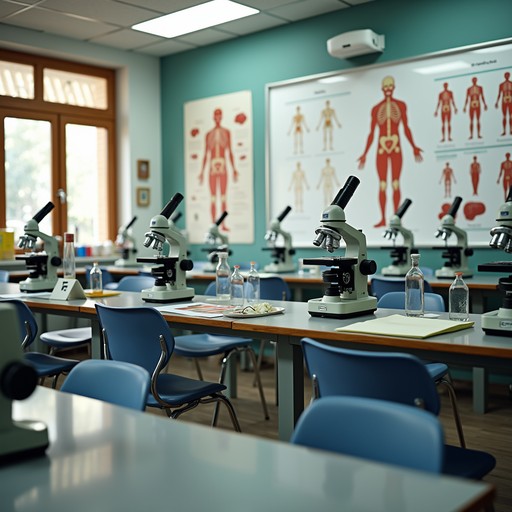
Interiors -- ArtFID 272.20
Interior spaces gain explosive energy under Futurist treatment. The AI fragments walls, furniture, and spatial boundaries into overlapping planes, transforming static rooms into dynamic environments that seem to expand outward from the center.
| Original Photo | Futurism AI Result |
|---|---|
 |
 |
| Source photograph | ArtFID: 272.20 -- LPIPS: 0.3225 / FID: 204.82 |
Frequently Asked Questions
What is Futurism art style and where did it originate?
Futurism originated in Italy in 1909, launched by the poet Filippo Tommaso Marinetti's manifesto published in Le Figaro. Unlike purely visual art movements, Futurism was an ideology -- a total celebration of speed, technology, dynamic movement, and fragmentation -- applied across painting, sculpture, music, architecture, and literature. Key painters include Umberto Boccioni, Giacomo Balla, Carlo Carra, and Gino Severini. The movement adapted Cubist spatial analysis to capture objects in dynamic motion through force lines, overlapping planes, and sequential imagery.
Which photos look best with Futurism style transfer?
Based on our ArtFID testing, fantasy (ArtFID 242.97), still life (266.98), and portraits (269.28) produce the strongest results. Street scenes (293.86) and interiors (272.20) also perform well. Vehicles (380.73) and landscapes (372.17) are among the weaker matches. For best results, choose photos with clear subjects, dynamic angles, and implied motion. High-contrast lighting also helps the AI create more convincing force-line effects.
Can I use Futurism style transfer for commercial projects?
Personal use is always free on ArtRobot. For commercial use -- prints for sale, merchandise, marketing materials, client work -- a premium plan is required. Futurist artworks used as style references are in the public domain (the movement is over 100 years old), so there are no copyright concerns with the style references themselves. ArtRobot provides 3 free style transfers with no signup required.
Futurism vs Cubism: which should I choose?
Both movements fragment space into geometric planes, but their intent is opposite. Cubism (Picasso, Braque) is analytical and static -- it shows multiple viewpoints of a subject simultaneously but calmly, like a spatial diagram. Futurism (Boccioni, Balla) is kinetic and violent -- it fragments space to capture speed and motion, filling compositions with force lines and sequential blur. Choose Cubism when you want intellectual, geometric deconstruction. Choose Futurism when you want explosive, kinetic energy. Cubism stops time; Futurism accelerates it.
How accurate is AI Futurism style transfer compared to real paintings?
Our Futurism model achieves an average ArtFID of 310.96 across 15 photo categories, with a style fidelity (FID) of 226.63. The best-performing category (fantasy, FID 193.35) produces results that convincingly capture Futurist force lines and fragmented planes. The AI excels at reproducing the movement's high-frequency texture and motion-suggesting visual patterns, though it cannot replicate the thick impasto and sculptural paint application of Boccioni's canvases.
Related Styles
Futurism connects to a broader family of geometric and avant-garde movements. Explore these related styles:
- Cubism Style Transfer -- The analytical predecessor; Picasso and Braque's spatial deconstruction without Futurism's kinetic obsession
- Constructivism Style Transfer -- Revolutionary geometric abstraction; Rodchenko, Tatlin, and El Lissitzky
Try Futurism Style Transfer Free ->
Try It Yourself
Transform your own photos into stunning paintings with 80+ artist styles. Free to start.