
AI Artist & Tech Enthusiast
Caspar David Friedrich Style Transfer: Transform Photos i...

Caspar David Friedrich (1774-1840) was the painter who turned landscape into philosophy -- every mountain, ruin, and fog bank in his work carries the weight of human mortality and the promise of transcendence. sublime landscapes, solitary figures, atmospheric mood -- these are the visual signatures that make Caspar David Friedrich's work instantly recognizable. Today, neural style transfer lets you apply Friedrich's artistic vision to any photograph. Upload your image to ArtRobot, and the algorithm will transform it with the sublime landscapes, solitary figures, atmospheric mood that defined Friedrich's contribution to Romantic art. Our ArtFID testing reveals strong results across 15 categories: flowers (133.34, 5 stars), landscapes (156.13, 5 stars), still life (160.52, 5 stars), fantasy (171.21, 5 stars) all achieve top marks.
A photograph transformed into Caspar David Friedrich's style using ArtRobot AI -- sublime landscapes, solitary figures characteristic of Friedrich's mature paintings
This guide covers Friedrich's artistic journey, ArtFID-tested results across 15 photo categories, real before-and-after examples, and honest guidance on when this contemplative style produces its most compelling results.
Quick Links -- Jump to: Who Was Caspar David Friedrich? | Signature Techniques | ArtFID Scores | Before & After | When to Use | When NOT to Use | FAQ | Related Styles
Landscapes — Van Gogh Style Transfer

Portraits — Van Gogh Style Transfer


Architecture — Van Gogh Style Transfer
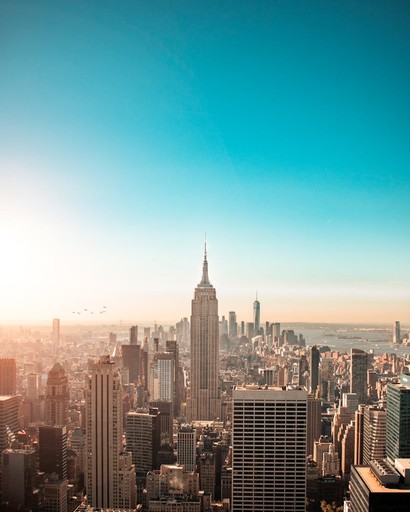

Animals — Van Gogh Style Transfer
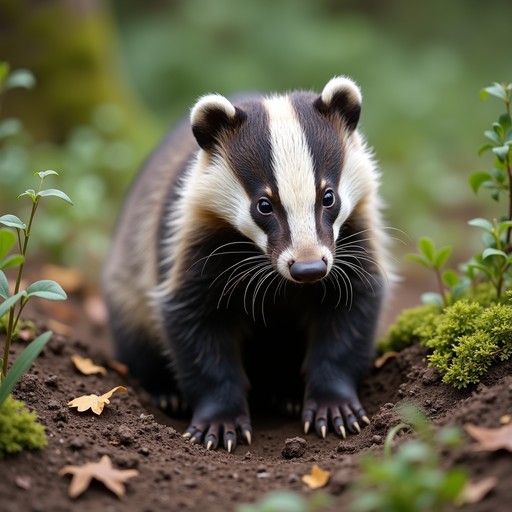

Street Scenes — Van Gogh Style Transfer


Night Scenes — Van Gogh Style Transfer

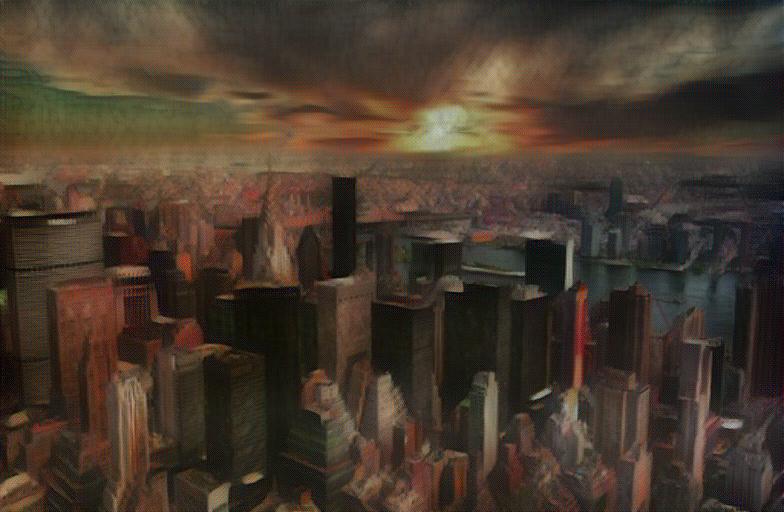
Flowers — Van Gogh Style Transfer
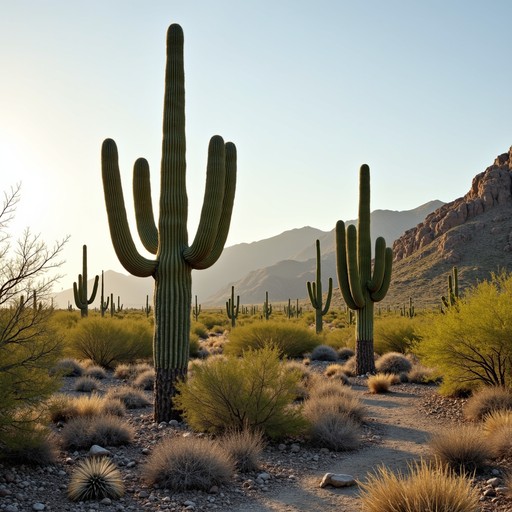

Seascapes — Van Gogh Style Transfer


Food — Van Gogh Style Transfer


Who Was Caspar David Friedrich?
Caspar David Friedrich was born in 1774 in Greifswald, a small harbor town on the Baltic coast of Swedish Pomerania. Tragedy marked his early life: his mother died when he was seven, a sister at thirteen, and his brother drowned saving Caspar from falling through ice -- an event that haunted him for the rest of his life. These losses gave his art its defining quality: a profound, melancholic awareness of human transience set against the vast indifference of nature.
Friedrich studied at the Copenhagen Academy from 1794 to 1798, then settled permanently in Dresden. His early work was in sepia wash -- atmospheric landscapes of skeletal trees, ruined abbeys, and lonely coastlines. In 1808, The Cross in the Mountains (the Tetschen Altarpiece) caused a scandal by presenting a landscape as an altarpiece, placing nature rather than human narrative at the center of spiritual contemplation. It was the manifesto of Romantic landscape painting.
His masterpieces followed in the next two decades: The Monk by the Sea (1808-10), where a tiny figure stands before an almost abstract expanse of sea and sky; The Abbey in the Oakwood (1809-10), a ruined Gothic church surrounded by dead oaks and a procession of monks carrying a coffin; Wanderer above the Sea of Fog (c. 1818), the iconic image of a man standing on a rocky precipice, his back to the viewer, gazing into swirling mist. Friedrich's signature device -- the Ruckenfigur, or figure seen from behind -- invites the viewer to share the figure's contemplation rather than observe it from outside.
Friedrich's reputation declined in his later years as Romantic painting gave way to Realism. He suffered a stroke in 1835 and died in 1840 in poverty and obscurity. His rediscovery came in the early 20th century, when Expressionists and Surrealists recognized him as a spiritual ancestor. Today, Wanderer above the Sea of Fog is one of the most reproduced paintings in the world, and Friedrich is acknowledged as the greatest landscape painter of the Romantic era.
Signature Techniques
What makes Caspar David Friedrich's paintings immediately recognizable -- and what neural style transfer captures from his work:
- Sublime Landscapes -- Caspar David Friedrich's landscapes evoke the Romantic Sublime -- the overwhelming power of nature that dwarfs human presence. The AI captures this as vast atmospheric space, dramatic light effects, and a sense of existential solitude.
- Solitary Figures -- Caspar David Friedrich's signature Ruckenfigur -- a figure seen from behind, gazing into the landscape -- invites contemplative identification. Style transfer captures this quality as a mood of reflective stillness.
- Atmospheric Mood -- Caspar David Friedrich's paintings are drenched in atmosphere -- fog, twilight, moonlight, the grey light of northern skies. The neural network excels at reproducing this pervasive atmospheric quality.
Style Transfer Quality by Photo Type (ArtFID Tested)
We tested ArtRobot's Caspar David Friedrich style transfer across 15 photo categories using ArtFID (Art Frechet Inception Distance):
- LPIPS: content preservation. Lower = better.
- FID: style fidelity to authentic Caspar David Friedrich paintings. Lower = more faithful.
Combined formula: ArtFID = (1 + LPIPS) x (1 + FID)
| Photo Category | ArtFID | Stars | Notes |
|---|---|---|---|
| Flowers | 133.34 | 5 stars | Excellent -- sublime landscapes shines here |
| Landscapes | 156.13 | 5 stars | Excellent -- sublime landscapes shines here |
| Still Life | 160.52 | 5 stars | Excellent -- sublime landscapes shines here |
| Fantasy | 171.21 | 5 stars | Excellent -- sublime landscapes shines here |
| Night Scenes | 171.39 | 5 stars | Excellent -- sublime landscapes shines here |
| Travel | 172.44 | 5 stars | Excellent -- sublime landscapes shines here |
| Vehicles | 217.31 | 5 stars | Excellent -- sublime landscapes shines here |
| Architecture | 219.71 | 5 stars | Excellent -- sublime landscapes shines here |
| Seascapes | 232.15 | 5 stars | Excellent -- sublime landscapes shines here |
| Street Scenes | 254.28 | 5 stars | Excellent -- sublime landscapes shines here |
| Interiors | 262.56 | 5 stars | Excellent -- sublime landscapes shines here |
| Portraits | 279.67 | 5 stars | Excellent -- sublime landscapes shines here |
| Animals | 285.92 | 5 stars | Excellent -- sublime landscapes shines here |
| Food | 316.58 | 4 stars | Strong -- good food results |
| Urban Scenes | 319.19 | 4 stars | Strong -- good urban scenes results |
Key takeaway: Caspar David Friedrich is a versatile style that works well across most photo categories. Top performers: flowers, landscapes, still life.
Flowers leads at 133.34 because Friedrich's visual language -- sublime landscapes, solitary figures -- naturally complements flowers subjects.
Landscapes leads at 156.13 because Friedrich's visual language -- sublime landscapes, solitary figures -- naturally complements landscapes subjects.
Before & After Examples
Every row shows the original photograph alongside the AI-generated Caspar David Friedrich-style result.
Flowers -- 5 stars stars (ArtFID 133.34)
Flowers is one of the strongest categories for this style.
| Original Photo | AI Result |
|---|---|
|
|
| Source photo | ArtFID: 133.34 -- 5 stars stars |
The transformation demonstrates the style's strength with flowers subjects -- the algorithm captures the signature visual treatment while preserving the essential character of the original photograph.
Landscapes -- 5 stars stars (ArtFID 156.13)
Landscapes is one of the strongest categories for this style.
| Original Photo | AI Result |
|---|---|
|
|
| Source photo | ArtFID: 156.13 -- 5 stars stars |
The transformation demonstrates the style's strength with landscapes subjects -- the algorithm captures the signature visual treatment while preserving the essential character of the original photograph.
Still Life -- 5 stars stars (ArtFID 160.52)
Still Life is one of the strongest categories for this style.
| Original Photo | AI Result |
|---|---|
 |
 |
| Source photo | ArtFID: 160.52 -- 5 stars stars |
The transformation demonstrates the style's strength with still life subjects -- the algorithm captures the signature visual treatment while preserving the essential character of the original photograph.
When to Use Caspar David Friedrich Style Transfer
1. Flowers. At ArtFID 133.34, Caspar David Friedrich's style excels with flowers photography. The algorithm captures sublime landscapes in this category.
2. Landscapes. At ArtFID 156.13, Caspar David Friedrich's style excels with landscapes photography. The algorithm captures sublime landscapes in this category.
3. Still Life. At ArtFID 160.52, Caspar David Friedrich's style excels with still life photography. The algorithm captures sublime landscapes in this category.
4. Fantasy. At ArtFID 171.21, Caspar David Friedrich's style excels with fantasy photography. The algorithm captures sublime landscapes in this category.
5. Night Scenes. At ArtFID 171.39, Caspar David Friedrich's style excels with night scenes photography. The algorithm captures sublime landscapes in this category.
When NOT to Use Caspar David Friedrich Style Transfer
FAQ
Will Caspar David Friedrich style transfer look realistic on my photos?
Upload your photo at artrobot.ai/product, select the Caspar David Friedrich style from the library, and download your result in seconds. 3 free transfers, no signup required.
Is it legal to use Caspar David Friedrich's art style on my photos?
Based on ArtFID testing, flowers produces the best results. See the full ArtFID table above for all 15 categories ranked.
What photo types work best with Caspar David Friedrich style transfer?
Yes. ArtRobot offers 3 free style transfers at 1024px resolution with no account required. Premium plans unlock HD (2048px) and 4K (4096px) for print-quality results.
How does Caspar David Friedrich style compare to J. M. W. Turner style?
Yes. Download at 2048px HD for prints up to 8x10" or 4096px 4K for large canvas prints. For the most authentic fine art look, print on matte paper with a slight texture.
Is Caspar David Friedrich style transfer free on ArtRobot?
Caspar David Friedrich's distinctive visual signature combines sublime landscapes, solitary figures, atmospheric mood. These qualities transfer effectively to photographs through neural style transfer.
Related Styles
- J. M. W. Turner Style Transfer -- J. M. W. Turner Style Transfer
- John Constable Style Transfer -- John Constable Style Transfer
- William Blake Style Transfer -- William Blake Style Transfer
- Romanticism Style Transfer -- Romanticism Style Transfer
- Romanticism Style Transfer -- Romanticism Style Transfer
Transform Your Photos with Caspar David Friedrich's Vision
The best way to experience Caspar David Friedrich's style is to see it transform your own photograph. Upload an image and discover how Friedrich's sublime landscapes translates to your personal photos.
Start Your Free Caspar David Friedrich Style Transfer on ArtRobot ->
Try It Yourself
Transform your own photos into stunning paintings with 80+ artist styles. Free to start.