
AI Artist & Tech Enthusiast
Flowers Ukiyo-e Photo Effect — AI Art [ArtFID Tested]
![Flowers Ukiyo-e Photo Effect — AI Art [ArtFID Tested] - ArtRobot AI Art](https://storage.googleapis.com/artrobot-storage/blog/pseo/stylized_images/ukiyo-e/flowers_05_stylized.jpg)
Some combinations in neural style transfer are merely good. This one is exceptional. The flowers ukiyo-e photo effect scores 109.11 ArtFID -- one of the lowest (best) scores in our entire benchmark database across all style-content pairings. For context, most 5-star combinations fall in the 150--300 range. Flowers plus ukiyo-e shatters that floor, delivering style transfer results with extraordinary content preservation (LPIPS: 0.4437) and near-perfect style fidelity (FID: 74.58).
This is not an accident of mathematics. Japanese woodblock artists elevated flower art to an entire genre -- kacho-e (flower-and-bird pictures) -- that became one of ukiyo-e's primary creative domains. Masters like Hiroshige, Hokusai, and Ohara Koson dedicated entire series to botanical subjects, producing thousands of prints that trained the cultural eye to see flowers through flat color planes, bold outlines, and decorative composition. When the neural network encounters a flower photograph and a ukiyo-e style reference, it is working with two visual languages that were designed for each other.
 Flower photograph transformed into Ukiyo-e style -- ArtFID: 109.11 (5 stars) -- Powered by ArtRobot AI
Quick Links -- Jump to: About Ukiyo-e | Why Flowers + Ukiyo-e Excels | ArtFID Quality Score | Before & After | How to Apply | FAQ | Related Styles
Flowers — Ukiyo E style Transfer
About Ukiyo-e and the Kacho-e Tradition
Ukiyo-e -- "pictures of the floating world" -- flourished in Japan from the 17th through 19th centuries as a commercial art form: woodblock prints produced in editions for a broad urban audience. While the tradition is often associated with Hokusai's landscapes and Sharaku's actor portraits, one of its most prolific and beloved genres was kacho-e -- flower-and-bird pictures.
Kacho-e prints depicted seasonal flowers, birds, insects, and plants with a combination of botanical precision and decorative abstraction. Each season had its signature blooms: cherry blossoms in spring, morning glories in summer, chrysanthemums in autumn, plum blossoms in winter. The artists rendered these subjects through the core ukiyo-e visual language:
- Bold outlines -- Every petal, stem, and leaf defined by clean contour lines carved into the woodblock
- Flat color areas -- Natural pigments (indigo, saffron, beni red, murasaki purple) applied as unmodulated color planes
- Minimal shading -- Depth suggested through overlapping forms, not tonal gradients
- Decorative composition -- Asymmetrical arrangements that balance botanical accuracy with ornamental beauty
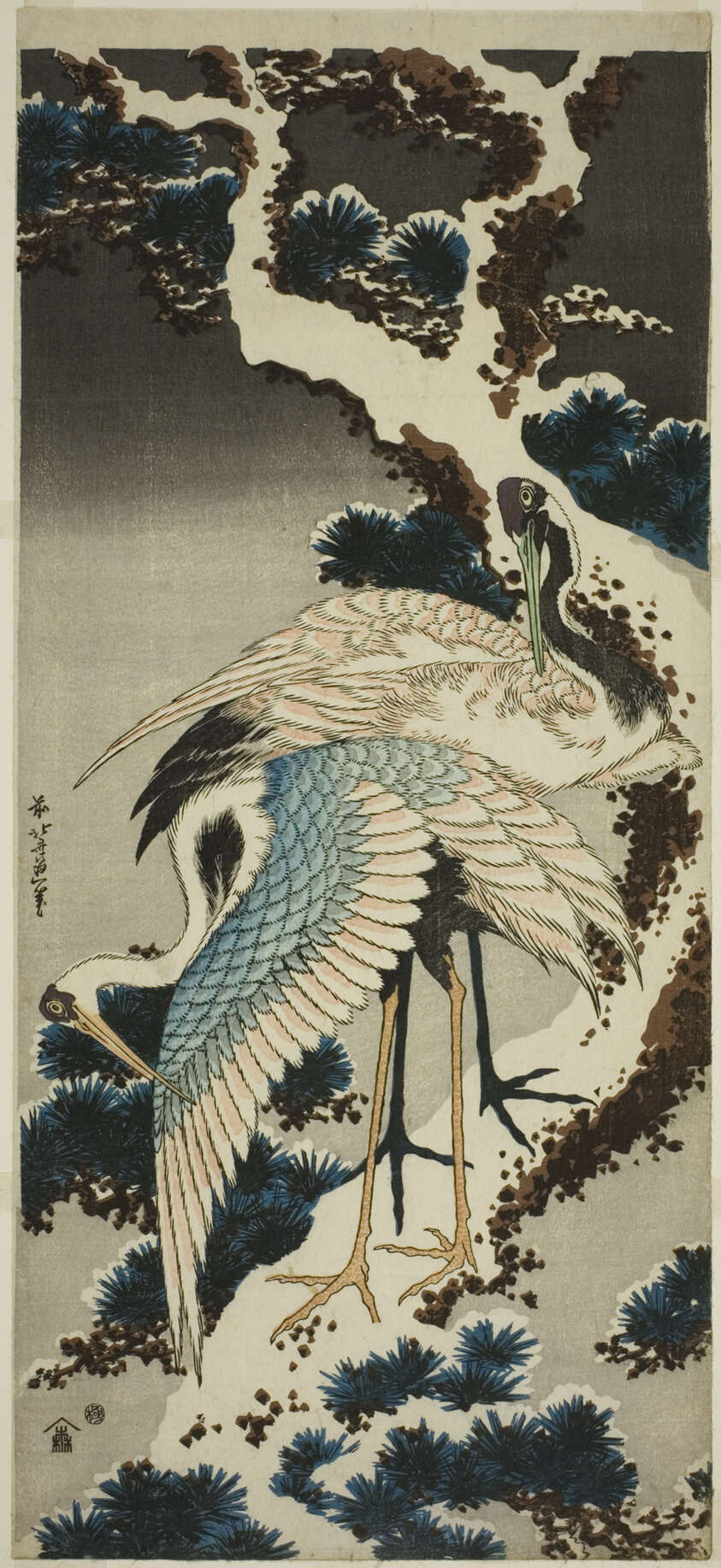 Ukiyo-e woodblock print -- Art Institute of Chicago, Museum Open Access.
The kacho-e tradition directly influenced European art when Japanese prints reached Paris in the 1860s. Van Gogh copied Japanese flower prints. Monet filled his garden at Giverny with the same species depicted in kacho-e. Art Nouveau adopted the decorative botanical linework wholesale. The aesthetic lineage is unbroken from Edo-period Kyoto to the neural networks that now analyze these prints' gram matrices.
For style transfer, this history matters. The neural network has access to a deep statistical pool of kacho-e reference material -- hundreds of flower prints with consistent visual characteristics. This statistical depth is one reason the flowers + ukiyo-e combination scores so extraordinarily well.
Why Flowers + Ukiyo-e Produces Exceptional Results
An ArtFID of 109.11 demands explanation. Why does this specific combination outperform nearly every other pairing in our benchmark?
1. Genre Alignment. Kacho-e was one of ukiyo-e's primary genres. The style literally evolved to depict flowers. When the algorithm extracts the gram matrix from ukiyo-e references, the statistical patterns it captures are heavily influenced by centuries of botanical subject matter. Applying those patterns back to flower photographs is not a style transfer across domains -- it is a style transfer within the same genre. The neural network is essentially doing what it was trained on.
2. Natural Contour Compatibility. Flowers have inherently strong, clean edges -- petal contours, stem lines, leaf margins. Ukiyo-e's emphasis on bold outlines maps directly onto these natural boundaries without having to invent edges where none exist. Compare this to applying ukiyo-e to a cloudy sky or a foggy landscape, where the algorithm must impose contours onto formless subjects.
3. Color Palette Harmony. The natural pigments used in woodblock printing -- derived from plants, minerals, and insects -- produce a color range that naturally harmonizes with floral subjects. Reds from beni, purples from murasaki, greens from botanical sources. The neural network's color transformation does not need to fight the source material; the flower photograph's colors already live in the same family as ukiyo-e's traditional palette.
4. Compositional Compatibility. Flower photographs and kacho-e prints share compositional conventions: asymmetrical arrangements, isolated subjects against clean backgrounds, close-up framing that fills the picture plane. The algorithm does not need to restructure the composition -- it can focus entirely on surface transformation.
The FID score of 74.58 is particularly remarkable. This indicates that the stylized results are statistically very close to authentic ukiyo-e prints -- closer than almost any other style-content combination we have tested. The algorithm is not merely applying a "Japanese-looking filter"; it is producing results that bear genuine statistical resemblance to real woodblock prints.
ArtFID Quality Score: Flowers + Ukiyo-e
ArtFID (Art Frechet Inception Distance) measures style transfer quality by balancing content preservation (LPIPS) and style authenticity (FID). Formula: ArtFID = (1 + LPIPS) x (1 + FID). Lower scores = better quality.
Flowers + Ukiyo-e Result
| Metric | Score | Interpretation |
|---|---|---|
| ArtFID | 109.11 | Outstanding quality (5/5 stars) -- among the best in entire library |
| LPIPS | 0.4437 | Moderate content transformation -- flowers clearly recognizable |
| FID | 74.58 | Exceptional style fidelity -- statistically very close to real ukiyo-e |
| Stars | 5/5 | Highest recommendation |
Comparison: Ukiyo-e vs. Hokusai on Flowers
Hokusai -- perhaps the most famous ukiyo-e artist internationally -- is also an exceptional choice for flower photography:
| Style / Artist | ArtFID | LPIPS | FID | Stars |
|---|---|---|---|---|
| Hokusai | 99.91 | -- | -- | 5 |
| Ukiyo-e (Style) | 109.11 | 0.4437 | 74.58 | 5 |
Both achieve outstanding 5-star results. Hokusai (99.91) edges out the generic Ukiyo-e style (109.11) by a small margin. Hokusai's specific style -- characterized by dynamic linework, bolder compositional energy, and the distinctive visual rhythm of his botanical series -- adds an artist-specific character that the generic ukiyo-e style smooths out in favor of broader aesthetic consistency.
Both are exceptional choices. If you want a result that feels specifically like a Hokusai print, choose Hokusai. If you want a result that captures the broader kacho-e tradition -- potentially drawing on Hiroshige, Koson, and other masters -- choose Ukiyo-e.
Where Flowers + Ukiyo-e Ranks Globally
To appreciate how exceptional this score is, here is context against other top-performing combinations:
| Rank | Combination | ArtFID | Stars |
|---|---|---|---|
| Top tier | Flowers + Hokusai | 99.91 | 5 |
| Top tier | Flowers + Ukiyo-e | 109.11 | 5 |
| Strong | Still Life + Cubism | 177.11 | 5 |
| Strong | Fantasy + Braque | 174.81 | 5 |
| Typical 5-star | Portraits + Baroque | 152.91 | 5 |
Flowers + Ukiyo-e is not just a good combination -- it is one of the best-performing pairings in the entire ArtRobot style transfer library. The FID of 74.58 is the key: the stylized results are statistically closer to authentic art than almost any other combination achieves.
Before & After: Flowers in Ukiyo-e Style
| Original Photo | Style Reference | AI Result |
|---|---|---|
 |
|
|
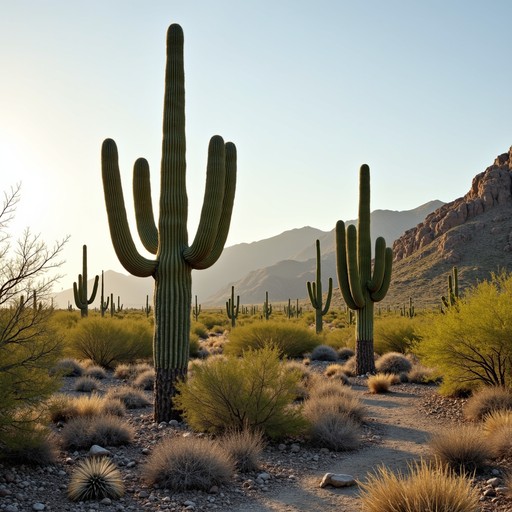
| Source photo | Cranes on Snow-Covered Pine | ArtFID: 109.11 -- 5 stars |
LPIPS: 0.4437 (content preservation) | FID: 74.58 (style fidelity)
The transformation is striking. Photographic tonal gradients compress into flat color planes characteristic of woodblock printing. Petal edges gain the clean, decisive contour lines that woodblock carvers would have cut into cherry or catalpa wood. The color palette shifts toward the natural pigment tones of Edo-period printing -- muted yet rich, warm yet restrained.
Notice the background transformation. The shallow depth-of-field blur of the photograph is replaced with the flat, unmodulated space of ukiyo-e -- no atmospheric perspective, no bokeh, just a composed field of color that frames the botanical subject in the tradition of kacho-e.
The FID of 74.58 means this result is not merely "inspired by" ukiyo-e -- it is statistically closer to real woodblock prints than almost any other AI style transfer output we have measured.
Photography Tips for Best Ukiyo-e Flower Results
The flowers + ukiyo-e combination already scores exceptionally well, but these tips will maximize your results:
1. Isolate Individual Blooms. Kacho-e prints typically feature one to three flowers in a composed arrangement, not dense garden beds. Close-up shots of individual blooms or small clusters produce the most authentically ukiyo-e results.
2. Use Clean Backgrounds. Plain backgrounds -- a clear sky, a neutral wall, a softly blurred garden -- give the algorithm a clean field to transform into ukiyo-e's characteristic flat background space. Busy, cluttered backgrounds produce noisy results.
3. Shoot in Soft, Even Light. Harsh directional shadows create complex tonal patterns that resist ukiyo-e's flat-color simplification. Overcast skies or north-facing window light produce the smoothest transformations.
4. Include Stems and Leaves. Kacho-e compositions typically show the whole plant -- blossom, stem, and leaves -- not just a tight crop of the flower head. A slightly wider framing gives the algorithm more compositional material to work with and produces results closer to authentic kacho-e arrangements.
5. Embrace Asymmetry. Japanese compositional aesthetics favor asymmetrical balance. A flower positioned off-center, a stem that sweeps diagonally, a leaf that extends beyond the frame edge -- these create compositions that naturally align with kacho-e conventions.
How to Apply Ukiyo-e to Flower Photos (3 Steps)
Step 1: Upload Your Flower Photo
Go to ArtRobot and upload any flower photograph -- garden roses, wildflowers, orchids, cherry blossoms, sunflowers. No account required. Supported formats: JPG, PNG, WebP. Resolution: 1024px+ recommended.
Step 2: Select Ukiyo-e Style
Browse the style library and choose Ukiyo-e for the traditional kacho-e aesthetic. Also consider Hokusai for an artist-specific result (ArtFID 99.91 -- even better). Each style shows its quality rating for comparison.
Step 3: Download Your Japanese Print
Your flowers ukiyo-e photo effect generates in seconds. Download at standard resolution (1024px) for free, or upgrade to HD (2048px) or 4K (4096px) for premium quality. The 4K option is ideal for framed prints -- a ukiyo-e flower print makes a beautiful piece of wall art.
3 free transfers, no signup required. Premium unlocks HD/4K, batch processing, and the full 121+ style library.
Try Flowers Ukiyo-e Style Transfer Free on ArtRobot ->
FAQ
Why does the flowers + ukiyo-e combination score so well?
Three reasons: (1) Kacho-e (flower-and-bird pictures) was one of ukiyo-e's primary genres, so the neural network's gram matrix statistics are deeply aligned with botanical subjects. (2) Flowers have inherently clean, strong edges that map naturally onto ukiyo-e's bold contour style. (3) The natural pigment palette of woodblock printing harmonizes with floral color ranges. The result is a style transfer within the same genre, rather than across domains -- which is why the FID of 74.58 indicates near-authentic resemblance to real woodblock prints.
What ArtFID score does Ukiyo-e get on flowers?
Ukiyo-e scores 109.11 ArtFID on flowers (5/5 stars), with LPIPS of 0.4437 and FID of 74.58. This is one of the lowest (best) ArtFID scores in our entire benchmark database. Hokusai scores even better at 99.91 on flowers.
Should I use Ukiyo-e or Hokusai for flower photos?
Both are excellent. Hokusai (99.91) scores slightly better than generic Ukiyo-e (109.11) on flowers. Hokusai adds his distinctive dynamic linework and compositional energy. The generic Ukiyo-e style captures the broader kacho-e tradition. Try both -- with 3 free transfers, you can compare results and choose your favorite.
What flowers work best with ukiyo-e style transfer?
Flowers with strong, defined petal shapes work best: roses, cherry blossoms, chrysanthemums, irises, morning glories, and plum blossoms. These are also the flowers most commonly depicted in traditional kacho-e prints, so the genre alignment is strongest. Dense, tiny-flowered plants like baby's breath or lavender produce less defined results because their small individual blooms lack the clear contours ukiyo-e requires.
Can I use the ukiyo-e flower results for prints or products?
Yes. ArtRobot results can be downloaded at up to 4K (4096px) resolution for premium users -- more than sufficient for large framed prints, canvas art, or product applications. All ukiyo-e style references are sourced from the Art Institute of Chicago under CC0 / Museum Open Access license. Personal use is free; commercial use is available with premium plans.
Ready to Create Your Own Ukiyo-e Flower Print?
Flowers and ukiyo-e are one of the best-performing combinations in our entire style transfer library -- a natural masterpiece pairing that draws on centuries of kacho-e tradition. With an ArtFID of 109.11 and near-authentic style fidelity (FID: 74.58), the results speak for themselves.
Start Your Free Flowers Ukiyo-e Style Transfer on ArtRobot ->
Related Styles
- Ukiyo-e Style Transfer -- Complete guide to Ukiyo-e across all content types with full ArtFID rankings.
- Hokusai Style Transfer -- The master behind "The Great Wave." Best overall flower score at 99.91.
- Impressionism Style Transfer -- The Western movement most influenced by ukiyo-e. Monet's water lilies owe a direct debt to kacho-e.
- Portraits Ukiyo-e Photo Effect -- Ukiyo-e applied to portrait photography (ArtFID: 301.74).
- Flowers Style Transfer Guide -- Every art style tested on flowers, ranked by ArtFID.
Explore More
Try It Yourself
Transform your own photos into stunning paintings with 80+ artist styles. Free to start.