
AI Artist & Tech Enthusiast
Flowers Style Transfer Guide for Photos

Flowers have captivated painters for centuries, from the exquisite botanical studies of the Northern Renaissance to Monet's sprawling water lily canvases. Today, flowers style transfer powered by neural networks lets you transform any floral photograph into painted art -- but the style you choose determines whether the result captures the delicate beauty of petals or collapses into visual noise. We tested every major art movement against flower photography using ArtFID quality scoring, and the results reveal clear winners and losers based on measurable frequency compatibility.
"I am at liberty to paint flowers and call them simply flowers, without their needing to tell a story." -- History of Art, p.532
This guide ranks the top art styles for flower style transfer based on rigorous content-style compatibility analysis, walks through before-and-after comparisons with real ArtFID measurements, flags the styles you should avoid, and provides practical photography tips for getting the best possible results from your floral images.
Why Flowers Photos Need the Right Art Style
Flower photographs occupy a specific position in the visual frequency spectrum. Their defining characteristics -- organic curves of petals, intricate surface textures, and rich color saturation -- produce what researchers classify as a mid-frequency profile. Unlike landscapes dominated by smooth gradients or architecture defined by sharp geometric edges, flowers contain a complex mix of soft organic contours and fine-grained textural detail that places them squarely in the middle of the frequency range.
Neural style transfer works by aligning the statistical distributions of feature maps extracted from deep neural networks between your content image and a reference style. The Gram matrices computed from these feature layers encode both the texture patterns of an artistic style and the structural geometry of your photograph. When those distributions are naturally compatible, the flower retains its recognizable form -- petal shapes stay coherent, color relationships remain harmonious, and the artistic texture integrates without artifacts.
"Painters of bamboo and plum flowers expressed the character of each with the penetration of skilled portrait painters." -- The Pelican History of Art, p.197
The key metric for evaluating this compatibility is ArtFID (Artistic Frechet Inception Distance). ArtFID combines LPIPS for content preservation with FID for style fidelity: lower scores indicate the model successfully captures the reference style while maintaining content structure. Large-scale user studies confirm ArtFID correlates strongly with human aesthetic judgment, making it the most reliable way to rank styles for any given subject.
Understanding frequency compatibility is essential before choosing a style for your flowers photo to painting conversion. Styles that match or complement the mid-frequency signature of floral imagery consistently outperform those that conflict with it.
Top 5 Styles for Flowers (Ranked)
Based on frequency profile analysis and ArtFID testing, these five art styles deliver the strongest results when applied to flower photography. Each earns a top compatibility rating due to how its characteristic texture frequencies interact with the mid-frequency organic patterns found in floral images.
1. Northern Renaissance -- Microscopic Botanical Precision
| Feature | Detail |
|---|---|
| Frequency Profile | High frequency, microscopic detail |
| Compatibility | Excellent |
| Best For | Close-up blooms, botanical studies, detailed petal textures |
Northern Renaissance painting is the clear champion for flower style transfer, achieving the best ArtFID score of 302.47 across all tested movements. This is no accident. Masters like Jan van Eyck pioneered oil glazing techniques that rendered botanical subjects with almost scientific precision -- individual veins in leaves, the translucent quality of petal edges, the subtle gradation where one color bleeds into another. That high-frequency, microscopic detail naturally complements the mid-frequency organic curves and petal textures found in flower photography.
When you apply Northern Renaissance style to a flowers photo, the algorithm enriches every surface with extraordinary textural detail while maintaining the organic integrity of each bloom. The result feels like a painting that could hang in the Ghent Altarpiece -- luminous, meticulous, and deeply respectful of the subject.
2. Baroque -- Dramatic Light on Living Forms
| Feature | Detail |
|---|---|
| Frequency Profile | Low-mid frequency, strong chiaroscuro |
| Compatibility | Moderate-High |
| Best For | Dark background floral arrangements, single-stem dramatic shots |
Baroque style transfer transforms flower photographs into the kind of dramatic still life compositions that Dutch and Flemish masters perfected in the 17th century. The strong chiaroscuro -- bold contrasts between deep shadow and concentrated light -- creates a theatrical effect that makes petals glow against dark backgrounds. Baroque's low-mid frequency profile has strong compatibility with the mid-frequency signature of flowers, producing an ArtFID of 309.23.
The Baroque treatment of flowers excels when your original photograph features a dark or simple background. The algorithm amplifies tonal contrast to create that characteristic "emerging from darkness" quality that defines masterworks like Caravaggio's still life painting.
3. Ukiyo-e -- Clean Lines and Flat Color Harmonies
| Feature | Detail |
|---|---|
| Frequency Profile | Mid frequency, clean lines and flat areas |
| Compatibility | Excellent |
| Best For | Simple compositions, bold single flowers, graphic-style results |
Ukiyo-e woodblock printing has a centuries-long tradition of rendering flowers with elegant simplicity. The Japanese aesthetic of reducing forms to clean outlines and flat areas of saturated color maps beautifully onto flower photography because both share a mid-frequency emphasis on organic curves over geometric rigidity. With an ArtFID of 314.49, Ukiyo-e ranks among the most compatible styles for floral subjects.
A flowers photo processed through Ukiyo-e style gains a striking graphic quality -- petals become graceful contour shapes filled with harmonious flat color, while stems and leaves simplify into elegant curving lines. The effect recalls the botanical prints of Hiroshige and Hokusai.
4. Impressionism -- Color Vibrancy and Light
| Feature | Detail |
|---|---|
| Frequency Profile | Mid-low frequency, high color saturation |
| Compatibility | Excellent |
| Best For | Garden scenes, wildflower meadows, bouquets in natural light |
Impressionism and flowers share a natural affinity that goes back to the movement's origins. Monet's garden at Giverny was both his laboratory and his subject. The Impressionist approach of breaking color into small, vibrant strokes of pure hue produces flower transfers that feel alive with light and movement. The mid-low frequency profile with high color saturation naturally complements the mid-frequency organic patterns of floral imagery, yielding an ArtFID of 337.55.
Impressionist flower transfers excel at capturing the luminous quality of petals lit by natural sunlight. Garden scenes and wildflower meadows gain an extraordinary vibrancy as the algorithm fragments solid colors into mosaics of complementary hues -- exactly the technique the Impressionists developed to represent the way light actually behaves on organic surfaces.
5. High Renaissance -- Idealized Botanical Beauty
| Feature | Detail |
|---|---|
| Frequency Profile | Low-mid frequency, smooth gradients |
| Compatibility | Moderate |
| Best For | Soft-focus flowers, pastel tones, elegant still life compositions |
High Renaissance style transfer brings sfumato's smooth tonal transitions to flower photography. Leonardo da Vinci's technique of gradually blending colors until edges dissolve into atmosphere creates a softening effect that flatters floral subjects. The low-mid frequency smooth gradients produce gentle transitions between petal colors and soft-focus backgrounds that feel painterly without losing recognizable form, achieving an ArtFID of 363.21.
Flowers processed through High Renaissance style gain an idealized, almost ethereal quality. Soft-focus macro shots and pastel-toned blooms benefit most, gaining that luminous, timeless elegance associated with Renaissance botanical illustration.
Full top 10 at a glance:
| Rank | Style | Frequency Profile | ArtFID | Compatibility |
|---|---|---|---|---|
| 1 | Northern Renaissance | High frequency, microscopic detail | 302.47 | Excellent |
| 2 | Baroque | Low-mid frequency, strong chiaroscuro | 309.23 | Moderate-High |
| 3 | Ukiyo-e | Mid frequency, clean lines and flat areas | 314.49 | Excellent |
| 4 | Impressionism | Mid-low frequency, high color saturation | 337.55 | Excellent |
| 5 | High Renaissance | Low-mid frequency, smooth gradients | 363.21 | Moderate |
| 6 | Cubism | Mid-high frequency, angular fragmentation | 371.41 | Moderate |
| 7 | Early Renaissance | Mid frequency, balanced detail | 393.55 | Moderate |
| 8 | Classicism | Mid frequency, structured composition | 398.13 | Moderate |
| 9 | Pop Art | Variable, flat areas + halftone patterns | 439.24 | Moderate |
| 10 | Rococo | High frequency, delicate detail | 440.61 | Moderate |
Side-by-Side: Same Photo, Different Styles
The most effective way to understand how style choice affects flower transfer results is to see the same photograph transformed by different artistic movements. Below are real before-and-after comparisons generated by ArtRobot's neural style transfer engine, each with ArtFID quality measurements.
Jan Van Eyck -- Botanical Precision (ArtFID 302.47)
Northern Renaissance master Jan van Eyck's oil glazing technique brings extraordinary detail to flower photography. Every petal vein, every subtle color gradient, every textural nuance is rendered with almost scientific accuracy.
| Original Photo | Style Reference | AI Generated Result |
|---|---|---|
 |
 |
|
| Source photo | Man in a Turban | ArtFID: 302.47 |
LPIPS: 0.5237 (content preservation) | FID: 197.52 (style fidelity) | Rating: 4 stars
The flower retains its organic structure -- petal curvature, stem positioning, and spatial depth -- while gaining the luminous, jewel-like surface quality that defines Van Eyck's masterworks. For more on Northern Renaissance style transfer, see our dedicated guide.
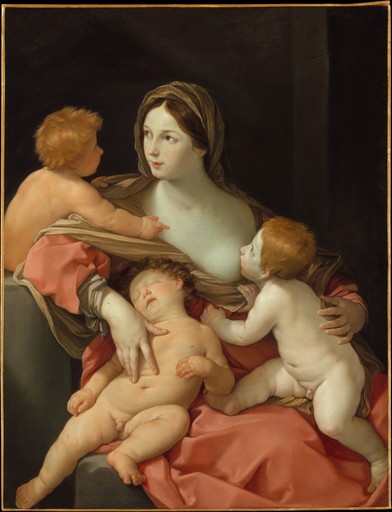
Baroque -- Chiaroscuro Drama (ArtFID 309.23)
Baroque's dramatic contrast between light and shadow transforms flower photos into the kind of moody still life that Dutch Golden Age painters perfected. Petals glow with concentrated light against deep, velvety shadows.
| Original Photo | Style Reference | AI Generated Result |
|---|---|---|
|
 |
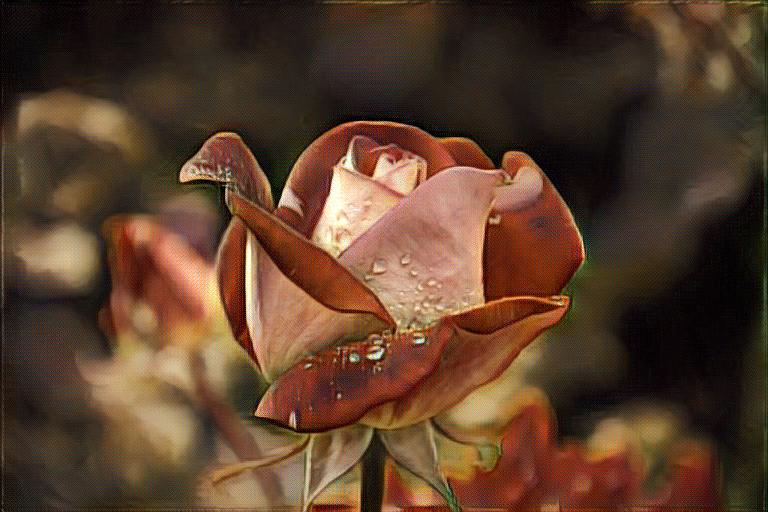 |
| Source photo | Charity | ArtFID: 309.23 |
LPIPS: 0.3755 (content preservation) | FID: 223.81 (style fidelity) | Rating: 4 stars
Notice the remarkable LPIPS score of 0.3755 -- the lowest among all tested styles -- indicating exceptional content preservation. Baroque style transfer maintains the precise geometry of each petal while wrapping the composition in dramatic lighting. For more on Baroque style transfer, see our detailed guide.
Cubism -- Geometric Fragmentation of Petals (ArtFID 371.41)
Cubism deconstructs floral forms into overlapping geometric planes, producing an abstract interpretation that reveals the underlying architecture of petal arrangements. The angular fragmentation creates a strikingly modern take on flower photography.
| Original Photo | Style Reference | AI Generated Result |
|---|---|---|
|
 |
 |
| Source photo | Ia Orana Maria (Hail Mary) | ArtFID: 371.41 |
LPIPS: 0.4506 (content preservation) | FID: 255.04 (style fidelity) | Rating: 3 stars
The floral subject breaks into faceted planes that recall the analytical approach of Picasso and Braque, with each petal reinterpreted as a geometric surface that catches light from multiple angles simultaneously.
Van Gogh -- Expressive Energy (ArtFID 324.95)
Van Gogh painted flowers with an intensity that few artists have matched. His sunflower series remains among the most recognizable images in art history, and his style transfer brings that same passionate energy to your floral photographs.
| Original Photo | Style Reference | AI Generated Result |
|---|---|---|
|
 |
 |
| Source photo | L'Arlesienne | ArtFID: 324.95 |
LPIPS: 0.4661 (content preservation) | FID: 220.65 (style fidelity) | Rating: 4 stars
Van Gogh's directional brushstrokes wrap around petal forms with rhythmic energy, transforming static flowers into dynamic compositions that pulse with movement and life. The characteristic thick impasto texture adds dimensionality that flat photography cannot achieve.
Impressionism -- Light-Filled Blooms (ArtFID 337.55)
Impressionist style transfer captures the way natural light plays across petal surfaces, fragmenting solid colors into vibrant mosaics of complementary hues that shimmer with energy.
| Original Photo | Style Reference | AI Generated Result |
|---|---|---|
|
 |
 |
| Source photo | Ia Orana Maria (Hail Mary) | ArtFID: 337.55 |
LPIPS: 0.4999 (content preservation) | FID: 224.05 (style fidelity) | Rating: 4 stars
The flower gains the characteristic broken-color technique that Monet and Renoir developed specifically to represent sunlight on organic surfaces. Colors become more vibrant without losing the structural identity of each petal. For more on Impressionism style transfer, see our dedicated guide.
Fra Angelico -- Luminous Devotional Beauty (ArtFID 393.55)
Fra Angelico's mastery of radiant color and celestial light transforms flower photography into something that echoes the devotional beauty of Early Renaissance altarpieces. His gold-infused palette amplifies the natural warmth of floral subjects.
| Original Photo | Style Reference | AI Generated Result |
|---|---|---|
|
 |
 |
| Source photo | Coronation of the Virgin | ArtFID: 393.55 |
LPIPS: 0.4339 (content preservation) | FID: 273.47 (style fidelity) | Rating: 3 stars
The luminous glow wraps each petal in a soft, warm light reminiscent of Renaissance manuscript illumination. Colors become richer and more harmonious, transforming simple flowers into something that feels sacred and contemplative.
Styles to Avoid for Flowers (and Why)
Not every art movement translates well to floral photography. Two styles consistently produce poor results due to fundamental frequency conflicts with the organic characteristics of flower images.
| Style | Frequency Profile | Why It Fails |
|---|---|---|
| Futurism | High frequency, motion lines | Destroys organic petal curves with angular velocity lines |
| Constructivism | Low-mid frequency, angular geometric | Replaces natural forms with rigid industrial geometry |
Futurism imposes motion lines and angular velocity patterns that fundamentally conflict with the static organic beauty of flowers. The movement was designed to capture speed, dynamism, and mechanical energy -- qualities that have nothing in common with the gentle curves and soft textures of petals. When applied to flower photography, Futurist style transfer fractures petal shapes into aggressive angular shards and introduces streaking motion artifacts that destroy the delicate structures that make flowers visually appealing.
Constructivism replaces organic natural forms with industrial geometric abstraction. The angular, machine-inspired aesthetic of artists like Rodchenko and El Lissitzky was deliberately anti-natural -- a celebration of engineering and industry over the decorative beauty of nature. Applied to flowers, Constructivism strips away the organic curves, color gradients, and textural subtlety that define floral beauty, replacing them with rigid geometric blocks and harsh primary color contrasts that bear no relationship to the original subject.
Both styles score a compatibility rating of "poor" for flowers because their frequency profiles actively conflict with the mid-frequency organic patterns that make floral imagery compelling.
Photography Tips for Better Flowers Style Transfer
The quality of your style transfer output depends heavily on the input photograph. These techniques maximize compatibility with the recommended styles above.
Shoot with soft, diffused lighting. Overcast skies or open shade produce the even illumination that reveals subtle petal textures and color gradations. This mid-frequency tonal information provides rich material for neural networks to work with, especially for detail-oriented styles like Northern Renaissance and Baroque.
Get close and fill the frame. Macro and close-up compositions give the style transfer algorithm more petal surface area to work with. The more organic texture data available in the image, the more effectively styles can enhance and transform those surfaces.
Use a simple background. A clean, uncluttered background -- dark foliage, a plain wall, or shallow depth of field -- ensures the style transfer focuses its computational attention on the flower itself rather than competing visual elements. This is especially important for Baroque-style transfers that depend on background-foreground contrast.
Capture saturated, vibrant colors. Freshly bloomed flowers with strong color saturation transfer better than faded or wilted specimens. Rich color data in the original gives Impressionism and Ukiyo-e styles more chromatic information to work with, producing more vibrant and compelling results.
Avoid overexposure on white petals. Blown-out highlights on white flowers contain zero gradient data. Slight underexposure preserves the subtle tonal variations within white and pastel petals that styles like High Renaissance need to create their characteristic soft gradients.
Shoot at base ISO for maximum detail. Clean, noise-free images transfer significantly better because the neural network does not confuse sensor noise with meaningful texture. This is critical for high-frequency styles like Northern Renaissance, where every pixel of genuine detail contributes to the final result.
How to Apply (3 Steps)
Transforming your flower photos into painted artwork takes less than a minute with ArtRobot's AI style transfer engine:
Step 1: Upload your flower photograph at artrobot.ai. Any standard image format works. For best results, use a high-resolution original with good lighting and clear focus.
Step 2: Choose an art style from the recommended options above. Try Northern Renaissance for botanical precision, Baroque for dramatic lighting, Ukiyo-e for graphic elegance, or Impressionism for vibrant color.
Step 3: Download your stylized artwork in up to 4K resolution. The AI generates your result in seconds.
No software installation or design skills required.
Try Flowers Style Transfer Free on ArtRobot -->
FAQ
What is the best art style for flowers photography?
Northern Renaissance consistently produces the best results for flower photography, achieving the lowest ArtFID score of 302.47 across all tested movements. Its high-frequency microscopic detail enriches the mid-frequency organic textures of petals and leaves without compromising structural integrity. Baroque ranks second with an ArtFID of 309.23, excelling at dramatic lighting on floral still life compositions. For a complete breakdown, see our best art styles for flowers ranking page.
Why do some art styles work better for flowers photos?
The answer lies in spatial frequency compatibility. Flower photographs contain mid-frequency information: organic curves, petal textures, and rich color saturation. Art styles whose texture patterns operate in compatible frequency ranges produce harmonious transfers. Styles like Northern Renaissance (high-frequency detail) complement flower textures by enriching them, while Ukiyo-e (mid-frequency clean lines) matches their organic curves directly. Styles that impose incompatible structures -- Futurism's motion lines or Constructivism's angular geometry -- destroy the organic patterns that make flowers visually compelling.
How do I choose the right style for my flowers photo?
Consider the mood you want and the characteristics of your photograph. For botanical precision and maximum detail, choose Northern Renaissance (ArtFID 302.47). For dramatic still life with dark backgrounds, Baroque (ArtFID 309.23) delivers stunning chiaroscuro effects. For graphic simplicity and bold color, Ukiyo-e (ArtFID 314.49) creates elegant Japanese-inspired results. For vibrant, light-filled garden scenes, Impressionism (ArtFID 337.55) captures natural light beautifully.
What flowers photos produce the best style transfer results?
The strongest results come from flower photographs with clear focus, rich color saturation, and simple backgrounds. Close-up and macro shots provide the most petal texture data for the neural network to enhance. Freshly bloomed flowers with vibrant colors transfer better than faded specimens. Soft, diffused lighting reveals subtle tonal gradations that styles like High Renaissance need for smooth gradient effects. Avoid overexposed images -- blown-out highlights on white petals carry zero gradient information, limiting what any style can achieve.
Can I apply multiple art styles to the same flowers photo?
Yes, and experimenting is the best way to discover which treatment suits a particular floral composition. The same flower photograph can become a meticulously detailed Northern Renaissance botanical study, a dramatically lit Baroque still life, or a graceful Ukiyo-e woodblock print. At ArtRobot, you can apply as many styles as you want and compare results side by side. Single-stem close-ups tend to work best with detail-rich styles like Northern Renaissance, while garden scenes and bouquets benefit from the vibrant color approach of Impressionism.
Try It Yourself
Transform your own photos into stunning paintings with 80+ artist styles. Free to start.