
AI Artist & Tech Enthusiast
Expressionism Photo Effect — AI Style Transfer Guide (2026)
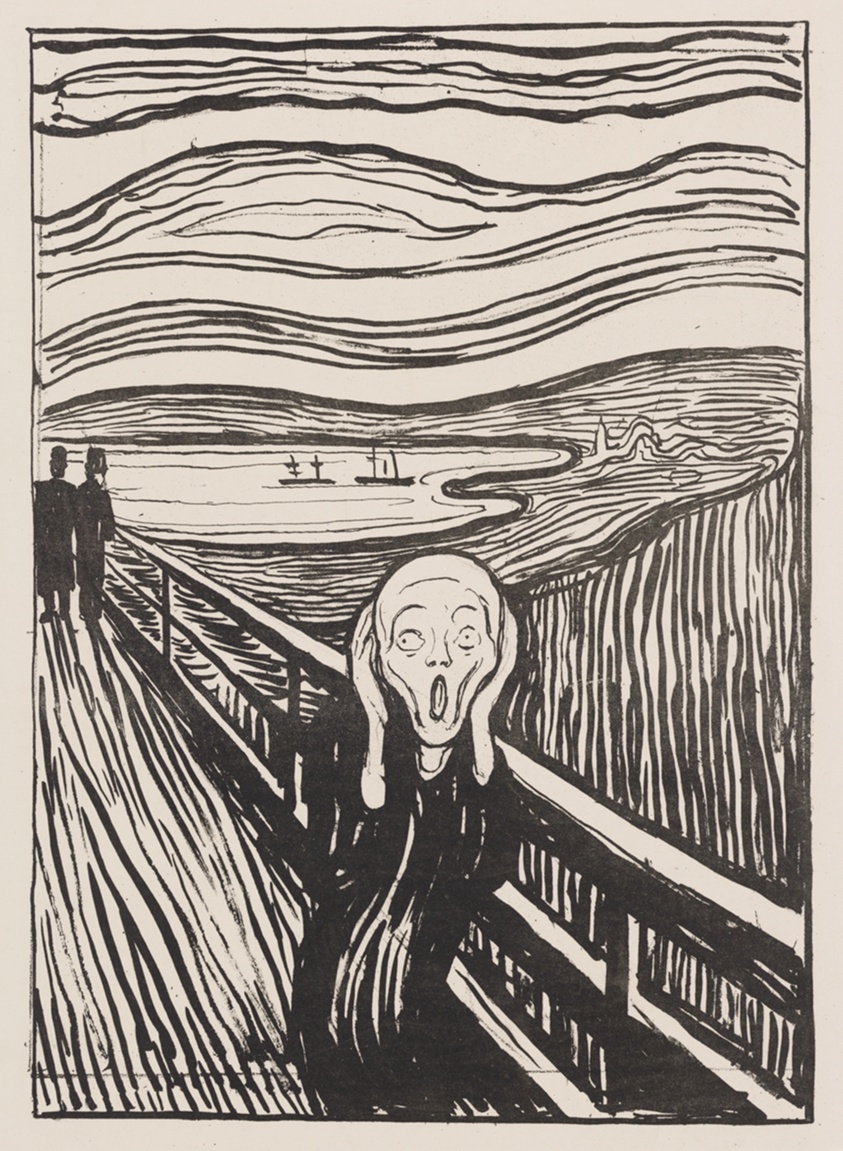
Expressionism is not about what you see -- it is about what you feel. Born in early 20th-century Germany, this movement rejected photographic realism in favor of distorted forms, intense color, and raw emotional power. Artists like Edvard Munch, Ernst Ludwig Kirchner, and Egon Schiele painted the world not as it appeared, but as it burned inside them. With AI-powered neural style transfer, you can now channel that same visceral energy into your own photographs -- turning ordinary images into emotionally charged Expressionist art in seconds.
Edvard Munch, "The Scream" -- Art Institute of Chicago, CC0 Public Domain
We tested ArtRobot's Expressionism style transfer across 15 different photo categories, each scored by our ArtFID quality benchmark. This guide covers the movement's history, its defining visual traits, which photos produce the best results, and how to create your own Expressionist art for free.
Quick Links -- Jump to: What Is Expressionism? | Characteristics | ArtFID Scores | Key Artists | How to Apply | Before & After | FAQ
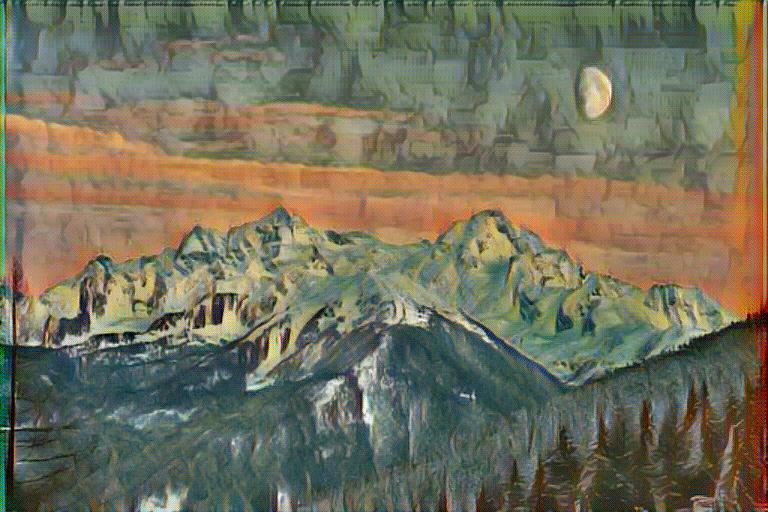
Landscapes — Van Gogh Style Transfer

Portraits — Van Gogh Style Transfer


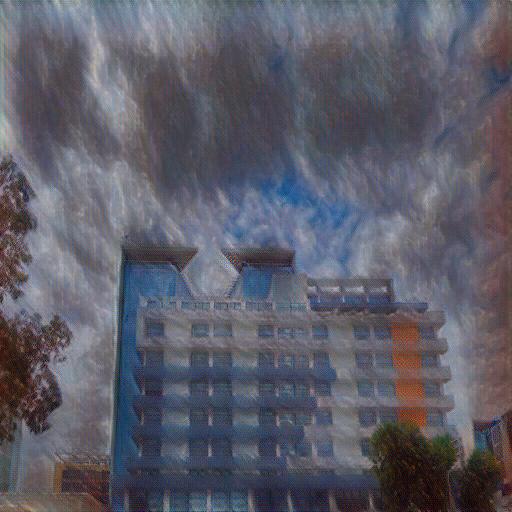
Architecture — Van Gogh Style Transfer

Food — Van Gogh Style Transfer


Street Scenes — Van Gogh Style Transfer

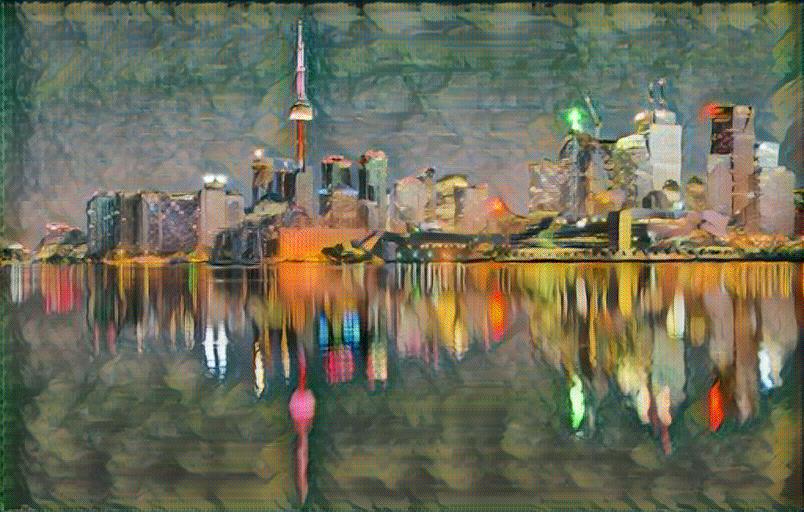
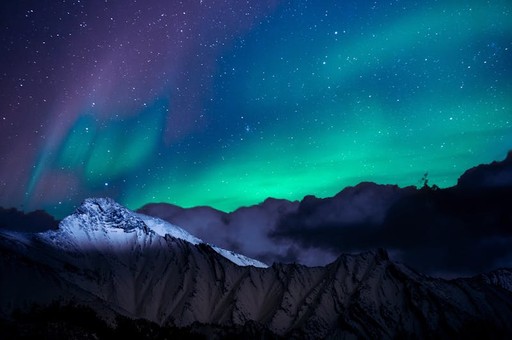
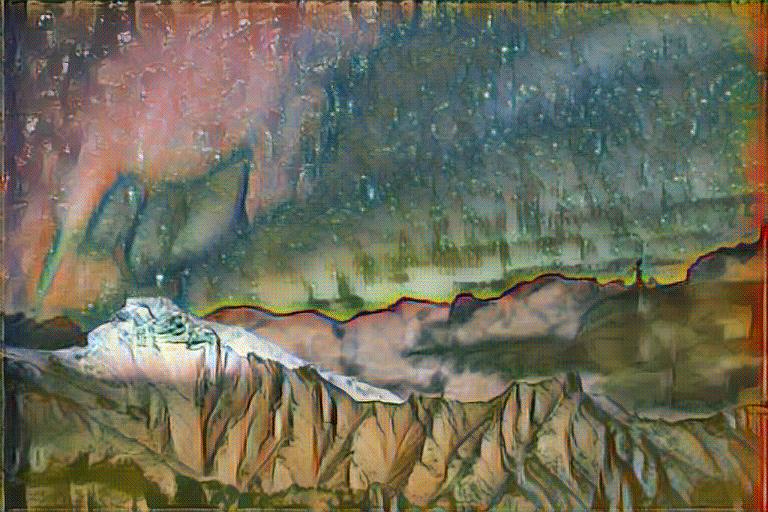
Night Scenes — Van Gogh Style Transfer
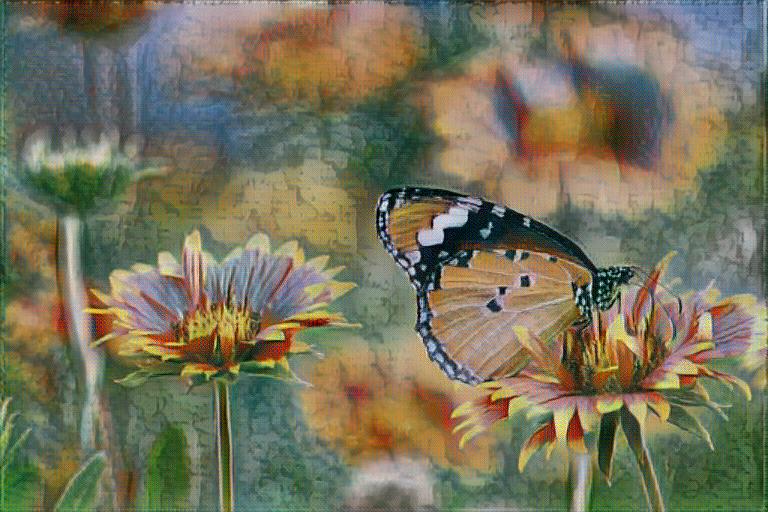
Flowers — Van Gogh Style Transfer

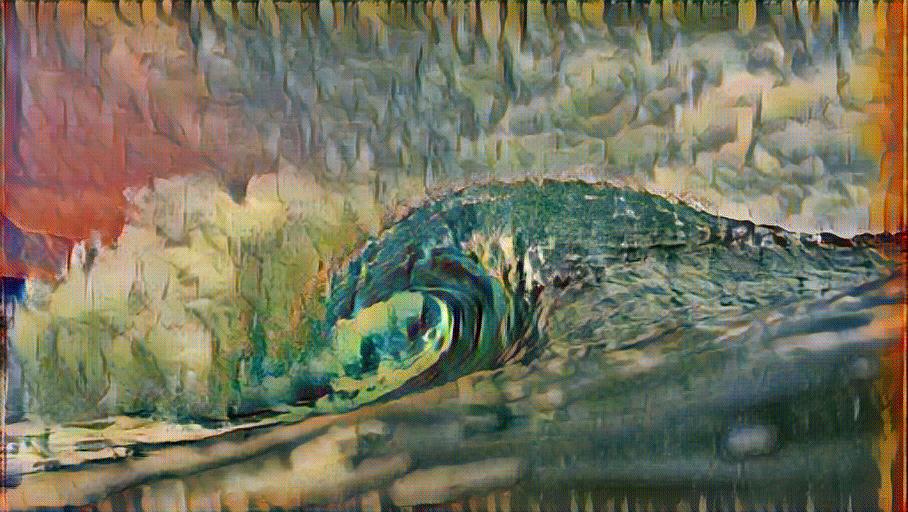
Seascapes — Van Gogh Style Transfer

What Is Expressionism?
Expressionism emerged in Germany between 1905 and the 1930s as a radical rejection of Impressionism's devotion to optical reality. Where the Impressionists recorded what the eye perceived -- fleeting light, subtle color shifts -- the Expressionists painted what the soul experienced: anxiety, alienation, ecstasy, and existential dread.
The movement coalesced around two groups: Die Brucke (The Bridge), founded in Dresden in 1905 by Kirchner, Heckel, and Schmidt-Rottluff; and Der Blaue Reiter (The Blue Rider), formed in Munich in 1911 by Kandinsky and Franz Marc. Though their methods differed, both groups shared a commitment to emotional truth over visual accuracy.
"The term 'Expressionist' was first used in 1911 by Wilhelm Worringer in connection with van Gogh and Matisse. Soon it was being quite widely applied to artists and even to architects, though Expressionist architecture is not easy to define." -- History of Art, p. 575
The movement's influence extended far beyond painting into cinema, theater, and literature. But it was in painting that Expressionism found its purest voice -- and it is those visual qualities that make this style so compelling for AI style transfer.
"It became almost a point of honour with them to avoid anything which smelt of prettiness and polish, and to shock the 'bourgeois' out of his real or imagined complacency." -- The Story of Art, p. 437
This deliberate embrace of visual intensity is precisely what makes Expressionism translate so effectively to neural style transfer. The bold, unsubtle visual language carries through even aggressive algorithmic transformation.
Expressionism Characteristics & Techniques
Understanding the core visual traits of Expressionism helps predict how your photos will transform and which subjects yield the strongest results.
The Four Pillars of Expressionist Style
-
Distorted Forms -- Expressionists deliberately warped perspective, proportion, and anatomy to externalize inner states. Munch's figures dissolve under psychic pressure; Kirchner's street scenes tilt and compress with urban anxiety. In style transfer, this means the AI will reshape contours and edges to inject emotional tension into your photographs.
-
Intense, Non-Naturalistic Color -- Color in Expressionism serves emotion, not description. A face might glow acidic green; a sky might burn blood-red. Kirchner's Berlin street scenes used clashing complementary colors to create visual dissonance. The AI replicates this by remapping your photo's color palette toward high-saturation, high-contrast combinations.
-
Angular, Aggressive Brushwork -- Expressionist brushstrokes are visible, directional, and often violent. Unlike the soft dabs of Impressionism, these strokes slash across the canvas with deliberate urgency. This variable, angular stroke pattern is one of the strongest visual signatures the neural network captures.
-
Emotional Atmosphere Over Physical Accuracy -- Every compositional choice -- lighting, spatial arrangement, color temperature -- serves a psychological purpose. The result is art that communicates mood before content. When applied to photographs, this means the AI prioritizes emotional resonance over photographic fidelity.
Visual Trait Comparison
| Trait | Expressionism Approach | Effect on Your Photos |
|---|---|---|
| Color palette | High-saturation, non-naturalistic, clashing | Colors intensified and shifted toward emotional extremes |
| Brushwork | Angular, visible, variable-frequency strokes | Surface gains tactile, energetic texture |
| Form & proportion | Deliberately distorted, elongated, compressed | Subjects gain dramatic tension and emotional weight |
| Composition | Compressed space, tilted planes | Scenes feel claustrophobic, urgent, psychologically charged |
| Light & shadow | Harsh, non-realistic, symbolic | Contrast amplified; shadows become ominous, light becomes piercing |
Style Transfer Quality by Photo Type (ArtFID Tested)
We ran ArtRobot's Expressionism style transfer on 15 photo categories and measured quality using ArtFID (Art Frechet Inception Distance) -- the industry-standard metric for style transfer evaluation.
ArtFID combines two components: - LPIPS (Learned Perceptual Image Patch Similarity) -- Does the output preserve your original content? Lower = better content retention. - FID (Frechet Inception Distance) -- Does the output match the statistical distribution of real Expressionist paintings? Lower = more authentic style.
Combined formula: ArtFID = (1 + LPIPS) x (1 + FID)
Full Scores Table
| Photo Type | ArtFID | LPIPS | FID | Rating | Recommendation |
|---|---|---|---|---|---|
| Still Life | 100.88 | 0.2355 | 80.65 | 5 | Best match -- rich textures thrive |
| Architecture | 111.82 | 0.4337 | 77.00 | 5 | Excellent -- angular forms amplified |
| Landscapes | 114.44 | 0.4121 | 80.04 | 5 | Excellent -- classic Expressionist subject |
| Fantasy | 121.67 | 0.2557 | 95.90 | 5 | Excellent -- surreal content aligns naturally |
| Travel | 125.16 | 0.3056 | 94.87 | 5 | Strong -- exotic scenes gain emotional depth |
| Night Scenes | 134.23 | 0.5034 | 88.28 | 5 | Strong -- dramatic light/dark contrast |
| Street Scenes | 150.13 | 0.3133 | 113.32 | 5 | Strong -- Kirchner's signature subject |
| Flowers | 156.09 | 0.3863 | 111.60 | 5 | Good -- colors intensify beautifully |
| Interiors | 158.38 | 0.2479 | 125.92 | 5 | Good -- enclosed spaces gain tension |
| Portraits | 163.08 | 0.3415 | 120.56 | 5 | Good -- emotional intensity shines |
| Seascapes | 184.62 | 0.4763 | 124.05 | 5 | Moderate -- works best with stormy seas |
| Vehicles | 187.15 | 0.2831 | 144.85 | 5 | Moderate -- mechanical forms gain energy |
| Animals | 193.18 | 0.3480 | 142.31 | 5 | Moderate -- Franz Marc's territory |
| Food | 229.67 | 0.3369 | 170.80 | 5 | Challenging -- low subject compatibility |
| Urban Scenes | 236.80 | 0.2275 | 191.92 | 5 | Challenging -- wide compositions dilute impact |
| Average | 156.42 | 0.3418 | 117.74 | 5 |
Key findings: Still life achieves the lowest (best) ArtFID at 100.88 -- the contained compositions and rich textures are ideal for Expressionist transformation. Architecture and landscapes follow closely, both scoring under 115. Food and urban scenes score highest, suggesting that these subjects lack the emotional resonance that Expressionism demands. Portraits -- the movement's signature subject -- score a solid 163.08 with strong LPIPS (0.3415), meaning your face remains recognizable even under heavy stylization.
Key Expressionism Artists
Each Expressionist master brings a distinct visual signature to style transfer. Choose the artist whose emotional language matches your intent:
| Artist | Years | Signature Style | Best Subjects | Try It |
|---|---|---|---|---|
| Edvard Munch | 1863--1944 | Swirling anxiety, haunting color, psychic tension | Portraits, landscapes, night scenes | Munch Style Transfer |
| Ernst Ludwig Kirchner | 1880--1938 | Angular urban energy, clashing complementary colors | Street scenes, portraits, architecture | Kirchner Style Transfer |
| Egon Schiele | 1890--1918 | Raw line, contorted figures, unflinching honesty | Portraits, figure studies | Schiele Style Transfer |
| Franz Marc | 1880--1916 | Spiritual color symbolism, animal forms, crystalline shapes | Animals, landscapes, fantasy | Marc Style Transfer |
| Wassily Kandinsky | 1866--1944 | Abstract rhythm, musical color, geometric energy | Abstract compositions, landscapes | Kandinsky Style Transfer |
For portraits with emotional depth, Munch and Schiele excel. For dynamic scenes with architectural energy, Kirchner is unmatched. For color-driven transformation that borders on abstraction, Kandinsky and Marc push furthest from photographic reality.
How to Apply Expressionism Style (3 Steps)
Step 1: Choose Your Photo
Upload any photograph to ArtRobot. Based on our ArtFID testing, the strongest results come from: - Still life and architecture -- ArtFID under 112, the closest match to Expressionist visual language - Landscapes with dramatic skies -- Swirling clouds and horizon lines amplify Expressionist energy - Portraits with clear facial features -- LPIPS 0.3415 means strong identity preservation even under heavy stylization - High-contrast scenes -- Expressionism thrives on tonal extremes; flat, evenly-lit photos produce weaker results
Step 2: Select Expressionism Style
Browse the Expressionism collection in ArtRobot's style library. You can choose the general Expressionism style or select a specific artist -- Munch for psychological intensity, Kirchner for urban angularity, Schiele for raw figural honesty. The AI uses neural style transfer to apply the Expressionist treatment while preserving your photograph's core structure.
Step 3: Download Your Expressionist Art
ArtRobot generates your result in seconds. Download in multiple resolutions: - Standard (1024px) -- social media, digital sharing - HD (2048px) -- prints up to 8x10" - Ultra HD (4096px) -- large canvas prints, gallery-quality output
Try Expressionism Style Transfer Free ->
Before & After Examples
We tested ArtRobot's Expressionism style transfer on photographs across multiple categories using masterworks from the Art Institute of Chicago as style references. Below are representative transformations with their ArtFID quality scores.
Still Life -- ArtFID 100.88 (Best Match)
Still life achieves the strongest Expressionism transfer in our testing. The contained compositions allow the AI to fully apply Expressionist color intensification and angular brushwork without losing compositional coherence.
| Original Photo | Expressionism AI Result |
|---|---|
 |
 |
| Source photograph | ArtFID: 100.88 -- LPIPS: 0.2355 / FID: 80.65 |
Architecture -- ArtFID 111.82
Architectural subjects respond powerfully to Expressionism's angular distortion. Straight lines gain a hand-built urgency; facades compress and tilt as if viewed through emotional rather than optical lenses -- recalling Kirchner's Berlin streetscapes.
| Original Photo | Expressionism AI Result |
|---|---|
|
|
| Source photograph | ArtFID: 111.82 -- LPIPS: 0.4337 / FID: 77.00 |
Landscapes -- ArtFID 114.44
Landscape is classic Expressionist territory. The AI amplifies sky drama, shifts the color palette toward emotional extremes, and applies the characteristically angular brushwork that makes Expressionist landscapes feel alive with tension.
| Original Photo | Expressionism AI Result |
|---|---|
|
|
| Source photograph | ArtFID: 114.44 -- LPIPS: 0.4121 / FID: 80.04 |
Portraits -- ArtFID 163.08
Portraiture was central to Expressionism. Munch, Schiele, and Kirchner all used the human face as a canvas for psychological excavation. The AI preserves facial identity (LPIPS 0.3415) while injecting the distorted color and angular line that define Expressionist portraiture.
| Original Photo | Expressionism AI Result |
|---|---|
 |
 |
| Source photograph | ArtFID: 163.08 -- LPIPS: 0.3415 / FID: 120.56 |
Night Scenes -- ArtFID 134.23
Night scenes benefit from Expressionism's dramatic handling of artificial light against darkness. The AI amplifies the contrast between illuminated areas and surrounding shadow, creating eerie, psychologically charged atmospheres.
| Original Photo | Expressionism AI Result |
|---|---|
|
|
| Source photograph | ArtFID: 134.23 -- LPIPS: 0.5034 / FID: 88.28 |
Street Scenes -- ArtFID 150.13
Kirchner's Berlin street scenes are among the most iconic Expressionist works. The AI captures that same compressed urban energy -- angular figures, clashing colors, and restless metropolitan anxiety.
| Original Photo | Expressionism AI Result |
|---|---|
|
|
| Source photograph | ArtFID: 150.13 -- LPIPS: 0.3133 / FID: 113.32 |
Frequently Asked Questions
What is Expressionism art style and where did it originate?
Expressionism originated in Germany between 1905 and the 1930s. It prioritizes emotional expression over physical reality, using distorted forms, bold non-naturalistic color, and angular brushwork to externalize inner psychological states. The movement emerged from two groups: Die Brucke (Dresden, 1905) and Der Blaue Reiter (Munich, 1911). Key artists include Edvard Munch, Ernst Ludwig Kirchner, Egon Schiele, Franz Marc, and Wassily Kandinsky.
Which photos look best with Expressionism style transfer?
Based on our ArtFID testing, still life (ArtFID 100.88), architecture (111.82), and landscapes (114.44) produce the strongest results. Portraits score 163.08 with good identity preservation (LPIPS 0.3415). Food (229.67) and urban scenes (236.80) are the weakest matches. For best results, choose photos with high contrast, dramatic lighting, and strong compositional elements.
Can I use Expressionism style transfer for commercial projects?
Personal use is always free on ArtRobot. For commercial use -- prints for sale, merchandise, marketing materials, client work -- a premium plan is required. All style reference artworks used by ArtRobot's Expressionism models come from public domain museum collections (Art Institute of Chicago, Metropolitan Museum of Art) under CC0 or open access licenses, so there are no copyright concerns with the style references themselves. ArtRobot provides 3 free style transfers with no signup required.
Expressionism vs Fauvism: which should I choose?
Both movements use bold, non-naturalistic color, but their emotional intent differs fundamentally. Expressionism channels anxiety, angst, and psychological intensity -- the colors are meant to disturb and provoke. Fauvism (led by Matisse and Derain) uses equally vivid color but for sensory pleasure and decorative harmony -- the colors are meant to delight. Choose Expressionism for photos where you want emotional weight and psychological depth. Choose Fauvism for photos where you want joyful chromatic vibrancy. In ArtFID terms, Expressionism tends to produce stronger LPIPS scores (better content preservation) due to its structural emphasis, while Fauvism often achieves lower FID (more convincing style match) due to its flatter, more pattern-like application.
How accurate is AI Expressionism style transfer compared to real paintings?
Our Expressionism model achieves an average ArtFID of 156.42 across 15 photo categories, with a style fidelity (FID) of 117.74. The best-performing category (still life, FID 80.65) produces results statistically close to genuine Expressionist paintings. The AI captures core visual traits -- angular brushwork, color distortion, emotional atmosphere -- though it cannot fully replicate impasto texture depth.
Related Styles
Expressionism sits within a broader ecosystem of emotionally-driven art movements. Explore these related styles:
- Fauvism Style Transfer -- Bold color with joyful rather than anxious intent; Matisse, Derain, Vlaminck
- Abstract Expressionism Style Transfer -- The American successor; Pollock, de Kooning, Rothko pushed emotional painting toward pure abstraction
- Edvard Munch Style Transfer -- The Norwegian pioneer of psychological painting
- Ernst Ludwig Kirchner Style Transfer -- Angular urban energy and Die Brucke's founding force
- Egon Schiele Style Transfer -- Raw figural honesty and unflinching self-portraiture
- Franz Marc Style Transfer -- Spiritual color symbolism and animal forms
- Wassily Kandinsky Style Transfer -- From Expressionist landscapes to pure abstraction
Try Expressionism Style Transfer Free ->
Explore More
Try It Yourself
Transform your own photos into stunning paintings with 80+ artist styles. Free to start.