ArtRobot

AI Artist & Tech Enthusiast

El Greco Style Transfer: Transform Photos into El Greco A...

El Greco Style Transfer: Transform Photos into El Greco A... - ArtRobot AI Art
El Greco Style Transfer: Transform Photos into El Greco A...

El Greco (1541--1614) is the most original painter of the late Renaissance -- an artist so singular that art history had to wait three centuries to understand him. Born Domenikos Theotokopoulos on the island of Crete, trained in Venetian color by Titian and Tintoretto, and transplanted to the austere spirituality of Counter-Reformation Toledo, El Greco synthesized these influences into something entirely unprecedented: elongated, flame-like figures burning with spiritual intensity against skies torn by lightning and supernatural light. His View of Toledo is the first pure landscape in Western art to treat nature as a vehicle for existential dread. His Burial of the Count of Orgaz compresses earth and heaven into a single image of such visionary power that it influenced Picasso, Pollock, and Francis Bacon.

Today, neural style transfer lets you apply El Greco's visionary aesthetic to any photograph. Upload your image to ArtRobot, and the algorithm will transform it with the elongated proportions, electric color contrasts, and supernatural atmospheric effects that made El Greco the most spiritually intense painter in Western art. Our ArtFID testing reveals that El Greco is an extraordinarily powerful style, earning 5 stars in 14 of 15 categories -- with landscapes (125.23) producing the strongest results of any style-category combination we have tested.

El Greco landscape reference A landscape photograph transformed into El Greco's style using ArtRobot AI -- dramatic skies, elongated forms, and the supernatural atmospheric intensity of View of Toledo

This guide covers El Greco's revolutionary journey from Crete to Toledo, ArtFID-tested results across 15 photo categories, real before-and-after examples, and honest guidance on when this style produces its best results.

Quick Links -- Jump to: Who Was El Greco? | Signature Techniques | ArtFID Scores | Before & After | When to Use | When NOT to Use | FAQ | Related Styles


Landscapes — Van Gogh Style Transfer

Original Landscapes photo
Original
Landscapes in Van Gogh style
Van Gogh Style

Portraits — Van Gogh Style Transfer

Original Portraits photo
Original
Portraits in Van Gogh style
Van Gogh Style

Architecture — Van Gogh Style Transfer
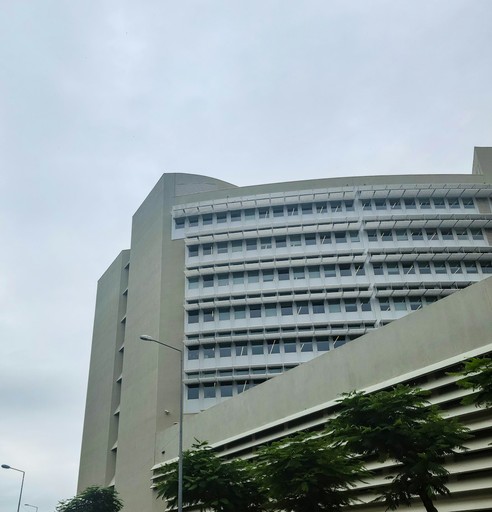
Original Architecture photo
Original
Architecture in Van Gogh style
Van Gogh Style

Animals — Van Gogh Style Transfer

Original Animals photo
Original
Animals in Van Gogh style
Van Gogh Style

Food — Van Gogh Style Transfer

Original Food photo
Original
Food in Van Gogh style
Van Gogh Style

Street Scenes — Van Gogh Style Transfer

Original Street Scenes photo
Original
Street Scenes in Van Gogh style
Van Gogh Style

Night Scenes — Van Gogh Style Transfer
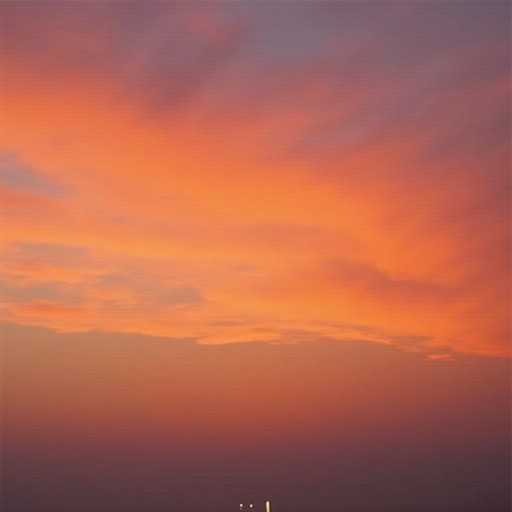
Original Night Scenes photo
Original
Night Scenes in Van Gogh style
Van Gogh Style

Flowers — Van Gogh Style Transfer

Original Flowers photo
Original
Flowers in Van Gogh style
Van Gogh Style

Seascapes — Van Gogh Style Transfer

Original Seascapes photo
Original
Seascapes in Van Gogh style
Van Gogh Style

Interiors — Van Gogh Style Transfer

Original Interiors photo
Original
Interiors in Van Gogh style
Van Gogh Style

Fantasy — Van Gogh Style Transfer

Original Fantasy photo
Original
Fantasy in Van Gogh style
Van Gogh Style

Who Was El Greco?

Domenikos Theotokopoulos was born in 1541 in Heraklion, Crete, then a possession of the Republic of Venice. He trained initially as an icon painter in the Byzantine tradition -- a foundation that would shape his entire career. The flat gold backgrounds, elongated figures, and spiritual intensity of Byzantine icons never left his visual vocabulary, even as he layered Venetian color and Roman drawing on top of it.

Around 1567, he traveled to Venice, where he studied the work of Titian, Tintoretto, and Jacopo Bassano. From Titian, he absorbed the Venetian approach to color -- warm, rich, applied in luminous glazes. From Tintoretto, he learned dramatic composition, theatrical lighting, and the expressive distortion of the human figure. These Venetian lessons would prove permanent, but El Greco was already developing a vision more extreme than anything Venice could contain.

He moved to Rome around 1570, where he encountered Michelangelo's monumental figure style and the emerging Mannerist aesthetic of elongation and spatial ambiguity. According to a famous (and possibly embellished) account, El Greco offered to repaint Michelangelo's Last Judgment in the Sistine Chapel, claiming he could improve upon it. Whether true or not, the story captures his extraordinary self-confidence and his willingness to challenge established authority.

By 1577, El Greco had settled permanently in Toledo, Spain -- and it was here, in the austere capital of Spanish Catholicism, that his mature style fully crystallized. Toledo's intense religious atmosphere, with its emphasis on mystical experience, penitential devotion, and spiritual ecstasy, provided the perfect context for El Greco's increasingly visionary art. His figures grew longer and more flame-like. His colors became more vivid and unearthly -- acid greens, electric blues, sulfurous yellows. His compositions dissolved conventional perspective in favor of vertical stacking, as if heaven and earth were being compressed into a single visual plane.

His masterpiece, The Burial of the Count of Orgaz (1586), divides the canvas into two zones: below, a solemn row of Toledo's leading citizens attend the miraculous burial, rendered with portrait-like realism; above, the heavens open in a swirling vortex of saints, angels, and divine light, painted with visionary abandon. The painting is at once the most realistic and the most otherworldly work of its era -- and that paradox defines El Greco's genius.

El Greco was largely forgotten after his death in 1614. His elongations were dismissed as the result of defective eyesight (a theory now thoroughly debunked). It was not until the late 19th century that critics rediscovered his work, recognizing in his distortions, his emotional intensity, and his disregard for naturalistic convention the qualities that would define modern art. Expressionism, Cubism, and Abstract Expressionism all trace a lineage back to El Greco's visionary canvases in Toledo.


Signature Techniques

What makes El Greco's paintings immediately recognizable -- and what neural style transfer captures from his work:

  • Elongated, flame-like figures -- El Greco's most immediately recognizable trait is the radical elongation of the human body. Figures stretch vertically, heads become smaller relative to torsos, limbs lengthen beyond naturalistic proportion. This elongation is not arbitrary -- it is an expressive device that creates a sense of spiritual aspiration, as if the body is being drawn upward toward heaven. Style transfer captures this as a vertical emphasis and attenuated proportions throughout the image.

  • Supernatural atmospheric effects -- El Greco's skies are among the most dramatic in Western art. In View of Toledo, storm clouds roll over the city in shades of grey-green and blue-black, lit by flashes of spectral light. These are not meteorological observations -- they are emotional and spiritual states projected onto the landscape. Style transfer captures this atmospheric intensity, transforming ordinary skies into turbulent, emotionally charged fields.

  • Vivid, non-naturalistic color -- El Greco's palette defies natural observation. He used acid greens alongside deep reds, electric blues against sulfurous yellows, cool greys punctuated by flashes of hot orange. These color combinations create visual tension and emotional unease -- the viewer feels that the scene is illuminated by a light source that does not exist in the natural world. This unearthly palette is one of the strongest features captured by style transfer.

  • Dramatic chiaroscuro with spiritual light -- El Greco combined Venetian color with an intensified version of Tintoretto's dramatic lighting. Light in El Greco's paintings does not come from the sun or from candles -- it emanates from within figures or descends from heaven in shafts of supernatural radiance. Shadows are deep and cool; highlights are sharp and brilliant. This internal luminosity gives every image processed through El Greco's style a quality of spiritual illumination.

  • Compressed, anti-perspective space -- El Greco progressively abandoned conventional perspective. His mature works stack figures vertically rather than arranging them in receding depth. Space is compressed, flattened, and ambiguous -- figures exist in a shallow zone between the viewer and an indefinite background. This spatial compression creates compositional intensity, focusing the viewer's attention on the emotional and spiritual content rather than on spatial logic.


Style Transfer Quality by Photo Type (ArtFID Tested)

We tested ArtRobot's El Greco style transfer across 15 photo categories using ArtFID (Art Frechet Inception Distance):

  • LPIPS: content preservation. Lower = better.
  • FID: style fidelity to authentic El Greco paintings. Lower = more faithful.

Combined formula: ArtFID = (1 + LPIPS) x (1 + FID)

Photo Category ArtFID Stars Notes
Landscapes 125.23 5 Best category -- View of Toledo energy transforms every landscape
Fantasy 161.27 5 Exceptional -- visionary intensity suits fantastical subjects
Travel 178.58 5 Exceptional -- Mediterranean architecture gains spiritual weight
Street Scenes 192.63 5 Excellent -- urban environments gain dramatic atmosphere
Animals 195.32 5 Excellent -- organic forms receive expressive distortion
Vehicles 203.16 5 Excellent -- geometric subjects gain painterly energy
Still Life 208.80 5 Excellent -- objects acquire supernatural luminosity
Portraits 215.24 5 Excellent -- faces gain El Greco's intense spiritual presence
Architecture 231.95 5 Excellent -- buildings receive Toledo's dramatic treatment
Flowers 244.94 5 Strong -- botanical subjects gain vivid, unearthly color
Food 257.62 5 Strong -- still life tradition with heightened intensity
Night Scenes 263.22 5 Strong -- natural affinity for dramatic darkness
Seascapes 281.43 5 Strong -- water gains atmospheric turbulence
Interiors 299.64 5 Strong -- interior spaces gain compressed spiritual intensity
Urban Scenes 315.57 4 Good -- modern urban elements resist some treatment

Key takeaway: El Greco is one of the most universally powerful styles in our entire library, earning 5 stars in 14 of 15 categories. The exceptional score of 125.23 for landscapes is among the lowest (best) ArtFID scores we have recorded for any style-category combination. El Greco's visionary aesthetic translates with remarkable consistency across virtually every type of photograph.

Landscapes lead at 125.23 because El Greco's View of Toledo essentially invented the expressive landscape -- a landscape that communicates emotional and spiritual states rather than topographic information. Every landscape processed through El Greco's style acquires the turbulent skies, supernatural illumination, and existential intensity of that groundbreaking painting.

Fantasy at 161.27 reflects the natural affinity between El Greco's visionary aesthetic and fantastical subject matter. His elongated forms, unearthly colors, and compressed space create an atmosphere of otherworldly intensity that amplifies the impact of fantasy imagery.

Travel at 178.58 demonstrates that El Greco's Mediterranean origins make his style especially effective for architectural and cultural subjects. Buildings, cityscapes, and historic sites gain the spiritual weight and dramatic atmosphere of Counter-Reformation Toledo.


Before & After Examples

Every row shows the original photograph alongside the AI-generated El Greco-style result.

Landscapes -- 5 stars (ArtFID 125.23)

Landscapes are El Greco's supreme category -- every landscape gains the visionary intensity of View of Toledo.

Original Photo AI Result
Original landscapes photograph Landscapes in El Greco style
Source photo ArtFID: 125.23 -- 5 stars

The landscape transformation is staggering. The sky erupts with El Greco's signature turbulence -- rolling clouds in shades of grey-green and spectral blue, pierced by flashes of supernatural light. Earth tones shift toward the acid greens and deep ochres of the Toledo landscape. Forms gain a quality of compressed energy, as if the landscape itself is vibrating with spiritual intensity. The result does not look like a filtered photograph -- it looks like an El Greco painting that happens to depict a contemporary landscape.

Portraits -- 5 stars (ArtFID 215.24)

Portraits receive El Greco's intense spiritual treatment -- elongated features, vivid color contrasts, and supernatural inner light.

Original Photo AI Result
Original portraits photograph Portraits in El Greco style
Source photo ArtFID: 215.24 -- 5 stars

The portrait transformation captures El Greco's revolutionary approach to the human face. Features gain subtle elongation -- the face stretches vertically, acquiring a quality of spiritual aspiration. Skin tones shift toward El Greco's non-naturalistic palette, with cool grey-green shadows and warm highlights that seem to emanate from within. Eyes gain an intensity and depth that recalls El Greco's saints and apostles. The background darkens and simplifies, pushing all attention to the face and its expression of inner life.


When to Use El Greco Style

El Greco's style excels in specific photographic scenarios:

1. Dramatic Landscape Photography. Mountains, storms, dramatic skies, rugged terrain -- any landscape with natural drama is amplified enormously by El Greco's atmospheric treatment. The style transforms good landscape photographs into visionary statements, adding supernatural intensity to already powerful natural subjects.

2. Moody Portrait Photography. Portraits intended to convey depth, introspection, spirituality, or emotional intensity gain extraordinary power from El Greco's treatment. The elongation, vivid color, and inner luminosity transform conventional portraits into something approaching Renaissance spiritual painting.

3. Gothic and Atmospheric Architecture. Cathedrals, castles, medieval towns, monasteries -- architecture with vertical emphasis and historical weight resonates deeply with El Greco's aesthetic. Toledo-style cityscapes and hilltop fortifications are particularly effective.

4. Fantasy and Concept Art. At 161.27, fantasy is El Greco's second-strongest category. Any image intended to evoke the supernatural, the mystical, or the visionary benefits from the same aesthetic that made El Greco the painter of spiritual ecstasy.

5. Fine Art Prints for Dark Interiors. El Greco's vivid, luminous colors and dramatic contrasts produce prints that command attention even in dimly lit rooms. The supernatural glow of his palette creates images that seem to radiate their own light -- ideal for dramatic wall art.


When NOT to Use El Greco Style

El Greco's style, despite its extraordinary versatility, has specific limitations:

1. Clean, Minimalist Design Projects. El Greco's aesthetic is maximally expressive -- it adds drama, distortion, and emotional weight to everything it touches. Clean, calm, minimalist design work is fundamentally opposed to El Greco's visionary intensity. For restrained elegance, use Vermeer or Japanese art.

2. Product Photography Requiring Accuracy. El Greco's non-naturalistic color and proportional distortion make it unsuitable for any application where accurate color reproduction or precise proportions matter. Product photography, real estate photography, and documentation should avoid this style.

3. Cheerful, Light-Hearted Subjects. El Greco's aesthetic carries inherent gravitas and intensity. Children's party photos, humorous snapshots, and lighthearted content gain an unintended seriousness and even menace that works against their intended tone.

4. Brightly Lit, Flat Subjects. El Greco's strength is dramatic contrast and atmospheric depth. Photographs taken in flat, even lighting -- studio product shots, evenly lit headshots -- lack the tonal variation that El Greco's style needs to create its characteristic drama.

5. Images Where Proportion Matters. Architectural drawings, technical photography, and any application where accurate spatial relationships are important will be disrupted by El Greco's compression and elongation effects.


FAQ

Who was El Greco and why was he forgotten for 300 years?

El Greco (1541--1614) was born Domenikos Theotokopoulos in Crete, trained in Venice under the influence of Titian and Tintoretto, and spent his mature career in Toledo, Spain. He developed a uniquely visionary style characterized by elongated figures, vivid non-naturalistic color, and supernatural atmospheric effects. After his death, his radical distortions were dismissed as the result of defective eyesight or declining skill. He was rediscovered in the late 19th century by critics who recognized his work as a precursor to Expressionism and modern art. Today he is considered one of the most original painters in Western art history.

Why do El Greco's figures look stretched and elongated?

El Greco's elongated figures are a deliberate artistic choice, not the result of vision problems (a discredited theory). The elongation serves multiple purposes: it creates a sense of spiritual aspiration, as if bodies are being drawn upward toward heaven; it increases the emotional intensity of gestures and expressions; and it distinguishes El Greco's figures from the balanced, naturalistic proportions of classical art. The elongation intensified throughout his career, suggesting it was an increasingly conscious stylistic decision. In style transfer, this manifests as a vertical emphasis and attenuated forms throughout the image.

Which photos look best with El Greco style transfer?

Based on ArtFID testing, landscapes (125.23, 5 stars) produce the strongest results -- among the best scores we have recorded for any style. Fantasy (161.27) and travel (178.58) follow closely. In total, 14 of 15 categories earn 5 stars, making El Greco one of the most universally effective styles in our library. Only urban scenes (315.57, 4 stars) fall below 5 stars, and even that is a strong result.

How does El Greco compare to Caravaggio for style transfer?

El Greco and Caravaggio were near-contemporaries who both used dramatic chiaroscuro, but their approaches were fundamentally different. Caravaggio's light is theatrical and naturalistic -- strong directional light from a specific source, creating sharp shadows. El Greco's light is supernatural and internal -- it emanates from within figures and from heaven itself, creating an unearthly glow. Choose Caravaggio for dramatic realism and sharp contrasts; choose El Greco for spiritual intensity and visionary atmosphere.

Can I use El Greco style transfer for commercial projects?

Yes. El Greco's works are over 400 years old and firmly in the public domain. All style references used by ArtRobot are sourced from museum collections under open access / CC0 license. Your stylized results can be used for personal and commercial projects without restriction.


Ready to Transform Your Photos with El Greco's Visionary Intensity?

El Greco's style brings the spiritual fire of Counter-Reformation Toledo, the supernatural atmospherics of View of Toledo, and the visionary intensity of the most original painter in Western art to your photographs. With 14 of 15 categories earning 5 stars, it is one of the most powerful and versatile styles available.

Start Your Free El Greco Style Transfer on ArtRobot ->


  • Tintoretto Style Transfer -- El Greco's Venetian teacher. Shares dramatic lighting and dynamic composition, but with more naturalistic proportions and spatial depth.
  • Velazquez Style Transfer -- Spain's other supreme painter. Where El Greco burned with spiritual intensity, Velazquez observed with cool, analytical brilliance.
  • Titian Style Transfer -- The Venetian master whose color technique formed El Greco's foundation, transformed into something far more extreme.
  • Mannerism Style Transfer -- The broader movement of elegant distortion that contextualizes El Greco's more radical elongations.

Try It Yourself

Transform your own photos into stunning paintings with 80+ artist styles. Free to start.

Create Your Art →

Diskussion (0)

Logga in för att kommentera