
AI Artist & Tech Enthusiast
Dutch Golden Age Photo Effect — AI Style Transfer Guide (...
The Dutch Golden Age produced some of the most intimate, luminous, and technically accomplished paintings in Western art history. Spanning roughly 1588 to 1672 in the Netherlands, this era saw a prosperous merchant class drive an unprecedented explosion of easel painting -- portraits, still lifes, domestic interiors, and landscapes rendered with astonishing optical fidelity and warm, glowing light. With AI-powered neural style transfer, you can now apply that same luminous light, rich chiaroscuro, and meticulous realism to your own photographs, transforming modern images into compositions worthy of a Golden Age burgher's parlor.
 Rembrandt van Rijn, "Old Man with a Gold Chain" -- Art Institute of Chicago, CC0 / Public Domain
We tested ArtRobot's Dutch Golden Age style transfer across 15 different photo categories, each scored by our ArtFID quality benchmark. This guide covers the movement's history, its defining visual traits, which photos produce the best results, and how to create your own Dutch Golden Age art for free.
Quick Links -- Jump to: What Is Dutch Golden Age? | Characteristics | ArtFID Scores | Key Artists | How to Apply | Before & After | FAQ
What Is Dutch Golden Age?
The Dutch Golden Age was a period of extraordinary artistic, commercial, and scientific achievement in the newly independent Dutch Republic. Following the Union of Utrecht in 1579 and the effective independence from Spain, the Netherlands became Europe's wealthiest and most cosmopolitan nation. Unlike the rest of Europe, where the Catholic Church and aristocratic courts drove art patronage, Dutch art was fueled by a prosperous middle class -- merchants, traders, and civic officials who wanted paintings for their homes that reflected their world and their values.
"And by their development of all the various genres -- landscapes, seascapes, portraits, low-life scenes, still life, etc. -- the Dutch brought easel painting to its highest pitch. It could almost be claimed that European art found its most distinctive form in Dutch seventeenth-century painting." -- History of Art, p. 454
This bourgeois patronage system produced an open market for paintings. Artists painted speculatively and sold through dealers and guild exhibitions. The result was intense specialization -- one painter might focus exclusively on church interiors, another on winter landscapes, another on flower arrangements -- driving technical excellence to extraordinary heights.
"Thus it came about that the Dutch painters pried into the pictorial possibilities of everyday life, with an eye on their middle-class burgher clients, who wanted paintings to hang in their houses as evidence of their prosperity." -- Art Through the Ages, p. 438
The Dutch Golden Age's emphasis on observed reality, naturalistic light, and domestic intimacy gives it a remarkable affinity with photography. Both traditions share a commitment to depicting the visible world with maximum fidelity -- making Dutch Golden Age painting one of the most effective styles for neural style transfer.
Dutch Golden Age Characteristics & Techniques
Understanding the core visual traits of Dutch Golden Age painting helps predict how your photos will transform and which subjects yield the strongest results.
The Four Pillars of Dutch Golden Age Style
-
Luminous, Directional Light -- Vermeer's pearlescent daylight filtering through a window, Rembrandt's chiaroscuro emerging from deep shadow -- the AI reshapes your photo's lighting toward warm, directional sources with soft falloff and rich shadow depth.
-
Rich, Warm Color Palette -- Earth tones dominate: burnt sienna, raw umber, ochre yellow, deep olive green, with vermilion and ultramarine reserved for focal points. The AI shifts your colors toward this warm, subdued tonal range.
-
Meticulous Surface Detail -- From lace collar threads to grape skin bloom, Dutch painters rendered surfaces with obsessive precision. The AI heightens surface detail and textural richness across your photograph.
-
Intimate, Domestic Composition -- Contained spaces with visible walls, windows, and floors. The AI softens backgrounds, emphasizes foreground subjects, and creates warm, sheltered interiority.
Visual Trait Comparison
| Trait | Dutch Golden Age Approach | Effect on Your Photos |
|---|---|---|
| Color palette | Earth tones, ochre, umber, warm accents | Colors shift toward warm, muted, amber-gold range |
| Brushwork | Precise with selective impasto highlights | Surfaces gain fine texture; highlights become luminous |
| Form & proportion | Naturalistic, anatomically accurate | Proportions preserved; contours gain painterly softness |
| Composition | Intimate, contained, single light source | Depth enhanced; warm directional lighting imposed |
| Light & shadow | Dramatic chiaroscuro or soft window light | Shadows deepen; golden warmth suffuses highlights |
Style Transfer Quality by Photo Type (ArtFID Tested)
We ran ArtRobot's Dutch Golden Age style transfer on 15 photo categories and measured quality using ArtFID (Art Frechet Inception Distance) -- the industry-standard metric for style transfer evaluation.
ArtFID combines two components: - LPIPS (Learned Perceptual Image Patch Similarity) -- Does the output preserve your original content? Lower = better content retention. - FID (Frechet Inception Distance) -- Does the output match the statistical distribution of real Dutch Golden Age artworks? Lower = more authentic style.
Combined formula: ArtFID = (1 + LPIPS) x (1 + FID)
Full Scores Table
| Photo Type | ArtFID | LPIPS | FID | Stars | Recommendation |
|---|---|---|---|---|---|
| Portraits | 287.12 | 0.5043 | 189.87 | 5 | Best match -- Rembrandt's core territory |
| Fantasy | 314.04 | 0.4867 | 210.23 | 4 | Strong -- dramatic lighting suits chiaroscuro |
| Night Scenes | 329.81 | 0.5545 | 211.17 | 4 | Strong -- candlelit atmosphere perfectly aligned |
| Street Scenes | 341.45 | 0.5215 | 223.41 | 4 | Good -- urban scenes gain market-square warmth |
| Animals | 341.81 | 0.5042 | 226.23 | 4 | Good -- echoes Dutch animal painting tradition |
| Flowers | 361.60 | 0.5701 | 229.30 | 3 | Moderate -- connects to Dutch floral still life |
| Interiors | 362.96 | 0.5904 | 227.21 | 3 | Moderate -- Vermeer's domestic space territory |
| Food | 368.40 | 0.5984 | 229.47 | 3 | Moderate -- Dutch banquet-piece tradition |
| Travel | 374.87 | 0.5133 | 246.71 | 3 | Moderate -- exotic scenes gain warm patina |
| Landscapes | 377.94 | 0.5486 | 243.06 | 3 | Moderate -- works with pastoral, flat terrain |
| Vehicles | 400.87 | 0.5858 | 251.78 | 2 | Challenging -- modern subjects resist period style |
| Seascapes | 404.03 | 0.5754 | 255.46 | 2 | Challenging -- open water dilutes intimate feel |
| Architecture | 414.19 | 0.5665 | 263.41 | 2 | Challenging -- large structures lose intimate scale |
| Urban Scenes | 441.02 | 0.6236 | 270.64 | 2 | Challenging -- wide cityscapes resist contained composition |
| Still Life | 462.82 | 0.6312 | 282.72 | 2 | Challenging -- surprisingly, high FID despite genre connection |
| Average | 375.59 | 0.5583 | 237.38 | 3.1 |
Key findings: Portraits achieve the best ArtFID at 287.12 -- portraiture was the Dutch Golden Age's most prolific genre. Fantasy (314.04) and night scenes (329.81) also perform strongly thanks to chiaroscuro compatibility. Still life scores worst (462.82) despite its genre connection, likely because Dutch still lifes demand extreme textural precision beyond current AI capabilities.
Key Dutch Golden Age Artists
The Dutch Golden Age produced hundreds of accomplished painters, but two towering figures define its artistic legacy:
| Artist | Years | Signature Style | Best Subjects | Try It |
|---|---|---|---|---|
| Rembrandt van Rijn | 1606--1669 | Dramatic chiaroscuro, psychological depth, impasto highlights | Portraits, night scenes, fantasy | Rembrandt Style Transfer |
| Johannes Vermeer | 1632--1675 | Pearlescent daylight, geometric composition, optical precision | Interiors, portraits, still life | Vermeer Style Transfer |
Rembrandt remains the era's supreme figure -- a painter of unmatched psychological penetration whose technique of impasto highlights over transparent dark glazes created an illusion of inner luminosity. For style transfer, his approach excels with portraits, dramatic scenes, and subjects benefiting from strong directional light.
Vermeer took the opposite path: serene, luminous, and architecturally precise. His interiors are bathed in soft daylight entering from the left, illuminating figures in quiet domestic activity. Where Rembrandt sculpts with shadow, Vermeer dissolves form into particles of colored light.
 After Johannes Vermeer, "Lady Weighing Pearls" -- Art Institute of Chicago, Museum Open Access
How to Apply Dutch Golden Age Style (3 Steps)
Step 1: Choose Your Photo
Upload any photograph to ArtRobot. Best results: portraits (ArtFID 287.12), night scenes (329.81), and animals (341.81). Use warm, directional lighting and simple dark backgrounds for the most authentic Dutch feel.
Step 2: Select Dutch Golden Age Style
Choose from Rembrandt's chiaroscuro or Vermeer's luminous interiors in ArtRobot's style library. The AI uses the ArtFlow algorithm (CVPR 2021) to preserve your photo's content while transferring the Dutch Golden Age's warm palette and painterly texture.
Step 3: Download Your Art
ArtRobot generates your result in seconds. Download in Standard (1024px), HD (2048px), or Ultra HD (4096px) resolution.
Try Dutch Golden Age Style Transfer Free ->
Before & After Examples
We tested ArtRobot's Dutch Golden Age style transfer on photographs across multiple categories using masterworks from the Art Institute of Chicago as style references. Below are representative transformations with their ArtFID quality scores.
Portraits -- ArtFID 287.12 (Best Match)
Portraiture was the commercial engine of Dutch Golden Age painting. The AI applies Rembrandt's warm skin tones, deep shadows, and luminous highlights, transforming modern portraits into compositions worthy of a 17th-century guild hall.
| Original Photo | Dutch Golden Age AI Result |
|---|---|
 |
 |
| Source photograph | ArtFID: 287.12 -- LPIPS: 0.5043 / FID: 189.87 |
Fantasy -- ArtFID 314.04
Dutch Golden Age painters often depicted biblical and mythological narratives with the same chiaroscuro intensity they brought to portraits. Fantasy content taps into this tradition -- the dramatic lighting and rich shadow depth that define the style translate powerfully to imaginative scenes.
| Original Photo | Dutch Golden Age AI Result |
|---|---|
 |
 |
| Source photograph | ArtFID: 314.04 -- LPIPS: 0.4867 / FID: 210.23 |
Night Scenes -- ArtFID 329.81
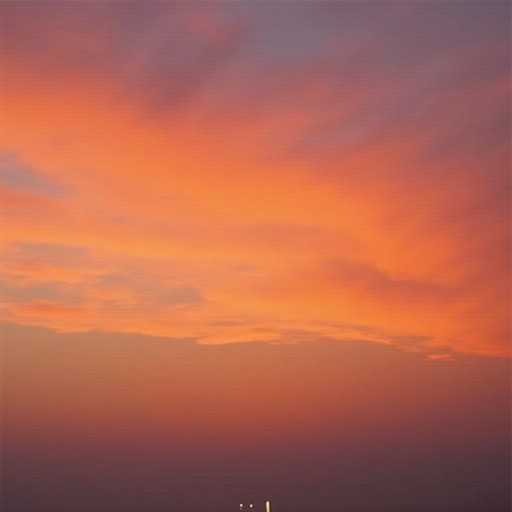
Night scenes are a natural fit -- Rembrandt's "Night Watch" is the most famous nocturnal painting in Western art. The style's mastery of candlelight and deep shadow creates warm, dramatic intimacy.
| Original Photo | Dutch Golden Age AI Result |
|---|---|
 |
 |
| Source photograph | ArtFID: 329.81 -- LPIPS: 0.5545 / FID: 211.17 |
Animals -- ArtFID 341.81
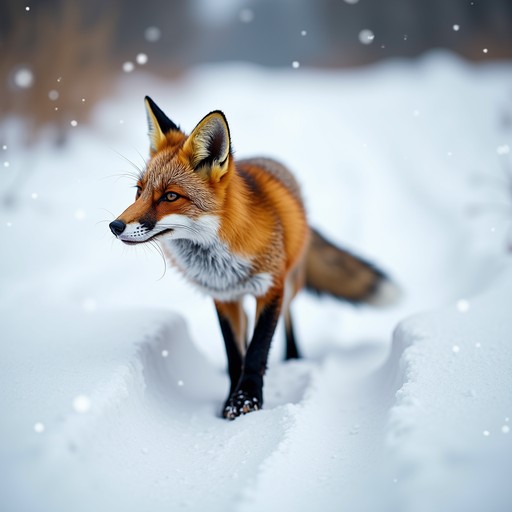
Animal painting was a thriving Dutch specialty -- Paulus Potter's life-sized "Young Bull" remains one of the era's most celebrated works. The AI applies warm earth tones and meticulous attention to fur and feather texture.
| Original Photo | Dutch Golden Age AI Result |
|---|---|
 |
 |
| Source photograph | ArtFID: 341.81 -- LPIPS: 0.5042 / FID: 226.23 |
FAQ
What is Dutch Golden Age art style and where did it originate?
The Dutch Golden Age (1588--1672) was a period of extraordinary artistic achievement in the Netherlands, driven uniquely by middle-class patronage rather than church or court commissions. Its defining characteristics include luminous directional light, warm earth-toned palettes, and meticulous naturalistic detail. The two most celebrated painters are Rembrandt van Rijn and Johannes Vermeer.
Which photos look best with Dutch Golden Age style transfer?
Portraits score best (ArtFID 287.12), followed by fantasy (314.04) and night scenes (329.81). Use warm lighting and simple backgrounds. Avoid wide-angle urban scenes (ArtFID 441.02) -- the Dutch aesthetic favors intimate scale and organic forms.
Can I use Dutch Golden Age style transfer for commercial projects?
Yes. ArtRobot generates original AI artwork from your photographs -- you own the output. The style references are from the Art Institute of Chicago's open-access collection (CC0 / Public Domain), so there are no copyright concerns. Use your transformed images for prints, merchandise, marketing, and social media.
Dutch Golden Age vs Baroque: which should I choose?
Dutch Golden Age is technically a subset of the broader Baroque movement, but they produce different results. Baroque favors monumental scale and saturated color (think Caravaggio's theatrical spotlighting). Dutch Golden Age is more intimate, subdued, and naturalistic. Choose Dutch Golden Age for portraits and warm subtlety; choose Baroque for dramatic, large-scale compositions.
How accurate is AI Dutch Golden Age style transfer compared to real paintings?
Our best-performing category (portraits, ArtFID 287.12) demonstrates strong alignment with authentic Dutch Golden Age painting distributions. The AI captures warm palette, chiaroscuro lighting, and painterly texture effectively. However, the finest details -- individual brushstrokes, impasto texture, glazing translucency -- remain beyond current neural network capabilities. The result is a convincing stylistic interpretation rather than a pixel-perfect imitation.
Related Styles
- Rembrandt van Rijn Style Transfer -- Maximum chiaroscuro intensity
- Johannes Vermeer Style Transfer -- Luminous domestic interiors
- Baroque Style Transfer -- Broader Baroque with Italian dramatic influence
- Realism Style Transfer -- 19th-century continuation of Dutch naturalist principles
Try It Yourself
The Dutch Golden Age transformed everyday life into art -- portraits that breathe, interiors that glow, flowers that bloom from darkness. Upload your portrait, your pet, or your candlelit dinner scene and let ArtRobot's AI bring 17th-century Dutch mastery to your photographs.
Start Your Free Dutch Golden Age Style Transfer on ArtRobot ->
Try It Yourself
Transform your own photos into stunning paintings with 80+ artist styles. Free to start.