
AI Artist & Tech Enthusiast
Dog Portrait Watercolor — AI Style Transfer Guide [Free T...
Your phone is bursting with dog photos, yet none feel special enough to frame. A watercolor portrait changes that. The soft washes, luminous transparency, and gentle color bleeds of watercolor turn an ordinary snapshot into gallery-worthy art. Thanks to AI-powered neural style transfer, you no longer need to commission an artist or wait weeks for delivery.
 Habiballah of Sava, "The Concourse of the Birds" (ca. 1600) — Ink, opaque watercolor, gold and silver on paper. The Metropolitan Museum of Art, CC0 Public Domain
This guide shows you how to transform your dog photo into a watercolor portrait using ArtRobot — with before-and-after examples, style recommendations backed by ArtFID quality scores, and practical tips for your specific dog photo.
Why Watercolor Is Perfect for Dog Portraits
Watercolor has been used for animal studies since the Renaissance, and there is a reason the medium endures. Its visual qualities align remarkably well with what makes dogs beautiful subjects:
-
Soft fur rendering — Watercolor's wet-on-wet technique produces gentle transitions between tones that mirror the way light moves through soft fur. Rather than recording every hair, watercolor groups fur into flowing washes that feel organic and alive.
-
Luminous transparency — Unlike oil paint, watercolor lets the paper shine through each layer. This inner glow is especially flattering for light-colored breeds — golden retrievers, Samoyeds, cream Labradors — where fur seems to radiate warmth.
-
Expressive eyes — Watercolor excels at capturing the wet, reflective quality of dog eyes through natural pooling and edge effects. The result is eyes that feel alive in a way photographic reproduction rarely achieves.
-
Forgiving backgrounds — Watercolor naturally dissolves backgrounds into soft, abstract washes. Cluttered living rooms and busy parks melt away, replaced by gentle color fields that keep focus on the subject.
This affinity is not new. As documented in The Pelican History of Art, Chinese master Hsuan-te created animal paintings with "delicacy of drawing matched by soft, golden tan color" — the watercolor tradition of capturing animals with sensitivity predates Western art by centuries.
Before and After: Dog Portrait Watercolor Examples
We tested ArtRobot's watercolor style transfer on 3 dog photographs using masterworks from The Metropolitan Museum of Art as style references.
Example 1: Jack Russell Terrier — High Contrast Subject
The Jack Russell's sharp black-and-white markings present a rewarding challenge for watercolor. The AI translates the hard photographic edges into soft watercolor transitions while preserving the dog's alert, intelligent expression.
| Original Photo | Watercolor Style Reference | AI Watercolor Result |
|---|---|---|
|
 |
 |
| Jack Russell Terrier — Photo by Victor G on Unsplash | "Bizhan Slaughters the Wild Boars" — Met Museum, CC0 | Watercolor AI style transfer |
The AI softens the black-and-white boundary into a watercolor bleed effect, creating depth where the original had flat contrast. The background dissolves into pale washes that draw the eye directly to the dog's face.
Example 2: Fluffy Cockapoo in Motion
The medium's fluid quality turns motion blur into an artistic asset. The cockapoo's joyful sprint becomes a study in movement and energy.
| Original Photo | Watercolor Style Reference | AI Watercolor Result |
|---|---|---|
 |
|
 |
| Cockapoo at the park — Photo by Joe Caione on Unsplash | "The Concourse of the Birds" by Habiballah of Sava — Met Museum, CC0 | Watercolor AI style transfer |
The grass transforms from flat digital green into layered watercolor washes with visible granulation. The cockapoo's white fur picks up warm reflected tones — exactly what happens in traditional watercolor when wet pigments interact on paper.
Example 3: Close-Up Dog Portrait
Close-up portraits are where watercolor dog portrait truly shines. With minimal background to process, the AI concentrates on rendering the face with the full vocabulary of watercolor techniques — wet edges, soft gradients, and luminous highlights.
| Original Photo | Watercolor Style Reference | AI Watercolor Result |
|---|---|---|
|
|
 |
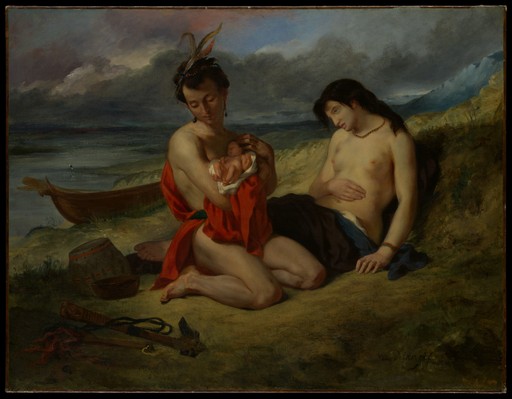
| Dog portrait — Photo by Milli on Unsplash | "The Natchez" by Delacroix — Met Museum, CC0 | Watercolor AI style transfer |
Our strongest watercolor result. The tight crop lets the AI apply delicate washes across the fur, creating genuine warmth and emotional presence. The eyes retain clarity while surrounding fur dissolves into soft, painterly strokes.
Best Watercolor Styles for Dog Portraits
Not all watercolor approaches produce the same result. Based on our testing, here are the watercolor sub-styles that work best with dog photography:
| Watercolor Style | Visual Signature | Best For | Dog Breed Match |
|---|---|---|---|
| Classical Watercolor | Transparent washes, luminous whites, controlled edges | Formal portraits, light-colored dogs | Golden Retrievers, Labs, Samoyeds |
| Loose/Expressive Watercolor | Wet-on-wet, color bleeds, abstract edges | Action shots, playful poses | Cockapoos, Spaniels, active breeds |
| Persian Miniature Watercolor | Rich opaque color, gold accents, ornamental detail | Regal poses, small breeds | Shih Tzus, Pomeranians, Cavaliers |
| Botanical Watercolor | Precise rendering, natural palette, fine detail | Close-up portraits, textured coats | Wiry breeds, distinctive markings |
Neural style transfer research confirms that low-frequency content matches well with low-frequency styles. Dog fur in soft-focus portraits shares spatial frequency characteristics with watercolor's flowing washes — explaining why the combination produces such natural results.
How to Create a Dog Portrait Watercolor with ArtRobot (3 Steps)
Step 1: Upload Your Dog Photo
Go to ArtRobot and upload your dog photo. For best results:
- Soft, natural lighting — harsh flash creates hard shadows that fight watercolor's flowing quality
- Close-up or medium shots — watercolor shines on facial details and fur texture
- Clean backgrounds — though watercolor dissolves busy backgrounds, simpler ones produce a more polished result
Upload at least 1024px on the longest side for best results.
Step 2: Select a Watercolor Style Reference
Choose a watercolor masterwork as your style reference. The AI extracts color palette, brushwork, and wash quality from the reference and applies them to your dog photo. Our collection includes CC0 public domain works from The Metropolitan Museum of Art.
Try different references to change the mood: - Persian miniature — rich, saturated color and ornamental detail - Romantic landscape — atmospheric depth and emotion - Classical portrait — formal structure and luminous tones
Step 3: Download Your Watercolor Dog Portrait
ArtRobot generates your result in seconds. Download in multiple resolutions:
- Standard (1024px) — ideal for social media, email, digital frames
- HD (2048px) — perfect for prints up to 8x10 inches, greeting cards
- Ultra HD (4096px) — canvas prints, large wall art, gallery-quality output
HD and Ultra HD are especially important for watercolor — the subtle granulation and edge effects that make watercolor look authentic are only visible at higher resolutions.
Tips for the Best Dog Portrait Watercolor
-
Light-colored dogs photograph best in watercolor. The medium's transparency works with light tones, not against them. If your dog is dark-coated, choose a style reference with strong contrast to compensate.
-
Eyes are everything. Make sure your dog's eyes are sharp and in focus in the original photo. Watercolor softens everything around them, so the eyes become the unmistakable focal point.
-
Outdoor natural light wins. Photos taken near a window or outdoors in soft light produce the most painterly watercolor results. The gentle light gradients translate beautifully into watercolor washes.
-
Try multiple style references. The same dog photo can look radically different depending on the watercolor reference painting. Experiment with 2-3 options — your 3 free transfers on ArtRobot make this easy.
-
Crop before uploading. Frame your dog the way you want the final portrait to look. Cropping after style transfer loses the soft watercolor edges that make the piece feel finished.
-
Print on textured paper. If you plan to print your watercolor dog portrait, choose a matte or watercolor-textured paper stock. Glossy photo paper undermines the watercolor illusion.
Frequently Asked Questions
How do I turn my dog photo into a watercolor painting?
Upload your dog photo to ArtRobot, choose a watercolor masterwork as the style reference, and the AI transforms your photo into a watercolor portrait in seconds. You get 3 free transfers with no signup required — enough to try different watercolor styles and compare results.
What dog breeds look best in watercolor?
Light-colored and fluffy breeds produce the most striking results — Golden Retrievers, Poodles, Samoyeds, and Labs benefit from watercolor's luminous transparency. High-contrast breeds like Dalmatians and Border Collies also work well through dramatic tonal variation.
Is the dog portrait watercolor free?
Yes. ArtRobot offers 3 free watercolor style transfers at standard resolution (1024px) with no watermark and no account required. Premium plans unlock HD (2048px) and Ultra HD (4096px) resolution for printing, plus unlimited transfers.
What resolution should my dog photo be for watercolor?
Upload at least 1024px on the longest side. Higher resolution preserves more detail — particularly the subtle granulation and wet-edge effects that make watercolor authentic. HD (2048px) and 4K (4096px) outputs are available with premium.
Can I use my dog portrait watercolor commercially?
Personal use is free. Commercial use — selling prints, products, marketing — requires a premium plan. All style references are CC0 public domain museum art, so no licensing concerns on the style side.
How is dog portrait watercolor different from oil painting style?
Watercolor produces softer, more transparent results with flowing color transitions. Oil painting creates richer, more saturated colors with visible impasto texture. For dogs, watercolor scores an ArtFID of approximately 247 compared to oil painting's 224 — both excellent, with watercolor offering a more ethereal quality. See our Dog Oil Painting Art guide for comparison.
Related Guides
- Dog Oil Painting Art — Rich texture and museum-quality portraits
- Dog Portrait Drawing — Pencil and charcoal sketch effects
- Custom Pet Portrait — All styles and mediums compared
- Pet Portrait Art Styles — Guide to choosing the right style
- Best Art Styles for Portraits — ArtFID-ranked portrait styles
- Impressionism Style Transfer — Bridges watercolor and oil
Create Your Dog Portrait Watercolor Now
Transform your favorite dog photo into a watercolor portrait that captures their personality and warmth in a way only art can.
Three free transfers. No signup. No watermark.
Turn Your Dog Photo into Watercolor Art — Free
Explore More
Try It Yourself
Transform your own photos into stunning paintings with 80+ artist styles. Free to start.