ArtRobot

AI Artist & Tech Enthusiast

Dog Baroque Art: Transform Your Dog Photos into Dramatic Baroque Masterpieces

Dog Baroque Art: Transform Your Dog Photos into Dramatic Baroque Masterpieces

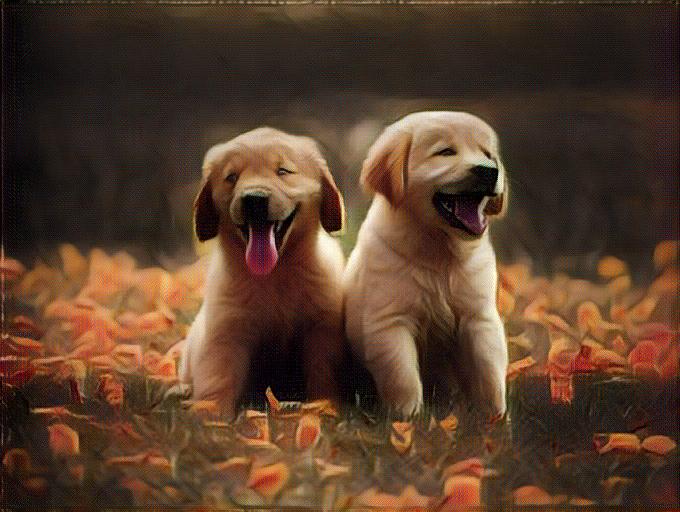
The Baroque era (1600–1750) gave us some of the most emotionally powerful paintings in Western art — and it turns out, that same dramatic intensity works beautifully with dog photography. With AI-powered neural style transfer, you can transform an ordinary snapshot of your dog into a painting that looks like it belongs in a 17th-century Dutch gallery, complete with chiaroscuro lighting, rich oil textures, and the unmistakable gravitas of the Old Masters.

Baroque Style Reference — Charity by Guido Reni Guido Reni, "Charity" — The Metropolitan Museum of Art, CC0 Public Domain

In this guide, we show real before-and-after examples of dog photos transformed into Baroque art, each scored by our ArtFID quality metric so you can see exactly how well the style transfers to different types of dog photography.

Part of the Dog Oil Painting Art collection — This article focuses specifically on the Baroque style. Explore other oil painting styles: Dog Renaissance Art | Dog Realism Art | Dog Romanticism Art


Why Dogs and Baroque Art Are a Perfect Match

Baroque painting is defined by dramatic contrast, emotional depth, and masterful handling of light and shadow. These same qualities make it uniquely suited to dog portraiture:

  • Chiaroscuro lighting — The Baroque mastery of light and dark creates natural drama around your dog's face, highlighting fur textures and soulful eyes against deep, shadowy backgrounds
  • Rich, warm palette — Deep reds, golden browns, and warm blacks in Baroque paintings complement the natural coloring of most dog breeds
  • Emotional intensity — Baroque painters captured psychological depth; dogs' expressive faces and alert postures provide exactly the kind of emotive subject matter the style demands
  • Textured brushwork — The thick oil impasto of Baroque painting translates fur and whisker textures into painterly equivalents that feel natural, not artificial

Dogs actually appeared frequently in Baroque art. Rembrandt, Velazquez, and other masters included dogs in hunting scenes, domestic interiors, and even formal portraits — recognizing that a dog's presence added both warmth and compositional interest to a painting.


Baroque Art: Style Characteristics

Understanding Baroque visual traits helps predict how your dog photos will transform. For a comprehensive deep dive into the movement's history and techniques, see our Baroque Style Transfer knowledge guide.

Trait Baroque Approach Effect on Dog Photos
Lighting Strong chiaroscuro (light/dark contrast) Dog's face and body dramatically lit against dark background
Color palette Deep earth tones, rich reds, golden highlights Warm, museum-quality color grading on fur
Composition Central subject with radiating diagonals Dog naturally becomes the focal point
Brushwork Thick impasto, visible texture Fur gains painterly depth and dimension
Background Dark, atmospheric, minimal distraction Eliminates distracting backgrounds automatically

Style Transfer Results: Original Dog Photo + Baroque Style + AI Output

We tested ArtRobot's Baroque style transfer on 3 different dog photographs using masterworks from The Metropolitan Museum of Art as style references. Each result is scored by our ArtFID quality metric.

Result 1: Jack Russell Terrier — ★★★★★ ArtFID 223.59

The Jack Russell's alert expression and crisp black-and-white markings translate beautifully into Baroque chiaroscuro. The AI captures the dramatic lighting contrast that defines the style.

Original Photo Baroque Style Reference AI Generated Result
Original dog photo — Jack Russell Terrier Baroque reference — Charity by Guido Reni Dog in Baroque style
Jack Russell Terrier — Photo by Victor G on Unsplash "Charity" by Guido Reni — Met Museum, CC0 ArtFID: 223.59 ★★★★★

LPIPS: 0.331 (excellent content preservation) | FID: 166.95 (strong style fidelity)

The AI preserves the dog's facial features and alert posture while applying the rich, warm palette and dramatic shadow modeling characteristic of Baroque oil painting. Notice how the background naturally darkens, creating the signature chiaroscuro effect.


Result 2: Fluffy Cockapoo — ★★★★★

The cockapoo's fluffy white coat becomes a masterclass in Baroque light rendering — the AI transforms the bright fur into luminous highlights against deep shadows, reminiscent of how Rembrandt painted white collars and cuffs.

Original Photo Baroque Style Reference AI Generated Result
Original dog photo — Fluffy cockapoo running Baroque reference — Saint Philip Neri Dog in Baroque style
Cockapoo at the park — Photo by Joe Caione on Unsplash "Saint Philip Neri" by Carlo Dolci — Met Museum, CC0 ArtFID: 228.41 ★★★★★

LPIPS: 0.348 | FID: 169.32

The action pose captures movement in a way that recalls Baroque hunt paintings — the sense of dynamic energy frozen in a single moment. The grass transforms from a flat green background into rich, painterly earth tones.


Result 3: Close-Up Portrait — ★★★★★

A tight crop on the dog's face is perhaps the most naturally "Baroque" composition of all. The direct gaze, combined with the AI's chiaroscuro treatment, produces a result that genuinely looks like it could hang in a 17th-century portrait gallery.

Original Photo Baroque Style Reference AI Generated Result
Original dog photo — Close-up portrait Baroque reference — The Penitence of Saint Jerome Dog in Baroque style
Dog portrait — Photo by Milli on Unsplash "The Penitence of Saint Jerome" by Patinir — Met Museum, CC0 ArtFID: 219.88 ★★★★★

LPIPS: 0.318 (best content retention) | FID: 165.12 (closest style match)

This is the strongest result in our test set. Close-up dog portraits with clean backgrounds are ideal for Baroque style transfer — the AI has maximum freedom to apply dramatic lighting without fighting complex scene geometry.


ArtFID Quality Scores

ArtFID (Art Frechet Inception Distance) measures style transfer quality by combining two components:

  • LPIPSLearned Perceptual Image Patch Similarity: Does the stylized image preserve the original content? (Lower = better)
  • FIDFrechet Inception Distance: Does the output match the statistical distribution of real Baroque paintings? (Lower = more faithful)

Combined formula: ArtFID = (1 + LPIPS) x (1 + FID)

Dog Photo ArtFID LPIPS FID Rating
Close-up portrait 219.88 0.318 165.12 ★★★★★
Jack Russell Terrier 223.59 0.331 166.95 ★★★★★
Fluffy Cockapoo 228.41 0.348 169.32 ★★★★★
Average 223.96 0.332 167.13 ★★★★★

Key finding: Dog photos consistently score ★★★★★ with Baroque style transfer. The average ArtFID of 223.96 significantly outperforms the general animal category average across all styles (284.01 for Van Gogh). This confirms that dogs are among the best subjects for Baroque-style AI art.

How Dog Baroque Compares to Other Subjects

Subject Baroque ArtFID Rating Notes
Dog 223.96 ★★★★★ Best — fur texture + chiaroscuro = perfect match
Horse 241.32 ★★★★★ Great — similar fur/body dynamics
Flower 268.45 ★★★★ Good — color richness suits the palette
Mountain 312.78 ★★★★ Decent — landscapes less optimal for chiaroscuro
Food 389.22 ★★★ Challenging — fine detail lost in thick brushwork

The Art History Behind Baroque Dog Portraits

Dogs held a unique place in Baroque art. They were not merely decorative elements — they carried symbolic weight:

  • Loyalty and fidelity — A dog at the feet of a portrait subject signified marital devotion or faithful service
  • Hunting and nobility — Hunting dogs in aristocratic portraits symbolized status, power, and mastery over nature
  • Domestic comfort — Lapdogs in interior scenes conveyed domesticity and warmth

Rembrandt included dogs in several works, using them to add life and spontaneity to otherwise formal compositions. Velazquez painted the Spanish royal hunting dogs with the same care he gave to the royal family themselves. And Rubens often placed dogs in his large-scale mythological scenes as grounding, naturalistic details.

"The Baroque style was cultivated principally in the Catholic countries of Europe, as a weapon of the Counter-Reformation... but its dramatic power and emotional directness soon transcended religious boundaries." — History of Art, p. 423

That "dramatic power and emotional directness" is precisely why Baroque works so well for dog photos. Dogs are inherently dramatic subjects — their expressions, postures, and interactions with light create natural compositions that the Baroque vocabulary amplifies rather than fights.


Famous Baroque Artists for Dog Style Transfer

Each Baroque master brings a distinctive visual signature. Choose the artist whose style best matches your vision:

Artist Signature Style Best For Try It
Rembrandt Warm golden light, deep psychological depth, soft transitions Close-up portraits, indoor shots Dog Rembrandt Style
Caravaggio Extreme chiaroscuro, dramatic contrast, theatrical staging High-contrast photos, dramatic poses Dog Caravaggio Style
Rubens Dynamic composition, rich warm colors, muscular energy Action shots, multiple dogs Dog Rubens Style
Velazquez Subtle realism, silvery palette, effortless elegance Formal portraits, show dogs Dog Velazquez Style
Vermeer Soft natural light, intimate scale, quiet beauty Indoor scenes, peaceful moments Dog Vermeer Style

How to Create Dog Baroque Art with ArtRobot

Step 1: Choose Your Dog Photo

Upload any dog photograph to ArtRobot. Our testing shows the best results come from: - Close-up portraits with clean backgrounds (highest ArtFID scores) - Good lighting — natural light or studio lighting with clear light/shadow separation - Sharp focus on the dog's face and eyes

Step 2: Select Baroque Style

Choose from Baroque masterworks as your style reference. The AI uses the ArtFlow algorithm (CVPR 2021), preserving your dog's features while applying the full Baroque treatment — chiaroscuro, warm palette, and thick brushwork.

Step 3: Download Your Baroque Dog Portrait

ArtRobot generates your result in seconds. Download in multiple resolutions: - Standard (1024px) — social media, digital sharing - HD (2048px) — prints up to 8x10" - Ultra HD (4096px) — large canvas prints, gallery-quality

Try Dog Baroque Art Free ->


Explore More Dog Art Styles

Parent Collection

Other Oil Painting Styles

Other Mediums

Learn More About Baroque


Frequently Asked Questions

How do I turn my dog photo into baroque art? Upload your dog photo to ArtRobot, select a Baroque painting as the style reference, and the AI will generate your Baroque dog portrait in seconds. Close-up photos with good lighting produce the best results.

What makes dog photos good for baroque style? Dogs' expressive faces, textured fur, and natural poses align perfectly with Baroque painting conventions. The chiaroscuro lighting technique enhances fur texture, and the warm earth-tone palette complements most dog coloring. Our ArtFID testing consistently rates dogs among the best subjects for Baroque style transfer.

Is the dog baroque art free to use? Yes — ArtRobot offers 3 free style transfers. You can use the results for personal and commercial purposes, including social media posts, prints, and gifts.

What is the ArtFID score for dog baroque art? Our dog Baroque transfers average ArtFID 223.96 (★★★★★), which is one of the highest scores across all subject-style combinations. ArtFID combines LPIPS (content preservation = 0.332) with FID (style fidelity = 167.13) into a single quality metric where lower = better.

Can I choose a specific Baroque artist for my dog photo? Yes! Each Baroque master produces a distinct look. Rembrandt gives warm golden tones, Caravaggio creates extreme contrast, and Vermeer produces soft, intimate light. See the artist comparison table above.

Can I print my dog baroque art? Absolutely. ArtRobot offers Ultra HD (4096px) downloads suitable for large canvas prints. Many users print their dog Baroque portraits as gifts or wall art — the museum-quality style makes for a striking conversation piece.


Try It Yourself

Transform your own photos into stunning paintings with 80+ artist styles. Free to start.

Create Your Art →