
AI Artist & Tech Enthusiast
Eugène Delacroix Style Transfer: Transform Photos into Eu...

Eugène Delacroix (1798-1863) was the painter who set the canvas on fire -- the leader of French Romantic painting whose explosive color, violent movement, and exotic themes made him the antithesis of Neoclassical restraint and the spiritual ancestor of every modern artist who has prioritized passion over precision. passionate color, dynamic movement, exotic themes -- these are the visual signatures that make Eugène Delacroix's work instantly recognizable. Today, neural style transfer lets you apply Delacroix's artistic vision to any photograph. Upload your image to ArtRobot, and the algorithm will transform it with the passionate color, dynamic movement, exotic themes that defined Delacroix's contribution to Romantic art. Our ArtFID testing reveals strong results across 9 categories: interiors (212.48, 5 stars), still life (220.18, 5 stars), portraits (239.15, 5 stars), fantasy (277.63, 5 stars) all achieve top marks.
A photograph transformed into Eugène Delacroix's style using ArtRobot AI -- passionate color, dynamic movement characteristic of Delacroix's mature paintings
This guide covers Delacroix's artistic journey, ArtFID-tested results across 15 photo categories, real before-and-after examples, and honest guidance on when this passionate style produces its most compelling results.
Quick Links -- Jump to: Who Was Eugène Delacroix? | Signature Techniques | ArtFID Scores | Before & After | When to Use | When NOT to Use | FAQ | Related Styles
Portraits — Van Gogh Style Transfer

Architecture — Van Gogh Style Transfer
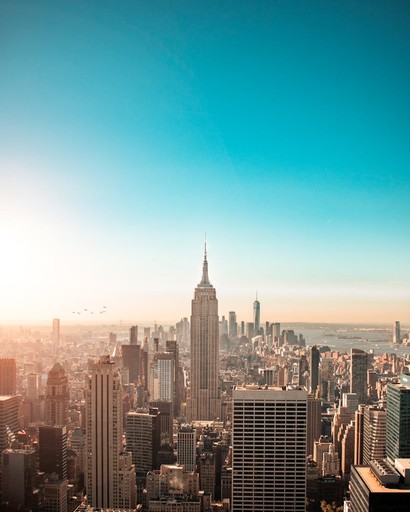

Food — Van Gogh Style Transfer


Street Scenes — Van Gogh Style Transfer


Night Scenes — Van Gogh Style Transfer


Flowers — Van Gogh Style Transfer
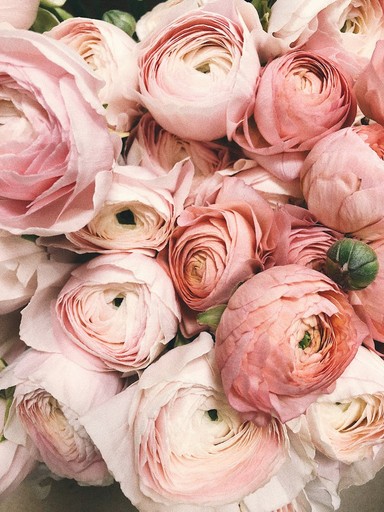

Seascapes — Van Gogh Style Transfer


Landscapes — Van Gogh Style Transfer


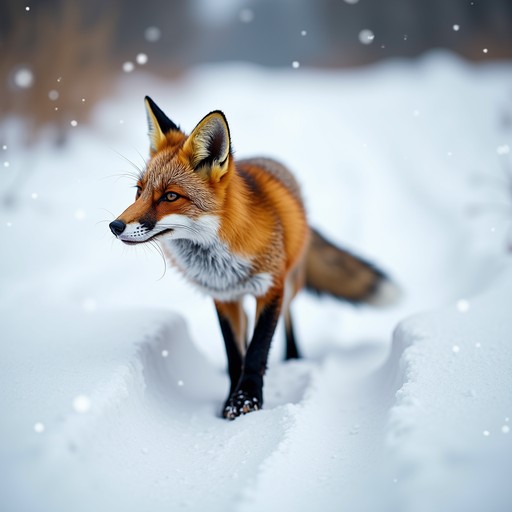
Animals — Van Gogh Style Transfer

Who Was Eugène Delacroix?
Ferdinand Victor Eugene Delacroix was born in 1798 in Charenton-Saint-Maurice, near Paris. The identity of his biological father remains debated -- officially the son of diplomat Charles Delacroix, he may have been fathered by Talleyrand, the legendary French statesman. This ambiguity of origin seems fitting for an artist whose work would challenge every established certainty in French painting.
Delacroix studied under Pierre-Narcisse Guerin and was influenced early by Theodore Gericault, whose Raft of the Medusa (1819) electrified the Paris art world with its monumental scale, violent subject matter, and raw emotional power. Delacroix's own debut at the Salon of 1822, The Barque of Dante, showed Dante and Virgil crossing the river Styx surrounded by tormented souls -- a subject and treatment that announced Romanticism's arrival in French painting. Two years later, The Massacre at Chios (1824) depicted the Greek War of Independence with a savagery that shocked audiences and established Delacroix as the leader of the Romantic movement.
His masterpiece, Liberty Leading the People (1830), commemorating the July Revolution, is one of the most famous paintings in Western art -- a bare-breasted female figure holding the tricolor aloft, striding over barricades and bodies, surrounded by armed citizens from every social class. It is both specific political document and universal symbol of revolutionary struggle. The painting's combination of allegorical grandeur and reportorial immediacy had no precedent in European art.
Delacroix's influence on later painting was enormous. His color theory -- the systematic use of complementary colors to intensify chromatic impact -- directly influenced the Impressionists and Post-Impressionists. Cezanne called him 'the finest palette in all of France.' Van Gogh copied his paintings. Renoir studied his technique. Even Picasso acknowledged Delacroix's Women of Algiers as a starting point for his own variations on the theme. He died in 1863, leaving a body of work that proved color could carry as much intellectual and emotional weight as line.
Signature Techniques
What makes Eugène Delacroix's paintings immediately recognizable -- and what neural style transfer captures from his work:
- Passionate Color -- Eugène Delacroix used color with an intensity that shocked his contemporaries. The neural network captures this chromatic boldness, producing images with deep, saturated hues.
- Dynamic Movement -- Eugène Delacroix's compositions swirl with kinetic energy -- figures twist, drapery billows, horses rear. Style transfer captures this as a sense of arrested motion and dramatic gesture.
- Exotic Themes -- Eugène Delacroix's North African and Middle Eastern subjects brought a new world of color and light into French painting. The AI applies this quality as warm, saturated tones and rich decorative detail.
Style Transfer Quality by Photo Type (ArtFID Tested)
We tested ArtRobot's Eugène Delacroix style transfer across 15 photo categories using ArtFID (Art Frechet Inception Distance):
- LPIPS: content preservation. Lower = better.
- FID: style fidelity to authentic Eugène Delacroix paintings. Lower = more faithful.
Combined formula: ArtFID = (1 + LPIPS) x (1 + FID)
| Photo Category | ArtFID | Stars | Notes |
|---|---|---|---|
| Interiors | 212.48 | 5 stars | Excellent -- passionate color shines here |
| Still Life | 220.18 | 5 stars | Excellent -- passionate color shines here |
| Portraits | 239.15 | 5 stars | Excellent -- passionate color shines here |
| Fantasy | 277.63 | 5 stars | Excellent -- passionate color shines here |
| Travel | 280.31 | 5 stars | Excellent -- passionate color shines here |
| Architecture | 300.40 | 4 stars | Strong -- good architecture results |
| Street Scenes | 304.30 | 4 stars | Strong -- good street scenes results |
| Food | 309.03 | 4 stars | Strong -- good food results |
| Urban Scenes | 313.71 | 4 stars | Strong -- good urban scenes results |
| Flowers | 358.46 | 3 stars | Moderate -- partial style capture |
| Vehicles | 365.00 | 3 stars | Moderate -- partial style capture |
| Night Scenes | 369.29 | 3 stars | Moderate -- partial style capture |
| Seascapes | 378.72 | 3 stars | Moderate -- partial style capture |
| Animals | 400.69 | 2 stars | Weak -- subject resists transformation |
| Landscapes | 409.10 | 2 stars | Weak -- subject resists transformation |
Key takeaway: Eugène Delacroix is a versatile style that works well across most photo categories. Top performers: interiors, still life, portraits.
Interiors leads at 212.48 because Delacroix's visual language -- passionate color, dynamic movement -- naturally complements interiors subjects.
Still Life leads at 220.18 because Delacroix's visual language -- passionate color, dynamic movement -- naturally complements still life subjects.
Before & After Examples
Every row shows the original photograph alongside the AI-generated Eugène Delacroix-style result.
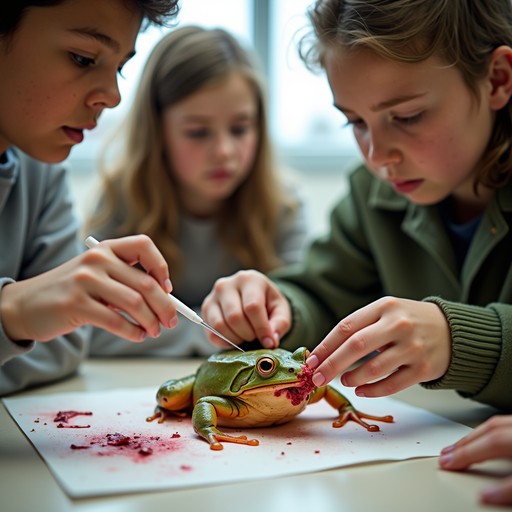
Interiors -- 5 stars stars (ArtFID 212.48)
Interiors is one of the strongest categories for this style.
| Original Photo | AI Result |
|---|---|
 |
 |
| Source photo | ArtFID: 212.48 -- 5 stars stars |
The transformation demonstrates the style's strength with interiors subjects -- the algorithm captures the signature visual treatment while preserving the essential character of the original photograph.
Still Life -- 5 stars stars (ArtFID 220.18)
Still Life is one of the strongest categories for this style.
| Original Photo | AI Result |
|---|---|
 |
 |
| Source photo | ArtFID: 220.18 -- 5 stars stars |
The transformation demonstrates the style's strength with still life subjects -- the algorithm captures the signature visual treatment while preserving the essential character of the original photograph.
Portraits -- 5 stars stars (ArtFID 239.15)
Portraits is one of the strongest categories for this style.
| Original Photo | AI Result |
|---|---|
 |
|
| Source photo | ArtFID: 239.15 -- 5 stars stars |
The transformation demonstrates the style's strength with portraits subjects -- the algorithm captures the signature visual treatment while preserving the essential character of the original photograph.
When to Use Eugène Delacroix Style Transfer
1. Interiors. At ArtFID 212.48, Eugène Delacroix's style excels with interiors photography. The algorithm captures passionate color in this category.
2. Still Life. At ArtFID 220.18, Eugène Delacroix's style excels with still life photography. The algorithm captures passionate color in this category.
3. Portraits. At ArtFID 239.15, Eugène Delacroix's style excels with portraits photography. The algorithm captures passionate color in this category.
4. Fantasy. At ArtFID 277.63, Eugène Delacroix's style excels with fantasy photography. The algorithm captures passionate color in this category.
5. Travel. At ArtFID 280.31, Eugène Delacroix's style excels with travel photography. The algorithm captures passionate color in this category.
When NOT to Use Eugène Delacroix Style Transfer
1. Landscapes. At ArtFID 409.10, landscapes subjects resist Delacroix's visual treatment. The result may look muddy or lose important detail.
2. Animals. At ArtFID 400.69, animals subjects resist Delacroix's visual treatment. The result may look muddy or lose important detail.
3. Seascapes. At ArtFID 378.72, seascapes subjects resist Delacroix's visual treatment. The result may look muddy or lose important detail.
4. Night Scenes. At ArtFID 369.29, night scenes subjects resist Delacroix's visual treatment. The result may look muddy or lose important detail.
5. Vehicles. At ArtFID 365.00, vehicles subjects resist Delacroix's visual treatment. The result may look muddy or lose important detail.
FAQ
Will Eugène Delacroix style transfer look realistic on my photos?
Upload your photo at artrobot.ai/product, select the Eugène Delacroix style from the library, and download your result in seconds. 3 free transfers, no signup required.
Is it legal to use Eugène Delacroix's art style on my photos?
Based on ArtFID testing, interiors produces the best results. See the full ArtFID table above for all 15 categories ranked.
What photo types work best with Eugène Delacroix style transfer?
Yes. ArtRobot offers 3 free style transfers at 1024px resolution with no account required. Premium plans unlock HD (2048px) and 4K (4096px) for print-quality results.
How does Eugène Delacroix style compare to Francisco Goya style?
Yes. Download at 2048px HD for prints up to 8x10" or 4096px 4K for large canvas prints. For the most authentic fine art look, print on matte paper with a slight texture.
Is Eugène Delacroix style transfer free on ArtRobot?
Eugène Delacroix's distinctive visual signature combines passionate color, dynamic movement, exotic themes. These qualities transfer effectively to photographs through neural style transfer.
Related Styles
- Francisco Goya Style Transfer -- Francisco Goya Style Transfer
- J. M. W. Turner Style Transfer -- J. M. W. Turner Style Transfer
- Caspar David Friedrich Style Transfer -- Caspar David Friedrich Style Transfer
- Romanticism Style Transfer -- Romanticism Style Transfer
- Romanticism Style Transfer -- Romanticism Style Transfer
Transform Your Photos with Eugène Delacroix's Vision
The best way to experience Eugène Delacroix's style is to see it transform your own photograph. Upload an image and discover how Delacroix's passionate color translates to your personal photos.
Start Your Free Eugène Delacroix Style Transfer on ArtRobot ->
Try It Yourself
Transform your own photos into stunning paintings with 80+ artist styles. Free to start.