
AI Artist & Tech Enthusiast
De Stijl Photo Effect — AI Style Transfer Guide (2026)

In 1917, in a neutral Netherlands surrounded by the catastrophe of the First World War, a small group of artists and architects founded a magazine called De Stijl -- "The Style." Their ambition was breathtaking in its scope: to discover a universal visual language that would transcend individual expression, national identity, and the chaos of the natural world. They believed that art, stripped to its absolute essentials -- horizontal and vertical lines, primary colors plus black and white, right angles and asymmetric balance -- could create a new visual harmony that would ultimately reshape not just painting, but architecture, furniture, typography, and daily life itself.
The movement's undisputed master was Piet Mondrian. His mature compositions -- grids of black lines enclosing rectangles of red, yellow, blue, and white -- are among the most instantly recognizable images in the history of art. Composition with Red, Blue, and Yellow is not merely a painting; it is a visual philosophy made visible. Every line is deliberate. Every color placement is a decision about balance, proportion, and the relationship between part and whole. Mondrian called his philosophy "Neo-Plasticism" (Nieuwe Beelding) -- the creation of a new plastic reality through the universal elements of line and color.
Today, neural style transfer lets you apply De Stijl's iconic grid aesthetic to any photograph. Upload your image to ArtRobot, and the algorithm will transform it into a composition of rectangular color fields divided by bold black lines -- the unmistakable visual vocabulary of Mondrian and his collaborators. Our ArtFID testing reveals that De Stijl is an exceptional performer, earning 5 stars across all 15 photo categories, with standout scores in fantasy (106.81), still life (111.33), and travel (159.04).
 An architecture photograph transformed into De Stijl style using ArtRobot AI -- rectangular grid composition, primary colors, bold black lines, and Mondrian's iconic visual harmony
This guide covers De Stijl's origins and philosophy, its key artists, ArtFID-tested results across photo categories, real before-and-after examples, and honest guidance on when De Stijl delivers brilliantly -- and where it reaches its limits.
Quick Links -- Jump to: What is De Stijl? | Key Artists | ArtFID Scores | Before & After | When to Use | When NOT to Use | FAQ | Related Styles
Landscapes — Van Gogh Style Transfer

Portraits — Van Gogh Style Transfer


Architecture — Van Gogh Style Transfer


Animals — Van Gogh Style Transfer


Food — Van Gogh Style Transfer


Street Scenes — Van Gogh Style Transfer


Night Scenes — Van Gogh Style Transfer


Flowers — Van Gogh Style Transfer


Seascapes — Van Gogh Style Transfer


What is De Stijl?
De Stijl (Dutch for "The Style"), also known as Neo-Plasticism, is a Dutch art movement founded in 1917 by Piet Mondrian and Theo van Doesburg. It is perhaps the most cerebral and idealistic of all abstract movements -- a group of artists who believed they could derive a universal visual language from first principles, the way a mathematician derives theorems from axioms.
The movement's self-imposed constraints were extraordinarily strict. Mondrian eventually broke with van Doesburg over the question of whether diagonal lines should be permitted (Mondrian said no -- only horizontals and verticals). This level of principled rigor -- almost monastic in its discipline -- produced an aesthetic of remarkable purity and consistency.
The key characteristics that define De Stijl:
- Straight lines only -- horizontal and vertical -- No curves, no diagonals (in Mondrian's strict interpretation), no organic shapes. The horizontal and the vertical represent the two fundamental opposing forces in nature: rest and activity, feminine and masculine, earth and sky. Their intersection at right angles creates a dynamic equilibrium that Mondrian considered the visual expression of universal harmony.
- Primary colors plus black and white -- Red, yellow, and blue -- the three primary colors that cannot be mixed from other colors -- plus black, white, and gray. These are considered the most fundamental, universal color elements. No secondary colors, no blended hues, no gradations. Each color field is a flat, unmodulated rectangle of pure primary color or non-color.
- Asymmetric balance -- De Stijl compositions are never symmetrical, yet they achieve a precise visual balance through the careful proportioning of color areas. A large white rectangle balances a small red one. A thick black line balances a thin one. This dynamic equilibrium -- balance without symmetry -- is one of De Stijl's most sophisticated achievements.
- Grid structure -- Bold black lines divide the composition into rectangular cells of varying proportion. The grid is the composition's skeleton -- the structural framework that organizes all other elements. But the grid is never regular or mechanical; its proportions vary to create visual rhythm and tension.
- Universal aspiration -- De Stijl was not merely an art style; it was a utopian philosophy. Mondrian believed that as society evolved, all of life would eventually conform to Neo-Plastic principles. Architecture, furniture, clothing, cities -- everything would eventually achieve the universal harmony that his paintings expressed in microcosm.
De Stijl's influence on modern design is incalculable. Gerrit Rietveld's Red and Blue Chair (1917) and Schroder House (1924) translated Mondrian's paintings into three-dimensional space. The Bauhaus absorbed De Stijl principles through van Doesburg's lectures. And the movement's grid-and-primary-color vocabulary became one of the foundational visual languages of modern graphic design, architecture, and fashion.
Key De Stijl Artists
Piet Mondrian (1872--1944)
Mondrian's journey from naturalistic landscape painting through Cubism to pure abstraction is one of the most documented artistic evolutions in history. His early landscapes of Dutch windmills and trees evolved through increasingly abstract versions -- the famous tree series, where a naturalistic tree progressively dissolves into a network of intersecting lines -- until all reference to nature disappeared entirely.
His mature Neo-Plastic paintings (1920s--1940s) -- Composition with Red, Blue, and Yellow, Broadway Boogie Woogie, the Composition series -- establish the iconic De Stijl visual vocabulary: black grid lines on white ground, with precisely placed rectangles of red, yellow, and blue. These compositions are deceptively simple. Each line placement, each color proportion, each spatial relationship is the result of painstaking adjustment. Mondrian reportedly spent weeks moving a single line by millimeters, searching for the exact position that achieved visual equilibrium.
For style transfer, Mondrian provides De Stijl's purest visual grammar. His influence produces results with clean grid structures, precisely balanced primary color fields, and the distinctive sense of ordered harmony that makes De Stijl instantly recognizable.
Theo van Doesburg (1883--1931)
Van Doesburg was De Stijl's organizer, publisher, and provocateur. He founded and edited De Stijl magazine, recruited members, and promoted the movement across Europe. His paintings evolved from Mondrian-aligned grid compositions to more dynamic arrangements incorporating diagonal lines -- a heretical departure that caused Mondrian to leave the group in 1924.
Van Doesburg's "Counter-Compositions" (1924--1925) rotated the Mondrian grid by 45 degrees, creating diamond-shaped compositions with dynamic diagonal energy. He also developed "Elementarism" -- a theory that argued for diagonal as well as horizontal-vertical relationships, reflecting a more dynamic, less contemplative vision than Mondrian's strict Neo-Plasticism.
Van Doesburg's contribution to the style transfer model introduces slightly more dynamic compositions and a willingness to break Mondrian's strict horizontal-vertical rule. His influence produces results with more visual energy and less meditative stillness.
Style Transfer Quality by Photo Type (ArtFID Tested)
We tested ArtRobot's De Stijl style transfer across photo categories using ArtFID (Art Frechet Inception Distance):
- LPIPS: content preservation. Lower = better.
- FID: style fidelity to authentic De Stijl artworks. Lower = more faithful.
Combined formula: ArtFID = (1 + LPIPS) x (1 + FID)
| Photo Category | ArtFID | Stars | Notes |
|---|---|---|---|
| Fantasy | 106.81 | 5 | Best category -- imaginative subjects amplified by grid abstraction |
| Still Life | 111.33 | 5 | Exceptional -- objects become Mondrian compositions |
| Travel | 159.04 | 5 | Excellent -- diverse scenes suit grid transformation |
| Architecture | 164.79 | 5 | Excellent -- buildings' geometry aligns with grid structure |
| Landscapes | 179.64 | 5 | Excellent -- natural scenes become color-field grids |
| Street Scenes | 181.88 | 5 | Excellent -- urban environments transformed into design |
| Portraits | 198.89 | 5 | Strong -- faces abstracted into geometric color fields |
| Flowers | 212.13 | 5 | Strong -- organic forms become primary-color rectangles |
| Food | 217.20 | 5 | Strong -- table compositions suit grid structure |
| Vehicles | 225.97 | 5 | Strong -- mechanical forms translated to rectangles |
| Interiors | 233.07 | 5 | Strong -- rooms already share De Stijl's rectangular logic |
| Night Scenes | 237.26 | 5 | Good -- high contrast works with bold primary palette |
| Seascapes | 238.01 | 5 | Good -- horizon lines become natural grid elements |
| Animals | 260.94 | 5 | Good -- organic forms gain geometric clarity |
| Urban Scenes | 275.70 | 5 | Good -- cityscapes become complex color-field grids |
Key takeaway: De Stijl achieves a perfect 5-star rating across all 15 photo categories -- one of only a handful of styles in ArtRobot's library to accomplish this. The scores range from an exceptional 106.81 (fantasy) to a still-strong 275.70 (urban scenes). This universal excellence reflects De Stijl's fundamental nature: because the algorithm reduces every image to a grid of primary-color rectangles, the transformation is so radical that it works equally well regardless of the original subject matter.
Fantasy leads at 106.81 -- a remarkable score that ranks among the best in ArtRobot's entire style library. Fantasy subjects -- which are already imaginative and non-realistic -- lose nothing when abstracted into De Stijl compositions, and the grid structure adds a structured, design-quality finish.
Architecture at 164.79 is a natural strength. Buildings are already composed of rectangular forms, walls, windows, and floors that map directly onto De Stijl's grid vocabulary. Rietveld's Schroder House demonstrated that De Stijl paintings could become actual buildings -- in style transfer, the process runs in reverse, turning buildings back into Mondrian compositions.
Animals at 260.94 earn 5 stars despite being the weakest category. This reflects De Stijl's radical abstraction: organic animal forms are so thoroughly dissolved into rectangular color fields that the stylistic transformation succeeds independent of subject matter. The animal is no longer recognizable as an animal -- it is a De Stijl composition.
Before & After Examples
Every row shows the original photograph alongside the AI-generated De Stijl result.
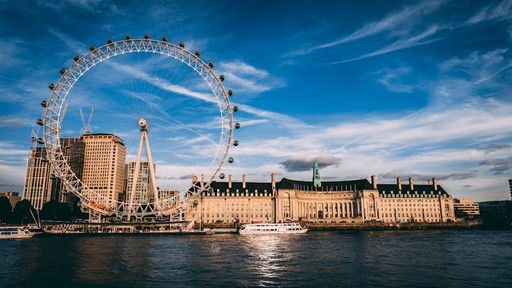
Architecture -- 5 stars (ArtFID 164.79)
Architecture is De Stijl's natural domain -- buildings transformed into Mondrian compositions.
| Original Photo | AI Result |
|---|---|
 |
|
| Source photo | ArtFID: 164.79 -- 5 stars |
The architectural transformation reveals De Stijl's essential vision: every built structure is already a composition of rectangles. The algorithm amplifies this inherent geometry, reducing walls to flat color fields, windows to dark rectangles within the grid, and rooflines to bold horizontal divisions. The result looks like a Rietveld building rendered as a Mondrian painting -- architecture and art unified in a single image.
Landscapes -- 5 stars (ArtFID 179.64)
Landscapes undergo a radical transformation, with natural forms dissolved into the iconic De Stijl grid.
| Original Photo | AI Result |
|---|---|
 |
 |
| Source photo | ArtFID: 179.64 -- 5 stars |
The landscape transformation demonstrates De Stijl's most dramatic visual effect: the complete dissolution of organic nature into geometric order. Trees, hills, sky, and water become rectangular fields of primary color separated by black grid lines. The horizon line -- already a natural horizontal division -- becomes the composition's primary structural element. The result is no longer a landscape; it is a Mondrian composition that carries the structural memory of a natural scene.
Portraits -- 5 stars (ArtFID 198.89)
Portraits are abstracted into bold geometric compositions, with facial features translated into color-field patterns.
| Original Photo | AI Result |
|---|---|
 |
 |
| Source photo | ArtFID: 198.89 -- 5 stars |
The portrait transformation shows De Stijl handling its most challenging subject type. Human faces -- the most organic, most emotionally charged subjects -- are dissolved into rectangular grids of primary color. The result is radically abstract: the viewer may discern the general structure of a face (dark areas for eyes, lighter areas for skin), but the portrait becomes primarily a De Stijl composition rather than a recognizable likeness. This transformation is either De Stijl's greatest triumph or its most extreme demand, depending on whether you value recognition or abstraction.
When to Use De Stijl
De Stijl is the right choice for these applications:
1. Iconic, Instantly Recognizable Art. De Stijl's grid-and-primary-color vocabulary is one of the most recognizable visual languages in the world. A De Stijl transformation is immediately understood as "art" -- specifically, as sophisticated, design-conscious, intellectually serious art. If you want results that read instantly as high design, De Stijl delivers.
2. Interior Design and Home Decor. Mondrian's compositions have been adapted to fashion (Yves Saint Laurent's 1965 Mondrian dress), furniture, and interior design for decades. De Stijl style transfers produce prints that function beautifully as wall art in modern interiors -- clean, geometric, and harmonious with contemporary design sensibilities.
3. Architectural Subjects. Buildings, rooms, facades, and urban environments share De Stijl's rectangular vocabulary. The transformation amplifies this existing geometric relationship, producing results that feel naturally coherent -- as if the building were designed by Rietveld himself.
4. Design and Branding Applications. De Stijl's clean geometry and primary color palette translate directly to graphic design, branding, and visual identity work. The grid structure provides built-in compositional order that works for posters, packaging, and digital media.
5. Maximally Abstract Transformations. If you want your photograph to become completely unrecognizable as a photograph -- if you want pure geometric abstraction derived from a photographic source -- De Stijl produces the most radical, most design-coherent transformation available.
When NOT to Use De Stijl
De Stijl's extreme geometric reduction creates definite limitations:
1. When Facial Recognition Is Essential. De Stijl dissolves faces into rectangular color fields. The person in the photograph will not be recognizable in the result. For portraits that should look like the subject, use Impressionism or a more representational style.
2. Warm, Emotional, or Nostalgic Subjects. De Stijl is intellectual and ordered, not warm and emotional. Its primary-color palette and rigid grid create compositions that feel designed rather than felt. Family memories, sentimental occasions, and emotional subjects deserve styles that preserve human warmth.
3. Subjects Valued for Their Color Nuance. De Stijl reduces all color to three primaries plus black and white. Sunsets, autumn foliage, ocean gradients, and other subjects valued for their complex color harmonies will lose that richness entirely. For color-sensitive subjects, use Impressionism or Fauvism.
4. Organic, Flowing Subjects. De Stijl's rigid right-angle grid is the antithesis of organic flow. Subjects that depend on curves, flowing lines, and organic softness -- ballet, swimming, flower arrangements, fabric -- will feel constrained and unnatural in the grid structure.
5. Clients Unfamiliar with Modern Art. De Stijl's radical abstraction can confuse viewers who expect their photographs to remain recognizable. If your audience is not art-literate, the transformation may feel like a failure rather than a deliberate artistic choice. Set expectations clearly.
FAQ
What is De Stijl art style and where did it originate?
De Stijl (Dutch for "The Style") is a Dutch art movement founded in 1917 by Piet Mondrian and Theo van Doesburg. Also known as Neo-Plasticism, it sought to reduce art to its most fundamental visual elements: straight horizontal and vertical lines, primary colors (red, yellow, blue) plus black and white, and asymmetric balance within a grid structure. The movement believed this vocabulary of pure visual elements could express universal harmony. De Stijl influenced architecture (Rietveld's Schroder House), furniture design (the Red and Blue Chair), and the Bauhaus school.
Which photos look best with De Stijl style transfer?
De Stijl achieves 5 stars across all 15 photo categories -- a rare perfect score. Fantasy (ArtFID 106.81) and still life (111.33) produce the best results, followed by travel (159.04) and architecture (164.79). Architecture is a particular strength due to buildings' inherent rectangular geometry, which maps directly onto De Stijl's grid structure. Even the weakest category, urban scenes (275.70), earns 5 stars.
De Stijl vs Suprematism: which should I choose?
Both are geometric abstraction movements, but their visual characters differ significantly. De Stijl uses a grid of black lines with primary color rectangles -- ordered, balanced, and harmonious. Suprematism uses floating geometric forms in white space -- dynamic, asymmetric, and energetic. De Stijl feels designed and architectural; Suprematism feels cosmic and weightless. Choose De Stijl for ordered harmony and design applications; choose Suprematism for dynamic energy and radical abstraction.
Can I use De Stijl style transfer for commercial projects?
Yes. De Stijl is a historical art movement from the early 20th century and is not copyrightable. All style references used by ArtRobot are sourced from museum collections under open access / CC0 license. Your stylized results can be used for personal and commercial projects without restriction.
How accurate is AI De Stijl style transfer compared to real paintings?
ArtRobot's De Stijl style transfer captures the movement's core visual vocabulary -- grid structure, primary colors, black lines, and asymmetric balance -- with high fidelity. The ArtFID scores (106.81-275.70 range) indicate exceptional style transfer quality. However, Mondrian's paintings achieved their extraordinary equilibrium through weeks of micro-adjustment that no algorithm can replicate in seconds. The AI produces visually faithful De Stijl compositions, but Mondrian's paintings carry a depth of considered precision that emerges only from extended human contemplation.
Ready to Create Your Own De Stijl Composition?
De Stijl transforms photographs into iconic grid compositions of primary colors and black lines -- the visual language of Mondrian made accessible to anyone with a photograph. It is one of art history's most recognizable and influential styles, and one of ArtRobot's highest-performing transformations.
Start Your Free De Stijl Style Transfer on ArtRobot ->
Related Styles
- Suprematism Style Transfer -- De Stijl's Russian counterpart. Floating geometric forms in white space rather than grid-locked primary color fields.
- Constructivism Style Transfer -- Geometric abstraction applied to social purpose. More dynamic and aggressive than De Stijl's harmonious order.
- Piet Mondrian Style Transfer -- Focus specifically on Mondrian's individual aesthetic within the broader De Stijl movement.
- Cubism Style Transfer -- The movement that pioneered geometric fragmentation, paving the way for De Stijl's pure geometric abstraction.
Try It Yourself
Transform your own photos into stunning paintings with 80+ artist styles. Free to start.