
AI Artist & Tech Enthusiast
Dada Photo Effect — AI Style Transfer Guide (2026)

Dada was not an art movement. It was a grenade lobbed at art itself. In 1916, in the middle of the slaughter of World War I, a group of poets, painters, and provocateurs gathered at the Cabaret Voltaire in Zurich and declared war on reason, logic, and every convention that bourgeois culture held sacred. Hugo Ball recited nonsense poetry in a cardboard costume. Tristan Tzara cut newspaper articles into strips, shook them in a bag, and called the random result a poem. Marcel Duchamp signed a urinal "R. Mutt" and submitted it to an art exhibition. The point was not to create beauty -- it was to destroy the very idea that art should be beautiful.
Today, neural style transfer lets you channel Dada's radical anti-aesthetic into your own photographs. Upload your image to ArtRobot, and the algorithm will fragment, collage, and reassemble it with the chaotic, irreverent energy that Duchamp, Man Ray, and Hannah Hoch pioneered. The result is not polished or pretty -- it is deliberately disruptive, layered with visual noise, sharp juxtapositions, and the deliberate refusal of harmony that defined Dada from its first scream in a Zurich nightclub.
 A landscape photograph transformed into Dada style using ArtRobot AI -- fragmented collage elements, typographic intrusions, and anti-compositional chaos
This guide covers Dada's explosive history, its key artists, real before-and-after examples, and honest guidance on when Dada painting styles work well for style transfer -- and when the chaos becomes counterproductive.
Quick Links -- Jump to: What is Dada? | Key Artists | Before & After | When to Use | When NOT to Use | FAQ | Related Styles
Landscapes — Van Gogh Style Transfer

Portraits — Van Gogh Style Transfer

Architecture — Van Gogh Style Transfer


Food — Van Gogh Style Transfer


Street Scenes — Van Gogh Style Transfer


Night Scenes — Van Gogh Style Transfer

Flowers — Van Gogh Style Transfer

Interiors — Van Gogh Style Transfer


Fantasy — Van Gogh Style Transfer


Seascapes — Van Gogh Style Transfer


Animals — Van Gogh Style Transfer

What is Dada?
Dada -- sometimes spelled "dada" in deliberate defiance of capitalization norms -- was an anti-art movement born in Zurich in 1916, with simultaneous eruptions in New York, Berlin, Cologne, Hannover, and Paris. It was not a style in the traditional sense. It was a stance: a violent rejection of the rationalism, nationalism, and cultural complacency that the Dadaists believed had produced the catastrophe of World War I. If reason led to mechanized slaughter, then unreason was the only honest response.
The key characteristics that make Dada visually distinctive -- and that neural style transfer captures:
- Collage and photomontage -- Dada pioneered the technique of cutting and reassembling found images, text, and materials into jarring new compositions. Hannah Hoch's photomontages sliced magazine photographs of politicians and fashion models into grotesque, satirical assemblages. This cut-and-paste aesthetic -- fragmented, layered, deliberately ugly -- is Dada's most recognizable visual signature.
- Ready-mades and found objects -- Duchamp's radical proposition was that an artist could designate any manufactured object as art simply by choosing it. A bicycle wheel on a stool. A bottle rack. A urinal signed with a pseudonym. This idea -- that context, not craft, determines what art is -- shattered every prior assumption about artistic skill and beauty.
- Chance operations -- Dada embraced randomness as a creative method. Jean Arp dropped torn paper pieces onto a surface and glued them where they fell. Tzara composed poems by pulling words randomly from a hat. The refusal to impose conscious order was both aesthetic principle and philosophical statement: if rational planning produced war, then chance was morally superior to intention.
- Typographic disruption -- Dada publications and posters used wildly mixed typefaces, sizes, and orientations. Words collided, overlapped, ran sideways and upside down. The page itself became a visual battleground -- legibility was optional, visual chaos was the point.
- Satirical intent -- Dada was never abstract for abstraction's sake. Its chaos was pointed. Berlin Dada in particular -- George Grosz, John Heartfield, Raoul Hausmann -- used photomontage as a weapon against militarism, capitalism, and the Weimar Republic's political corruption. Every fragmented image was an argument.
Dada's influence radiates through the entire history of 20th-century art: into Surrealism (which inherited Dada's love of the irrational but tamed it into dreamlike imagery), Pop Art, Fluxus, punk aesthetics, and contemporary digital collage. When you apply Dada style transfer, you are tapping into the single most disruptive force in modern art history.
Key Dada Artists
Marcel Duchamp (1887--1968)
Duchamp was Dada's most radical thinker and modern art's great demolition expert. His ready-mades -- Fountain (the urinal, 1917), Bicycle Wheel (1913), Bottle Rack (1914) -- did not just challenge conventions of beauty. They challenged the entire framework of what art could be. His major painting Nude Descending a Staircase, No. 2 (1912) fragmented the human figure into a cascade of angular, mechanical planes -- a work that scandalized the 1913 Armory Show in New York and fused Cubist fragmentation with Futurist motion.
For style transfer, Duchamp's influence introduces mechanical fragmentation, angular decomposition, and a cold, conceptual quality that treats the photographic subject as raw material to be disassembled rather than beautified.
Man Ray (1890--1976)
Man Ray was Dada's photographer -- a paradox, since Dada distrusted craft and photography was supremely crafty. His innovation was to subvert the photographic medium from within. His "Rayographs" placed objects directly on photographic paper and exposed them to light, creating ghostly, shadow-like images without a camera. His solarized portraits -- created by briefly exposing a developing print to light -- produced eerie, outline-haloed faces that hovered between positive and negative.
Man Ray's style transfer influence introduces high-contrast tonal inversions, shadow play, and the uncanny quality of images that seem photographically real but optically wrong. His contribution is particularly effective on portrait subjects.
Hannah Hoch (1889--1978)
Hoch was the pioneer of photomontage and Berlin Dada's most visually inventive artist. Her masterwork Cut with the Kitchen Knife Dada Through the Last Weimar Beer-Belly Cultural Epoch of Germany (1919--1920) is a monumental collage of newspaper photographs, magazine illustrations, and text fragments assembled into a whirling, satirical commentary on Weimar politics, gender roles, and mass media. Her smaller photomontages -- severed heads grafted onto dancers' bodies, eyes mismatched in scale, landscapes invaded by machine parts -- remain startlingly modern.
For style transfer, Hoch's influence produces the most recognizable Dada visual effect: the photomontage aesthetic of cut, fragmented, and reassembled image elements. Her contribution is what makes Dada style transfer look like Dada rather than generic abstraction.
Max Ernst (1891--1976)
Ernst bridged Dada and Surrealism, inventing techniques that served both movements. His Dada-period collage novels -- Une semaine de bonte (1934), La femme 100 tetes (1929) -- assembled Victorian engravings into nightmarish, poetic narratives. His technique of frottage (rubbing textured surfaces through paper) and grattage (scraping paint off canvas over textured objects) introduced chance-generated textures that became integral to both Dada and Surrealist visual vocabularies.
Ernst's style transfer influence adds organic, textured surfaces -- wood grain, fabric weave, leaf veins -- that layer beneath and through the image, creating a palimpsest effect of multiple visual realities coexisting in a single frame.
Before & After Examples
Every row shows the original photograph alongside the AI-generated Dada result.
Landscapes
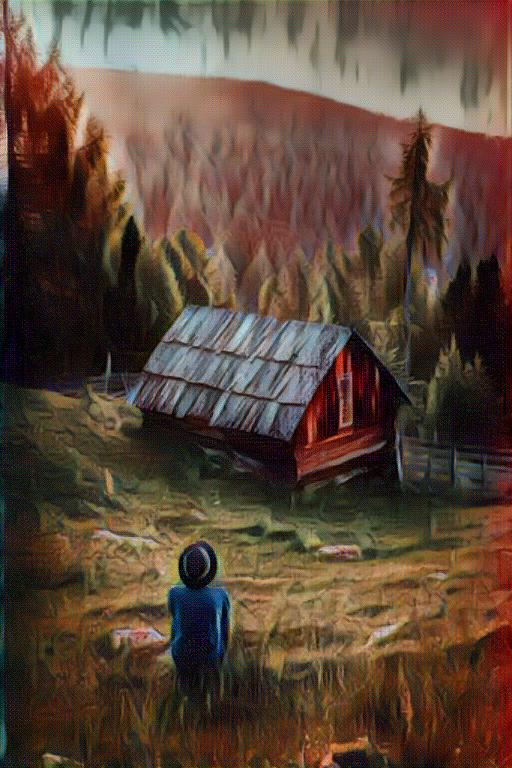
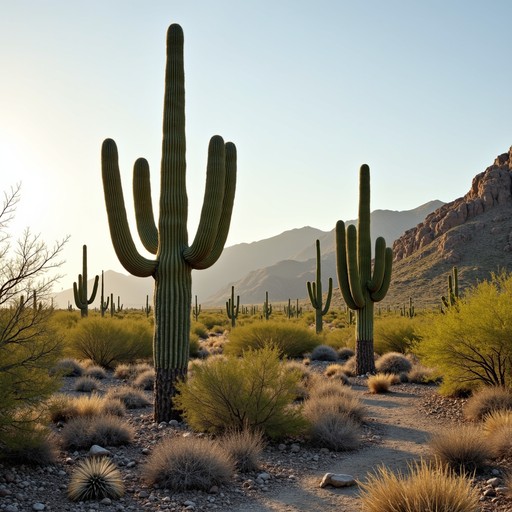
The landscape transformation demonstrates Dada's fragmentation of natural scenes into collage-like compositions.
| Original Photo | AI Result |
|---|---|
 |
|
| Source photo | Dada style transfer |
The landscape is shattered. The horizon line fractures into overlapping planes. Sky and ground interpenetrate through collage-like layering. Colors shift abruptly at fragment boundaries. The tranquil natural scene becomes a visual argument -- nature reprocessed through the industrial logic of cut, paste, and reassemble.
Portraits
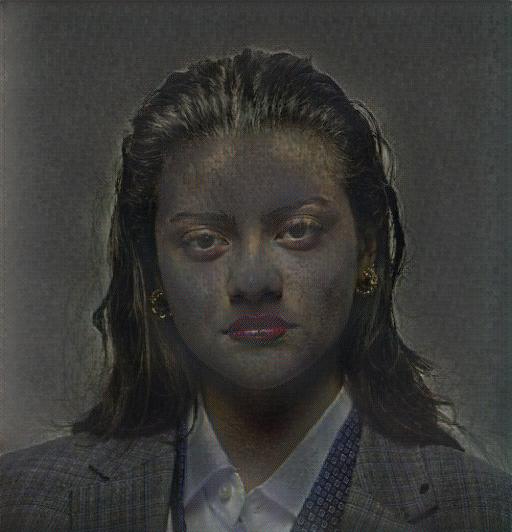
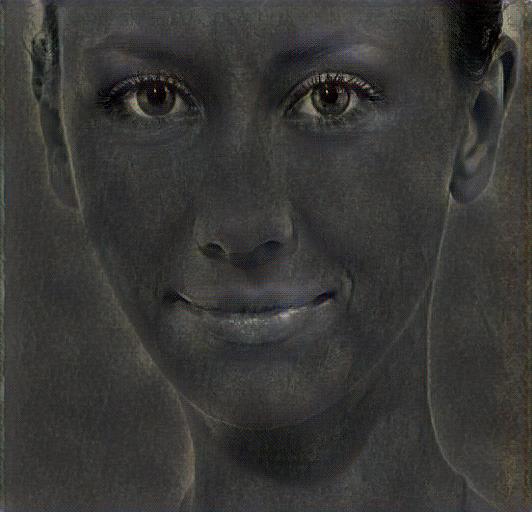
Portraits are where Dada's confrontational energy is most powerful -- the human face becoming raw material for radical reassembly.
| Original Photo | AI Result |
|---|---|
 |
 |
| Source photo | Dada style transfer |
The portrait transformation channels Hannah Hoch's photomontage legacy. Facial features remain recognizable but are disrupted by tonal inversions, textural overlays, and angular fragmentation. The effect is unsettling in the best Dada tradition -- familiar enough to register as a face, strange enough to challenge comfortable viewing.
Architecture
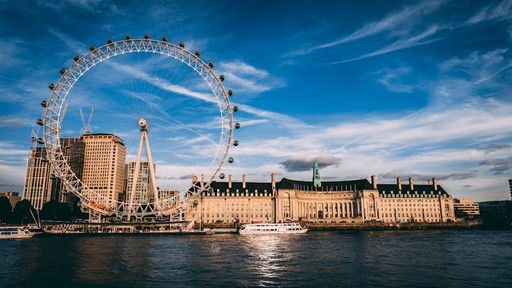
Architectural subjects gain an industrial, mechanical quality that connects to Dada's ambivalent relationship with the machine age.
| Original Photo | AI Result |
|---|---|
 |
 |
| Source photo | Dada style transfer |
The architectural transformation fragments structural lines and introduces collage-like tonal shifts across the building surface. Geometric regularity is simultaneously preserved and disrupted -- the building remains recognizable as architecture, but its surfaces are invaded by competing visual textures and tonal inversions.
When to Use Dada Painting Styles
Dada style transfer excels in specific creative contexts:
1. Social Media Content That Demands Attention. Dada's visual chaos is algorithmically advantageous -- fragmented, high-contrast, visually noisy images stop the scroll. In feeds dominated by polished, filtered photography, a Dada-style image is a visual disruption that commands attention precisely because it refuses to be pretty.
2. Music, Zine, and Poster Art. Dada's aesthetic is the direct ancestor of punk graphic design, zine culture, and DIY poster art. If you are designing album covers, event posters, or independent publications, Dada style transfer produces results that align perfectly with these traditions -- raw, confrontational, and deliberately anti-commercial.
3. Political or Satirical Commentary. Dada was born as political protest, and its visual language retains that confrontational charge. Photographs of political subjects, urban environments, consumer culture, or media imagery gain additional critical edge when processed through Dada's fragmenting, destabilizing lens.
4. Creative Experimentation. Dada's embrace of chance and anti-logic makes it ideal for creative exploration. If you want to see a familiar photograph transformed into something genuinely unexpected -- not beautified, not harmonized, but disrupted -- Dada is the style that most radically reimagines its source material.
5. Contrast with Polished Content. In a brand or portfolio that is otherwise clean and polished, a strategically placed Dada-style image creates powerful visual contrast. It signals creative range, willingness to take risks, and awareness of art-historical depth beyond mainstream aesthetics.
When NOT to Use Dada Painting Styles
Dada's deliberate chaos has genuine limitations. Choose a different style for these contexts:
1. Commercial Product Photography. Dada actively fights against the clarity, attractiveness, and aspirational quality that product photography requires. Fragmented, chaotic, tonally inverted product images will confuse rather than persuade customers. For commercial use, choose Impressionism or Art Nouveau.
2. Wedding or Family Portraits. Dada's confrontational, deconstructive energy is the opposite of what sentimental, commemorative photography demands. No one wants their wedding portrait fragmented and satirized. Use Romanticism for soft, emotionally warm treatments.
3. Subjects Requiring Clarity. If the viewer needs to clearly see and understand the subject -- real estate photography, medical imagery, documentation -- Dada's fragmentation and tonal disruption will obscure essential information. Clarity and Dada are mutually exclusive.
4. Luxury or Elegance Branding. Dada is explicitly anti-luxury, anti-elegance, and anti-bourgeois. Applying it to luxury brand imagery creates an ironic commentary that may not be intentional. For elegant, refined results, use Art Deco or Classicism.
5. Nature and Wildlife Photography. Dada's urban, industrial, media-saturated aesthetic clashes with natural subjects. The fragmentation that energizes urban and portrait subjects deadens the organic beauty of nature scenes. For nature, use Romanticism or Pointillism.
FAQ
What is Dada art style?
Dada is an anti-art movement that originated in Zurich in 1916, during World War I. It rejected logic, reason, and aesthetic conventions in favor of chaos, chance, and satirical provocation. Dada artists pioneered collage, photomontage, ready-mades, and chance-based composition. Key figures include Marcel Duchamp, Man Ray, Hannah Hoch, and Max Ernst. Dada is not a visual style in the traditional sense -- it is a radical attitude toward image-making that embraces fragmentation, disruption, and the deliberate rejection of beauty.
What is the difference between Dada and Surrealism?
Dada (1916--1924) came first and was more purely destructive -- it aimed to demolish art conventions without necessarily building something new. Surrealism (1924 onward) inherited Dada's love of the irrational but channeled it into a constructive program: exploring the unconscious mind through dreamlike imagery. Visually, Dada tends toward collage, fragmentation, and typographic chaos. Surrealism tends toward dreamlike scenes, impossible juxtapositions, and hallucinatory realism. Several artists -- notably Max Ernst -- worked in both movements.
Which photos work best with Dada style transfer?
Portraits and urban/architectural subjects produce the strongest results. Portraits connect to Dada's tradition of photomontage portraiture (Hoch, Man Ray), while architectural and urban subjects align with Dada's engagement with industrial modernity and mass media. High-contrast images with strong graphic elements translate particularly well into Dada's fragmentary aesthetic. Avoid nature photography and subjects that require soft, organic treatment.
Can I use Dada style transfer for commercial projects?
Yes. Dada as a movement and its visual techniques (collage, photomontage, ready-made aesthetics) are historical and not copyrightable. All style references used by ArtRobot are sourced from museum collections under open access / CC0 license. Your stylized results can be used for personal and commercial projects. However, consider whether Dada's anti-commercial, confrontational aesthetic is appropriate for your specific commercial context.
Why does Dada style transfer look "messy"?
Because it is supposed to. Dada's entire aesthetic philosophy is built on the rejection of visual harmony, compositional balance, and conventional beauty. The "messy" quality of Dada style transfer -- fragmented edges, tonal disruptions, collage-like layering -- is not a technical limitation. It is a faithful reproduction of the movement's anti-aesthetic principles. If you want clean, harmonious results, Dada is deliberately the wrong choice. That deliberateness is the point.
Ready to Create Your Own Dada Disruption?
Dada transforms photographs into provocative, fragmented compositions that challenge every expectation of what a "beautiful" image should be. It is art history's most radical visual language -- and it remains as confrontational today as it was in 1916.
Start Your Free Dada Style Transfer on ArtRobot ->
Related Styles
- Surrealism Style Transfer -- Dada's direct descendant. Dreamlike imagery and impossible juxtapositions replace Dada's pure chaos with structured irrationality.
- Cubism Style Transfer -- Shares Dada's fragmentation of visual reality, but through geometric analysis rather than anti-art provocation.
- Pop Art Style Transfer -- Inherits Dada's engagement with mass media and commercial imagery, but celebrates rather than satirizes consumer culture.
- Abstract Art Style Transfer -- Shares Dada's rejection of representational conventions, but pursues pure form and color rather than satirical disruption.
Try It Yourself
Transform your own photos into stunning paintings with 80+ artist styles. Free to start.