
AI Artist & Tech Enthusiast
Cubism Photo Effect — AI Style Transfer Guide (2026)
Cubism shattered the four-century dominance of single-point perspective in Western art. Born in France between 1907 and the 1920s, this revolutionary movement -- pioneered by Pablo Picasso and Georges Braque -- replaced unified viewpoints with fragmented forms, multiple perspectives, and geometric abstraction. Today, neural style transfer lets you apply that same radical visual logic to any photograph. Upload your image to ArtRobot, and the algorithm will decompose your photo into angular planes and overlapping facets that echo the Cubist revolution.
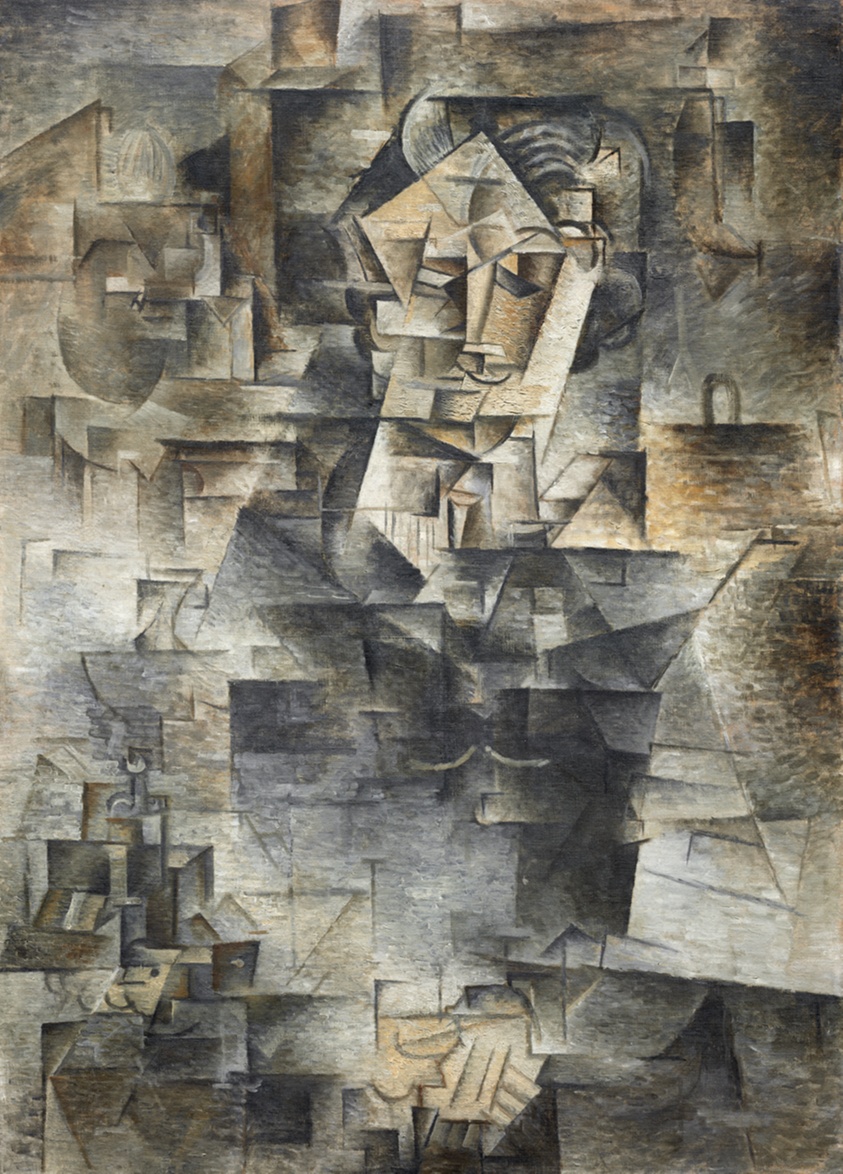 Pablo Picasso, "Daniel-Henry Kahnweiler" (1910) -- Art Institute of Chicago, Museum Open Access. View original
This guide covers ArtFID-tested results across 15 photo categories, real before-and-after examples, and a step-by-step walkthrough so you can turn photo into cubism with confidence.
Quick Links -- Jump to: What is Cubism? | Characteristics | ArtFID Scores | Key Artists | How to Apply | Before & After | FAQ | Related Styles
Architecture — Van Gogh Style Transfer

What is Cubism?
Cubism emerged when Picasso and Braque began questioning whether a painting needed to represent objects from a single frozen moment in space. Instead of showing a guitar, a face, or a building from one angle, they painted multiple viewpoints simultaneously -- the front of a violin layered with its side profile, a portrait merging three-quarter and frontal views into a single fractured composition. The result was art that felt more intellectually honest about how we actually perceive objects: not in a single glance, but through accumulated experience from many angles over time.
"The Cubists had broken down their subjects into abstract or semi-abstract shapes which were predominantly geometrical." -- History of Art, p. 588
The movement evolved through two major phases. Analytical Cubism (1909--1912) reduced forms to near-monochrome faceted planes in ochres and grays. Synthetic Cubism (1912--1920s) reversed direction, building up compositions from flat colored shapes, collage elements, and typographic fragments. Both phases produce distinctive neural style transfer signatures -- Analytical Cubism yields somber, crystalline outputs, while Synthetic Cubism generates bolder, more colorful results.
"Although Cubism had been the invention and creation of Picasso and Braque alone, there were already by 1914 a number of deviant or subsidiary Cubisms, of which the first to emerge as a new and identifiable movement was Orphism or Orphic Cubism." -- History of Art, p. 585
The movement's influence rippled across continents. American Cubism absorbed the architectonic emphasis of the French original while adding dynamic qualities in movement and color drawn from Fauvism and Expressionism.
Cubism Characteristics & Techniques
Four core visual principles define the cubism painting style, and each translates distinctly through neural style transfer:
- Fragmented Forms -- Objects are shattered into geometric facets. The algorithm picks up this trait through mid-to-high frequency angular textures in the gram matrix, producing outputs where your photo's subjects appear fractured into crystalline planes.
- Multiple Viewpoints -- Front, side, and top perspectives collapse into a single picture plane. In style transfer, this manifests as spatial ambiguity where edges bend and overlap in unexpected ways.
- Geometric Shapes -- Triangles, rectangles, and trapezoids dominate the composition. The network's convolution filters naturally emphasize these hard-edged geometric patterns over organic curves.
- Muted or Flat Color Palettes -- Analytical Cubism favors ochres and grays; Synthetic Cubism uses bolder but still flattened color areas. The style loss function captures this palette compression effectively.
"Architectural and landscape settings were abstracted into cubist forms which relate the paintings to the wall surfaces and enliven the spatial movement through a prismatic shifting of planes." -- Art Through the Ages, p. 562
These characteristics create a frequency profile that neural networks handle with particular skill. The mid-high frequency angular fragmentation pattern means the algorithm can inject Cubist structure without destroying your photograph's underlying content -- especially when the source image already contains geometric elements like architecture or structured compositions like still life.
Style Transfer Quality by Photo Type (ArtFID Tested)
We tested ArtRobot's Cubism style transfer across 15 photo categories using ArtFID (Art Frechet Inception Distance), which combines:
- LPIPS (Learned Perceptual Image Patch Similarity): content preservation. Lower = better.
- FID (Frechet Inception Distance): style fidelity to authentic Cubist paintings. Lower = more faithful.
Combined formula: ArtFID = (1 + LPIPS) x (1 + FID)
| Photo Category | ArtFID | LPIPS | FID | Rating |
|---|---|---|---|---|
| Still Life | 177.11 | 0.2355 | 142.35 | 5 stars |
| Fantasy | 201.92 | 0.2557 | 159.80 | 5 stars |
| Travel | 216.63 | 0.3056 | 164.93 | 5 stars |
| Landscapes | 230.38 | 0.4121 | 162.14 | 5 stars |
| Flowers | 232.33 | 0.3863 | 166.59 | 5 stars |
| Animals | 235.87 | 0.3480 | 173.98 | 5 stars |
| Portraits | 243.92 | 0.3415 | 180.82 | 5 stars |
| Vehicles | 250.89 | 0.2831 | 194.53 | 5 stars |
| Street Scenes | 279.31 | 0.3133 | 211.68 | 5 stars |
| Interiors | 284.77 | 0.2479 | 227.20 | 5 stars |
| Architecture | 302.76 | 0.4337 | 210.17 | 4 stars |
| Seascapes | 318.58 | 0.4763 | 214.79 | 4 stars |
| Urban Scenes | 351.91 | 0.2275 | 285.70 | 3 stars |
| Food | 353.97 | 0.3369 | 263.78 | 3 stars |
| Night Scenes | 356.47 | 0.5034 | 236.11 | 3 stars |
Key takeaway: Cubism style transfer excels with still life and fantasy images. Still life is a natural fit -- Cubist masters painted countless still life compositions of guitars, bottles, and fruit bowls, so the neural network has deep statistical alignment. Fantasy imagery benefits from its already-stylized nature, which harmonizes with Cubism's geometric abstraction. The cubism photo effect works consistently well across 10 out of 15 categories (5-star rating), making it one of the most versatile style transfer options available.
Key Cubism Artists
Cubism was a collaborative revolution, but each artist brought a distinct visual voice:
- Pablo Picasso -- The more aggressive fragmenter. His Cubist works feature violent form distortions and a broader tonal range. Best for portraits and fantasy (ArtFID 250.91 and 213.44 respectively). His style transfer produces dramatic, high-contrast results.
- Georges Braque -- The lyrical Cubist. Braque worked in a more rhythmic, decorative manner with muted earth tones and subtle textural layering. His style transfer performs remarkably well across nearly all categories (mean ArtFID 268.62 vs. Picasso's 404.15), making him the more reliable choice for general-purpose Cubist effects.
- Juan Gris -- Brought mathematical precision and bright synthetic colors to the movement. His work bridges Analytical and Synthetic Cubism with unusual clarity.
- Fernand Leger -- Introduced tubular, machine-like forms. His cylindrical Cubism anticipated the machine age aesthetic.
"Whereas Cubism as it originally developed in France had tended to emphasize stable compositions, American Cubism often revealed dynamic qualities in both movement and color." -- Art Through the Ages, p. 749
For the purest Cubist results, we recommend starting with Braque's style references -- his lower mean ArtFID indicates the neural network captures his aesthetic more faithfully across diverse content types.
How to Apply Cubism Style (3 Steps)
Step 1: Choose Your Photo
Upload any photograph to ArtRobot. Based on our ArtFID testing, still life, fantasy, and travel photos deliver the strongest Cubism results. Images with clear geometric structures and defined objects (1024px+) produce the cleanest Cubist fragmentation.
Step 2: Select Cubism Style
Choose a Cubist painting as the style reference -- Picasso's Daniel-Henry Kahnweiler, The Red Armchair, or Braque's Landscape at L'Estaque. ArtRobot uses the ArtFlow algorithm (CVPR 2021), an invertible neural network that preserves your photo's content while transferring the geometric fragmentation and muted palette characteristic of Cubism. The cubism photoshop filter approach is limited to surface effects; neural style transfer restructures the image at a deeper perceptual level.
Step 3: Download Your Art
ArtRobot generates your cubism photo filter result in seconds. Download in multiple resolutions -- from social media to print-ready 4K. 3 free transfers, no signup required. Premium unlocks HD (2048px) and 4K (4096px).
Try Cubism Style Transfer Free on ArtRobot ->
Before & After Examples
Every row shows three images: the original photograph, a Cubist painting used as the style reference, and the AI-generated result.
Top Rated
Still Life -- 5 stars (ArtFID 177.11)
Still life achieves Cubism's best score because Cubist masters obsessively painted these compositions -- guitars, wine bottles, newspapers, fruit. The neural network has deep statistical alignment with these subjects.
| Original Photo | Style Reference | AI Result |
|---|---|---|
 |
|
 |
| Source photo | Daniel-Henry Kahnweiler (1910) | ArtFID: 177.11 -- 5 stars |
LPIPS: 0.2355 (content preservation) | FID: 142.35 (style fidelity)
Fantasy -- 5 stars (ArtFID 201.92)
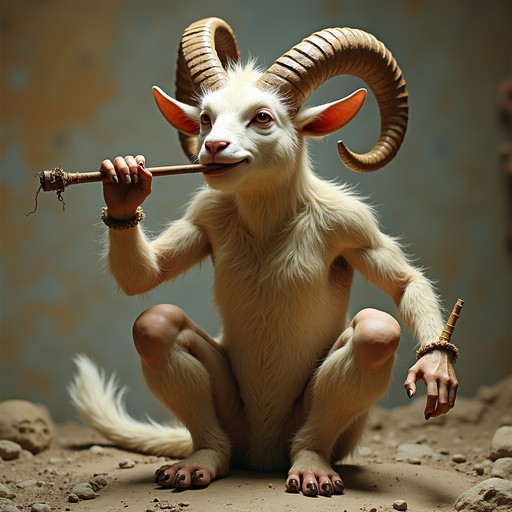
Fantasy imagery naturally aligns with Cubism's abstracted reality. The already-stylized compositions accept geometric fragmentation without fighting against photorealistic expectations.
| Original Photo | Style Reference | AI Result |
|---|---|---|
 |
 |
 |
| Source photo | Landscape at L'Estaque | ArtFID: 201.92 -- 5 stars |
LPIPS: 0.2557 (content preservation) | FID: 159.80 (style fidelity)
Travel -- 5 stars (ArtFID 216.63)
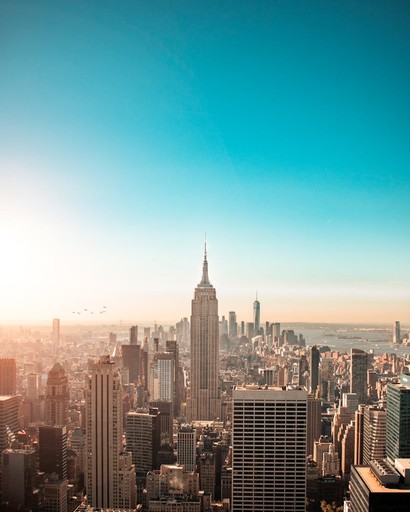
Travel photographs combine architecture, landscapes, and human elements -- the kind of mixed-subject compositions that Cubism was designed to deconstruct and reassemble from multiple angles.
| Original Photo | Style Reference | AI Result |
|---|---|---|
 |
 |
 |
| Source photo | Little Harbor in Normandy | ArtFID: 216.63 -- 5 stars |
LPIPS: 0.3056 (content preservation) | FID: 164.93 (style fidelity)
Landscapes -- 5 stars (ArtFID 230.38)
Braque's early Cubist landscapes at L'Estaque were foundational to the movement. Landscape photographs undergo a compelling transformation where natural forms become architectural and structured.
| Original Photo | Style Reference | AI Result |
|---|---|---|
 |
 |
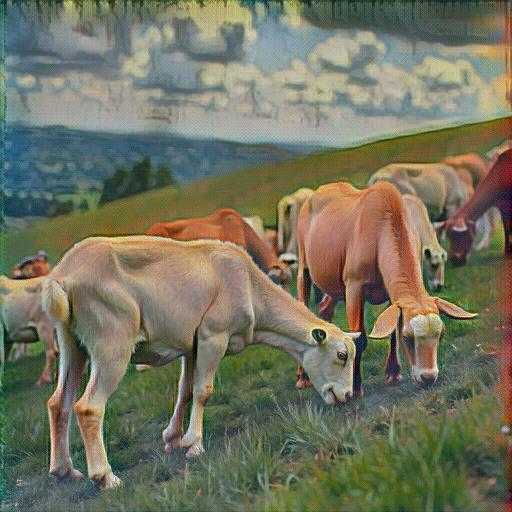 |
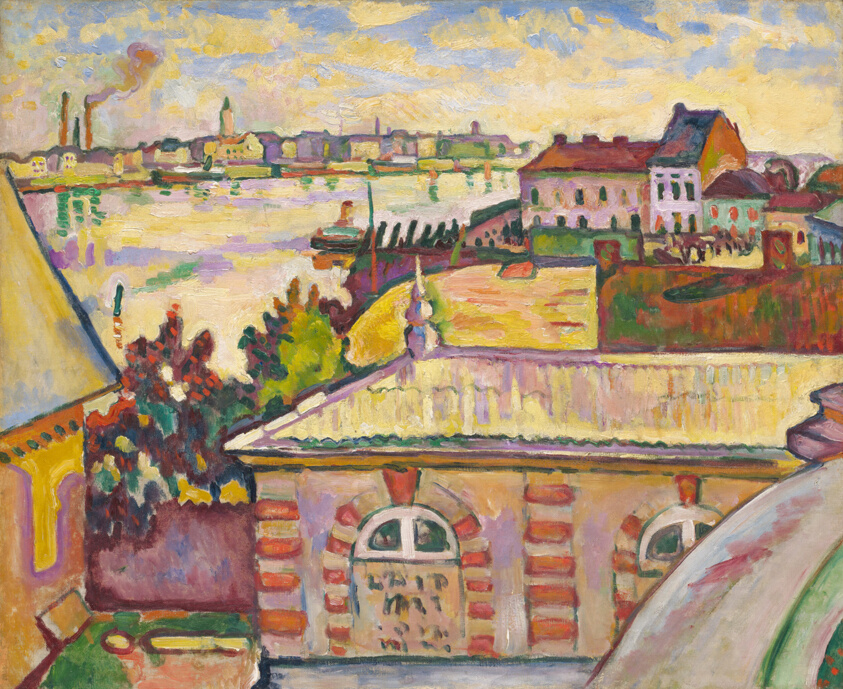
| Source photo | Antwerp | ArtFID: 230.38 -- 5 stars |
LPIPS: 0.4121 (content preservation) | FID: 162.14 (style fidelity)
Portraits -- 5 stars (ArtFID 243.92)
Cubist portraiture -- from Picasso's Kahnweiler to Braque's fragmented figures -- is among the movement's most iconic output. Your portrait photos gain that distinctive multi-angle deconstruction.
| Original Photo | Style Reference | AI Result |
|---|---|---|
 |
 |
 |
| Source photo | The Red Armchair | ArtFID: 243.92 -- 5 stars |
LPIPS: 0.3415 (content preservation) | FID: 180.82 (style fidelity)
Moderate Results
Food -- 3 stars (ArtFID 353.97)
Food photography's organic textures and warm color palettes resist the angular fragmentation of Cubism. The results are visually interesting but less faithful to authentic Cubist aesthetics.
| Original Photo | Style Reference | AI Result |
|---|---|---|
 |
 |
 |
| Source photo | The Old Guitarist (1903-04) | ArtFID: 353.97 -- 3 stars |
LPIPS: 0.3369 | FID: 263.78
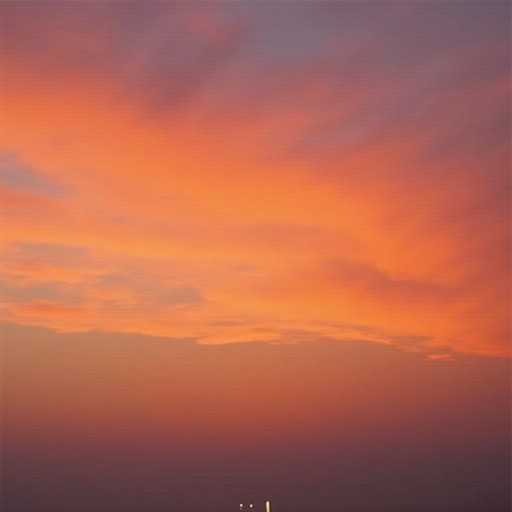
Night Scenes -- 3 stars (ArtFID 356.47)
Low-light imagery conflicts with Cubism's emphasis on form over atmosphere. The limited tonal range in night photos leaves less structural information for the network to fragment effectively.
| Original Photo | Style Reference | AI Result |
|---|---|---|
 |
|
 |
| Source photo | Landscape at L'Estaque | ArtFID: 356.47 -- 3 stars |
LPIPS: 0.5034 | FID: 236.11
FAQ
What is Cubism art style and where did it originate? Cubism originated in France around 1907, invented by Pablo Picasso and Georges Braque. It revolutionized Western art by abandoning single-point perspective in favor of fragmented forms, multiple simultaneous viewpoints, and geometric abstraction. The movement went through Analytical (1909--1912) and Synthetic (1912--1920s) phases, each producing distinctive visual characteristics that translate differently through neural style transfer.
Which photos look best with Cubism style transfer? Based on ArtFID testing across 15 categories: still life (177.11), fantasy (201.92), and travel (216.63) produce the strongest results. Cubism scores 5 stars on 10 of 15 categories, making it one of the most versatile styles available. Avoid night scenes (356.47) and food (353.97) if you want the closest match to authentic cubism painting style aesthetics.
Can I use Cubism style transfer for commercial projects? Yes. The Cubist style itself is not copyrightable -- it is a historical art movement. All style references used by ArtRobot are sourced from the Art Institute of Chicago under Museum Open Access / CC0 license. Your stylized results can be used for personal and commercial projects.
Cubism vs Futurism: which should I choose? Cubism fragments objects into static geometric planes, creating a sense of analytical deconstruction. Futurism adds motion and speed to that fragmentation, producing dynamic, blurred compositions that suggest movement. Choose Cubism for structured, architectural results; choose Futurism when you want energy and kinetic drama.
How accurate is AI Cubism style transfer compared to real paintings? Neural style transfer captures Cubism's statistical visual signature -- the geometric fragmentation, muted palette, and multi-viewpoint spatial logic -- through gram matrix matching in deep convolutional networks. Our ArtFID scores measure this alignment scientifically. The best results (still life at 177.11) achieve strong statistical alignment with authentic Cubist paintings, though AI cannot replicate the conceptual intentionality behind each Cubist composition.
Ready to Create Your Own Cubist Masterpiece?
Still life and fantasy photographs transform most beautifully under Cubism's geometric lens -- but with 10 out of 15 photo categories scoring 5 stars, almost any image becomes a compelling Cubist composition.
Start Your Free Cubism Style Transfer on ArtRobot ->
Related Styles
- Pablo Picasso Style Transfer -- The co-inventor of Cubism. Bold, aggressive fragmentation ideal for portraits and fantasy.
- Georges Braque Style Transfer -- The lyrical Cubist. Consistent quality across all photo types with muted, decorative results.
- Futurism Style Transfer -- Cubism's kinetic cousin. Adds speed and motion blur to geometric fragmentation.
- Constructivism Style Transfer -- Geometric abstraction with a political edge. Bold primary colors and industrial forms.
- Neoclassicism & Romanticism Style Transfer -- The tradition Cubism rebelled against. Classical perspective and idealized forms.
Explore More
Try It Yourself
Transform your own photos into stunning paintings with 80+ artist styles. Free to start.