
AI Artist & Tech Enthusiast
Constructivism Photo Effect — AI Style Transfer Guide (2026)

In 1921, a group of Russian artists issued a declaration that would have been unthinkable a decade earlier: art, they announced, was dead. Not the making of visual things -- that would continue -- but the idea of art as personal expression, as spiritual contemplation, as a luxury for the bourgeoisie. In its place, they proposed something radically different: art as construction. Art as engineering. Art as a tool for building a new socialist society.
This was Constructivism -- a movement that fused the geometric discoveries of Suprematism with the revolutionary politics of post-1917 Russia. Alexander Rodchenko, who had followed Malevich into pure abstraction, now turned his geometric precision toward posters, advertisements, book covers, and photomontage. Vladimir Tatlin designed his famous Monument to the Third International -- a tilted spiral tower that would have dwarfed the Eiffel Tower, had it ever been built. El Lissitzky created propaganda posters that turned geometric abstraction into political weaponry. Art was no longer about feeling; it was about function.
Today, neural style transfer lets you apply Constructivism's bold industrial aesthetic to any photograph. Upload your image to ArtRobot, and the algorithm will transform it with angular geometric forms, bold diagonal compositions, industrial-strength color contrasts, and the graphic energy of a Soviet propaganda poster. Our ArtFID testing shows that Constructivism delivers exceptional 5-star results across 14 of 15 categories, with standout scores in still life (116.07), travel (170.30), and interiors (171.98).
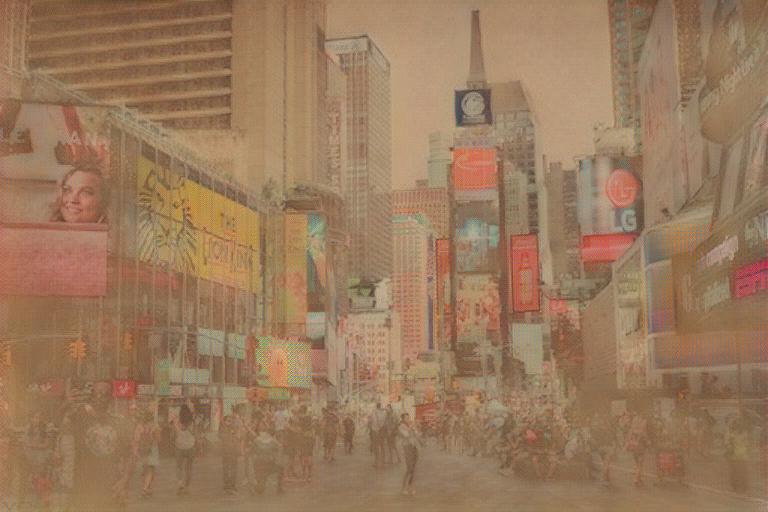 A street photograph transformed into Constructivism style using ArtRobot AI -- angular geometry, bold diagonals, industrial color contrasts, and revolutionary graphic energy
This guide covers Constructivism's revolutionary origins, its key artists, ArtFID-tested results across photo categories, real before-and-after examples, and practical guidance on when to use -- and when to avoid -- this style.
Quick Links -- Jump to: What is Constructivism? | Key Artists | ArtFID Scores | Before & After | When to Use | When NOT to Use | FAQ | Related Styles
Landscapes — Van Gogh Style Transfer

Portraits — Van Gogh Style Transfer


Animals — Van Gogh Style Transfer

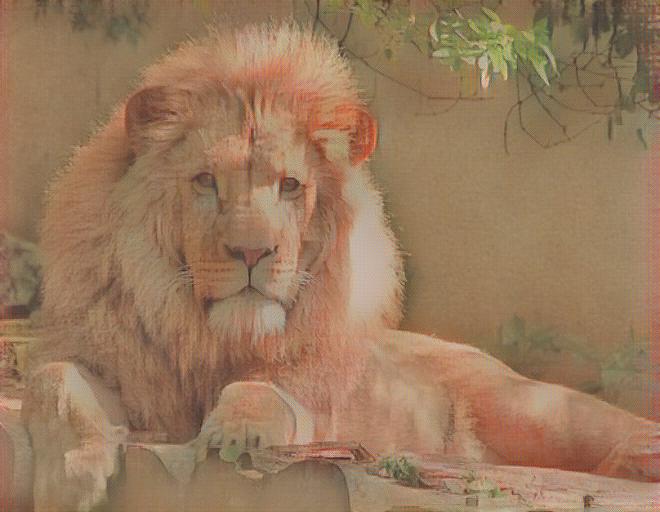
Street Scenes — Van Gogh Style Transfer


Night Scenes — Van Gogh Style Transfer


Flowers — Van Gogh Style Transfer


Seascapes — Van Gogh Style Transfer


Still Life — Van Gogh Style Transfer


Architecture — Van Gogh Style Transfer


What is Constructivism?
Constructivism is an art and design movement that emerged in Russia around 1913 and reached its peak in the 1920s. Born from the same geometric experiments that produced Suprematism, Constructivism diverged by insisting that art must serve a social function. While Malevich floated geometric forms in spiritual white space, the Constructivists dragged geometry into the streets -- onto posters, into architecture, across the pages of books and magazines.
The Constructivist ideology was explicitly anti-aesthetic. As Marx had argued that the mode of production determined social reality, the Constructivists argued that the mode of visual production should determine art. Easel painting was a bourgeois relic; the future belonged to design, photography, photomontage, and industrial production.
The key characteristics that define Constructivism:
- Angular geometric forms -- Like Suprematism, Constructivism uses geometric shapes: triangles, rectangles, circles, and diagonal lines. But where Suprematist geometry floats freely, Constructivist geometry is structurally purposeful. Forms are arranged to create directional force, visual hierarchy, and graphic impact. Every element points somewhere, pushes something, communicates a message.
- Bold diagonal compositions -- The diagonal is Constructivism's signature compositional device. Diagonal lines create dynamic energy, suggest forward motion, and break the static symmetry of traditional composition. Rodchenko's photographs, Lissitzky's posters, and Tatlin's tower all exploit the diagonal as a visual metaphor for revolutionary progress.
- Industrial aesthetic -- Constructivism celebrates the machine, the factory, the engineered structure. Colors are industrial: black, red, white, and metallic gray. Surfaces are hard and precise. There is no handcraft warmth, no organic softness, no decorative ornament. The aesthetic is intentionally mechanical -- a visual language for the machine age.
- Photomontage and mixed media -- Constructivists pioneered photomontage: combining photographic fragments with geometric forms, typography, and graphic elements in dynamic compositions. Rodchenko and Gustav Klutsis elevated photomontage from technique to art form, creating propaganda images of extraordinary visual power.
- Typographic integration -- Text is not an addition to Constructivist composition; it is a structural element. Bold sans-serif letterforms are treated as geometric shapes, integrated into the composition with the same precision as any rectangle or diagonal line. This fusion of image and typography became the foundation of modern graphic design.
Constructivism's influence extends far beyond fine art. It shaped the Bauhaus, De Stijl, Swiss typography, and virtually every school of modern graphic design. When you see a poster with bold diagonal composition, geometric forms, and integrated typography, you are seeing Constructivism's legacy.
Key Constructivism Artists
Alexander Rodchenko (1891--1956)
Rodchenko was Constructivism's most versatile and prolific practitioner. He moved fluidly between painting, sculpture, graphic design, photography, and photomontage -- embodying the Constructivist ideal of the artist as universal designer rather than specialized painter. His early abstract paintings (1918--1921) pushed geometric reduction to extremes: Pure Red Color, Pure Yellow Color, Pure Blue Color (1921) presented three monochrome canvases as painting's terminal point -- after which Rodchenko declared easel painting obsolete and turned entirely to design and photography.
His graphic design work -- advertising posters for state enterprises, book covers, magazine layouts -- established the visual language of Constructivist graphic design: bold diagonals, red-and-black color schemes, integrated photography, and aggressive typographic compositions. His photograph Girl with a Leica and his dramatic downward-looking and upward-looking camera angles revolutionized photographic composition.
For style transfer, Rodchenko's influence produces results with strong graphic impact, bold color contrasts, and dynamic diagonal energy. His aesthetic is the most accessible and commercially applicable branch of Constructivism.
El Lissitzky (1890--1941)
El Lissitzky occupied the exact intersection of Suprematism and Constructivism, creating works that combined Malevich's floating geometric purity with Constructivism's functional purpose. His Proun compositions (1919--1927) imagined geometric forms existing in architectural space -- neither flat paintings nor three-dimensional models, but something entirely new. His propaganda poster Beat the Whites with the Red Wedge (1919) is among the most recognizable works of 20th-century graphic design: a red triangle piercing a white circle against a geometric background, communicating revolutionary struggle through pure geometric metaphor.
Lissitzky also designed groundbreaking exhibitions, creating immersive spatial environments that prefigured installation art by decades. His Proun Room (1923) and Abstract Cabinet (1927--1928) treated the gallery as a total Constructivist environment.
For style transfer, Lissitzky introduces architectural spatial depth, more refined color relationships, and a precision that bridges fine art and design.
Vladimir Tatlin (1885--1953)
Tatlin was Constructivism's architect and sculptor. His Monument to the Third International (1919--1920) -- a model for a 400-meter tower of glass and steel that was never built -- remains the most ambitious physical manifestation of Constructivist ideology. A spiraling steel frame containing rotating glass chambers for legislative, executive, and information functions, the tower embodied the movement's belief that art and engineering should be indistinguishable.
Tatlin's "counter-reliefs" (1914--1915) -- abstract constructions of metal, glass, and wood mounted on walls and across corners -- pioneered the idea that art could be constructed from industrial materials rather than painted on canvas. This shift from representation to construction gave the movement its name.
While Tatlin's three-dimensional work does not directly influence the flat-image style transfer model, his aesthetic of industrial materials, structural logic, and engineering ambition shapes the movement's overall visual character.
Style Transfer Quality by Photo Type (ArtFID Tested)
We tested ArtRobot's Constructivism style transfer across photo categories using ArtFID (Art Frechet Inception Distance):
- LPIPS: content preservation. Lower = better.
- FID: style fidelity to authentic Constructivist artworks. Lower = more faithful.
Combined formula: ArtFID = (1 + LPIPS) x (1 + FID)
| Photo Category | ArtFID | Stars | Notes |
|---|---|---|---|
| Still Life | 116.07 | 5 | Best category -- objects become bold geometric compositions |
| Travel | 170.30 | 5 | Excellent -- diverse scenes suit industrial geometry |
| Interiors | 171.98 | 5 | Excellent -- room geometry amplified to Constructivist clarity |
| Flowers | 182.52 | 5 | Excellent -- organic forms become graphic color shapes |
| Fantasy | 182.74 | 5 | Excellent -- imaginative subjects gain revolutionary energy |
| Night Scenes | 220.20 | 5 | Strong -- high contrast aligns with red-and-black palette |
| Food | 244.03 | 5 | Strong -- simple subjects become poster-quality graphics |
| Vehicles | 255.89 | 5 | Strong -- machines match the industrial aesthetic perfectly |
| Street Scenes | 260.99 | 5 | Strong -- urban scenes become Constructivist propaganda |
| Portraits | 268.53 | 5 | Good -- faces gain graphic poster intensity |
| Urban Scenes | 281.62 | 5 | Good -- cityscapes become geometric fields of force |
| Landscapes | 282.69 | 5 | Good -- natural forms translate to angular geometry |
| Animals | 284.25 | 5 | Good -- animal forms become bold graphic silhouettes |
| Seascapes | 289.21 | 5 | Good -- horizontal compositions gain dynamic diagonals |
| Architecture | 301.60 | 4 | Solid -- buildings amplified into bold structural forms |
Key takeaway: Constructivism is one of ArtRobot's top-performing styles overall. With 5 stars across 14 categories and only architecture at 4 stars, it offers remarkably consistent quality. This broad strength reflects Constructivism's design versatility -- a movement that was applied to everything from posters to furniture to architecture naturally handles diverse photographic subjects.
Still life at 116.07 is exceptional. Simple objects with clear outlines translate perfectly into the bold, graphic compositions that Constructivism demands. A table setting, a fruit arrangement, a collection of tools -- each becomes a Rodchenko poster composition.
Vehicles at 255.89 deserve special mention because mechanical subjects align directly with Constructivism's industrial ideology. Cars, trains, motorcycles, and machinery become celebrations of the machine -- exactly what the Constructivists intended.
Architecture at 301.60 earns 4 stars. Counterintuitively, buildings -- which should align with Constructivism's architectural ambitions -- score slightly lower because the style's aggressive geometric transformation can conflict with architecture's existing structural logic. The result is still strong, just not as refined as the algorithm's handling of less structured subjects.
Before & After Examples
Every row shows the original photograph alongside the AI-generated Constructivist result.
Street Scenes -- 5 stars (ArtFID 260.99)
Street scenes are natural Constructivist territory -- the urban environment transformed into revolutionary graphic art.
| Original Photo | AI Result |
|---|---|
 |
|
| Source photo | ArtFID: 260.99 -- 5 stars |
The street scene transformation captures Constructivism's poster-like graphic intensity. Urban elements -- buildings, signs, vehicles, pedestrians -- are reduced to angular geometric forms in bold, limited colors. Diagonal lines create dynamic energy that propels the eye through the composition. The result looks like a propaganda poster for modern urban life -- which is exactly what Rodchenko and Lissitzky would have wanted.
Portraits -- 5 stars (ArtFID 268.53)
Portraits gain the graphic intensity of a revolutionary poster, with faces transformed into bold geometric constructions.
| Original Photo | AI Result |
|---|---|
 |
 |
| Source photo | ArtFID: 268.53 -- 5 stars |
The portrait transformation demonstrates Constructivism's power to heroicize its subjects. Facial features are simplified into bold planes. Skin tones shift toward the limited Constructivist palette -- red, black, white, and gray. The result evokes Rodchenko's photomontage portraits, where individuals become icons -- graphic symbols rather than naturalistic likenesses.
Architecture -- 4 stars (ArtFID 301.60)
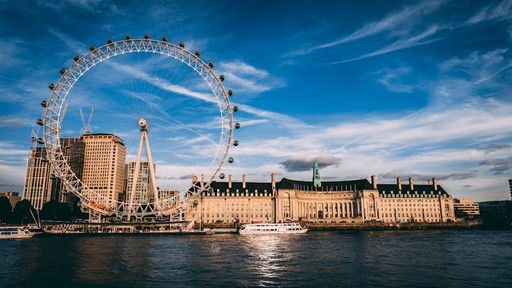
Architecture's structural forms are amplified into bold Constructivist compositions that celebrate engineered geometry.
| Original Photo | AI Result |
|---|---|
 |
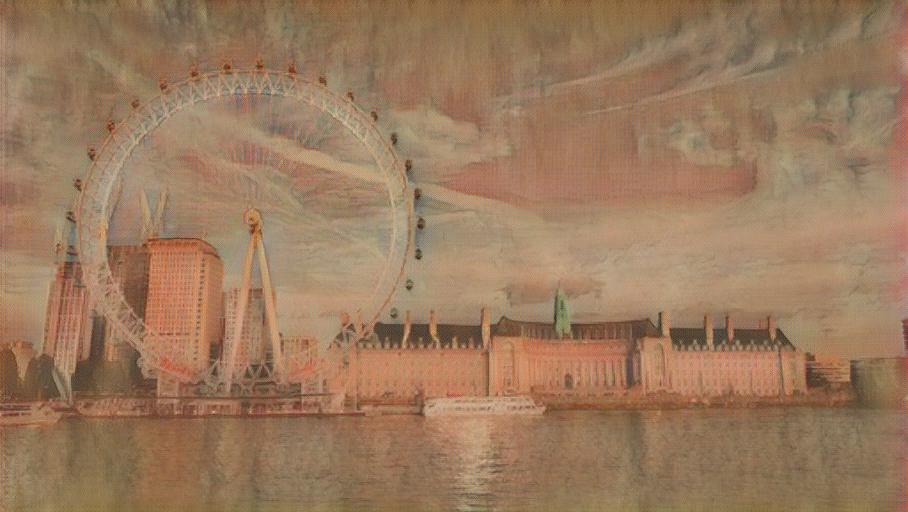 |
| Source photo | ArtFID: 301.60 -- 4 stars |
The architectural transformation reveals Constructivism's relationship with built form. Building structures are reduced to their essential geometry: rectangles, trapezoids, and diagonal lines in bold, industrial colors. The result looks like an architectural rendering from a Constructivist design studio -- Tatlin's vision of art and engineering unified.
When to Use Constructivism
Constructivism is the right choice for these specific applications:
1. Poster and Graphic Design Work. Constructivism produces inherently poster-like results: bold colors, strong geometry, dynamic diagonals, and graphic clarity. The style translates directly to event posters, album covers, marketing materials, and editorial illustration. If you need artwork with immediate graphic impact, Constructivism delivers it automatically.
2. Political, Social, or Activist Content. Constructivism was born as revolutionary art, and its visual language still carries that political energy. Campaign graphics, protest art, social justice visuals, and activist communications gain authentic power from the Constructivist aesthetic. The style communicates urgency, conviction, and collective action.
3. Industrial, Mechanical, and Urban Subjects. Constructivism celebrates the machine. Photographs of factories, machinery, vehicles, urban infrastructure, and industrial landscapes become celebrations of engineering and modern production. The style aligns perfectly with these subjects' inherent character.
4. Brand Identity for Tech and Design Companies. Constructivism's clean geometry, bold color, and modernist precision align naturally with technology and design brand aesthetics. The style can produce distinctive visual identity elements, social media graphics, and presentation materials with a sophisticated, design-conscious sensibility.
5. Bold, High-Impact Wall Art. Constructivist transformations produce prints with commanding visual presence. The bold colors, strong geometry, and dynamic compositions demand attention on large walls. In modern minimalist interiors, a Constructivist print becomes a statement piece.
When NOT to Use Constructivism
Constructivism's aggressive aesthetic creates clear limitations:
1. Soft, Romantic, or Sentimental Subjects. Constructivism is the antithesis of sentimentality. Wedding photos, baby portraits, pet pictures, and romantic couples will lose all emotional warmth under the style's industrial geometric treatment. Use Impressionism or Romanticism for emotional subjects.
2. Nature Photography That Should Stay Natural. Constructivism imposes industrial geometry on organic subjects. While the scores are strong (5 stars on flowers, animals, and landscapes), the results will look mechanical rather than natural. If the point is to celebrate nature's organic beauty, Constructivism contradicts that purpose.
3. Subtle, Nuanced Color Work. Constructivism reduces color palettes to bold, limited schemes -- primarily red, black, white, and gray. Photographs valued for their subtle color gradations, pastel tones, or complex color harmonies will lose that nuance. For color-sensitive work, use Impressionism or Fauvism.
4. Luxury or Premium Brand Content. Constructivism's proletarian, industrial aesthetic conflicts with luxury positioning. Fashion brands, jewelry, fine dining, and premium lifestyle content should avoid a style that was explicitly designed to reject bourgeois values.
5. Photos Where Facial Recognition Matters. While portraits score 5 stars, the Constructivist transformation significantly abstracts facial features. If the viewer needs to recognize the person in the photo, the style's geometric simplification will work against that goal.
FAQ
What is Constructivism art style and where did it originate?
Constructivism is an art and design movement that emerged in Russia around 1913 and reached its peak in the 1920s following the Russian Revolution. Founded by artists including Alexander Rodchenko, Vladimir Tatlin, and El Lissitzky, Constructivism insisted that art must serve a social function rather than exist as personal expression. The movement used angular geometric forms, bold diagonal compositions, industrial materials, photomontage, and integrated typography to create visual works with immediate graphic impact. Constructivism profoundly influenced modern graphic design, architecture, and typography.
Which photos look best with Constructivism style transfer?
Still life (ArtFID 116.07, 5 stars) produces the best results, followed by travel (170.30) and interiors (171.98). Constructivism earns 5 stars across 14 of 15 categories. Subjects with clear geometric structure -- vehicles, architecture, urban scenes -- align particularly well with the style's industrial aesthetic. Only architecture (301.60) drops to 4 stars, which is still a strong result.
Constructivism vs Suprematism: which should I choose?
Both movements emerged from the Russian avant-garde and share geometric visual language, but they serve different purposes. Suprematism pursues pure abstraction -- forms floating in spiritual white space, freed from all function. Constructivism pursues functional design -- geometry applied to communication, propaganda, and practical objects. In style transfer, Suprematism produces more radically abstract results with floating forms and white backgrounds. Constructivism produces more structured, graphic, poster-like results with bold diagonals and industrial energy. Choose Suprematism for contemplative art; choose Constructivism for graphic impact and communication.
Can I use Constructivism style transfer for commercial projects?
Yes. Constructivism is a historical art movement from the early 20th century and is not copyrightable. All style references used by ArtRobot are sourced from museum collections under open access / CC0 license. Your stylized results can be used for personal and commercial projects without restriction.
How accurate is AI Constructivism style transfer compared to real artworks?
ArtRobot's Constructivism style transfer captures the movement's core visual language: angular geometry, bold diagonals, industrial color contrasts, and graphic composition. The ArtFID scores (116.07-301.60 range) indicate strong style fidelity across nearly all categories. However, authentic Constructivist art encompassed three-dimensional construction, photomontage, typography, and architectural design -- multimedia dimensions that a flat-image style transfer cannot fully reproduce. The AI produces visually compelling Constructivist-inspired compositions, not comprehensive recreations of the movement's full scope.
Ready to Create Your Own Constructivist Composition?
Constructivism transforms photographs into bold, graphic compositions with revolutionary energy -- angular geometry, industrial color, and the commanding visual impact of a Soviet propaganda poster. It is one of the most design-ready styles in ArtRobot's library.
Start Your Free Constructivism Style Transfer on ArtRobot ->
Related Styles
- Suprematism Style Transfer -- Constructivism's spiritual parent. Pure geometric abstraction freed from social function.
- De Stijl Style Transfer -- The Dutch parallel. Grid-based compositions and primary colors, with utopian rather than revolutionary ambitions.
- Cubism Style Transfer -- The movement that pioneered geometric fragmentation before the Russian avant-garde radicalized it.
- Fauvism Style Transfer -- Bold color applied expressively rather than structurally -- Constructivism's emotional opposite.
Try It Yourself
Transform your own photos into stunning paintings with 80+ artist styles. Free to start.