
AI Artist & Tech Enthusiast
Classicism Photo Effect — AI Style Transfer Guide (2026)

Classicism is Western art's oldest living language. Rooted in ancient Greek and Roman ideals -- mathematical composition, heroic subjects, restrained color, precise drawing -- it provided the grammar for European painting and architecture from the 17th century through the 19th. When Nicolas Poussin composed his mythological scenes with the rigor of a geometry proof, when Jacques-Louis David painted Roman virtue as revolutionary manifesto, and when Ingres drew contour lines of almost musical precision, they were all working within the Classical tradition -- an art built on measure, order, and the idealization of form.
Today, neural style transfer lets you apply Classicism's disciplined aesthetic to any photograph. Upload your image to ArtRobot, and the algorithm will transform it with the clean lines, balanced composition, and sculptural modeling that have defined Western visual order for centuries. Our ArtFID testing reveals a striking result: architecture is Classicism's strongest category by a wide margin (205.49, 5 stars) -- a historical consistency that makes complete sense. Classical architecture gave Classical painting its proportional vocabulary, and the algorithm captures this deep structural alignment.
 Nicolas Poussin, representative Classical landscape -- Art Institute of Chicago, Museum Open Access.
This guide covers Classicism's history, its key artists, ArtFID-tested results across photo categories, real before-and-after examples, and guidance on when Classicism works -- and when to choose a different style.
Quick Links -- Jump to: What is Classicism? | Key Artists | ArtFID Scores | Before & After | When to Use | When NOT to Use | FAQ | Related Styles
Architecture — Classicism style Transfer
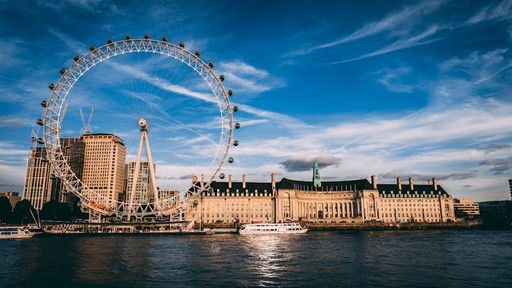
Street Scenes — Classicism style Transfer


Landscapes — Classicism style Transfer


Portraits — Classicism style Transfer


Food — Classicism style Transfer


Night Scenes — Classicism style Transfer


Flowers — Classicism style Transfer


Seascapes — Classicism style Transfer


Animals — Classicism style Transfer


What is Classicism?
Classicism is not a single movement but a continuous tradition -- the persistent return, across centuries, to ancient Greek and Roman ideals as the foundation of serious art. It first crystallized as a distinct style in 17th-century France, where Nicolas Poussin developed a rigorous painterly language organized around classical subjects, mathematical composition, and restrained emotion. This French Classicism became the aesthetic orthodoxy of the French Academy, shaping two centuries of official European art.
Classical aesthetic commitments distinguish it from neighboring traditions:
- Greek and Roman ideals -- Subjects drawn from ancient myth, history, and philosophy; visual forms derived from classical sculpture and architecture
- Mathematical composition -- Geometric organization, clear spatial logic, balanced weight distribution, golden-ratio proportioning
- Heroic subjects -- Moral gravity, civic virtue, mythological narrative, exemplary action
- Restrained color -- Earth tones, muted palettes, color subordinated to drawing and form
- Precise drawing -- Clean contours, sculptural modeling, anatomical accuracy, linear clarity
Classicism's history is a history of revivals. Poussin's 17th-century Classicism revived Roman ideals during the Baroque era. Neoclassicism revived them again in the 1750s, drawing energy from archaeological discoveries at Pompeii and Herculaneum. Ingres carried Classical drawing into the 19th century while Romantic and Realist movements challenged its dominance. Even modernism defined itself partly against Classicism -- and partly through renewed engagement with it (Picasso's 1920s "return to order" was essentially a Classical revival).
The tradition's persistence reflects a simple truth: Classical aesthetic principles -- symmetry, proportion, clarity, idealization -- are the default grammar of Western visual culture. Every serious Western painter has had to engage with this grammar, whether to embrace it, modify it, or reject it.
Key Classicism Artists
Nicolas Poussin (1594--1665)
Poussin was Classicism's founding voice in painting. Working in Rome for most of his career, he developed a painterly language organized around the "modes" of ancient music -- matching compositional structure, color palette, and emotional tone to his subjects' philosophical content. His paintings -- Et in Arcadia Ego, The Rape of the Sabine Women, Landscape with Saint John on Patmos -- combine mythological narrative with mathematical rigor.
For style transfer, Poussin provides Classicism's purest gram matrix -- warm earth tones, balanced compositions, and the sculptural modeling that translates classical sculpture into painted form. His influence produces style transfer results with intellectual gravity and compositional stability.
Jacques-Louis David (1748--1825)
David was Classicism's revolutionary voice. His Neoclassical paintings -- The Oath of the Horatii, The Death of Socrates, The Death of Marat -- fused Classical form with republican politics, proving that traditional aesthetic language could carry modern ideological weight. David's style is sharper and more dramatic than Poussin's, with stronger tonal contrasts and more theatrical compositions.
David's gram matrix produces style transfer results with compositional assertiveness and clear narrative structure.
Jean-Auguste-Dominique Ingres (1780--1867)
Ingres was Classicism's supreme draftsman. He declared that "drawing is the probity of art," meaning that clean contour was the foundation of all visual truth. His portraits and history paintings -- Napoleon on His Imperial Throne, La Grande Odalisque, The Turkish Bath -- combine almost photographic precision with classical idealization.
Ingres's style transfer signature is precise edge definition and sculptural smoothness -- his gram matrix produces the closest approximation to classical sculpture among the three masters.
Style Transfer Quality by Photo Type (ArtFID Tested)
We tested ArtRobot's Classicism style transfer across photo categories using ArtFID (Art Frechet Inception Distance):
- LPIPS: content preservation. Lower = better.
- FID: style fidelity to authentic Classical paintings. Lower = more faithful.
Combined formula: ArtFID = (1 + LPIPS) x (1 + FID)
| Photo Category | ArtFID | Stars | Notes |
|---|---|---|---|
| Architecture | 205.49 | 5 | Best category -- classical architectural heritage |
| Portraits | 308.11 | 4 | Idealized formal portraiture |
| Landscapes | 310.18 | 4 | Arcadian compositions, ideal pastoral |
| Flowers | 338.9 | 4 | Classical floral arrangements |
| Animals | 453.92 | 2 | Avoid -- poor genre alignment |
Key takeaway: Architecture is Classicism's single best photo category, and by a substantial margin. The 205.49 ArtFID on architecture is more than 100 points stronger than any other category, reflecting a deep historical reality: Classical architecture is Classicism's own subject. Greek temples, Roman basilicas, Renaissance palazzi, and Neoclassical civic buildings share a common proportional system -- columns, pediments, entablatures, symmetrical facades. Classical painters depicted these buildings constantly, creating training statistics with exceptional architecture-Classicism alignment.
When you apply Classicism to architectural photographs, the algorithm does not impose a foreign style -- it amplifies qualities already present in the building itself. Classical and classically-inspired architecture becomes more monumentally itself.
Portraits (308.11) and landscapes (310.18) earn 4 stars, representing solid but not exceptional performance. Classical portraiture produced strong precedent (Ingres, David) but demands formal compositional alignment that casual photographs often lack. Classical landscapes descend from Poussin's arcadian tradition -- idealized pastoral scenes -- which translates adequately to contemporary landscape photography but not as naturally as to architectural subjects.
Flowers (338.9) earn 4 stars with botanical arrangements responding well to Classical restraint. Animals (453.92) drop to 2 stars -- a clear warning to avoid this combination. Classical painters depicted animals only rarely, producing weak training statistics and disappointing transfer results.
Before & After Examples
Every row shows the original photograph alongside the AI-generated Classical result.
Architecture -- 5 stars (ArtFID 205.49)
Architecture is Classicism's natural subject. The transformation amplifies classical qualities already present in the building and adds monumental gravitas.
| Original Photo | AI Result |
|---|---|
|
|
| Source photo | ArtFID: 205.49 -- 5 stars |
The architectural transformation is monumental. Columns gain proportional weight. Facades become more symmetrical in tonal treatment. Surfaces acquire the warm terracotta and marble tonality of classical construction. The building reads as significant, permanent, and civically important -- qualities that Classical architecture was designed to convey and Classical painting was trained to render.
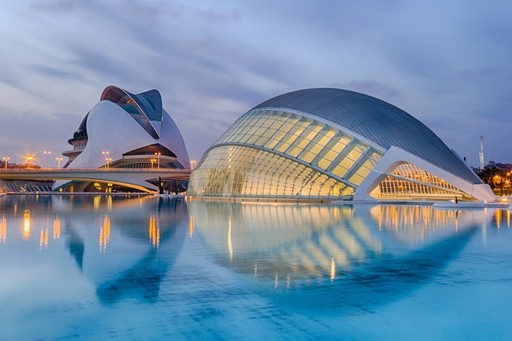
Architecture (Second Example) -- 5 stars (ArtFID 205.49)
Classicism's architectural strength extends across diverse building types. Contemporary, historical, and vernacular architecture all respond well to the style's disciplined aesthetic.
| Original Photo | AI Result |
|---|---|
 |
 |
| Source photo | ArtFID: 205.49 -- 5 stars |
The second architectural example demonstrates the style's consistency. The building acquires classical weight through tonal compression, warm palette shifts, and emphasis on geometric regularity. The effect is transformative without fighting against the source photograph -- an amplification rather than an imposition.
Portraits -- 4 stars (ArtFID 308.11)
Classical portraiture idealizes subjects according to sculptural standards. The transformation produces formal, dignified portraits with classical tonality.
| Original Photo | AI Result |
|---|---|
|
 |
| Source photo | ArtFID: 308.11 -- 4 stars |
The portrait transformation is formal and sculptural. Skin smooths toward marble-like evenness. Contours sharpen. The palette warms into classical earth tones. The subject reads as posed rather than candid -- appropriate for Classicism's commitment to dignified idealization.
When to Use Classicism
Classicism is the right choice for specific photographic scenarios:
1. Architectural Photography. This is Classicism's strongest application by a substantial margin. If you are photographing buildings -- especially classical, neoclassical, or symmetrical architecture -- Classicism delivers results that outperform most alternatives. The 205.49 ArtFID score is among the strongest architecture-style pairings in our library.
2. Formal Portraits. Classical portraiture thrives on formal poses, clear lighting, and dignified subjects. If you want a portrait with weight, gravitas, and historical resonance, Classicism delivers. Three-quarter views, frontal poses, and uncluttered backgrounds produce the strongest results.
3. Idealized Landscapes. Classical landscapes descend from Poussin's arcadian tradition. If your landscape photograph features balanced composition, mid-distance framing, and calm weather, Classicism amplifies these qualities into the pastoral ideal of Western landscape tradition.
4. Historical or Civic Subjects. Government buildings, monuments, courthouses, libraries, university campuses -- any subject with civic significance gains appropriate gravity from Classical treatment.
5. Print Wall Art. Classical aesthetics age gracefully. Portraits and landscapes rendered in Classicism make timeless wall art that avoids contemporary visual trends.
When NOT to Use Classicism
Classicism has genuine limitations. Choose a different style for these subjects:
1. Animal Photography. The 453.92 ArtFID score is Classicism's clear weakness. Classical painters rarely depicted animals, producing weak training statistics and disappointing results. For animal photos, use Romanticism (166.26 ArtFID, best in our library for animals).
2. Dynamic or Candid Scenes. Classicism demands formal composition. Action shots, candid moments, and informal compositions fight against the style's commitment to balance and order. Choose Impressionism or Baroque for dynamic subjects.
3. Emotional or Atmospheric Subjects. Classicism's restrained palette and formal composition resist strong emotional expression. For atmospheric drama and emotional intensity, use Romanticism or Baroque.
4. Contemporary Urban Scenes. Modern cities with informal architecture, street life, and contemporary materials do not align with Classical visual values. Use Impressionism or modernist styles instead.
5. Intimate or Casual Portraits. Classical portraiture is formal and idealized. For candid, casual, or emotionally raw portraits, consider Realism or Impressionism.
FAQ
What is Classicism art style?
Classicism is the persistent Western tradition of painting and sculpture based on ancient Greek and Roman ideals. It emphasizes mathematical composition, heroic subjects, restrained color, and precise drawing. The style first crystallized in 17th-century France through Nicolas Poussin, was revived in the mid-18th century as Neoclassicism, and continued through Ingres into the 19th century. Its core principles -- symmetry, proportion, clarity, idealization -- remain the foundational grammar of Western visual culture.
What is the difference between Classicism and Neoclassicism?
Neoclassicism is a specific historical movement (roughly 1750--1850) that revived Classical ideals following archaeological discoveries at Pompeii and Herculaneum. Classicism is the broader continuous tradition that includes Neoclassicism but also Poussin's 17th-century French Classicism, Renaissance Classical revivals, and Ingres's 19th-century Classical drawing. In practical style transfer terms, Classicism leans slightly toward Poussin's warmer earth-toned compositions, while Neoclassicism leans toward Ingres's porcelain-smooth sculptural surfaces.
Which photos look best with Classicism style transfer?
Architecture (205.49 ArtFID, 5 stars) is Classicism's best category by a large margin, followed by portraits (308.11, 4 stars), landscapes (310.18, 4 stars), and flowers (338.9, 4 stars). Architecture's exceptional performance reflects the movement's deep engagement with classical architectural forms. Avoid animals (453.92, 2 stars) -- the weakest pairing in our Classicism testing.
How does Classicism compare to Renaissance for architecture photography?
Both styles perform well on architecture, but they produce different effects. Renaissance adds warmth and atmospheric depth, producing architectural images with golden light and soft modeling. Classicism emphasizes geometric clarity and sculptural weight, producing architectural images with sharper contours and more monumental presence. Choose Renaissance for atmosphere; choose Classicism for structural authority.
Can I use Classicism style transfer for commercial projects?
Yes. Classicism is a historical art tradition and is not copyrightable. All style references used by ArtRobot are sourced from the Art Institute of Chicago under Museum Open Access / CC0 license. Your stylized results can be used for personal and commercial projects.
Why does Classicism work so well for architecture?
Classical architecture and Classical painting share the same proportional vocabulary -- columns, entablatures, symmetrical facades, golden-ratio composition. Classical painters depicted classical buildings constantly, creating training statistics with exceptional architecture-Classicism alignment. When the algorithm applies Classicism to architectural photographs, it amplifies qualities already present in the building rather than imposing foreign aesthetics. The 205.49 ArtFID score reflects this natural fit.
Ready to Create Your Own Classical Composition?
Classicism brings monumental dignity to architectural photography -- and provides a formal, timeless aesthetic for portraits, landscapes, and civic subjects.
Start Your Free Classicism Style Transfer on ArtRobot ->
Related Styles
- Neoclassicism Style Transfer -- Classicism's 18th-century revival. Porcelain-smooth sculptural modeling, archaeologically informed idealization.
- Renaissance Style Transfer -- Classicism's foundational ancestor. Warmer, more atmospheric, with sfumato and golden light.
- Baroque Style Transfer -- Classicism's dramatic counterpoint. Emotional intensity, dynamic composition, theatrical lighting against Classical restraint.
Try It Yourself
Transform your own photos into stunning paintings with 80+ artist styles. Free to start.