
AI Artist & Tech Enthusiast
Surrealism Photo Effect — AI Style Transfer Guide (2026)

In 1924, Andre Breton published the Manifesto of Surrealism and declared that the real world was not real enough. The true territory of art, he argued, was the unconscious mind -- the landscape of dreams, hallucinations, repressed desires, and irrational associations that Freud had mapped but no painter had yet colonized. Surrealism would fuse dream and reality into a new "surreality" -- more real than reality because it included the vast, suppressed interior life that waking consciousness filtered out.
What followed was one of the most visually extraordinary movements in art history. Salvador Dali painted melting clocks draped over dead trees in barren deserts. Rene Magritte placed a perfectly realistic green apple in front of a man's face and titled it The Son of Man. Max Ernst invented frottage and grattage to summon images from textured surfaces the way a medium summons spirits. Frida Kahlo turned her own body into a theater of pain, birth, and mythological transformation. Each artist found a different door into the unconscious -- and each door opened onto a different impossible world.
Today, neural style transfer lets you apply Surrealism's dreamlike distortions to any photograph. Upload your image to ArtRobot, and the algorithm will transform it with the melting forms, impossible juxtapositions, and hallucinatory precision that define the surrealism art filter. Reality bends. Objects become something else. The familiar becomes strange -- which is exactly what Breton demanded.
 A landscape photograph transformed into Surrealism style using ArtRobot AI -- dreamlike distortion, impossible spatial relationships, and hallucinatory color
This guide covers Surrealism's history, its key artists, real before-and-after examples, and honest guidance on when the surrealism art filter works well -- and when it does not.
Quick Links -- Jump to: What is Surrealism? | Key Artists | Before & After | When to Use | When NOT to Use | FAQ | Related Styles
Landscapes — Van Gogh Style Transfer

Portraits — Van Gogh Style Transfer


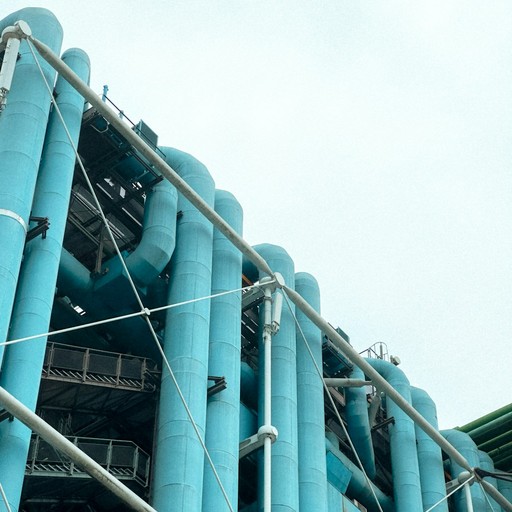
Architecture — Van Gogh Style Transfer

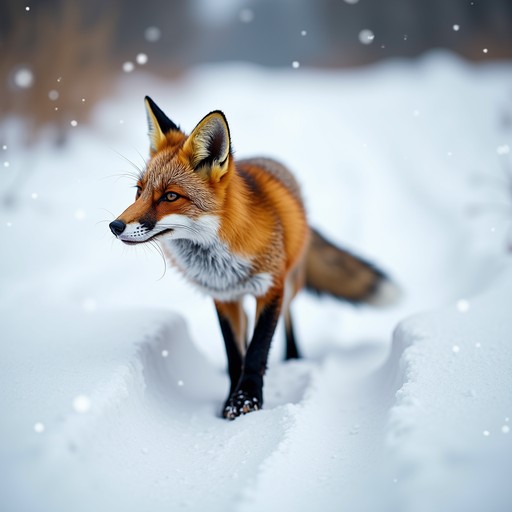
Animals — Van Gogh Style Transfer

Food — Van Gogh Style Transfer


Street Scenes — Van Gogh Style Transfer


Night Scenes — Van Gogh Style Transfer

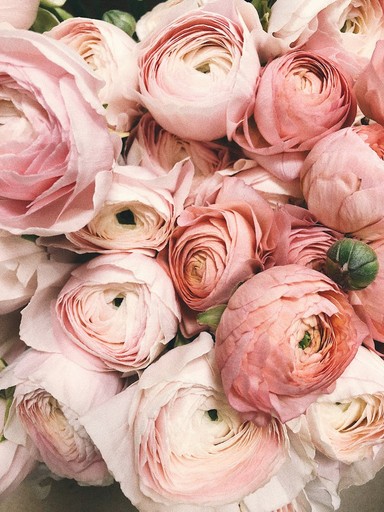
Flowers — Van Gogh Style Transfer

Seascapes — Van Gogh Style Transfer


What is Surrealism?
Surrealism is an art and literary movement founded in Paris in 1924 by Andre Breton. It grew directly out of Dada's anti-rational rebellion but replaced Dada's pure destruction with a constructive program: the systematic exploration of the unconscious mind through art. Heavily influenced by Sigmund Freud's psychoanalytic theories, Surrealism sought to access the deeper reality hidden beneath the surface of rational thought -- the world of dreams, free association, automatic processes, and repressed desire.
The key characteristics that distinguish Surrealism and that neural style transfer captures:
- Dreamlike imagery -- Surrealist paintings depict scenes that follow dream logic rather than waking logic. Objects appear in impossible contexts. Scale shifts without warning -- a tiny figure stands before an enormous apple, or a vast desert contains a single melting clock. Spaces are simultaneously interior and exterior, near and far, solid and dissolving. This dream quality is Surrealism's most immediately recognizable visual trait.
- Impossible juxtaposition -- Surrealism's signature technique is placing familiar objects in unfamiliar combinations. Magritte's rock floats in the sky. Dali's elephants stand on impossibly thin legs. Ernst's forests contain anatomical organs. The Comte de Lautreamont's definition -- "beautiful as the chance meeting of a sewing machine and an umbrella on a dissecting table" -- became the movement's aesthetic formula. Beauty arises not from harmony but from the shock of things that should not coexist.
- Hyper-realistic rendering of impossible subjects -- Many Surrealist painters (especially Dali and Magritte) used technically precise, almost photographic realism to depict impossible scenes. The realism of the rendering makes the impossibility of the subject more disturbing -- the melting clock is painted with such precision that you almost believe it could exist. This tension between realistic technique and irrational content is central to Surrealism's psychological power.
- Double images and visual ambiguity -- Dali's "paranoiac-critical method" produced paintings in which a single image simultaneously represents two or more different subjects. A face is also a landscape. A woman's torso is also a set of drawers. These double images exploit the brain's pattern-recognition instincts, creating images that oscillate between interpretations -- never settling, always destabilizing.
- Automatism -- Breton advocated "pure psychic automatism" -- writing or drawing without conscious control, allowing the unconscious to express itself directly. Miro's biomorphic forms, Masson's automatic drawings, and Ernst's frottage techniques all used semi-automatic processes to bypass rational composition. In style transfer, this translates to organic, flowing, biomorphic distortions that feel spontaneous rather than planned.
Surrealism's influence extends far beyond painting -- into film (Bunuel, Lynch), photography (Man Ray, Lee Miller), literature (Garcia Marquez, Borges), fashion, advertising, and digital art. It is arguably the most culturally pervasive art movement of the 20th century. When you apply a surrealism art filter, you are accessing a visual language that has shaped how the modern world imagines the irrational, the dreamlike, and the psychologically strange.
Key Surrealism Artists
Salvador Dali (1904--1989)
Dali was Surrealism's most famous practitioner and its most technically virtuosic painter. His "paranoiac-critical method" -- a self-induced state of delusional interpretation -- produced some of art history's most iconic images: the melting watches of The Persistence of Memory (1931), the lobster telephone, the elephants on spider legs, the burning giraffes. Dali painted with the technical precision of a 17th-century Dutch master, applying this realism to subjects of pure impossibility. The result is a visual language in which every impossible thing looks absolutely, photographically real.
For style transfer, Dali's influence produces the most dramatic distortions -- melting forms, elongated structures, desert-like spatial emptiness, and the uncanny precision-of-impossibility that makes Surrealist images so psychologically compelling. His training contribution is particularly strong on landscape and still-life subjects, where his vast, empty spaces and distorted objects create the strongest effect.
Rene Magritte (1898--1967)
Magritte was Surrealism's philosopher -- the artist who used perfectly ordinary objects to ask profoundly disorienting questions about reality and representation. His paintings are deceptively simple: a pipe with the caption "This is not a pipe." A man in a bowler hat with an apple obscuring his face. A room-sized rock floating in a cloudy sky. Day and night coexisting in a single scene. Magritte did not distort objects -- he placed them in wrong contexts, wrong scales, and wrong relationships, revealing how much our perception of reality depends on expectation rather than observation.
Magritte's style transfer influence is subtler than Dali's. Rather than melting and distorting forms, it introduces spatial wrongness -- objects that exist in impossible relationships to each other, lighting that contradicts itself, and a flat, deadpan clarity that makes the strangeness more, not less, disturbing.
Max Ernst (1891--1976)
Ernst was Surrealism's great inventor of techniques. Frottage (rubbing textured surfaces through paper), grattage (scraping paint off canvas over textured objects), decalcomania (pressing paint between surfaces), and collage -- Ernst developed each of these methods to access images that conscious intention could not produce. His paintings -- dense, layered, teeming with half-visible forms emerging from organic textures -- have a quality of controlled hallucination. Forests contain eyes. Skies contain anatomical forms. Every surface is alive with secondary, semi-hidden imagery.
Ernst's style transfer influence introduces textural complexity and the sense of hidden forms emerging from surfaces. His contribution produces results with dense, layered visual information -- images that reward close inspection, revealing secondary forms and patterns within the primary composition.
Frida Kahlo (1907--1954)
Kahlo brought Surrealism's dreamlike imagery into the territory of autobiography and bodily experience. Her self-portraits -- she painted herself more than 50 times -- transform personal suffering (a devastating bus accident, a tumultuous marriage to Diego Rivera, multiple surgeries, miscarriages) into mythological, symbolic imagery. Roots grow from her body. Her heart is visible outside her chest. She bleeds onto white sheets while surrounded by floating objects. Kahlo rejected the Surrealist label ("I never painted dreams. I painted my own reality"), but her visual language -- the impossible made visible through precise, vivid rendering -- is quintessentially Surrealist.
Kahlo's style transfer influence adds vivid, saturated color, botanical and anatomical imagery, and an intimate, confessional intensity that is distinct from the cooler, more intellectual Surrealism of Magritte and Dali. Her contribution is particularly effective on portrait subjects.
Before & After Examples
Every row shows the original photograph alongside the AI-generated Surrealist result.
Landscapes
Landscapes are where Surrealism's spatial distortions are most dramatic -- reality's stage set warped by dream logic.
| Original Photo | AI Result |
|---|---|
 |
|
| Source photo | Surrealism art filter |
The landscape transformation reveals Surrealism's power to make familiar terrain alien. The horizon bends or multiplies. Colors shift toward the hyper-vivid palette of Dali's desert scenes -- amber, ochre, electric blue. Spatial depth becomes ambiguous: is that hill close or far? Is the sky above or below? The natural landscape becomes a dream landscape -- recognizable but fundamentally wrong.
Portraits
Portraits are Surrealism's most psychologically charged territory -- the human face becomes a window into the unconscious.
| Original Photo | AI Result |
|---|---|
 |
|
| Source photo | Surrealism art filter |
The portrait transformation draws on Dali's double-image technique and Kahlo's vivid, symbolic intensity. Facial features remain recognizable but are destabilized by color distortions, spatial shifts, and textural overlays that suggest hidden forms beneath the surface. The result is a portrait that feels psychologically loaded -- as if the viewer is seeing not just the face but the dream behind it.
Architecture
Architectural subjects gain the impossible spatial qualities of Magritte's paintings -- familiar structures in unfamiliar realities.
| Original Photo | AI Result |
|---|---|
 |
 |
| Source photo | Surrealism art filter |
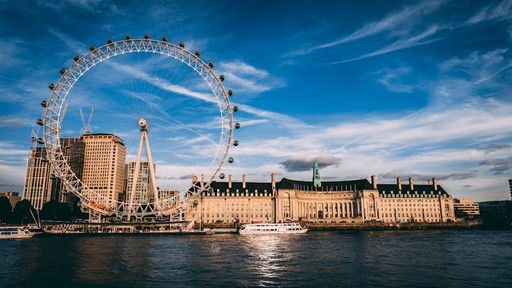
The architectural transformation introduces Magritte-like spatial contradictions. Building surfaces take on organic, almost fleshy textures. Lighting becomes internally contradictory -- simultaneously day and night, indoors and outdoors. The structure remains architecturally recognizable while becoming spatially impossible, creating the sensation of a building that exists in a dream.
When to Use Surrealism Art Filter
Surrealism style transfer excels in these creative contexts:
1. Fantasy and Speculative Art. Surrealism's dreamlike distortions are ideal for fantasy book covers, game concept art, speculative fiction illustration, and any project that requires images of impossible worlds. The style's ability to make the unreal look photographically precise gives fantasy imagery a gravity and conviction that purely abstract approaches lack.
2. Album Covers and Music Visuals. Surrealism has been the dominant visual language of album art since the 1960s -- Pink Floyd, Fleetwood Mac, and countless others have drawn on Surrealist imagery. A Surrealism art filter transforms band photographs and concert images into the kind of dreamlike, psychologically charged visuals that music packaging demands.
3. Psychological and Emotional Expression. If you want an image to communicate emotional states -- anxiety, desire, loss, wonder -- Surrealism's visual language is precisely designed for that purpose. The movement's entire program was the externalization of internal experience. A Surrealist portrait does not just show a face; it shows a psyche.
4. Social Media and Digital Art. Surrealist imagery performs exceptionally well on visual platforms. Its combination of photographic familiarity and dreamlike strangeness creates images that viewers stop to examine -- the "is this real?" effect that drives engagement. The style is simultaneously accessible (realistic rendering) and surprising (impossible content).
5. Art Education and Exploration. Surrealism is one of the most culturally significant art movements of the 20th century. Transforming familiar photographs into Surrealist style is an engaging way to understand how artists like Dali and Magritte constructed their impossible images -- and to appreciate the technical precision required to paint dreams convincingly.
When NOT to Use Surrealism Art Filter
Surrealism's dreamlike distortions have genuine limitations:
1. Product Photography. Surrealism actively distorts and destabilizes subjects. Products need to be shown clearly and attractively -- not melting, floating, or existing in impossible spatial relationships. For product imagery, choose Art Nouveau or Impressionism.
2. Real Estate and Documentary Photography. Any photograph where accurate representation of physical reality matters is incompatible with Surrealism's fundamental principle of distorting reality. Real estate listings, news photography, and documentation require clarity and truth -- Surrealism provides neither.
3. Corporate or Conservative Branding. Surrealism's association with dreams, the unconscious, and psychological strangeness may conflict with brand identities that require professionalism, reliability, and conventional trustworthiness. Financial services, healthcare, and legal brands should generally avoid Surrealist imagery.
4. Subjects That Are Already Visually Complex. Surrealism adds visual complexity -- distortions, hidden forms, spatial contradictions. If the source photograph is already busy, cluttered, or visually chaotic, the Surrealist treatment will amplify the chaos into visual noise. Start with simple, clean compositions for the strongest Surrealist results.
5. Small-Format Reproduction. Surrealism's power depends on the viewer being able to examine the image closely -- noticing the spatial contradictions, the double images, the hidden forms. At thumbnail size, these subtleties disappear, and the image reads as merely distorted rather than dreamlike. For small-format use, choose a style with broader, simpler visual effects.
FAQ
What is Surrealism art style?
Surrealism is an art movement founded in Paris in 1924 by Andre Breton. It seeks to express the unconscious mind through dreamlike imagery, impossible juxtapositions, and the fusion of dream and reality into "surreality." Key visual characteristics include melting or distorted forms, hyper-realistic rendering of impossible scenes, double images, and objects placed in wrong contexts. Major Surrealist painters include Salvador Dali, Rene Magritte, Max Ernst, and Frida Kahlo.
What is the difference between Surrealism and Dada?
Dada (1916--1924) was Surrealism's predecessor -- a purely destructive movement that aimed to demolish art conventions through chaos, chance, and anti-art provocation. Surrealism (1924 onward) inherited Dada's love of the irrational but channeled it into a constructive program: the systematic exploration of the unconscious mind through art. Visually, Dada tends toward collage, fragmentation, and typographic chaos; Surrealism tends toward dreamlike scenes, hallucinatory precision, and impossible but coherent imagery.
Which photos work best with Surrealism style transfer?
Landscapes and portraits produce the strongest Surrealist results. Landscapes connect to Dali's vast, empty dream-spaces and Magritte's impossible environments. Portraits connect to Kahlo's symbolic self-portraits and Dali's double-image faces. Simple, clean compositions with strong subjects translate best -- the Surrealist filter adds complexity, so starting with a simple image prevents visual overload. Avoid cluttered, busy source photographs.
What is the "paranoiac-critical method"?
The paranoiac-critical method is a technique developed by Salvador Dali in the early 1930s. It involves inducing a state of self-directed paranoia in which the artist actively interprets one image as another -- seeing faces in landscapes, bodies in clouds, multiple subjects in a single form. This systematic delusional interpretation produced Dali's famous double images and his ability to create paintings that are simultaneously two or more different subjects. In style transfer, this influence manifests as visual ambiguity and the suggestion of hidden forms within the transformed image.
Can I use Surrealism style transfer for commercial projects?
Yes. Surrealism as a movement and its visual techniques are historical and not copyrightable. All style references used by ArtRobot are sourced from museum collections under open access / CC0 license. Your stylized results can be used for personal and commercial projects. Surrealist imagery is particularly effective for creative industries -- publishing, music, entertainment, fashion -- where dreamlike visual impact is valued.
Ready to Enter the Dream?
Surrealism transforms photographs into windows onto impossible worlds -- melting, floating, and shimmering with the hallucinatory precision of the dream state. It is the visual language of the unconscious mind, and it remains as psychologically compelling today as when Dali first painted a melting clock.
Start Your Free Surrealism Style Transfer on ArtRobot ->
Related Styles
- Dada Style Transfer -- Surrealism's chaotic predecessor. Pure anti-art destruction where Surrealism built structured dreams.
- Abstract Art Style Transfer -- Shares Surrealism's rejection of literal representation, but through pure form and color rather than dreamlike imagery.
- Symbolism Style Transfer -- Surrealism's 19th-century ancestor. Mystical, allegorical imagery that prefigured Surrealism's exploration of the hidden and the irrational.
- Expressionism Style Transfer -- Shares Surrealism's focus on emotional and psychological states, but externalizes them through distorted color and brushwork rather than dream logic.
Try It Yourself
Transform your own photos into stunning paintings with 80+ artist styles. Free to start.