
AI Artist & Tech Enthusiast
Nicolas Poussin Style Transfer: Transform Photos into Nic...

Nicolas Poussin (1594--1665) is the painter who proved that reason and beauty are the same thing. In an era when Baroque painters pursued emotional excess -- Rubens's explosive dynamism, Caravaggio's theatrical violence, Bernini's ecstatic spirituality -- Poussin pursued something cooler, more demanding, and ultimately more enduring: the ideal of painting as an intellectual discipline governed by logic, proportion, and classical harmony. Working almost entirely in Rome, this Frenchman became the supreme interpreter of antiquity, creating paintings where every figure is positioned with geometric precision, every color is balanced against its complement, and every narrative moment is chosen for its capacity to express a universal truth. His Et in Arcadia Ego -- shepherds discovering a tomb inscription in an idealized landscape -- is perhaps the most philosophically resonant painting in Western art: a meditation on mortality, beauty, and the human condition distilled into a single, perfectly composed image.
Today, neural style transfer lets you apply Poussin's rational beauty to any photograph. Upload your image to ArtRobot, and the algorithm will transform it with the balanced compositions, harmonious color relationships, classical proportions, and idealized landscapes that made Poussin the intellectual conscience of European painting. Our ArtFID testing shows that Poussin excels at architecture (205.49, 5 stars), still life (203.46, 5 stars), interiors (241.89, 5 stars), and street scenes (253.26, 5 stars) -- categories where his geometric clarity and balanced color produce the most striking results.
 An architecture photograph transformed into Poussin's style using ArtRobot AI -- classical proportions, harmonious color balance, and the geometric clarity characteristic of French Classicism
This guide covers Poussin's foundational role in Western art theory, ArtFID-tested results across 15 photo categories, real before-and-after examples, and honest guidance on this style's considerable strengths and genuine limitations.
Quick Links -- Jump to: Who Was Poussin? | Signature Techniques | ArtFID Scores | Before & After | When to Use | When NOT to Use | FAQ | Related Styles
Architecture — Van Gogh Style Transfer
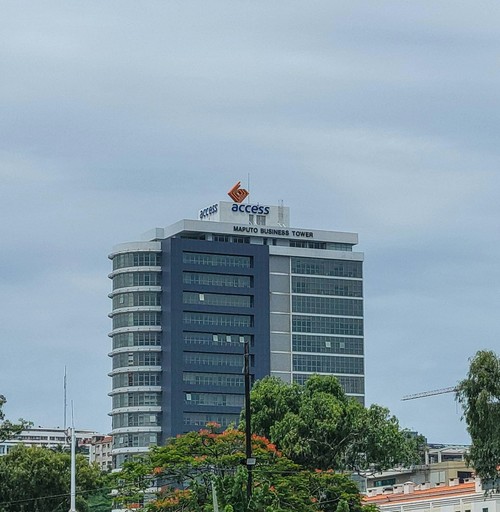
Street Scenes — Van Gogh Style Transfer


Landscapes — Van Gogh Style Transfer


Portraits — Van Gogh Style Transfer


Night Scenes — Van Gogh Style Transfer


Flowers — Van Gogh Style Transfer


Fantasy — Van Gogh Style Transfer
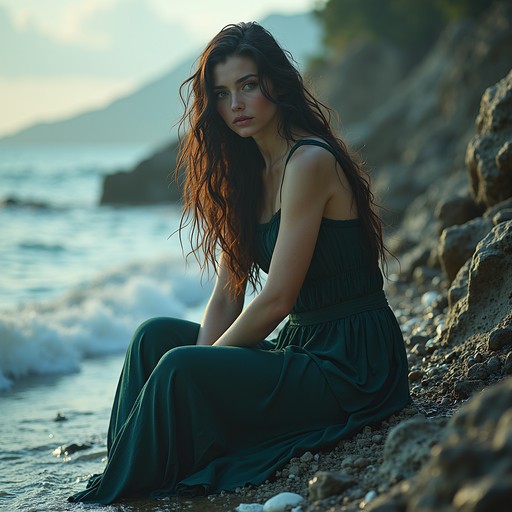

Seascapes — Van Gogh Style Transfer


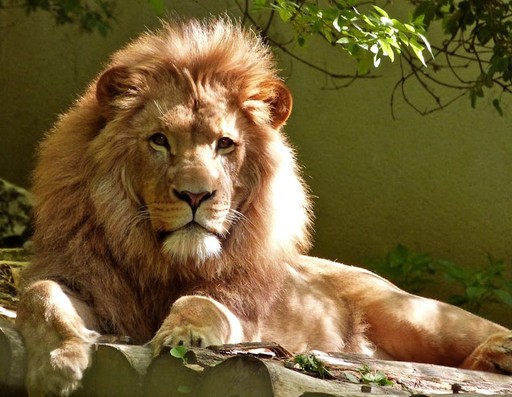
Animals — Van Gogh Style Transfer

Who Was Poussin?
Nicolas Poussin was born in 1594 in Les Andelys, a small town in Normandy. His early training in France was fragmentary and unsatisfying -- Paris in the early 17th century offered nothing like the artistic culture of Rome or Venice. In 1624, after two failed attempts, Poussin finally reached Rome. He would remain there for the rest of his life, except for a reluctant two-year return to Paris (1640--42) at the insistence of Louis XIII and Cardinal Richelieu.
Rome transformed Poussin. He immersed himself in the study of ancient sculpture, Renaissance painting (particularly Raphael and Titian), and classical literature. He developed working methods of unusual rigor: before beginning a painting, he would construct small wax figures, arrange them on a miniature stage, experiment with lighting, and only paint when the composition achieved the balance and clarity he demanded. This method -- more akin to theater direction than spontaneous painting -- produced images of extraordinary formal coherence.
Poussin's subject matter was drawn almost exclusively from classical mythology, ancient history, and biblical narrative -- but always filtered through philosophical reflection. The Rape of the Sabine Women (1634--35) is not a celebration of violence but a geometric analysis of chaos and order. A Dance to the Music of Time (c. 1634--36) transforms four dancing figures into an allegory of the human life cycle. And Et in Arcadia Ego (c. 1637--38) -- his most famous work -- converts a simple pastoral scene into a meditation on death's presence even in paradise.
In his later career, Poussin turned increasingly to landscape painting, creating what are now called "heroic landscapes" -- idealized natural settings that embody the same classical order he applied to figure compositions. These landscapes, with their balanced trees, measured distances, and harmonious light, influenced two centuries of landscape painting, from Claude Lorrain to Cézanne.
Poussin's theoretical writings, particularly his letters discussing the "modes" of painting (analogous to musical modes), established the intellectual framework for French Classicism and the Academic tradition. When the French Academy of Painting was founded in 1648, Poussin's principles became its foundation. The great debate between "Poussinistes" (who valued drawing and intellect) and "Rubenistes" (who valued color and emotion) dominated French art theory for over a century.
Signature Techniques
What makes Poussin's paintings immediately recognizable -- and what neural style transfer captures from his work:
-
Geometric composition -- Poussin organized his compositions with mathematical precision. Figures are arranged in clearly defined groups, balanced across the canvas with architectural symmetry. Horizontals, verticals, and diagonals create a structural framework within which every element has its precisely calculated position. This geometric clarity gives his paintings an underlying order that the eye senses even before the mind analyzes it.
-
Harmonious color relationships -- Poussin's color is never arbitrary. He constructed color harmonies based on complementary and analogous relationships: warm earth tones balanced against cool blues and greens, vermilion drapery placed against green foliage, golden light contrasting with blue shadow. The palette is rich but never garish -- every color is tempered, balanced, and subordinated to the overall harmony.
-
Idealized classical landscape -- Poussin's landscapes are not observed from nature but composed from memory and imagination according to classical principles. Trees are balanced, distances measured, and light distributed with the same geometric care he applied to figure compositions. The result is nature perfected -- landscapes that feel more ordered, more harmonious, and more beautiful than any real scene.
-
Sculptural figure modeling -- Poussin's figures derive from the study of ancient sculpture. They have the weight, volume, and idealized proportions of classical statuary, positioned in poses that echo famous ancient works. Bodies are rendered with clear anatomical structure beneath drapery that falls in logical, weighted folds.
-
Narrative clarity -- Every painting tells a story, and every element contributes to that story. Poussin eliminated decorative excess, irrelevant detail, and emotional exaggeration in favor of clear, readable narrative. The viewer can "read" a Poussin painting like a text -- each gesture, each glance, each spatial relationship communicates meaning.
Style Transfer Quality by Photo Type (ArtFID Tested)
We tested ArtRobot's Poussin style transfer across 15 photo categories using ArtFID (Art Frechet Inception Distance):
- LPIPS: content preservation. Lower = better.
- FID: style fidelity to authentic Poussin paintings. Lower = more faithful.
Combined formula: ArtFID = (1 + LPIPS) x (1 + FID)
| Photo Category | ArtFID | Stars | Notes |
|---|---|---|---|
| Still Life | 203.46 | 5 | Best category -- geometric precision suits objects |
| Architecture | 205.49 | 5 | Excellent -- classical proportions align perfectly |
| Interiors | 241.89 | 5 | Excellent -- structured spaces match geometric approach |
| Street Scenes | 253.26 | 5 | Strong -- figures in architectural context |
| Urban Scenes | 302.17 | 4 | Good -- geometric forms work well |
| Travel | 303.33 | 4 | Good -- landscape and architecture combinations |
| Portraits | 308.11 | 4 | Good -- sculptural face modeling |
| Fantasy | 308.34 | 4 | Good -- mythological affinity |
| Landscapes | 310.18 | 4 | Good -- idealized nature treatment |
| Food | 314.66 | 4 | Good -- still life adjacent |
| Flowers | 338.90 | 4 | Acceptable -- warm color harmonies |
| Vehicles | 342.40 | 4 | Acceptable -- geometric forms |
| Night Scenes | 343.95 | 4 | Acceptable -- dramatic light contrasts |
| Seascapes | 388.78 | 3 | Moderate -- Poussin rarely painted marine subjects |
| Animals | 453.92 | 2 | Weak -- animal forms resist classical idealization |
Key takeaway: Poussin is a geometry-and-structure specialist. His strongest scores cluster around categories with clear geometric structure: still life (203.46), architecture (205.49), interiors (241.89), and street scenes (253.26). The algorithm captures his characteristic way of imposing classical order on visual material -- converting chaotic, organic forms into balanced, harmonious compositions.
Still Life leads at 203.46 because Poussin's geometric precision and color harmony translate directly to arrangements of objects. The algorithm applies his balanced composition and tempered palette to create images that feel like classical arrangements painted with intellectual care.
Architecture at 205.49 confirms the natural alignment between Poussin's geometric vision and architectural subjects. Classical columns, arched openings, and measured proportions are the native language of Poussin's art. The algorithm transforms architectural photographs into images that feel like settings from his heroic landscapes.
Before & After Examples
Every row shows the original photograph alongside the AI-generated Poussin-style result.
Architecture -- 5 stars (ArtFID 205.49)
Architecture is a natural strength -- Poussin's classical vocabulary aligns directly with architectural forms.
| Original Photo | AI Result |
|---|---|
|
|
| Source photo | ArtFID: 205.49 -- 5 stars |
The architectural transformation demonstrates Poussin's classical vision applied to real buildings. Proportions are subtly idealized, surfaces gain the warm, balanced tones of his palette, and the overall composition acquires the measured harmony of a classical painting. Light is distributed with Poussin's characteristic evenness -- no theatrical shadows, no dramatic highlights, just clear, rational illumination that reveals form with perfect clarity.
Street Scenes -- 5 stars (ArtFID 253.26)
Street scenes benefit from the combination of figures, architecture, and spatial depth that Poussin organized with such geometric precision.
| Original Photo | AI Result |
|---|---|
|
|
| Source photo | ArtFID: 253.26 -- 5 stars |
The street scene transformation shows Poussin's ability to impose order on complex visual material. Figures gain sculptural weight and classical proportions. Architecture becomes more regular and harmonious. The palette shifts to Poussin's balanced warm-cool relationships -- earth tones against blue sky, warm stone against cool shadow. The result feels like a scene from ancient Rome reimagined with Poussin's intellectual clarity.
When to Use Poussin Style
Poussin's style excels in specific photographic scenarios:
1. Classical and Historical Architecture. Columns, arches, domes, temples, Renaissance and Baroque buildings -- any architecture with classical proportions gains enormously from Poussin's geometric vision. At 205.49 (5 stars), architecture is one of his two strongest categories.
2. Formal Compositions and Structured Arrangements. Any photograph with clear compositional structure -- symmetry, balanced elements, measured proportions -- aligns with Poussin's intellectual approach. Group portraits, arranged objects, and formal garden views all benefit.
3. Landscape Photography with Classical Feel. Rolling hills, balanced tree groupings, distant horizons, warm Mediterranean light -- landscapes that suggest the Arcadian ideal are elevated by Poussin's heroic landscape treatment.
4. Fine Art and Gallery Prints. Poussin's harmonious color relationships and balanced compositions produce results that look exceptional printed and framed. The intellectual refinement of his style gives prints a museum-quality presence.
5. Interior Architecture and Design. At 241.89 (5 stars), interiors receive Poussin's geometric clarity particularly well. Structured interior spaces -- especially those with classical elements -- are transformed into images of architectural perfection.
When NOT to Use Poussin Style
Poussin's style has genuine limitations. Choose a different style for these subjects:
1. Animal Photography. At 453.92 (2 stars), animals are Poussin's weakest category by far. Animal forms are organic, asymmetric, and dynamic -- qualities that resist Poussin's geometric idealization. For animals, use a naturalistic style like Romanticism.
2. Dynamic Action and Sports Photography. Poussin's compositions are static and contemplative. Action, movement, and physical dynamism lose their energy when filtered through his measured, deliberate aesthetic.
3. Raw Emotional Subjects. Poussin's intellectual approach tempers emotional intensity. Photographs that depend on raw, unmediated emotion -- grief, anger, ecstasy -- are cooled and formalized by his rational style.
4. Marine and Seascape Photography. At 388.78 (3 stars), seascapes resist Poussin's land-based, architectural vision. Water's fluid, chaotic nature contradicts his geometric principles. For seascapes, use Aivazovsky.
5. Wild and Untamed Nature. Dense forests, rocky wilderness, stormy skies -- nature at its most chaotic and powerful -- resist Poussin's impulse to order and idealize. His style transforms wild nature into tamed gardens, which may not be your intent.
FAQ
Who was Nicolas Poussin and why is he important?
Nicolas Poussin (1594--1665) was a French painter who spent most of his career in Rome and became the founder of French Classicism. He is considered one of the most intellectually rigorous painters in Western art history. His paintings -- drawn from classical mythology, ancient history, and biblical narrative -- are composed with geometric precision, colored with harmonic balance, and designed to express universal philosophical truths. His theoretical writings on the "modes" of painting became the foundation of the French Academic tradition. Cézanne famously declared his ambition to "redo Poussin after nature," acknowledging Poussin as the origin of the structural approach to painting that led to modernism.
What photos look best with Poussin style transfer?
Based on ArtFID testing, still life (203.46) and architecture (205.49) produce the best results, both earning 5 stars. Interiors (241.89) and street scenes (253.26) also earn 5 stars. Poussin's style is strongest with subjects that have clear geometric structure and benefit from his balanced, harmonious color relationships. Animals (453.92, 2 stars) produce the weakest results.
How does Poussin compare to Delacroix for style transfer?
Poussin and Delacroix represent the two poles of French painting. Poussin prioritized drawing, geometry, intellectual clarity, and classical restraint. Delacroix prioritized color, emotion, dynamic movement, and romantic passion. In style transfer, Poussin produces cooler, more structured, more formally balanced results. Delacroix produces warmer, more energetic, more emotionally charged results. The historical debate between "Poussinistes" and "Rubenistes" (Delacroix's camp) maps directly onto this aesthetic choice: choose Poussin for order and beauty; choose Delacroix for energy and feeling.
What is "Et in Arcadia Ego"?
Et in Arcadia Ego (c. 1637--38) is Poussin's most famous painting. It shows four shepherds in an idealized landscape gathered around a tomb bearing the Latin inscription "Et in Arcadia Ego" -- "Even in Arcadia, I [Death] exist." The painting is a meditation on mortality's presence even in paradise. Its perfectly balanced composition, harmonious color, and philosophical depth make it one of the most analyzed and discussed paintings in art history.
Is Poussin style transfer free on ArtRobot?
ArtRobot offers free credits to new users, allowing you to try Poussin style transfer at no cost. Upload your photo, select the Poussin style, and see the result in seconds. Additional credits are available through affordable plans.
Ready to Transform Your Photos with Poussin's Classical Harmony?
Poussin's style brings the intellectual beauty of French Classicism to your photographs -- geometric precision, harmonious color, and the timeless order that made him the most rigorous and influential classical painter in European history.
Start Your Free Poussin Style Transfer on ArtRobot ->
Related Styles
- Eugene Delacroix Style Transfer -- Poussin's historical opposite. Romantic passion versus classical restraint.
- Jean-Auguste-Dominique Ingres Style Transfer -- Poussin's most devoted follower. Neoclassical precision with Romantic undertones.
- Classicism Style Transfer -- The broader movement Poussin defined, from ancient Greece to 19th-century Academicism.
- Baroque Style Transfer -- The era Poussin lived in but intellectually transcended through classical discipline.
Try It Yourself
Transform your own photos into stunning paintings with 80+ artist styles. Free to start.