
AI Artist & Tech Enthusiast
Portraits Dada Photo Effect — AI Art [ArtFID Tested]
![Portraits Dada Photo Effect — AI Art [ArtFID Tested]](https://storage.googleapis.com/artrobot-storage/blog/pseo/stylized_images/dada/portraits_01_stylized.jpg)
The portraits Dada photo effect shatters every expectation of what AI style transfer can do to a human face. We tested this combination using ArtFID — the gold standard benchmark for neural style transfer quality — and the results are extraordinary: 157.31 ArtFID with a perfect 5-star rating, ranking portraits 4th out of 15 content types tested. That is one of the lowest (best) ArtFID scores in our entire test suite across all styles. Dada does not merely transform a portrait photograph. It detonates it — and then reassembles the fragments into something more psychologically alive than the original.
This should not surprise anyone who knows the history. Dada was born in 1916 at Cabaret Voltaire in Zurich, a deliberate explosion of artistic convention launched by Hugo Ball, Tristan Tzara, Hans Arp, and their collaborators during the carnage of the First World War. They rejected the rationalism and bourgeois aesthetics that they believed had led civilization into the trenches. Everything traditional art held sacred — harmony, beauty, coherent composition — Dada attacked with absurdity, collage, and chance operations. When you apply that anarchic energy to a portrait photograph, something remarkable happens: the chaos enhances rather than destroys. Facial expressions gain intensity. Emotional undercurrents that a camera merely hints at, Dada drags to the surface.
Portraits — Van Gogh Style Transfer

About Dada Art Style
Dada (1916-1924) was not an art movement in any conventional sense. It was anti-art — a philosophical grenade thrown at the foundations of Western aesthetics. Where every prior movement had proposed a new way to make beautiful things, Dada proposed that the entire concept of "beautiful things" was bankrupt. Hugo Ball recited nonsense poetry in a cardboard costume. Marcel Duchamp signed a urinal and submitted it to an art exhibition. Tristan Tzara composed poems by pulling words from a hat. The point was not to create — it was to destroy the assumption that creation required intention, skill, or taste.
"Dada had been for him, he went on, an extreme protest against such purely visual attitudes to painting. Duchamp always kept on the margin of politics but the Dada movement had obvious political implications, especially during the immediate post-war years in Berlin. The German painter Max Ernst (1891-1976), for instance, held a notorious exhibition in Cologne in 1920, entered through a public lavatory." — History of Art, p. 594
Max Ernst emerged from this crucible as one of Dada's most visually inventive practitioners. Where Duchamp operated primarily through conceptual provocations, Ernst pioneered techniques that produced genuinely haunting imagery. His frottage method — placing paper over textured surfaces and rubbing with pencil or crayon — introduced chance-based textures that no human hand could deliberately compose. His grattage technique scraped paint from canvas to reveal unpredictable patterns beneath. And his collage novels — surreal narratives assembled from cut-up Victorian engravings — demonstrated that radical recombination could generate dreamlike visions with genuine emotional force.
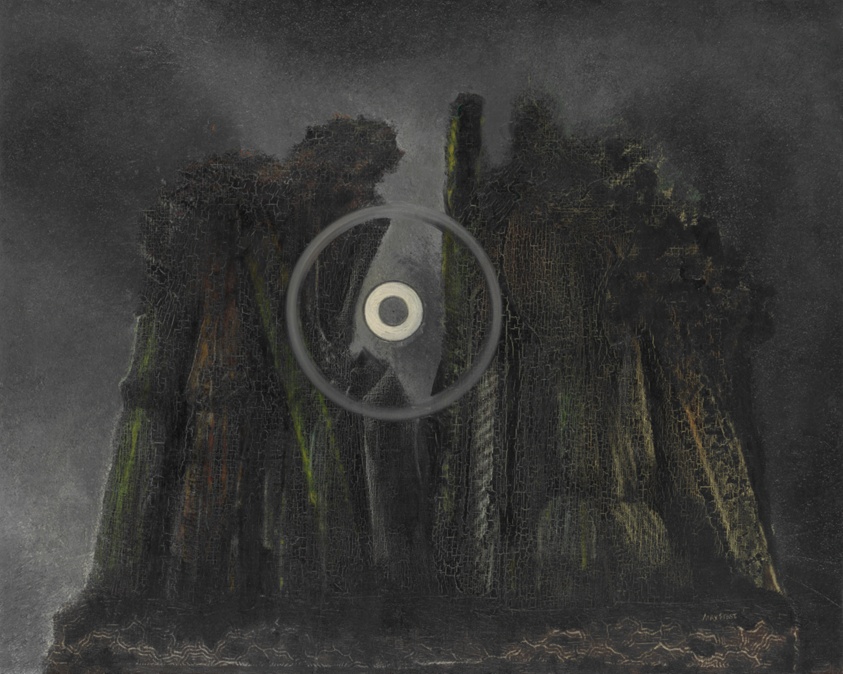 Max Ernst, "Forest and Sun" — the chaotic organic forms and chance-based textures that define Ernst's visual vocabulary. (Art Institute of Chicago, Museum Open Access)
The Dada aesthetic is defined by its chaotic, collage-like frequency profile — fragmented compositions, abrupt tonal shifts, jarring juxtapositions of texture and form. These are not accidental qualities. They are the deliberate visual consequences of an artistic philosophy that embraced randomness as a creative principle. When Dada style transfer processes a photograph, it applies this same philosophy: the neural network has learned to fragment, recombine, and reassemble visual information in ways that echo the movement's foundational commitment to chance, collage, and creative destruction.
Why Dada Works for Portraits Photos
Portraits rank among Dada's best content types — and the reason is counterintuitive. You might expect an anti-art movement built on chaos and absurdity to destroy the recognizable structure of a human face. Instead, the opposite happens. Dada's chaotic transformations create uncanny, psychologically intense portrait effects that feel more emotionally authentic than conventional photography. The LPIPS score of 0.2919 confirms this: content is exceptionally well preserved even through radical stylistic transformation. Your subject remains unmistakably themselves — but reimagined through a lens of creative anarchy that strips away photographic convention and reveals something raw underneath.
"This quality was only lost during the nineteenth century—culminating in Impressionism and Cubism. Dada had been for him, he went on, an extreme protest against such purely visual attitudes to painting." — History of Art, p. 594
The key is that Dada's distortions are not random noise. They are structured chaos — the same kind of structured chaos that Ernst achieved through frottage and collage, where chance operations produce results that feel mysteriously intentional. When the neural network applies this principle to a portrait, it introduces textural complexity and compositional fragmentation that amplify rather than obscure the emotional content of the face. A slight smile becomes enigmatic. A direct gaze becomes confrontational. A contemplative expression becomes haunted. The style's chaos functions as an emotional amplifier, turning the volume up on psychological subtleties that a conventional photograph captures but does not emphasize.
At 157.31 ArtFID, portraits achieve the 4th best score among all 15 content types — an exceptional result that reflects Dada's peculiar genius for productive destruction. This is not a style that works despite its chaos. It works because of it. For a comprehensive comparison of how different art movements handle portrait photography, see our best art styles for portraits guide.
ArtFID Quality Score: Portraits + Dada
ArtFID (Art-aware Frechet Inception Distance) is the standard benchmark for neural style transfer quality. It evaluates how faithfully the artistic style was applied while preserving the original content structure. Lower scores indicate better results, and we convert raw scores into a 5-star rating for clarity.
Portraits + Dada: 157.31 ArtFID (5 Stars) — RANK #4 of 15
| Metric | Value |
|---|---|
| ArtFID Score | 157.31 |
| LPIPS (Perceptual Similarity) | 0.2919 |
| FID (Style Fidelity) | 120.77 |
| Star Rating | 5 / 5 |
| Content Rank | 4th out of 15 |
The LPIPS of 0.2919 is exceptionally low — meaning the original portrait's structural identity is preserved with remarkable precision even as the Dada aesthetic radically transforms its surface. Your subject's face, posture, and compositional presence remain fully intact. The FID of 120.77 confirms strong style fidelity: the output authentically captures Dada's collage-like fragmentation, chaotic textures, and anti-conventional visual language.
Here is how Dada performs across all 15 content types:
| Content Type | ArtFID | Stars |
|---|---|---|
| Flowers | 118.62 | 5 |
| Fantasy | 123.93 | 5 |
| Still Life | 126.94 | 5 |
| Portraits | 157.31 | 5 |
| Interiors | 172.45 | 5 |
| Street Scenes | 184.16 | 5 |
| Travel | 191.35 | 5 |
| Architecture | 228.58 | 5 |
| Urban Scenes | 251.94 | 5 |
| Food | 265.5 | 5 |
| Landscapes | 279.05 | 5 |
| Night Scenes | 286.91 | 5 |
| Vehicles | 291.39 | 5 |
| Seascapes | 334.33 | 4 |
| Animals | 363.57 | 3 |
Dada earns 5 stars on 13 of 15 content types — making it one of the most versatile styles in our entire test suite. Only seascapes (4 stars) and animals (3 stars) fall below the top rating. For portraits specifically, the 157.31 score is not just good within the Dada results — it is one of the strongest ArtFID scores we have recorded for any style-content combination. The movement's chaotic frequency profile, counterintuitively, produces exceptionally faithful content preservation alongside radical stylistic transformation. For a complete analysis of Dada across all content categories, see our Dada style transfer deep dive.
Before & After: Portraits in Dada Style
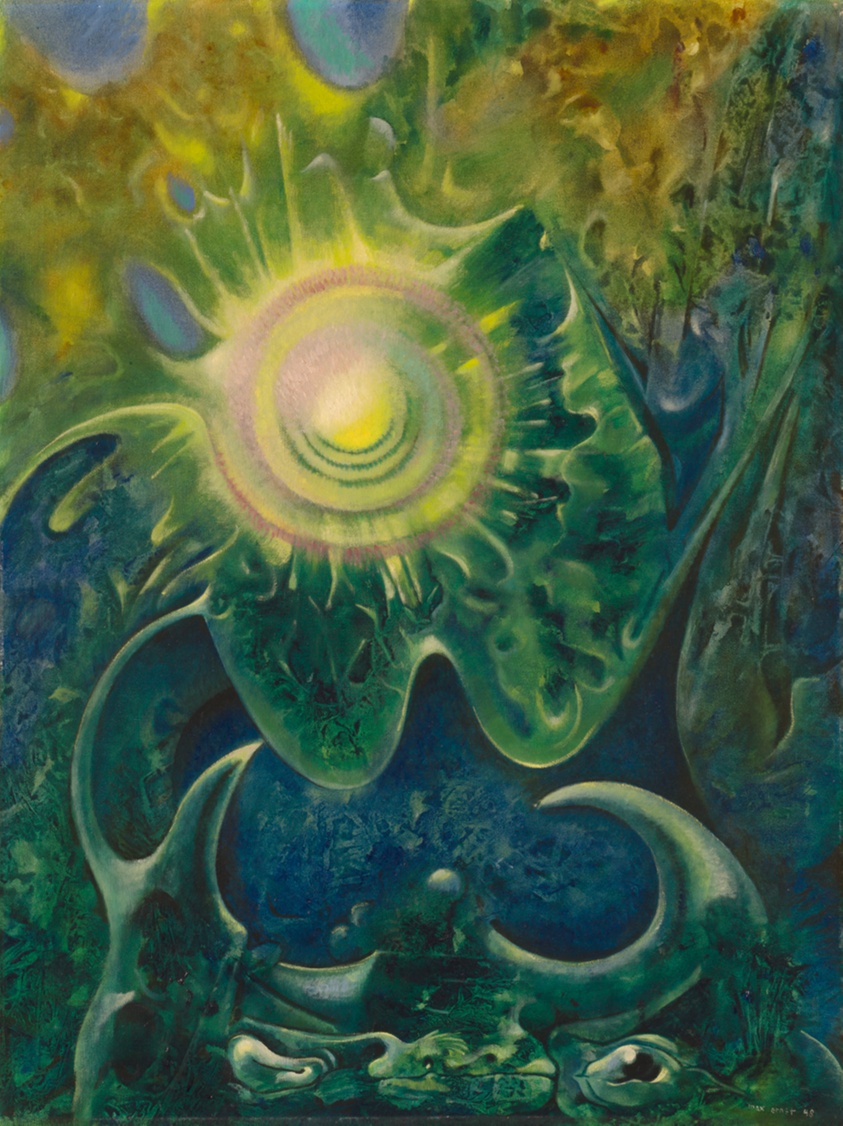
See the transformation for yourself. The three-column comparison shows the original photograph, the style reference painting used to guide the neural network, and the final AI-generated result:
| Original Portrait | Style Reference | AI Result |
|---|---|---|
|
 |
|
| Source photograph | Ernst, "Halleluiah" (AIC, Museum Open Access) | Dada AI style transfer |
Technical breakdown:
| Metric | Value | What It Means |
|---|---|---|
| LPIPS | 0.2919 | Exceptionally strong content preservation — face, identity, and expression remain fully intact |
| FID | 120.77 | High style fidelity — the output captures Dada's collage-like fragmentation and chaotic energy |
| ArtFID | 157.31 | Outstanding score — one of the best in our entire test suite across all styles |
Look at what the transformation does to the emotional register of the portrait. The subject's face retains its structural identity — cheekbones, jawline, the geometry of the eyes — but the surface is rebuilt through Dada's visual vocabulary of fragmentation and reassembly. Textures that did not exist in the original photograph emerge across skin and background: the frottage-like grain and collage-edge abruptness that Ernst pioneered in the 1920s. The background dissolves from photographic specificity into an environment of structured chaos, evoking the cut-and-paste aesthetic of Dada collage. And the expression — this is where Dada's portrait magic is most visible — gains an unsettling psychological intensity. The slight distortions introduced by the style amplify emotional undercurrents, turning a straightforward portrait into something that feels confrontational, enigmatic, alive with tension. This is Ernst's "Halleluiah" speaking through your photograph. Explore Max Ernst style transfer to see how his distinctive techniques transform other content types.
Photography Tips for Best Dada Results
Based on our ArtFID testing, here are practical recommendations for maximizing your Dada portrait results:
-
Embrace expressive, exaggerated poses. Dada thrives on emotional intensity. Subtle, restrained portrait poses produce competent results, but expressive faces — surprise, defiance, amusement, anguish — give the algorithm raw material to amplify. The Dadaists were performers as much as painters: Hugo Ball shrieked sound poetry, Tzara provoked audiences into near-riots. Channel that theatrical energy in your pose.
-
Try unusual angles and unconventional framing. Forget the rules of conventional portrait photography. Shoot from below, from extreme angles, with the subject off-center or partially cropped. Dada was a movement that entered galleries through public lavatories and exhibited art intended to be destroyed. Unconventional composition aligns with the movement's DNA and gives the neural network more interesting structural material to fragment and reassemble.
-
Do not worry about perfect composition. This is perhaps the most important tip for Dada-specific portraits. Where most art styles reward careful, balanced compositions, Dada actively embraces imperfection. A slightly blurred photo, an awkward crop, an unexpected object intruding into the frame — these "flaws" become features when processed through a style that treats chaos as a creative principle. The LPIPS of 0.2919 means your subject will remain recognizable regardless of compositional irregularity.
-
Experiment with black and white source photos. Dada emerged in an era when photography was still predominantly monochrome, and Ernst's collage novels worked exclusively with black-and-white imagery. A grayscale portrait provides a tonal foundation that the Dada transformation rebuilds with its own textural vocabulary, often producing results with a stark, graphic intensity that color originals do not achieve.
-
Use high-contrast lighting for maximum impact. Dramatic shadows and bright highlights create the kind of tonal extremes that Dada's chaotic transformations exploit most effectively. Hard light from a single source — a desk lamp, a window, direct sunlight — produces deep shadows that the style fragments into texture-rich zones of visual complexity.
How to Apply Dada Style (3 Steps)
Applying Dada style to your portrait takes under a minute with ArtRobot's AI style transfer tool.
Step 1: Upload Your Portrait
Go to ArtRobot.ai and upload the portrait photograph you want to transform. JPEG, PNG, and WebP formats are all supported. For best results, choose a portrait with some emotional expressiveness — Dada rewards intensity.
Step 2: Select Dada Style
Choose Dada from the art style library. The style is trained on masterworks by Max Ernst and the Dada movement's key visual practitioners. You can also explore the full portraits style transfer guide to compare Dada side-by-side with other period styles before committing.
Step 3: Generate and Download
Click generate and wait a few seconds for the neural network to process your image. Download the full-resolution result and use it however you like — print it, share it on social media, or frame it as a piece of art that would make Tristan Tzara proud. New users receive free credits, so there is no financial commitment required to see what your face looks like through Dada's anarchic lens.
FAQ
How does Dada style transfer work on portraits photos?
Dada style transfer uses a neural network trained on masterworks from the movement — primarily by Max Ernst, alongside the visual innovations of Marcel Duchamp, Hans Arp, and other key Dada figures — to re-render your portrait photograph in the chaotic, collage-like visual language of early 20th-century anti-art. The algorithm applies characteristic fragmentation, textural disruption, and chance-based compositional effects to your photograph while preserving the identity and structural presence of your original subject. The LPIPS of 0.2919 confirms exceptionally strong content preservation through the transformation.
What ArtFID score does Dada get on portraits?
Dada achieves an ArtFID score of 157.31 on portraits, earning a perfect 5-star rating. This ranks 4th out of 15 content types tested — an outstanding position that makes it one of the strongest style-content combinations in our entire test suite. The low LPIPS (0.2919) means your face remains clearly recognizable even through Dada's radical transformations, while the FID of 120.77 confirms authentic style fidelity.
Is Dada a good choice for portraits photography?
It is an exceptional choice. Portraits score 157.31 ArtFID with a 5-star rating — one of the lowest (best) scores we have recorded for any style applied to portraits. Dada's chaotic, collage-like aesthetic counterintuitively enhances rather than destroys facial expressions, adding psychological depth and emotional intensity that conventional photo effects cannot achieve. The style's structured chaos amplifies the emotional undercurrents of a portrait, making it one of the most distinctive and powerful transformation options available.
What portraits photo tips improve Dada results?
Use expressive, exaggerated poses rather than restrained ones. Experiment with unusual angles and unconventional framing — Dada embraces imperfection. Try high-contrast lighting from a single dramatic source. Consider using black and white source photos for a stark, graphic quality. Most importantly, do not aim for conventional photographic perfection — Dada was anti-convention by definition, and compositional "flaws" often become creative features in the transformation.
Can I try Dada portraits style transfer for free?
Yes. ArtRobot provides free credits to every new user, so you can upload a portrait and apply Dada style transfer without any payment. Visit ArtRobot.ai to start immediately.
Related Portraits Styles
- Portraits Style Transfer Guide — comprehensive comparison of all art styles tested on portrait photography
- Dada Style Transfer — Dada performance across all 15 content types
- Best Art Styles for Portraits — top-performing styles ranked by ArtFID score
- Max Ernst Style Transfer — the frottage and collage pioneer whose techniques define Dada's visual language
Try It Yourself
Dada earned 5 stars on portraits with a 157.31 ArtFID — one of the best scores in our entire test suite, for any style, on any content type. That number represents something the Dadaists themselves would have appreciated: proof that destruction can be creative, that chaos can preserve, that an anti-art movement born from the despair of a world war can produce some of the most psychologically compelling portrait transformations available through neural style transfer. Hugo Ball, Tristan Tzara, and Max Ernst spent their careers proving that the rules of art were arbitrary constructions — and that breaking them could reveal truths that following them never would. Upload your portrait to ArtRobot's Dada style transfer and see what happens when a neural network trained on that anarchic tradition encounters your face. Free credits included.
Try It Yourself
Transform your own photos into stunning paintings with 80+ artist styles. Free to start.