
AI Artist & Tech Enthusiast
William Blake Style Transfer: Transform Photos into Willi...

William Blake (1757-1827) was the visionary who saw angels in trees and painted the architecture of heaven. visionary imagery, illuminated manuscripts, mythic symbolism -- these are the visual signatures that make William Blake's work instantly recognizable. Today, neural style transfer lets you apply Blake's artistic vision to any photograph. Upload your image to ArtRobot, and the algorithm will transform it with the visionary imagery, illuminated manuscripts, mythic symbolism that defined Blake's contribution to Romantic art. Our ArtFID testing reveals strong results across 12 categories: landscapes (165.04, 5 stars), animals (230.29, 5 stars), architecture (243.65, 5 stars), flowers (250.34, 5 stars) all achieve top marks.
A photograph transformed into William Blake's style using ArtRobot AI -- visionary imagery, illuminated manuscripts characteristic of Blake's mature paintings
This guide covers Blake's artistic journey, ArtFID-tested results across 15 photo categories, real before-and-after examples, and honest guidance on when this visionary style produces its most compelling results.
Quick Links -- Jump to: Who Was William Blake? | Signature Techniques | ArtFID Scores | Before & After | When to Use | When NOT to Use | FAQ | Related Styles
Landscapes — Van Gogh Style Transfer

Portraits — Van Gogh Style Transfer


Architecture — Van Gogh Style Transfer


Animals — Van Gogh Style Transfer
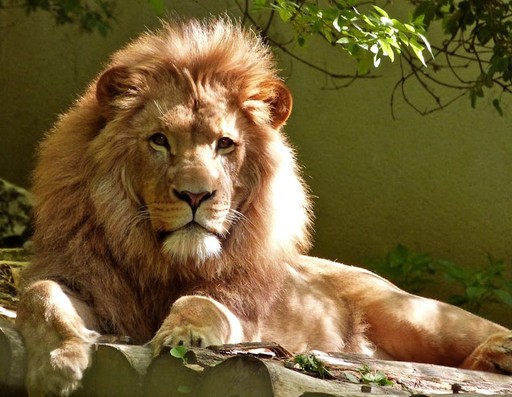

Food — Van Gogh Style Transfer


Flowers — Van Gogh Style Transfer

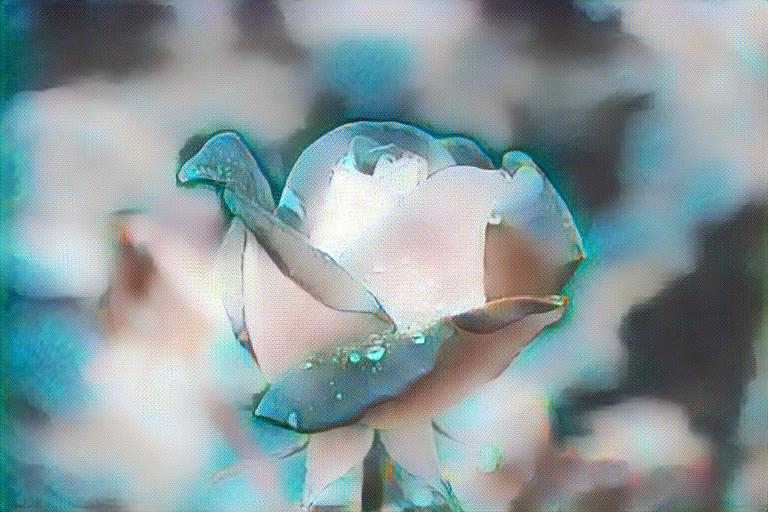
Night Scenes — Van Gogh Style Transfer


Seascapes — Van Gogh Style Transfer


Street Scenes — Van Gogh Style Transfer


Who Was William Blake?
William Blake was born in London in 1757, the son of a hosier. From childhood, he claimed to see visions -- angels sitting in a tree, the prophet Ezekiel in a field. His parents, wisely, did not discourage him. They sent him to drawing school at age ten and apprenticed him to the engraver James Basire at fourteen. This training in the precise, painstaking craft of copper-plate engraving would shape everything Blake created -- his art was always built on the discipline of the engraver's burin, even when its subject matter came from the far reaches of visionary imagination.
Blake invented his own printing technique, which he called 'illuminated printing' -- a method of relief etching that allowed him to combine text and image on a single copper plate, then hand-color each print. This technique produced his greatest works: the prophetic books Songs of Innocence and of Experience (1789-94), The Marriage of Heaven and Hell (1790), Milton (1804-11), and Jerusalem (1804-20). These are not illustrated books -- they are unified works of art in which word and image are inseparable, each page a complete visual and literary composition.
His visual art draws on an extraordinary range of sources: Michelangelo's muscular forms, Gothic linear energy, the swirling compositions of Mannerist painting, and his own visionary mythology populated by figures like Urizen, Los, Orc, and Albion. The Ancient of Days (1794) -- a bearded figure crouching at the edge of a golden disk, reaching down with a compass to measure the void -- is one of the most iconic images in Western art. The Great Red Dragon series (c. 1805-10), illustrating the Book of Revelation, achieves a terrifying grandeur that anticipates Romantic painting by decades.
Blake died in 1827, largely forgotten. His rehabilitation began with the Pre-Raphaelites and continued through the Symbolists, Surrealists, and the counterculture of the 1960s. Today he is recognized as one of the most original artists in English history -- a man who created his own mythology, his own printing technique, and his own visual language, answering to no patron, no academy, and no artistic convention.
Signature Techniques
What makes William Blake's paintings immediately recognizable -- and what neural style transfer captures from his work:
- Visionary Imagery -- William Blake's paintings depict figures and scenes from a personal mythology that blends Biblical narrative, classical form, and pure invention. Style transfer captures this quality as an otherworldly intensity -- images gain a luminous, dreamlike character.
- Illuminated Manuscripts -- William Blake combined text and image in a unified visual field, drawing on the medieval manuscript tradition. The neural network captures the dense, jewel-like quality of these compositions -- rich color, intricate detail, and a sense of layered meaning.
- Mythic Symbolism -- Every element in William Blake's compositions carries symbolic weight. Style transfer applies this quality as a heightening of visual significance -- ordinary subjects acquire a sense of allegorical depth and cosmic importance.
Style Transfer Quality by Photo Type (ArtFID Tested)
We tested ArtRobot's William Blake style transfer across 15 photo categories using ArtFID (Art Frechet Inception Distance):
- LPIPS: content preservation. Lower = better.
- FID: style fidelity to authentic William Blake paintings. Lower = more faithful.
Combined formula: ArtFID = (1 + LPIPS) x (1 + FID)
| Photo Category | ArtFID | Stars | Notes |
|---|---|---|---|
| Landscapes | 165.04 | 5 stars | Excellent -- visionary imagery shines here |
| Animals | 230.29 | 5 stars | Excellent -- visionary imagery shines here |
| Architecture | 243.65 | 5 stars | Excellent -- visionary imagery shines here |
| Flowers | 250.34 | 5 stars | Excellent -- visionary imagery shines here |
| Fantasy | 277.15 | 5 stars | Excellent -- visionary imagery shines here |
| Portraits | 278.05 | 5 stars | Excellent -- visionary imagery shines here |
| Food | 289.76 | 5 stars | Excellent -- visionary imagery shines here |
| Vehicles | 304.90 | 4 stars | Strong -- good vehicles results |
| Night Scenes | 313.90 | 4 stars | Strong -- good night scenes results |
| Seascapes | 324.06 | 4 stars | Strong -- good seascapes results |
| Urban Scenes | 339.02 | 4 stars | Strong -- good urban scenes results |
| Travel | 347.97 | 4 stars | Strong -- good travel results |
| Still Life | 350.60 | 3 stars | Moderate -- partial style capture |
| Street Scenes | 364.84 | 3 stars | Moderate -- partial style capture |
| Interiors | 372.21 | 3 stars | Moderate -- partial style capture |
Key takeaway: William Blake is a versatile style that works well across most photo categories. Top performers: landscapes, animals, architecture.
Landscapes leads at 165.04 because Blake's visual language -- visionary imagery, illuminated manuscripts -- naturally complements landscapes subjects.
Animals leads at 230.29 because Blake's visual language -- visionary imagery, illuminated manuscripts -- naturally complements animals subjects.
Before & After Examples
Every row shows the original photograph alongside the AI-generated William Blake-style result.
Landscapes -- 5 stars stars (ArtFID 165.04)
Landscapes is one of the strongest categories for this style.
| Original Photo | AI Result |
|---|---|
|
|
| Source photo | ArtFID: 165.04 -- 5 stars stars |
The transformation demonstrates the style's strength with landscapes subjects -- the algorithm captures the signature visual treatment while preserving the essential character of the original photograph.
Animals -- 5 stars stars (ArtFID 230.29)
Animals is one of the strongest categories for this style.
| Original Photo | AI Result |
|---|---|
|
|
| Source photo | ArtFID: 230.29 -- 5 stars stars |
The transformation demonstrates the style's strength with animals subjects -- the algorithm captures the signature visual treatment while preserving the essential character of the original photograph.
Architecture -- 5 stars stars (ArtFID 243.65)
Architecture is one of the strongest categories for this style.
| Original Photo | AI Result |
|---|---|
|
|
| Source photo | ArtFID: 243.65 -- 5 stars stars |
The transformation demonstrates the style's strength with architecture subjects -- the algorithm captures the signature visual treatment while preserving the essential character of the original photograph.
When to Use William Blake Style Transfer
1. Landscapes. At ArtFID 165.04, William Blake's style excels with landscapes photography. The algorithm captures visionary imagery in this category.
2. Animals. At ArtFID 230.29, William Blake's style excels with animals photography. The algorithm captures visionary imagery in this category.
3. Architecture. At ArtFID 243.65, William Blake's style excels with architecture photography. The algorithm captures visionary imagery in this category.
4. Flowers. At ArtFID 250.34, William Blake's style excels with flowers photography. The algorithm captures visionary imagery in this category.
5. Fantasy. At ArtFID 277.15, William Blake's style excels with fantasy photography. The algorithm captures visionary imagery in this category.
When NOT to Use William Blake Style Transfer
1. Interiors. At ArtFID 372.21, interiors subjects resist Blake's visual treatment. The result may look muddy or lose important detail.
2. Street Scenes. At ArtFID 364.84, street scenes subjects resist Blake's visual treatment. The result may look muddy or lose important detail.
3. Still Life. At ArtFID 350.60, still life subjects resist Blake's visual treatment. The result may look muddy or lose important detail.
FAQ
Will William Blake style transfer look realistic on my photos?
Upload your photo at artrobot.ai/product, select the William Blake style from the library, and download your result in seconds. 3 free transfers, no signup required.
Is it legal to use William Blake's art style on my photos?
Based on ArtFID testing, landscapes produces the best results. See the full ArtFID table above for all 15 categories ranked.
What photo types work best with William Blake style transfer?
Yes. ArtRobot offers 3 free style transfers at 1024px resolution with no account required. Premium plans unlock HD (2048px) and 4K (4096px) for print-quality results.
How does William Blake style compare to J. M. W. Turner style?
Yes. Download at 2048px HD for prints up to 8x10" or 4096px 4K for large canvas prints. For the most authentic fine art look, print on matte paper with a slight texture.
Is William Blake style transfer free on ArtRobot?
William Blake's distinctive visual signature combines visionary imagery, illuminated manuscripts, mythic symbolism. These qualities transfer effectively to photographs through neural style transfer.
Related Styles
- J. M. W. Turner Style Transfer -- J. M. W. Turner Style Transfer
- Caspar David Friedrich Style Transfer -- Caspar David Friedrich Style Transfer
- Eugène Delacroix Style Transfer -- Eugène Delacroix Style Transfer
- Romanticism Style Transfer -- Romanticism Style Transfer
- Romanticism Style Transfer -- Romanticism Style Transfer
Transform Your Photos with William Blake's Vision
The best way to experience William Blake's style is to see it transform your own photograph. Upload an image and discover how Blake's visionary imagery translates to your personal photos.
Try It Yourself
Transform your own photos into stunning paintings with 80+ artist styles. Free to start.