
AI Artist & Tech Enthusiast
Art Nouveau Photo Effect — AI Style Transfer Guide (2026)

Art Nouveau was a rebellion against the 19th century's obsession with historical pastiche. Beginning around 1890 in Brussels and Paris, a generation of artists, architects, and designers declared that modernity deserved its own visual language -- one drawn not from Greek columns or Gothic arches, but from the sinuous curves of growing plants, the spiral of a seashell, the unfurling of a fern. Gustav Klimt covered his canvases in gold leaf and Byzantine-inspired ornament. Alphonse Mucha turned commercial posters into elaborate botanical fantasias. Henri de Toulouse-Lautrec captured Parisian nightlife with flowing, whiplash lines. Antoni Gaudi bent stone and tile into organic forms that seemed to breathe. They longed for a "New Art" based on a new feeling for design and for the possibilities inherent in natural form -- and what they created between 1890 and 1910 remains one of the most visually distinctive movements in Western art history.
Today, neural style transfer lets you apply Art Nouveau's ornamental, organic aesthetic to any photograph. Upload your image to ArtRobot, and the algorithm will transform it with flowing curves, decorative patterns, and the lush ornamental quality that defined the movement. Our ArtFID testing reveals that Art Nouveau is a specialist style that excels with animals (336.41, 4 stars) and street scenes (395.61, 3 stars), but struggles with seascapes and night scenes. It is a style with strong opinions -- it rewards certain subjects handsomely and penalizes others.
An animal photograph transformed into Art Nouveau style using ArtRobot AI -- flowing organic curves, decorative patterns, and lush ornamental quality
This guide covers Art Nouveau's history, its key artists, ArtFID-tested results across photo categories, real before-and-after examples, and honest guidance on when Art Nouveau works well -- and where its limitations show.
Quick Links -- Jump to: What is Art Nouveau? | Key Artists | ArtFID Scores | Before & After | When to Use | When NOT to Use | FAQ | Related Styles
Animals — Art Nouveau style Transfer
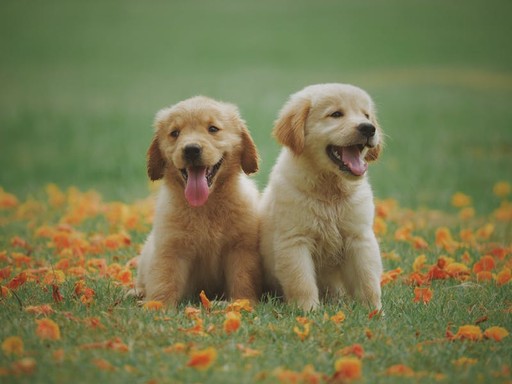
Street Scenes — Art Nouveau style Transfer


Landscapes — Art Nouveau style Transfer


Portraits — Art Nouveau style Transfer


Architecture — Art Nouveau style Transfer
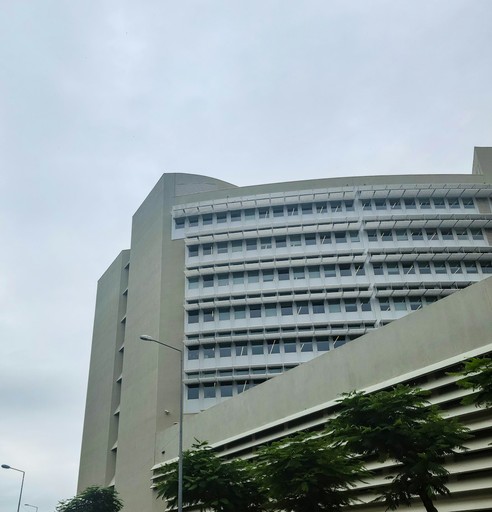

Food — Art Nouveau style Transfer


Night Scenes — Art Nouveau style Transfer
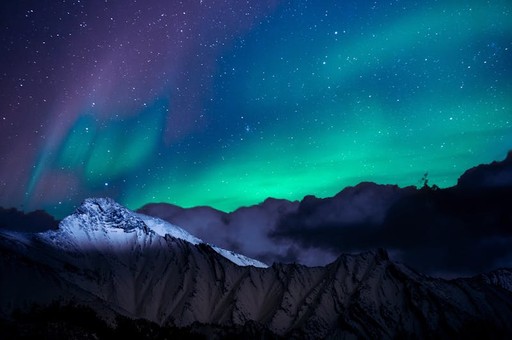

Flowers — Art Nouveau style Transfer
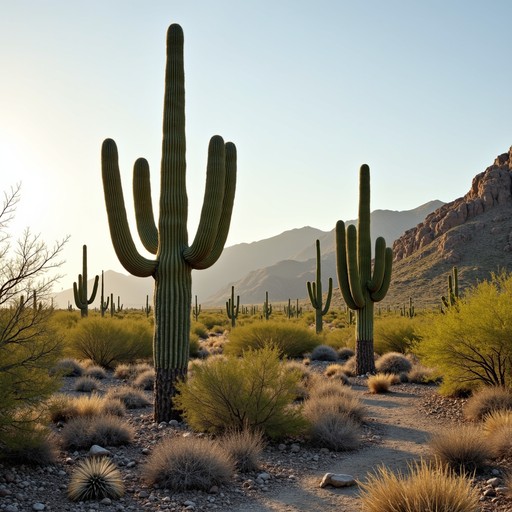

Seascapes — Art Nouveau style Transfer


What is Art Nouveau?
Art Nouveau -- literally "New Art" in French -- was an international decorative art movement that flourished between roughly 1890 and 1910. It emerged simultaneously across Europe under different names: Jugendstil in Germany, Stile Liberty in Italy, Modernisme in Catalonia, Secessionism in Vienna. Despite the varied labels, the movement shared a unified visual philosophy: nature, not history, should be the source of decorative form.
The key characteristics that distinguish Art Nouveau from other movements:
- Organic, whiplash curves -- The signature Art Nouveau line is a sinuous, asymmetric curve inspired by plant tendrils, flowing water, and the natural growth patterns of vines and roots. These curves appear everywhere -- in ironwork, furniture, typography, architecture, and painting. The "whiplash curve" became the movement's most recognizable motif.
- Natural forms as ornament -- Flowers, leaves, insects, peacock feathers, and female hair became the primary decorative vocabulary. Unlike earlier movements that used nature symbolically, Art Nouveau used natural forms structurally -- the curve of a lily stem became a lamp post, the spread of a dragonfly's wings became a brooch.
- Integration of art and craft -- Art Nouveau rejected the industrial-age separation of "fine art" and "decorative art." Painters designed furniture, architects designed cutlery, and every surface -- from building facades to book covers -- was treated as an opportunity for unified aesthetic design.
- Flat, decorative composition -- Influenced by Japanese woodblock prints (particularly the work of Hokusai and Hiroshige), Art Nouveau artists flattened pictorial space, used bold outlines, and organized compositions as decorative patterns rather than illusionistic windows into three-dimensional space.
- Rich color palettes -- Gold, deep jewel tones (emerald, sapphire, ruby), and the muted earth tones of natural materials. Klimt's gold-leaf surfaces and Mucha's pastel-and-gold poster palettes represent the movement's two dominant color approaches.
Art Nouveau emerged as a direct response to both academic historicism and raw industrialism. Despite the odour of decadence which hangs about a great deal of Art Nouveau, the movement was, in its best manifestations, a genuine attempt to create beauty appropriate to the modern age. It bridged the gap between the Arts and Crafts movement's handmade idealism and the coming machine-age aesthetics of Art Deco and early modernism.
Key Art Nouveau Artists
Gustav Klimt (1862--1918)
Klimt was Art Nouveau's most celebrated painter and the leader of the Vienna Secession. His mature work -- The Kiss, Portrait of Adele Bloch-Bauer I, The Tree of Life -- combines figurative painting with vast fields of gold leaf, geometric pattern, and decorative ornament. The result is a unique fusion of sensuality and abstraction: realistic faces and hands emerge from shimmering, flat, ornamental surfaces.
For style transfer, Klimt provides Art Nouveau's most distinctive gram matrix -- the gold-tinged, heavily ornamented, pattern-rich aesthetic that most people associate with the movement. His training influence produces results with dense decorative patterning, warm gold tones, and a striking contrast between realistic detail and flat ornamental surfaces. See also: Gustav Klimt Style Transfer.
Alphonse Mucha (1860--1939)
Mucha was Art Nouveau's greatest graphic designer -- the artist who brought the movement's aesthetic to the widest audience through his iconic commercial posters. His work for actress Sarah Bernhardt and for brands like Job cigarette papers established the Art Nouveau poster as a legitimate art form. Mucha's style features central female figures surrounded by elaborate floral borders, flowing hair rendered as decorative line, and soft pastel-and-gold color harmonies.
Mucha's style transfer influence introduces the poster-art dimension of Art Nouveau -- flatter composition, stronger outlines, more explicit decorative borders, and the movement's characteristic integration of figure and ornament.
Henri de Toulouse-Lautrec (1864--1901)
Toulouse-Lautrec brought Art Nouveau's flowing line to the depiction of modern Parisian life -- the cabarets, dance halls, and cafes of Montmartre. His posters for the Moulin Rouge and other venues combine bold, flat color with sinuous outlines and dynamic compositions influenced by Japanese prints and photography's cropped perspectives. See also: Toulouse-Lautrec Style Transfer.
Toulouse-Lautrec's contribution to the style transfer model adds an urban energy and graphic boldness that balances Klimt's ornamental richness and Mucha's decorative elegance.
Antoni Gaudi (1852--1926)
While primarily an architect, Gaudi's influence on Art Nouveau's visual language is profound. His buildings in Barcelona -- the Sagrada Familia, Casa Batllo, Park Guell -- translate Art Nouveau's organic curves into three-dimensional form. Every surface undulates, every structural element mimics natural growth patterns, and color (through mosaic tile, or trencadis) is integrated into the architectural form itself.
Gaudi's architectural legacy reinforces Art Nouveau's treatment of structural elements as organic, living forms -- an influence visible in style transfer results where architectural lines curve and soften.
Style Transfer Quality by Photo Type (ArtFID Tested)
We tested ArtRobot's Art Nouveau style transfer across photo categories using ArtFID (Art Frechet Inception Distance):
- LPIPS: content preservation. Lower = better.
- FID: style fidelity to authentic Art Nouveau paintings. Lower = more faithful.
Combined formula: ArtFID = (1 + LPIPS) x (1 + FID)
| Photo Category | ArtFID | Stars | Notes |
|---|---|---|---|
| Animals | 336.41 | 4 | Best category -- organic forms suit flowing curves |
| Street Scenes | 395.61 | 3 | Good -- urban scenes with decorative potential |
| Fantasy | 402.52 | 2 | Moderate -- decorative style matches fantastical subjects |
| Architecture | 411.26 | 2 | Moderate -- structural forms clash with organic curves |
| Portraits | 418.43 | 2 | Moderate -- faces preserved but ornament dominates |
| Still Life | 422.21 | 2 | Moderate -- objects gain decorative treatment |
| Landscapes | 458.87 | 2 | Weak -- broad vistas lack ornamental focus |
| Flowers | 455.87 | 2 | Weak -- despite floral motifs, algorithm struggles |
| Food | 480.91 | 2 | Weak -- decorative treatment fights food realism |
| Night Scenes | 489.34 | 2 | Weak -- Art Nouveau is a daylight aesthetic |
| Seascapes | 521.21 | 1 | Worst category -- open water resists ornamentation |
Key takeaway: Art Nouveau is a specialist style with one clear strength. Animals at 336.41 (4 stars) dramatically outperform all other categories. The gap between animals and the second-best category (street scenes at 395.61) is nearly 60 points -- a significant quality difference. This makes Art Nouveau a targeted choice rather than a versatile generalist.
Animals lead at 336.41 because Art Nouveau's organic, curving forms are a natural match for animal subjects. The flowing lines that define Art Nouveau -- the whiplash curves, the sinuous outlines -- map directly onto the organic shapes of animal bodies, fur patterns, and feathers. Klimt's and Mucha's extensive use of animal motifs (peacocks, serpents, swans) in their decorative work provides strong training data for animal compositions.
Street Scenes at 395.61 earn 3 stars because urban environments with architectural detail, signage, and human activity provide diverse visual elements that Art Nouveau's decorative transformation can enrich. The style adds ornamental quality to mundane urban surfaces.
Seascapes at 521.21 are Art Nouveau's worst category. Open water provides minimal structural detail for the algorithm to ornament -- Art Nouveau needs edges, forms, and surfaces to decorate, and featureless ocean expanses offer none. For seascape subjects, consider Impressionism or Romanticism.
Before & After Examples
Every row shows the original photograph alongside the AI-generated Art Nouveau result.
Animals -- 4 stars (ArtFID 336.41)
Animals are Art Nouveau's strongest category. The transformation captures the flowing organic quality that Klimt and Mucha brought to natural subjects.
| Original Photo | AI Result |
|---|---|
|
|
| Source photo | ArtFID: 336.41 -- 4 stars |
The animal transformation reveals Art Nouveau's signature effect on organic subjects: fur and feather textures dissolve into flowing decorative patterns, outlines become sinuous and rhythmic, and the overall image gains the ornamental quality of a Mucha poster or a Klimt decorative panel. The animal's natural form is enhanced rather than distorted -- Art Nouveau's organic vocabulary amplifies what is already organic.
Street Scenes -- 3 stars (ArtFID 395.61)
Street scenes provide the architectural and human detail that Art Nouveau's decorative transformation enriches.
| Original Photo | AI Result |
|---|---|
|
|
| Source photo | ArtFID: 395.61 -- 3 stars |
The street scene transformation shows Art Nouveau treating urban elements as opportunities for decoration. Building facades gain ornamental flourishes, signage becomes typographically stylized, and the overall composition takes on the poster-art quality of Toulouse-Lautrec's Montmartre scenes. Straight architectural lines soften into the subtle curves that define the movement.
Portraits -- 2 stars (ArtFID 418.43)
Portraits receive moderate treatment -- faces remain recognizable but heavy ornamentation competes with the subject.
| Original Photo | AI Result |
|---|---|
 |
 |
| Source photo | ArtFID: 418.43 -- 2 stars |
The portrait transformation echoes Klimt's approach: the face retains realistic detail while the surrounding areas -- hair, clothing, background -- become fields of decorative pattern. This is authentic to Art Nouveau's actual painting practice, but it creates a tension between the realistic face and the ornamental surroundings that not every portrait can sustain.
When to Use Art Nouveau
Art Nouveau is the right choice for specific photographic scenarios:
1. Animal Photography. Art Nouveau's 4-star performance on animals makes it one of the stronger style choices for this category. The organic flowing lines and decorative patterns naturally complement animal forms -- birds, cats, horses, and other subjects with distinctive silhouettes produce particularly strong results.
2. Decorative and Ornamental Projects. Art Nouveau was, first and foremost, a decorative movement. If your goal is to create highly ornamental, visually rich results -- for wall art, greeting cards, book covers, or product packaging -- Art Nouveau delivers maximum decorative impact.
3. Subjects with Strong Outlines. Art Nouveau's flowing line work requires clear edges to transform. Subjects with distinct silhouettes -- a lone tree against the sky, a person in profile, an architectural detail against a plain background -- give the algorithm strong boundaries to ornament.
4. Botanical and Natural Subjects. Flowers, leaves, insects, and other natural forms were Art Nouveau's primary decorative vocabulary. While the ArtFID scores for flowers (455.87) are moderate overall, individual photographs of single blooms or well-defined botanical subjects can produce results that channel Mucha's botanical poster art.
5. Creating a Vintage Luxury Aesthetic. Art Nouveau's association with Belle Epoque luxury -- Klimt's gold leaf, Mucha's elegant poster women, Gaudi's opulent interiors -- makes it the ideal choice when you want results that convey historical elegance and decorative richness.
When NOT to Use Art Nouveau
Art Nouveau has genuine limitations. Choose a different style for these subjects:
1. Seascape Photography. The 521.21 ArtFID score is Art Nouveau's worst category. Open water lacks the structural detail and clear edges that Art Nouveau's decorative transformation requires. For seascapes, use Impressionism or Romanticism.
2. Night Scenes and Low-Light Subjects. At 489.34, night scenes are Art Nouveau's second-worst category. The movement was aesthetically rooted in the bright daylight and gaslit elegance of the Belle Epoque, not in darkness or atmospheric mystery. For night scenes, consider Symbolism or Expressionism.
3. Minimalist or Modern Subjects. Art Nouveau is maximalist by nature -- it fills every surface with ornament. Clean, minimal, modern architectural subjects or stark compositions fight against Art Nouveau's impulse to decorate. The results will feel cluttered rather than enhanced. For modern subjects, use Cubism or Art Deco.
4. Landscape Panoramas. Broad, sweeping landscapes at 458.87 lack the concentrated detail that Art Nouveau's ornamental approach needs. The style works better on focused, close-up subjects than on wide vistas. For landscapes, Impressionism is a more natural match.
5. Food Photography. At 480.91, food subjects receive weak treatment. Art Nouveau's heavy decorative overlay fights against the appetizing clarity that food photography requires. The ornamental patterns dominate the subject rather than enhancing it.
FAQ
What is Art Nouveau art style and where did it originate?
Art Nouveau (French for "New Art") is a decorative art movement that originated in Brussels and Paris around 1890 and flourished until approximately 1910. It spread across Europe under various names -- Jugendstil (Germany), Stile Liberty (Italy), Modernisme (Catalonia), Secessionism (Vienna). The movement is characterized by organic, flowing lines inspired by natural forms, elaborate decorative patterns, and the integration of fine art with decorative craft. Key figures include Gustav Klimt, Alphonse Mucha, Henri de Toulouse-Lautrec, and architect Antoni Gaudi.
Which photos look best with Art Nouveau style transfer?
Animals (336.41 ArtFID, 4 stars) are Art Nouveau's strongest category by a significant margin, followed by street scenes (395.61, 3 stars). The style's organic flowing lines naturally complement animal forms. Avoid seascapes (521.21, 1 star) and night scenes (489.34, 2 stars), where the style performs poorly.
Art Nouveau vs Symbolism: which should I choose?
Art Nouveau and Symbolism were contemporary movements that overlapped significantly -- Klimt is claimed by both. The key difference is intent: Art Nouveau prioritizes decorative beauty and surface pattern, while Symbolism prioritizes psychological mood and mysterious atmosphere. Choose Art Nouveau when you want ornamental richness; choose Symbolism when you want dreamlike, emotionally evocative results.
Can I use Art Nouveau style transfer for commercial projects?
Yes. Art Nouveau is a historical art movement from over a century ago, and its visual language is not copyrightable. All style references used by ArtRobot are sourced from museum collections under open access / CC0 license. Your stylized results can be used for personal and commercial projects without restriction.
How accurate is AI Art Nouveau style transfer compared to real paintings?
AI style transfer captures Art Nouveau's macro characteristics -- flowing organic curves, decorative patterns, flat composition, and rich color palettes -- with reasonable fidelity. However, the extreme fine detail of Art Nouveau's ornamental work (Klimt's gold-leaf textures, Mucha's intricate floral borders) exceeds what current neural style transfer can reproduce at full resolution. The results evoke Art Nouveau's aesthetic strongly but do not replicate the movement's most intricate decorative details. Our ArtFID scores reflect this honestly -- Art Nouveau's scores are moderate across most categories, with animals being the notable exception.
Ready to Create Your Own Art Nouveau Masterpiece?
Art Nouveau transforms photographs into ornamental, flowing compositions filled with organic curves and decorative richness. It is one of art history's most visually luxurious movements -- and one of the most rewarding to see applied to animal and nature subjects.
Start Your Free Art Nouveau Style Transfer on ArtRobot ->
Related Styles
- Gustav Klimt Style Transfer -- Art Nouveau's most famous painter. Gold-leaf surfaces, geometric patterns, and the fusion of realism with flat ornament.
- Toulouse-Lautrec Style Transfer -- Art Nouveau's poster art master. Bold outlines, flat color, and the energy of Parisian nightlife.
- Symbolism Style Transfer -- Art Nouveau's contemporary. Dreamlike atmosphere, psychological mood, and mysterious imagery.
- Art Deco Style Transfer -- Art Nouveau's geometric successor. Where Art Nouveau curves, Art Deco angles -- streamlined, machine-age elegance.
Try It Yourself
Transform your own photos into stunning paintings with 80+ artist styles. Free to start.