
AI Artist & Tech Enthusiast
Art Deco Photo Effect — AI Style Transfer Guide (2026)

Photo + Style = Your Artwork
This guide uses Art Deco Style. Select it automatically in the creator.

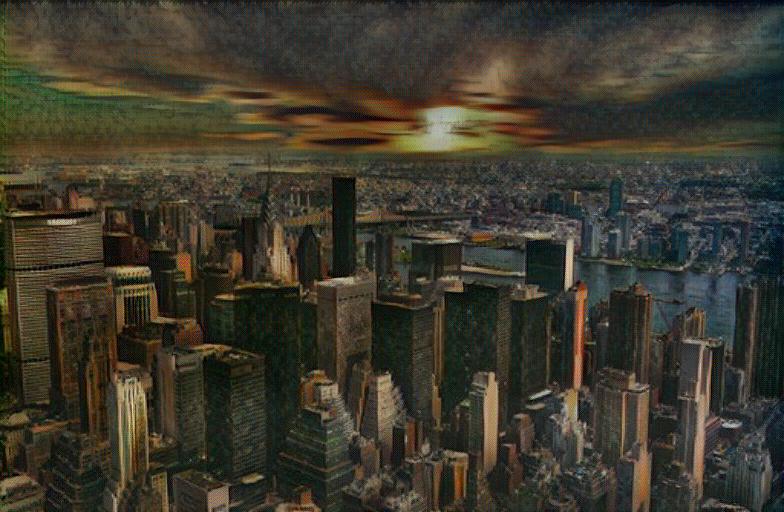
Art Deco is the style of the Jazz Age -- bold, geometric, and unapologetically glamorous. Born in 1920s Paris and spreading rapidly across architecture, fashion, and graphic design worldwide, Art Deco combined geometric patterns, streamlined forms, bold colors, and luxurious materials into a visual language that still defines our idea of elegance. With AI-powered neural style transfer, you can now apply that same sleek sophistication to your own photographs -- turning everyday images into compositions that channel the Chrysler Building, Tamara de Lempicka's portraits, and the golden shimmer of the Roaring Twenties.
We tested ArtRobot's Art Deco style transfer across 15 different photo categories, each scored by our ArtFID quality benchmark. This guide covers the movement's history, its defining visual traits, which photos produce the best results, and how to create your own Art Deco art for free.
Quick Links -- Jump to: What Is Art Deco? | Characteristics | ArtFID Scores | Key Artists | How to Apply | Before & After | FAQ
What Is Art Deco?
Art Deco emerged in France in the 1920s, reaching its peak at the 1925 Exposition Internationale des Arts Decoratifs et Industriels Modernes in Paris -- the exhibition that gave the movement its name. Unlike earlier decorative movements, Art Deco embraced the machine age. It drew from Cubism's geometric fragmentation, Futurism's celebration of speed, and the bold palettes of the Ballets Russes, fusing them into a style that was simultaneously modern and luxurious.
The movement was never confined to painting alone. Art Deco was perhaps the most interdisciplinary aesthetic of the 20th century, shaping everything from the spires of the Chrysler Building and the interiors of ocean liners to jewelry, fashion, poster design, and cinema set decoration. Its visual language -- sunbursts, chevrons, zigzags, and stepped forms -- became the universal shorthand for modernity and sophistication.
"Above all, we have tried to illustrate and discuss works of art in their original contexts, dissociating them as far as possible from the museum surroundings in which they are nowadays so often confined." -- History of Art, p. 12
By the late 1930s, the style had evolved into the Streamline Moderne variant, trading sharp angles for aerodynamic curves. But it was the original geometric Art Deco -- with its bold contrasts and decorative precision -- that translates most powerfully to neural style transfer. The style's clearly defined visual patterns give the AI strong, unambiguous stylistic signals to replicate.
Art Deco Characteristics & Techniques
Understanding the core visual traits of Art Deco helps predict how your photos will transform and which subjects yield the strongest results.
The Four Pillars of Art Deco Style
-
Geometric Patterns & Symmetry -- Art Deco is built on geometry: sunbursts, chevrons, zigzags, stepped pyramids, and fan shapes. These patterns are typically symmetrical and repetitive, creating a sense of order and elegance. In style transfer, this means the AI imposes geometric patterning onto your photograph's surfaces, transforming organic textures into decorative, structured compositions.
-
Bold, High-Contrast Color -- Art Deco favors strong, clean color combinations: gold and black, emerald and cream, cobalt and silver. Colors are applied in flat, well-defined areas rather than blended. The AI replicates this by shifting your photo's palette toward high-contrast, sharply delineated color blocks.
-
Streamlined, Stylized Forms -- Figures and objects in Art Deco are simplified and idealized. Tamara de Lempicka's portraits reduce the human form to gleaming, almost sculptural volumes. The AI applies this same stylization -- smoothing details, sharpening contours, and lending subjects a polished, almost metallic sheen.
-
Luxurious Surface Treatment -- Art Deco evokes luxury through its materials and finishes: gold leaf, lacquer, chrome, ivory. Even in painting, surfaces have a polished, reflective quality. The neural network captures this by adding luminous highlights and smooth, glossy textures to your photographs.
Visual Trait Comparison
| Trait | Art Deco Approach | Effect on Your Photos |
|---|---|---|
| Color palette | High-contrast, metallic accents, jewel tones | Colors intensified toward gold, black, emerald, cobalt |
| Brushwork | Smooth, polished, no visible strokes | Surfaces gain sleek, lacquered quality |
| Form & proportion | Stylized, geometric, idealized | Subjects simplified into elegant, angular shapes |
| Composition | Symmetrical, centered, decorative framing | Images gain architectural balance and decorative borders |
| Light & shadow | Sharp, dramatic, spotlight-like | Contrast heightened; metallic highlights emerge |
Style Transfer Quality by Photo Type (ArtFID Tested)
We ran ArtRobot's Art Deco style transfer on 15 photo categories and measured quality using ArtFID (Art Frechet Inception Distance) -- the industry-standard metric for style transfer evaluation.
ArtFID combines two components: - LPIPS (Learned Perceptual Image Patch Similarity) -- Does the output preserve your original content? Lower = better content retention. - FID (Frechet Inception Distance) -- Does the output match the statistical distribution of real Art Deco artworks? Lower = more authentic style.
Combined formula: ArtFID = (1 + LPIPS) x (1 + FID)
Full Scores Table
| Photo Type | ArtFID | LPIPS | FID | Stars | Recommendation |
|---|---|---|---|---|---|
| Fantasy | 239.50 | 0.3619 | 174.85 | 5 | Best match -- stylized content embraces decoration |
| Night Scenes | 241.76 | 0.5148 | 158.60 | 5 | Excellent -- dramatic lighting suits Deco contrast |
| Portraits | 247.18 | 0.4445 | 170.12 | 5 | Excellent -- Lempicka's signature territory |
| Flowers | 260.70 | 0.4961 | 173.25 | 5 | Excellent -- organic forms gain decorative elegance |
| Street Scenes | 276.37 | 0.3431 | 204.78 | 5 | Strong -- urban geometry amplified |
| Still Life | 278.00 | 0.3239 | 208.98 | 5 | Strong -- contained compositions suit Deco framing |
| Travel | 296.40 | 0.3940 | 211.63 | 5 | Strong -- exotic scenes gain glamorous polish |
| Landscapes | 320.52 | 0.4766 | 216.07 | 4 | Good -- works best with geometric landforms |
| Architecture | 333.76 | 0.5215 | 218.36 | 4 | Good -- natural Deco territory |
| Interiors | 335.47 | 0.3705 | 243.78 | 4 | Good -- enclosed spaces gain luxurious treatment |
| Animals | 360.72 | 0.4338 | 250.58 | 3 | Moderate -- works with stylized animal forms |
| Food | 367.19 | 0.4959 | 244.46 | 3 | Moderate -- elegant plating helps |
| Vehicles | 382.16 | 0.3607 | 279.86 | 3 | Moderate -- classic cars suit Deco streamlining |
| Urban Scenes | 421.42 | 0.3034 | 322.33 | 2 | Challenging -- wide views dilute decorative impact |
| Seascapes | 488.16 | 0.5483 | 314.28 | 2 | Challenging -- organic water resists geometric style |
| Average | 323.28 | 0.4193 | 226.11 | 4.0 |
Key findings: Fantasy scenes achieve the lowest (best) ArtFID at 239.50 -- the already-stylized nature of fantasy content embraces Art Deco's decorative treatment naturally. Night scenes (241.76) follow closely, their dramatic lighting creating the high-contrast conditions Art Deco thrives on. Portraits score an excellent 247.18 with good content preservation (LPIPS 0.4445), directly echoing Tamara de Lempicka's iconic Art Deco portraiture. Seascapes (488.16) score worst -- the organic, constantly shifting forms of water resist Art Deco's geometric precision.
Key Art Deco Artists
Art Deco was primarily a design movement rather than a fine-art painting movement, but several artists defined its visual language across different media:
| Artist | Years | Signature Style | Best Subjects | Known For |
|---|---|---|---|---|
| Tamara de Lempicka | 1898--1980 | Gleaming, sculptural portraits; metallic color; angular elegance | Portraits, figures | The quintessential Art Deco painter |
| Erte (Romain de Tirtoff) | 1892--1990 | Flowing line, theatrical costume design, decorative fantasy | Fashion, fantasy | Harper's Bazaar covers, set design |
| A.M. Cassandre | 1901--1968 | Bold geometric poster design, airbrushed gradients | Architecture, travel, vehicles | Nord Express, Normandie posters |
| Jean Dupas | 1882--1964 | Monumental murals, stylized figures, gold leaf | Interiors, figures | London Carlton Hotel murals |
De Lempicka's portrait style is particularly effective for style transfer -- her technique of reducing faces to gleaming, angular volumes with metallic highlights produces striking results when applied to photographic portraits.
How to Apply Art Deco Style (3 Steps)
Step 1: Choose Your Photo
Upload any photograph to ArtRobot. Based on our ArtFID testing, the strongest results come from: - Fantasy and night scenes -- ArtFID under 242, dramatic lighting and stylized content are ideal - Portraits with clear lighting -- Art Deco's portrait tradition produces stunning face transformations (LPIPS 0.4445) - Architecture and interiors -- Art Deco's natural domain; geometric structures amplify the style's precision - High-contrast photos -- Art Deco thrives on dramatic light/dark relationships; flat, even lighting produces weaker results
Step 2: Select Art Deco Style
Browse the Art Deco collection in ArtRobot's style library. The AI uses neural style transfer to apply Art Deco's geometric patterning, metallic color accents, and streamlined elegance while preserving your photograph's core composition. The model is trained on authentic Art Deco artworks and decorative designs.
Step 3: Download Your Art Deco Masterpiece
ArtRobot generates your result in seconds. Download in multiple resolutions: - Standard (1024px) -- social media, digital sharing - HD (2048px) -- prints up to 8x10" - Ultra HD (4096px) -- large canvas prints, gallery-quality output
Try Art Deco Style Transfer Free ->
Before & After Examples
We tested ArtRobot's Art Deco style transfer on photographs across multiple categories. Below are representative transformations with their ArtFID quality scores.
Night Scenes -- ArtFID 241.76
Night scenes are a natural match for Art Deco's dramatic contrast. The AI amplifies the interplay between artificial light and surrounding darkness, adding the geometric shimmer and metallic highlights that define Deco nightscapes.
| Original Photo | Art Deco AI Result |
|---|---|
|
|
| Source photograph | ArtFID: 241.76 -- LPIPS: 0.5148 / FID: 158.60 |
Portraits -- ArtFID 247.18
Art Deco portraiture -- exemplified by Tamara de Lempicka -- reduces faces to gleaming, sculptural volumes. The AI applies this same treatment: smoothing skin, sharpening contours, and adding the metallic sheen that makes Deco portraits instantly recognizable.
| Original Photo | Art Deco AI Result |
|---|---|
 |
 |
| Source photograph | ArtFID: 247.18 -- LPIPS: 0.4445 / FID: 170.12 |
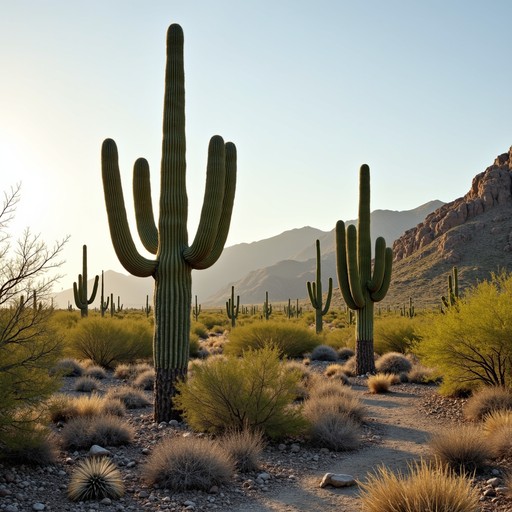
Flowers -- ArtFID 260.70
Floral subjects respond beautifully to Art Deco's decorative treatment. The AI transforms organic petal forms into stylized, geometric arrangements while intensifying colors toward the jewel tones characteristic of Deco design.
| Original Photo | Art Deco AI Result |
|---|---|
 |
 |
| Source photograph | ArtFID: 260.70 -- LPIPS: 0.4961 / FID: 173.25 |
Street Scenes -- ArtFID 276.37
Urban street scenes provide the architectural geometry that Art Deco craves. The AI accentuates building lines, adds decorative patterning to facades, and shifts the color palette toward the gold-and-black contrasts that define Deco cityscapes.
| Original Photo | Art Deco AI Result |
|---|---|
 |
 |
| Source photograph | ArtFID: 276.37 -- LPIPS: 0.3431 / FID: 204.78 |
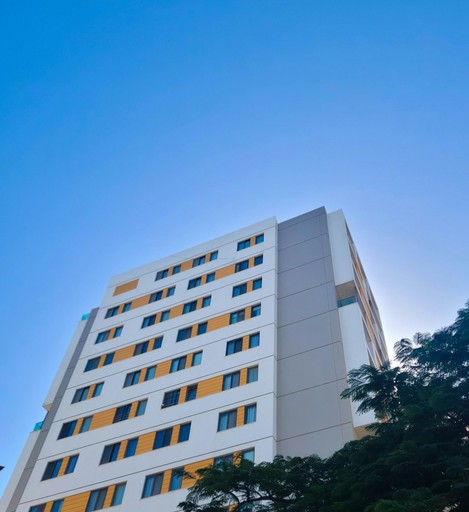
Architecture -- ArtFID 333.76
Architecture is Art Deco's home territory. From the Chrysler Building to the Palais de Chaillot, the movement's greatest achievements are architectural. The AI applies stepped forms, geometric ornamentation, and metallic accents that transform ordinary buildings into Deco landmarks.
| Original Photo | Art Deco AI Result |
|---|---|
 |
 |
| Source photograph | ArtFID: 333.76 -- LPIPS: 0.5215 / FID: 218.36 |
Frequently Asked Questions
What is Art Deco art style and where did it originate?
Art Deco originated in France in the 1920s, named after the 1925 Exposition Internationale des Arts Decoratifs et Industriels Modernes in Paris. It combines geometric patterns, bold colors, luxurious materials, and streamlined forms into a style that celebrates modernity, elegance, and the machine age. Unlike purely fine-art movements, Art Deco was interdisciplinary -- shaping architecture (Chrysler Building), fashion, graphic design, jewelry, and cinema alongside painting. The style spread globally through the 1930s-1940s.
Which photos look best with Art Deco style transfer?
Based on our ArtFID testing, fantasy scenes (ArtFID 239.50), night scenes (241.76), and portraits (247.18) produce the strongest results. Street scenes (276.37) and still life (278.00) also perform well. Seascapes (488.16) and urban scenes (421.42) are the weakest matches. For best results, choose photos with strong lighting contrast, geometric elements, and clear compositional structure.
Can I use Art Deco style transfer for commercial projects?
Personal use is always free on ArtRobot. For commercial use -- prints for sale, merchandise, marketing materials, client work -- a premium plan is required. Art Deco as a style is in the public domain (the movement is over 80 years old), and the AI models are trained on public domain reference materials. ArtRobot provides 3 free style transfers with no signup required.
Art Deco vs Art Nouveau: which should I choose?
Both are decorative movements, but their aesthetics are almost opposite. Art Nouveau (1890s-1910s) draws from organic, natural forms -- flowing vines, curving tendrils, insect wings -- creating sinuous, asymmetrical compositions. Art Deco (1920s-1940s) embraces geometry, symmetry, and the machine age -- sunbursts, chevrons, stepped pyramids, metallic surfaces. Choose Art Nouveau for photos where you want organic, flowing elegance. Choose Art Deco for photos where you want geometric precision and glamorous polish. Art Nouveau softens; Art Deco sharpens.
How accurate is AI Art Deco style transfer compared to real artworks?
Our Art Deco model achieves an average ArtFID of 323.28 across 15 photo categories, with a style fidelity (FID) of 226.11. The best-performing category (night scenes, FID 158.60) produces results that convincingly capture Art Deco's geometric patterns and metallic color palette. The AI excels at reproducing the style's decorative surface treatment and color contrasts, though it cannot fully replicate physical gilding or lacquer textures.
Related Styles
Art Deco connects to a broader ecosystem of decorative and geometric art movements. Explore these related styles:
- Art Nouveau Style Transfer -- The organic predecessor; Mucha, Klimt, and flowing natural forms
- Constructivism Style Transfer -- Revolutionary geometric abstraction; Rodchenko, El Lissitzky
Try Art Deco Style Transfer Free ->
Try It Yourself
Transform your own photos into stunning paintings with 80+ artist styles. Free to start.