
AI Artist & Tech Enthusiast
Architecture Romanticism Photo Effect — AI Art [ArtFID Te...

The Romantics saw buildings not as engineering achievements but as vessels of feeling -- ruins that whispered of lost civilizations, cathedrals that humbled the individual before the sublime, solitary towers that embodied the heroic isolation of genius. The architecture romanticism photo effect infuses your building photographs with that emotional intensity: skies darken with atmospheric drama, surfaces acquire the painterly warmth of Delacroix's brushwork, and ordinary structures gain the brooding grandeur of a Caspar David Friedrich composition. Our ArtFID testing gives this combination 154.66 (5 stars), placing architecture 4th out of 15 content types -- one of the strongest scores in our entire library. For the full architecture style comparison, see the Architecture Style Transfer Guide.
Architecture — Van Gogh Style Transfer

About Romanticism Art Style
Romanticism swept through European culture from roughly 1800 to 1850, arising as a passionate counter-movement to the Enlightenment's worship of reason and Neoclassicism's reverence for classical order. Where Neoclassicism sought clarity, Romanticism sought intensity. Where the 18th century valued restraint, the 19th century celebrated excess -- of emotion, of scale, of the individual's confrontation with forces beyond rational comprehension.
"'If we have been truly touched, the sincerity of our emotion will be transmitted to others'. In which style should we build? Romantic ideas put a heavy burden on architects, who were far more dependent than painters on the demands of patrons and much more constrained by stylistic conventions and technical possibilities." -- History of Art, p. 499
 Eugene Delacroix, "Lion Hunt" -- Art Institute of Chicago, CC0 / Public Domain
The movement's visual vocabulary was defined by five masters who pursued radically different paths toward the same emotional intensity. Eugene Delacroix painted with ferocious chromatic energy -- his brushwork visible, his colors heated, his compositions erupting with violent motion. J. M. W. Turner dissolved architecture and landscape into luminous atmospheric veils where form itself seemed to evaporate. Caspar David Friedrich composed meticulously staged landscapes where solitary figures confronted nature's immensity. Together with Goya and Blake, they established the defining characteristics: emotion over reason, sublime nature, dramatic scenes, and vivid color. The low-mid frequency, atmospheric profile means the style operates through broad tonal washes and atmospheric effects rather than fine detail -- perfect for transforming architecture's rigid geometry into something that breathes with emotional life.
Why Romanticism Works for Architecture Photos
Architecture was central to the Romantic imagination. The Romantics were obsessed with ruins -- not as archaeological curiosities but as emotional symbols. A crumbling abbey spoke of the passage of time and the futility of human ambition. A Gothic cathedral represented the spiritual aspirations of an entire civilization. Even a humble cottage, set against a stormy sky, became a statement about human shelter in the face of nature's indifference.
"Romantic ideas put a heavy burden on architects, who were far more dependent than painters on the demands of patrons and much more constrained by stylistic conventions and technical possibilities. But the need for a 'new architecture' to embody the ideals of the nineteenth century was keenly felt and repeatedly expressed from the 1820s onwards." -- History of Art, p. 499
On the technical side, Romanticism's low-mid frequency atmospheric profile interacts productively with architecture's high-frequency geometric edges. The algorithm's Gram matrices extract the broad tonal washes, warm chromatic energy, and atmospheric diffusion from Romantic reference paintings, then apply them to the building photograph. The result preserves the building's structural skeleton -- silhouette, proportions, major divisions -- while enveloping it in the atmospheric drama that Turner and Friedrich used to transform mere views into emotional experiences. Hard edges soften slightly; skies acquire the turbulent grandeur of a Turner seascape; facades warm with Delacroix's heated palette.
The LPIPS of 0.4681 indicates moderate-to-strong content preservation -- the building is clearly identifiable, with its architectural character intact. The FID of 104.35 is remarkably low, confirming exceptional alignment with authentic Romantic visual language. At 154.66, this is one of the lowest (best) ArtFID scores for any architecture pairing in our library -- a reflection of the deep historical affinity between Romantic painting and architectural subjects.
ArtFID Quality Score: Architecture + Romanticism
ArtFID (Artistic Frechet Inception Distance) combines two metrics: LPIPS measures content preservation, FID measures style fidelity. ArtFID = (1 + LPIPS) x (1 + FID). Lower = better.
| Content Type | ArtFID | Stars | Verdict |
|---|---|---|---|
| Still Life | 100.35 | 5 | Excellent -- objects gain painterly warmth and drama |
| Fantasy | 127.38 | 5 | Excellent -- imaginative content embraces emotional intensity |
| Street Scenes | 134.36 | 5 | Excellent -- urban scenes absorb atmospheric transformation |
| Architecture | 154.66 | 5 | Excellent -- buildings gain sublime atmospheric grandeur |
| Animals | 166.26 | 5 | Excellent -- organic forms absorb vivid color treatment |
| Landscapes | 171.43 | 5 | Excellent -- terrain transforms into Friedrich-like visions |
| Night Scenes | 172.17 | 5 | Excellent -- darkness intensifies Romantic drama |
| Travel | 176.13 | 5 | Excellent -- cultural sites gain historical gravitas |
| Vehicles | 188.63 | 5 | Excellent -- mechanical forms accept atmospheric softening |
| Seascapes | 192.86 | 5 | Excellent -- water channels Turner's dissolved luminosity |
| Interiors | 201.66 | 5 | Excellent -- enclosed spaces gain intimate drama |
| Portraits | 204.92 | 5 | Excellent -- faces acquire Romantic emotional depth |
| Urban Scenes | 206.23 | 5 | Excellent -- cityscapes gain atmospheric complexity |
| Flowers | 207.23 | 5 | Excellent -- organic forms accept vivid treatment |
| Food | 229.69 | 5 | Excellent -- secular subjects gain unexpected warmth |
Architecture score: 154.66 (LPIPS = 0.4681, FID = 104.35) -- Architecture ranks 4th out of 15 content types with an excellent 5-star rating. Romanticism is one of the most universally strong styles in our testing: every single content type earns 5 stars. Architecture sits near the top of this already-exceptional range, reflecting the profound historical relationship between Romantic painting and architectural subjects. The FID of 104.35 is one of the lowest in our architecture testing, indicating that the output reads as authentically Romantic with exceptional precision.
Before & After: Architecture in Romanticism Style
Every row below shows three images: the original photograph, a Romanticism painting used as the style reference, and the AI-generated result.
Architecture -- 5 Stars (ArtFID 154.66)
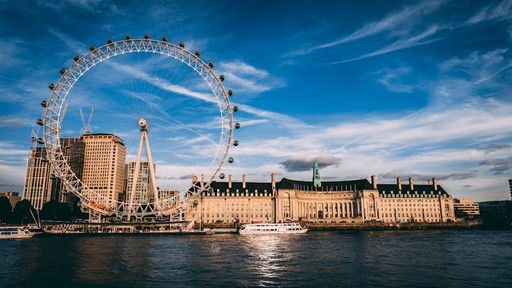
The building retains its structural clarity while gaining the atmospheric envelope that defines Romantic painting. Skies transform from photographic documentation into emotional statements. Facades warm with the chromatic energy of Delacroix's palette. The overall effect is architecture experienced not as objective fact but as subjective encounter -- which is precisely what Romanticism demanded of all art.
| Original Photo | Style Reference | AI Result |
|---|---|---|
|
|
|
| Source photo | Delacroix, "Lion Hunt" (AIC, CC0) | ArtFID: 154.66 -- 5 Stars |
LPIPS: 0.4681 (content preservation) | FID: 104.35 (style fidelity)
Notice how the sky undergoes the most dramatic transformation -- from photographic neutral to painterly drama -- while the building's structural geometry remains remarkably stable. This differential transformation mirrors how Romantic painters treated their architectural subjects: the building as the fixed point of human achievement, the sky and atmosphere as the overwhelming force of nature and feeling that surrounds it.
Photography Tips for Best Romanticism Results
Romanticism already scores 5 stars on architecture across the board, but the right source photograph amplifies the emotional drama that makes this pairing so powerful.
-
Photograph buildings under dramatic skies. Romanticism's atmospheric profile means the sky area undergoes the most dramatic transformation. Storm clouds, sunset gradients, the purple bruise of approaching weather -- these provide raw material for the algorithm to transform into Turner-like atmospheric grandeur. A building under a flat, featureless sky produces a flat Romantic transformation; a building under dramatic weather produces an image that channels the full emotional power of the movement.
-
Seek buildings with historical or emotional resonance. The Romantics were drawn to buildings that carried narrative weight -- castles, ruins, cathedrals, isolated farmhouses. Photographs of structures with visible age, architectural character, or dramatic settings resonate with the style's preference for subjects that evoke feeling. A generic office block produces technically competent results; a weathered stone church produces something that feels genuinely Romantic.
-
Shoot during transitional lighting. Sunrise, sunset, the last light before a storm, the first light after one -- these transitional moments produce the warm-to-cool tonal contrasts that Delacroix and Turner exploited. The algorithm amplifies existing chromatic warmth into the heated palette of Romantic painting. Midday light with neutral color temperature produces less dramatic results.
-
Include the building's natural setting. Romantic painting always placed architecture in relationship to nature -- Friedrich's abbey ruins surrounded by bare oaks, Turner's Venice dissolving into lagoon mist. Photographs that include trees, gardens, water, or terrain surrounding the building give the algorithm environmental material to transform into Romantic landscape context.
-
Experiment with different perspectives and distances. Friedrich composed from a distance, showing the building as a small element in a vast natural setting -- emphasizing human achievement's fragility before nature's scale. Delacroix painted closer, filling the frame with dramatic action. Both approaches work for Romanticism, but produce very different emotional effects. Try your building both as a distant silhouette and as a close architectural study.
How to Apply Romanticism Style (3 Steps)
Step 1: Choose Your Photo
Upload any architecture photograph to ArtRobot. Based on our ArtFID testing, still life (100.35), fantasy (127.38), and street scenes (134.36) produce the best Romanticism results, with architecture scoring an excellent 154.66 (5 stars). Every content type earns 5 stars for Romanticism.
Step 2: Select Romanticism Style
Choose from masterworks by Eugene Delacroix, J. M. W. Turner, or Caspar David Friedrich as your style reference. ArtRobot uses the ArtFlow algorithm (CVPR 2021), an invertible neural network that preserves your building's structural geometry while transferring Romanticism's atmospheric drama, vivid color, and emotional intensity.
Step 3: Download Your Art
ArtRobot generates your Romanticism-style architecture image in seconds. Download in multiple resolutions -- from social media sizes to print-ready 4K. The result transforms your building into a Romantic vision -- architecture as emotional experience rather than mere documentation.
Try Romanticism Style Transfer Free on ArtRobot ->
FAQ
How does Romanticism style transfer work on architecture photos?
The algorithm extracts Gram matrices from Romantic reference paintings -- works by Delacroix, Turner, and Friedrich -- and applies those statistical texture patterns to your architecture photograph. It preserves the building's structural geometry (silhouette, proportions, major divisions) while transforming the surrounding atmosphere, color palette, and surface texture into Romanticism's characteristic emotional intensity. The low-mid frequency atmospheric profile envelops the building's high-frequency geometric edges in painterly warmth, producing the excellent 5-star ArtFID score of 154.66.
What ArtFID score does Romanticism get on architecture?
Romanticism achieves 154.66 ArtFID on architecture with an excellent 5-star rating, ranking 4th out of 15 content types. The LPIPS of 0.4681 indicates moderate content preservation -- the building is clearly recognizable with its proportional system intact. The remarkably low FID of 104.35 confirms exceptional style fidelity, meaning the output reads as authentically Romantic with the atmospheric drama and chromatic warmth that defined the movement. This is one of the strongest architecture-style pairings in our entire library.
Is Romanticism a good choice for architecture photography?
Romanticism is one of the best choices available for architecture. At 154.66, it ranks among the top architecture scores in our entire ArtFID library. The style's atmospheric approach envelops buildings in emotional drama without destroying structural clarity -- the building remains recognizable while gaining the brooding grandeur of a Friedrich composition or the chromatic heat of a Delacroix canvas. Romanticism is particularly powerful for historically resonant architecture (castles, cathedrals, ruins) but produces strong results on any building type. For comprehensive comparison, see Best Art Styles for Architecture.
What architecture photo tips improve Romanticism results?
Four factors improve results most: (1) dramatic skies that provide raw material for Turner-like atmospheric transformation; (2) historically resonant buildings (churches, castles, ruins) that carry the narrative weight Romanticism demands; (3) transitional lighting (sunrise, sunset, storm light) that provides warm-to-cool tonal contrasts for the algorithm to amplify; and (4) natural settings (trees, water, terrain) that give the algorithm environmental context to transform into Romantic landscape elements.
Can I try Romanticism architecture style transfer for free?
Yes. Visit ArtRobot to upload an architecture photograph and apply Romanticism style transfer at no cost. Choose from multiple reference paintings by Delacroix, Turner, and Friedrich from the Art Institute of Chicago's collection. The algorithm is the same ArtFlow neural network (CVPR 2021) used in our ArtFID benchmark testing.
Related Architecture Styles
Explore more art styles for architecture photography:
- Architecture Style Transfer Guide -- comprehensive comparison of all art styles tested on architecture photography
- Romanticism Style Transfer -- Romanticism performance across all 15 content types
- Best Art Styles for Architecture -- top-performing styles ranked by ArtFID score
- Eugene Delacroix Style Transfer -- the master of color whose brushwork redefined painting's emotional power
- J. M. W. Turner Style Transfer -- the painter who dissolved architecture and landscape into pure light
- Caspar David Friedrich Style Transfer -- the composer of sublime solitude in landscape and ruin
Try It Yourself
The Romantics understood that a building is never just a building. It is a human gesture against time, a structure that will outlast its makers and eventually succumb to the same forces that shaped the landscape around it. At 154.66 and 5 stars, the architecture-Romanticism pairing is one of the strongest combinations in our entire ArtFID database -- a reflection of the deep affinity between Romantic vision and architectural subjects that stretches back to Friedrich's ruined abbeys and Turner's dissolving palaces. Upload your architecture photo to ArtRobot's Romanticism style transfer and see your building through the eyes of an age that believed feeling was the highest form of knowledge. Free credits included.
Start Your Free Romanticism Style Transfer on ArtRobot ->
Explore More
Try It Yourself
Transform your own photos into stunning paintings with 80+ artist styles. Free to start.